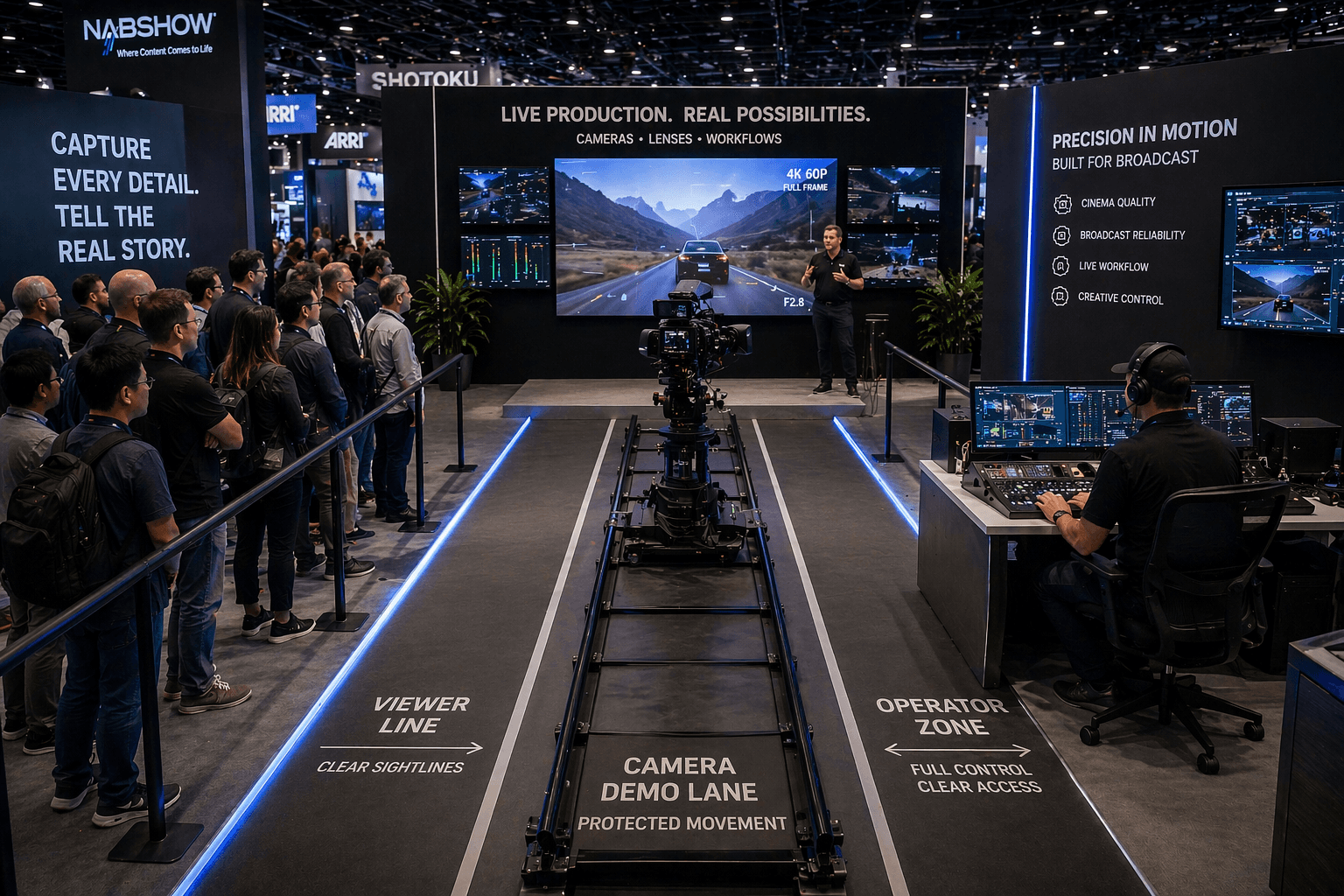
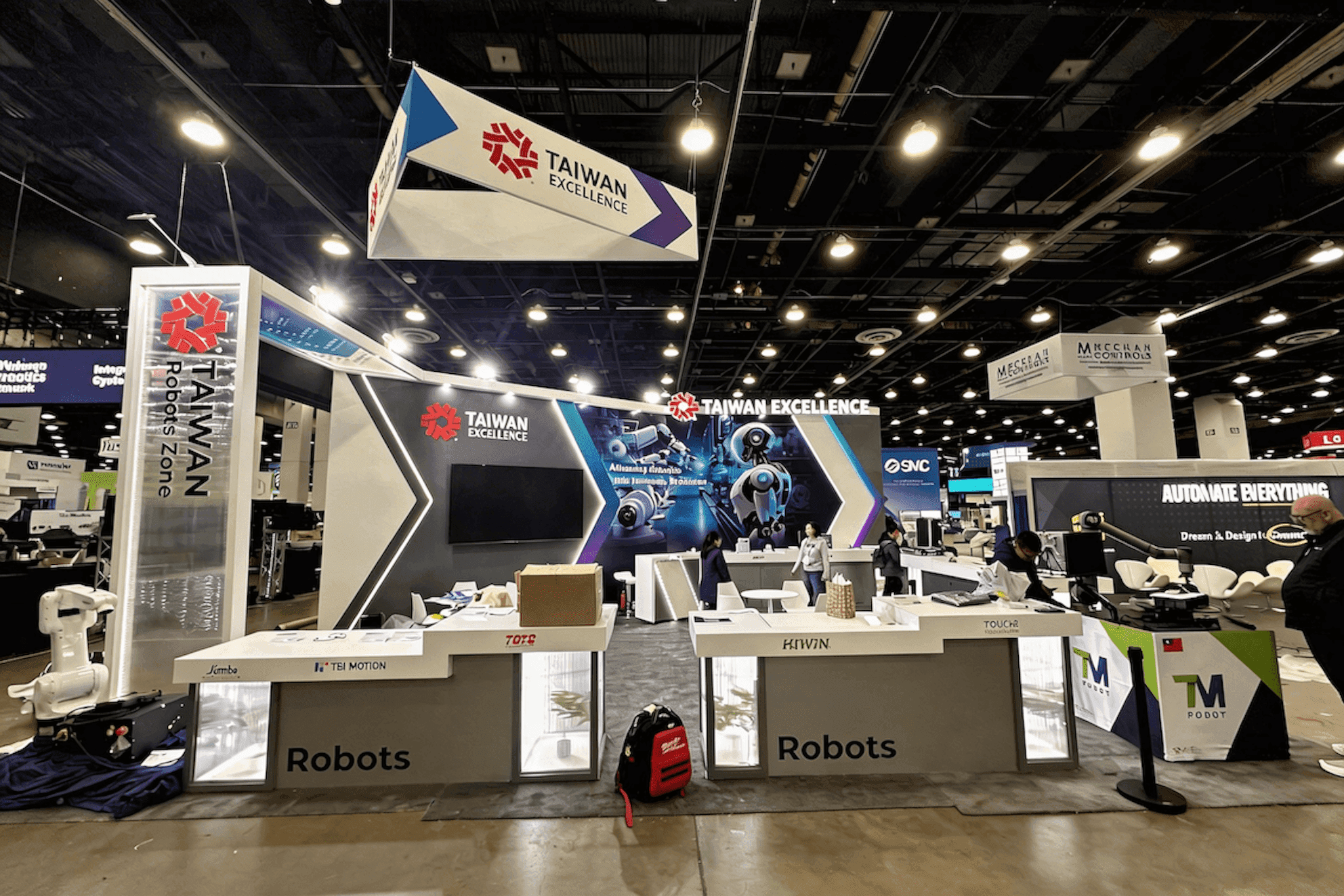
NAB booth camera demo lane with a protected movement path, operator zone, viewer line, and large presentation screen in Las Vegas

How Camera Demo Lanes Should Be Planned for NAB Show Booths

How Camera Demo Lanes Should Be Planned for NAB Show Booths

Circle Exhibit Team

Industry professionals

Exhibition industry professional dedicated to delivering the latest insights and curated recommendations to you.

Exhibition industry professional dedicated to delivering the latest insights and curated recommendations to you.

At NAB, camera demos need straight sightlines and protected movement. A well-planned demo lane makes the booth easier to watch, easier to operate, and easier to manage once traffic builds.

At NAB, camera demos need straight sightlines and protected movement. A well-planned demo lane makes the booth easier to watch, easier to operate, and easier to manage once traffic builds.

At NAB, camera demos need straight sightlines and protected movement. A well-planned demo lane makes the booth easier to watch, easier to operate, and easier to manage once traffic builds.

Camera demos look simple from the outside.

Set the camera. Give it a subject. Show the image. Let people see the result.

On the show floor, it rarely works that cleanly.

At NAB, a camera demo lane is not just a strip of open space. It has to do several jobs at once. It needs to give the camera a clean movement path. It needs to keep the operator position workable. It needs to let viewers understand what they are looking at without wandering into the shot. And it needs to do all of that without making the booth feel blocked or overbuilt.

That is why layout matters more than most teams expect.

A camera demo lane should not be treated like leftover floor between other booth elements. It is part of the presentation. If the lane bends too much, narrows too early, or gets interrupted by furniture, counters, or side conversations, the demo starts losing clarity before the technology even has a chance to impress anyone.

At NAB Show, the strongest camera demo lanes usually start with one simple rule: the main visual path should stay straight.

That does not mean every demo needs a long runway. It means the movement line needs to feel intentional from the audience point of view. If a viewer cannot quickly tell where the camera is moving, where the subject belongs, or where the result is being shown, the booth starts asking too much from the visitor. People see activity, but not necessarily the point of the activity.

The easiest mistake is to make the lane too public.

Some exhibitors want the demo to feel open, so they place the camera lane close to the aisle or let traffic cross it too easily. That usually backfires. People drift into the path. Staff start redirecting bodies instead of guiding the presentation. The operator loses consistency. The audience sees the demo interrupted by booth behavior instead of supported by it.

The second common mistake is to make the lane too hidden.

When the demo path is buried too deep in the booth or blocked by surrounding structure, the booth may gain control but lose visibility. A camera demo still needs to read from outside the immediate operating zone. Visitors should be able to understand that something live is happening and where to look if they want to follow it.

A better booth usually treats the lane as a visible middle layer.

The outside edge of the booth signals what kind of workflow is being shown. The lane itself carries the live action. The screen wall or result display confirms what the camera is actually doing. When those layers work together, the demo becomes much easier to read. People do not need to guess whether they should watch the operator, the camera, or the monitor first.

That is where booth size starts helping in a real way. A 20x20 trade show booth is often the first footprint that gives enough room to create a usable demo lane without collapsing the whole booth around it. In a smaller space, the camera path often fights with the viewer area and the conversation zone. In a better 20x20, the lane can sit where it stays visible while still leaving room for audience positioning and staff support.

The operator zone matters just as much as the lane itself.

If the operator is forced to stand in the same line as the audience, the demo becomes harder to manage. If the operator is placed so far off to the side that the connection between control and result becomes unclear, the workflow feels less convincing. The best setup usually lets the operator stay close enough to the lane to support the action, but not so central that the operator becomes the main thing the audience sees.

The viewing line needs similar discipline.

People should be able to watch the movement and the output without standing directly in the path. That sounds obvious, but on a busy booth floor it is easy for the audience to drift into the same space the camera needs. A better layout gives viewers a clear edge to occupy so the lane stays protected. Once that edge is defined, the booth feels calmer and the demo usually looks more professional.

This is also where graphics and brand presentation help more than people think. A camera lane is easier to understand when the supporting graphics explain the category, the use case, or the capture environment without forcing the operator to do all the talking. Good graphics help the visitor understand what kind of demo they are watching before the motion starts, which makes the live action easier to follow once it begins.

Many exhibitors also underestimate how much camera demos depend on what is not in the lane. Nearby stools, high tables, product displays, or casual conversations can all weaken the straightness of the visual path even if they technically sit outside it. The best lanes usually feel clean because the surrounding zone has been edited just as carefully as the lane itself.

That is one reason many teams benefit from planning the booth with a Las Vegas trade show booth builder that looks at demo behavior, not just booth components. A camera lane is not one object. It is a relationship between movement, operator control, viewer position, and screen confirmation. If one of those layers is off, the whole demo becomes harder to trust.

The strongest NAB camera demos usually feel simple even when the workflow is not.

The path is clear. The shot feels protected. The operator has room. The audience knows where to stand. The screen confirms the result. Nothing important is fighting for the same strip of floor.

That is what good planning solves.

At NAB, camera demos do not need more drama. They need straighter sightlines, cleaner movement, and a booth that protects the lane instead of constantly interrupting it. When that happens, the technology has a much better chance to speak for itself.

Planning a booth for NAB Show?
Start with NAB booth planning, then shape the layout with a Las Vegas trade show booth builder approach that gives camera demos a cleaner lane, better sightlines, and more controlled viewer flow.
Camera demos look simple from the outside.

Set the camera. Give it a subject. Show the image. Let people see the result.

On the show floor, it rarely works that cleanly.

At NAB, a camera demo lane is not just a strip of open space. It has to do several jobs at once. It needs to give the camera a clean movement path. It needs to keep the operator position workable. It needs to let viewers understand what they are looking at without wandering into the shot. And it needs to do all of that without making the booth feel blocked or overbuilt.

That is why layout matters more than most teams expect.

A camera demo lane should not be treated like leftover floor between other booth elements. It is part of the presentation. If the lane bends too much, narrows too early, or gets interrupted by furniture, counters, or side conversations, the demo starts losing clarity before the technology even has a chance to impress anyone.

At NAB Show, the strongest camera demo lanes usually start with one simple rule: the main visual path should stay straight.

That does not mean every demo needs a long runway. It means the movement line needs to feel intentional from the audience point of view. If a viewer cannot quickly tell where the camera is moving, where the subject belongs, or where the result is being shown, the booth starts asking too much from the visitor. People see activity, but not necessarily the point of the activity.

The easiest mistake is to make the lane too public.

Some exhibitors want the demo to feel open, so they place the camera lane close to the aisle or let traffic cross it too easily. That usually backfires. People drift into the path. Staff start redirecting bodies instead of guiding the presentation. The operator loses consistency. The audience sees the demo interrupted by booth behavior instead of supported by it.

The second common mistake is to make the lane too hidden.

When the demo path is buried too deep in the booth or blocked by surrounding structure, the booth may gain control but lose visibility. A camera demo still needs to read from outside the immediate operating zone. Visitors should be able to understand that something live is happening and where to look if they want to follow it.

A better booth usually treats the lane as a visible middle layer.

The outside edge of the booth signals what kind of workflow is being shown. The lane itself carries the live action. The screen wall or result display confirms what the camera is actually doing. When those layers work together, the demo becomes much easier to read. People do not need to guess whether they should watch the operator, the camera, or the monitor first.

That is where booth size starts helping in a real way. A 20x20 trade show booth is often the first footprint that gives enough room to create a usable demo lane without collapsing the whole booth around it. In a smaller space, the camera path often fights with the viewer area and the conversation zone. In a better 20x20, the lane can sit where it stays visible while still leaving room for audience positioning and staff support.

The operator zone matters just as much as the lane itself.

If the operator is forced to stand in the same line as the audience, the demo becomes harder to manage. If the operator is placed so far off to the side that the connection between control and result becomes unclear, the workflow feels less convincing. The best setup usually lets the operator stay close enough to the lane to support the action, but not so central that the operator becomes the main thing the audience sees.

The viewing line needs similar discipline.

People should be able to watch the movement and the output without standing directly in the path. That sounds obvious, but on a busy booth floor it is easy for the audience to drift into the same space the camera needs. A better layout gives viewers a clear edge to occupy so the lane stays protected. Once that edge is defined, the booth feels calmer and the demo usually looks more professional.

This is also where graphics and brand presentation help more than people think. A camera lane is easier to understand when the supporting graphics explain the category, the use case, or the capture environment without forcing the operator to do all the talking. Good graphics help the visitor understand what kind of demo they are watching before the motion starts, which makes the live action easier to follow once it begins.

Many exhibitors also underestimate how much camera demos depend on what is not in the lane. Nearby stools, high tables, product displays, or casual conversations can all weaken the straightness of the visual path even if they technically sit outside it. The best lanes usually feel clean because the surrounding zone has been edited just as carefully as the lane itself.

That is one reason many teams benefit from planning the booth with a Las Vegas trade show booth builder that looks at demo behavior, not just booth components. A camera lane is not one object. It is a relationship between movement, operator control, viewer position, and screen confirmation. If one of those layers is off, the whole demo becomes harder to trust.

The strongest NAB camera demos usually feel simple even when the workflow is not.

The path is clear. The shot feels protected. The operator has room. The audience knows where to stand. The screen confirms the result. Nothing important is fighting for the same strip of floor.

That is what good planning solves.

At NAB, camera demos do not need more drama. They need straighter sightlines, cleaner movement, and a booth that protects the lane instead of constantly interrupting it. When that happens, the technology has a much better chance to speak for itself.

Planning a booth for NAB Show?
Start with NAB booth planning, then shape the layout with a Las Vegas trade show booth builder approach that gives camera demos a cleaner lane, better sightlines, and more controlled viewer flow.
Message

Leave your message and we will get back to you ASAP

Send a Message

We’ll Be in Touch!

Message

Leave your message and we will get back to you ASAP

Address:

4915 Steptoe Street #300

Las Vegas, NV 89122