Start With the Clinical Decision, Not the Model
Begin with the decision a clinician or care team needs to make. Establish the clinical AI use case first, then show the information available to the system, the result it produces, and the point where a person reviews it.
The presentation stays centered on the clinical workflow instead of drifting into product architecture.
Clinical Input
Use only the patient, workflow, or operational information needed to frame the decision. Extra data adds visual noise without making the result easier to understand.
AI Output
Show the recommendation, alert, summary, prediction, or generated content in a format visitors can read quickly and connect to the original problem.
Human Review
Make it clear who checks, edits, accepts, or rejects the result. The human-in-the-loop process should also show where clinical responsibility remains.

A clear healthcare AI demo follows one clinical situation from essential input to readable AI output and final human review.
Keep the Main Story Clear and the Proof Within Reach
The main presentation should follow one visible path: clinical context, necessary input, AI result, and next human action. Validation, governance, security, integration, and implementation details should remain nearby without competing with that sequence.
Main Demo
Use the primary screen to show the workflow context, essential input, AI result, and the action taken by a clinician or authorized user.
Proof Layer
Use a secondary screen, panel, or discussion point for validation methods, governance, security controls, integration requirements, and implementation details.
This hierarchy affects screen height, viewing distance, counter placement, and presenter flow, so it should be resolved during booth design and engineering.
A Clinical Documentation Assistant Demo in Practice
A Short Demo Sequence
A clinician enters a short patient note, and the AI turns it into a structured draft. The presenter highlights one recommendation or uncertain section, then shows the clinician reviewing, editing, and approving the result.
The sequence ends with the completed record rather than a feature summary, keeping the clinical input, AI output, and human review within one practical workflow.
What This Means for the Booth Layout
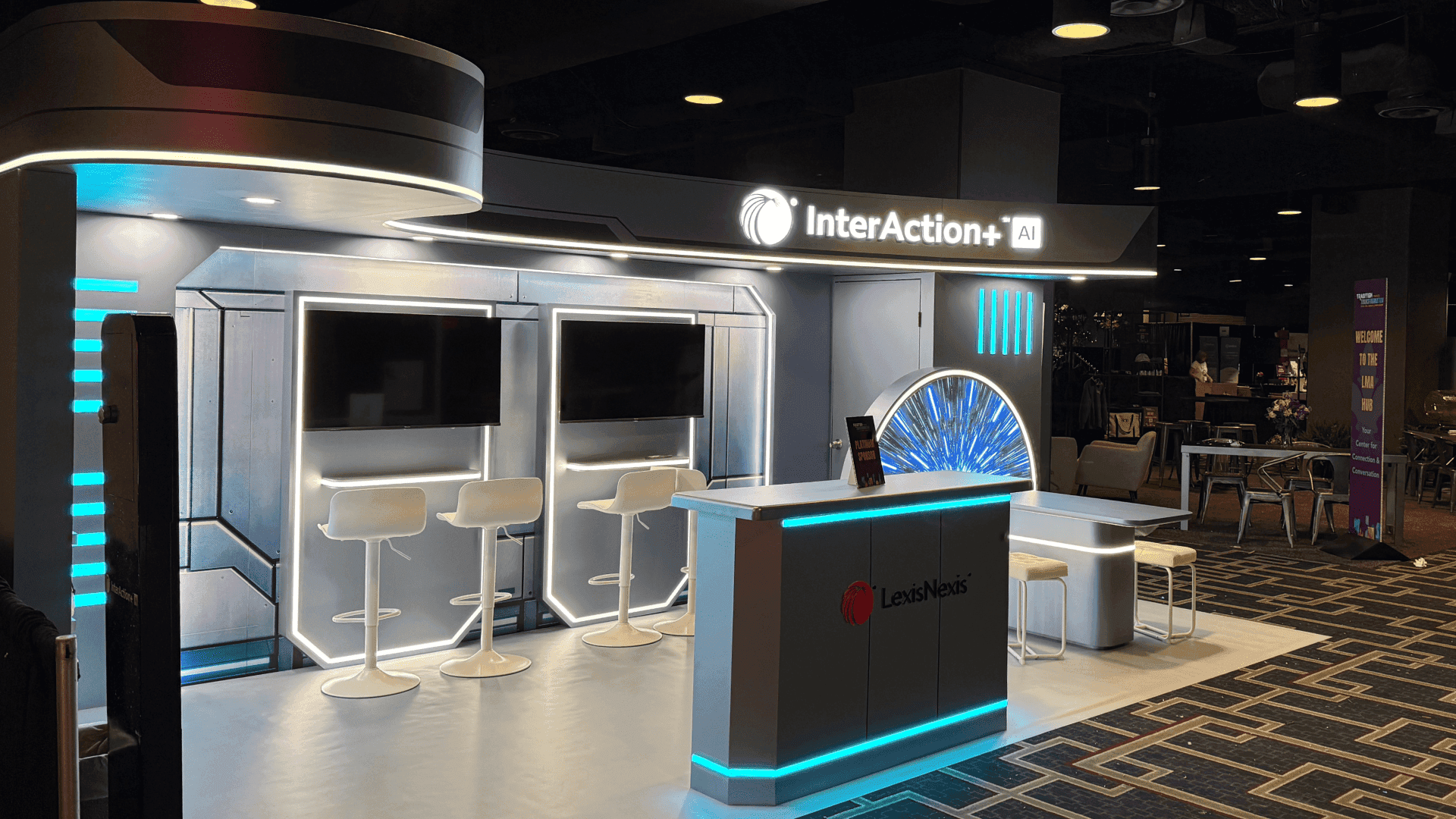
A similar separation appears in the Inhabit OPTECH 2025 20x30 project, where software demonstrations and visitor conversations were given different spatial roles.
It is not a healthcare AI case, but the layout principle transfers well: keep the primary product story visible, then move validation, governance, integration, and detailed technical questions to a separate follow-up point.

The main screen should carry the clinical workflow, while validation, governance, security, and integration details remain available in a separate proof layer.
Show the Review Path—and Plan for Failure
A useful healthcare AI demo should not show only a perfect result. Buyers also need to see what happens when the output is corrected, rejected, or sent back for review.
When the Output Needs Review
Show who reviews the AI output, what they can change, and what happens after the result is accepted or rejected. One clear AI exception state can reveal more about the workflow than another successful example.
When the Live Demo Fails
A slow response, expired login, cloud outage, or unavailable API should not stop the presentation. For a cloud-based AI demo, keep a local or recorded fallback ready and give the presenter a simple continuation path.
A live software demo failure should change the format of the conversation, not end it.

A useful AI demonstration shows how an output is reviewed or corrected and how the presenter continues when a login, API, or cloud connection fails.
Where Healthcare AI Demos Lose Their Audience
A healthcare AI demo becomes difficult to follow when the technology begins to overshadow the clinical decision.
Starting with model architecture before explaining the healthcare problem.
Showing too many AI use cases in one presentation.
Presenting AI output without human review or a clear next action.
Mixing validation and governance proof into the main demo.
Depending on one cloud connection without a practical fallback.
Ending without a buyer next step, such as a technical review, implementation discussion, or deeper product demonstration.
When AI shares the exhibit with interoperability, cybersecurity, or patient-facing products, HIMSS27 booth planning also needs to account for meeting space, visitor flow, supporting demonstrations, and show-site execution.
Questions Buyers Ask About Healthcare AI Demos
Should a Healthcare AI Demo Explain How the Model Works?
Only to the level needed to understand the AI output and its clinical relevance. Model architecture, validation methods, governance, and technical documentation can remain in the proof layer for buyers who need a deeper review.
How Much Clinical Data Should the Demo Show?
Use only the clinical input required to explain the result. Sanitized or synthetic data can protect patient privacy while keeping the demonstration realistic and easy to follow.
Should the AI Demonstration Be Live or Recorded?
Run the demonstration live only when interaction adds something a recording cannot. Even then, keep a local or recorded fallback ready for expired logins, slow cloud responses, or unavailable APIs.