Start With the Problem the Buyer Is Already Evaluating
Before a demo begins, the buyer needs a reason to care.
For Gartner exhibitors, that usually means connecting the solution to a business or operational problem the visitor is already considering. A long feature list makes that harder. The opening message should quickly establish what problem the solution addresses, why it matters in an enterprise environment, and what result is worth examining.
Once that relevance is clear, the demo has a much stronger reason to exist.

A focused product demo helps buyers evaluate one important solution claim before moving into a deeper conversation.
Let the Demo Prove One Thing Clearly
Once the business problem is understood, the demo has a simpler job: prove one important point.
Trying to show the entire platform can bury the capability the buyer actually needs to evaluate. A focused workflow, product interaction, or use case gives the visitor something concrete to judge.
The useful sequence is straightforward: make a claim, show credible proof, and let the buyer decide whether that proof is strong enough to continue the evaluation.
The demo does not need to finish the entire sales story. It needs to earn the next question.

Separating the open demo from technical or executive discussions helps different stages of buyer evaluation run at the same time.
Know When the Conversation Should Go Deeper
If the proof lands, buyer questions usually become more specific. Questions about integration, deployment, security, implementation, commercial fit, or broader business impact can indicate that the conversation has moved beyond general interest.
At that point, staff should decide what kind of discussion is actually useful instead of putting every visitor through the same handoff.
Buyer signal | What it may indicate | Useful next step |
|---|---|---|
“How does this integrate with our environment?” | Technical fit is being evaluated | Technical discussion |
“What would deployment involve?” | Implementation is becoming relevant | Technical or commercial review |
“How does this affect our broader strategy?” | The buyer is moving beyond product features | Executive conversation |
“Can we evaluate this further?” | The buyer wants deeper product proof | Trial or scheduled follow-up |
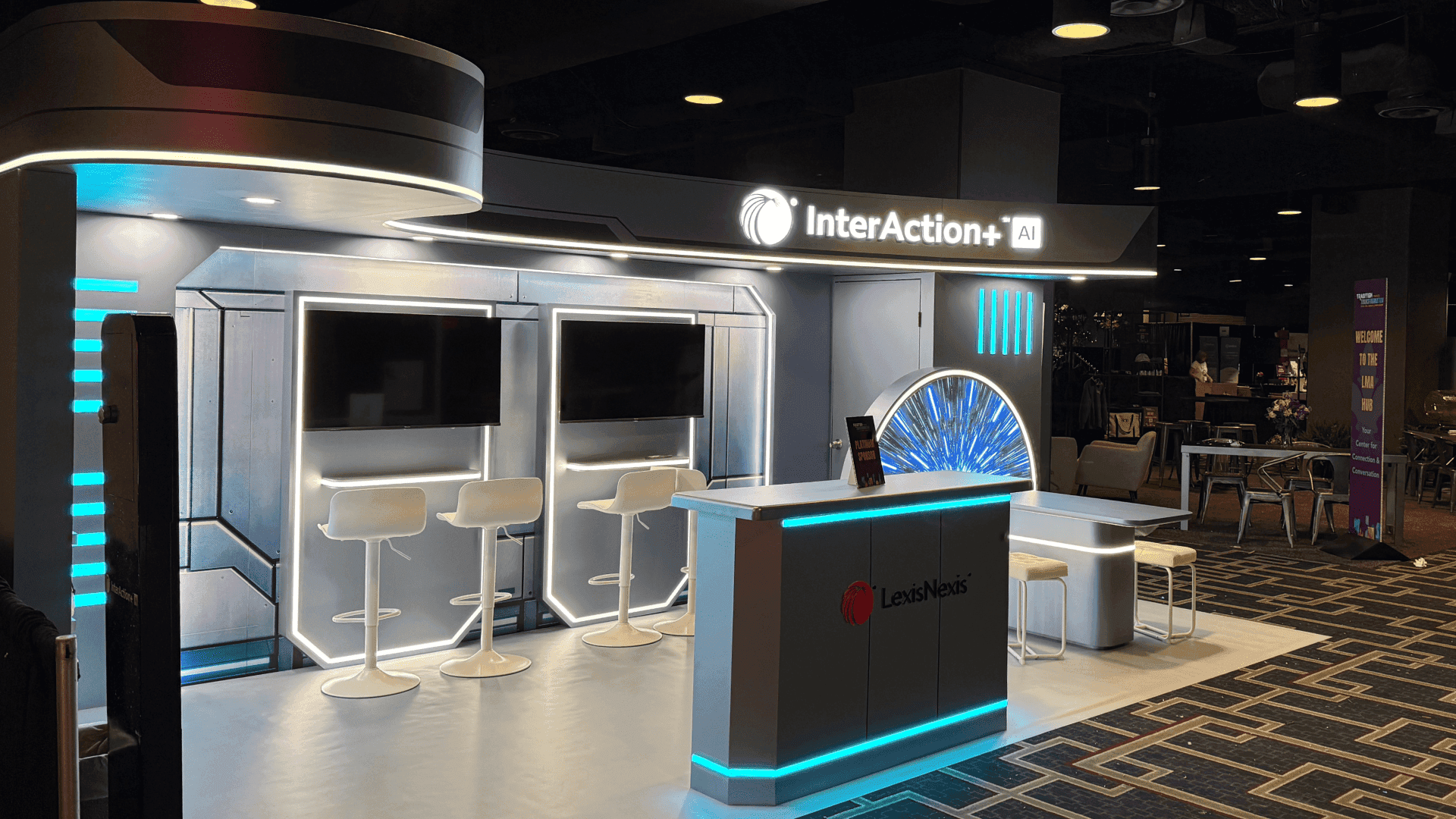
If one visitor is still watching the demo while another has moved into a technical or executive discussion, the booth has to support both without creating a bottleneck. In a 20x20 booth, those activities can be separated while keeping the main demo visible and accessible.
The footprint matters because of simultaneous activity, not because a larger booth is automatically better.

Clear messaging, visible proof, and a defined next step make it easier for buyers to compare providers and continue the evaluation after the booth conversation.
Give Buyers One Difference They Can Remember
After several provider conversations, buyers are unlikely to remember every feature they saw. They are more likely to remember one difference they can explain.
That difference might be a workflow advantage, deployment approach, integration capability, enterprise-readiness point, or another proof that matters to the buyer.
It also has to stay visible across the booth. The headline, supporting proof, and screen content should reinforce the same idea instead of introducing competing messages. Strong graphics and brand presentation helps maintain that hierarchy while deeper product detail remains available for buyers who want it.
If the visitor can still explain why the solution was different later, the booth has done more than generate attention.
Make the Next Step Clear Before the Buyer Leaves
A useful Gartner conversation should not end with a vague promise to reconnect after the show.
Before the buyer leaves, both sides should understand what comes next. That might be a technical review, executive discussion, product trial, architecture follow-up, requested material, or a scheduled meeting.
The right next step depends on what the buyer is evaluating and how far the conversation has progressed. There is no need to force every qualified visitor into the same process.
What matters is preserving enough context so the next conversation can continue from where the booth discussion ended instead of starting again from the beginning.
FAQ
How much should a Gartner IT Symposium/Xpo demo show?
A Gartner demo should focus on one important evaluation question and one clear proof point. Trying to demonstrate the entire platform usually makes the message harder to follow. A focused workflow or use case gives buyers a better basis for deciding whether the solution deserves deeper evaluation.
When should a Gartner booth visitor move from a demo into a deeper conversation?
A deeper conversation usually makes sense when questions move toward integration, deployment, security, implementation, commercial fit, or executive priorities. Those questions can indicate that the buyer is no longer simply exploring the product and is starting to evaluate whether it fits a real enterprise need.
Should every qualified Gartner visitor follow the same post-demo path?
No. One buyer may need a technical review, another an executive discussion, product trial, architecture follow-up, requested material, or a scheduled meeting. The follow-up should match the buyer’s evaluation stage instead of forcing every qualified visitor into the same process.