What Is a 20x20 ASD Booth Layout?
A 20x20 ASD booth layout is a product-focused booth plan that gives exhibitors more flexibility than a compact inline booth. It can support multiple product zones, a stronger display wall, one or two counters, hidden storage, and a small buyer conversation area.
This article supports ASD Market Week 20x20 booth planning. It does not replace the main ASD Market Week booth planning page or the general 20x20 booth planning page. The focus here is narrower: how a 20x20 ASD booth should handle product display, visitor circulation, booth graphics, storage, and rental setup.
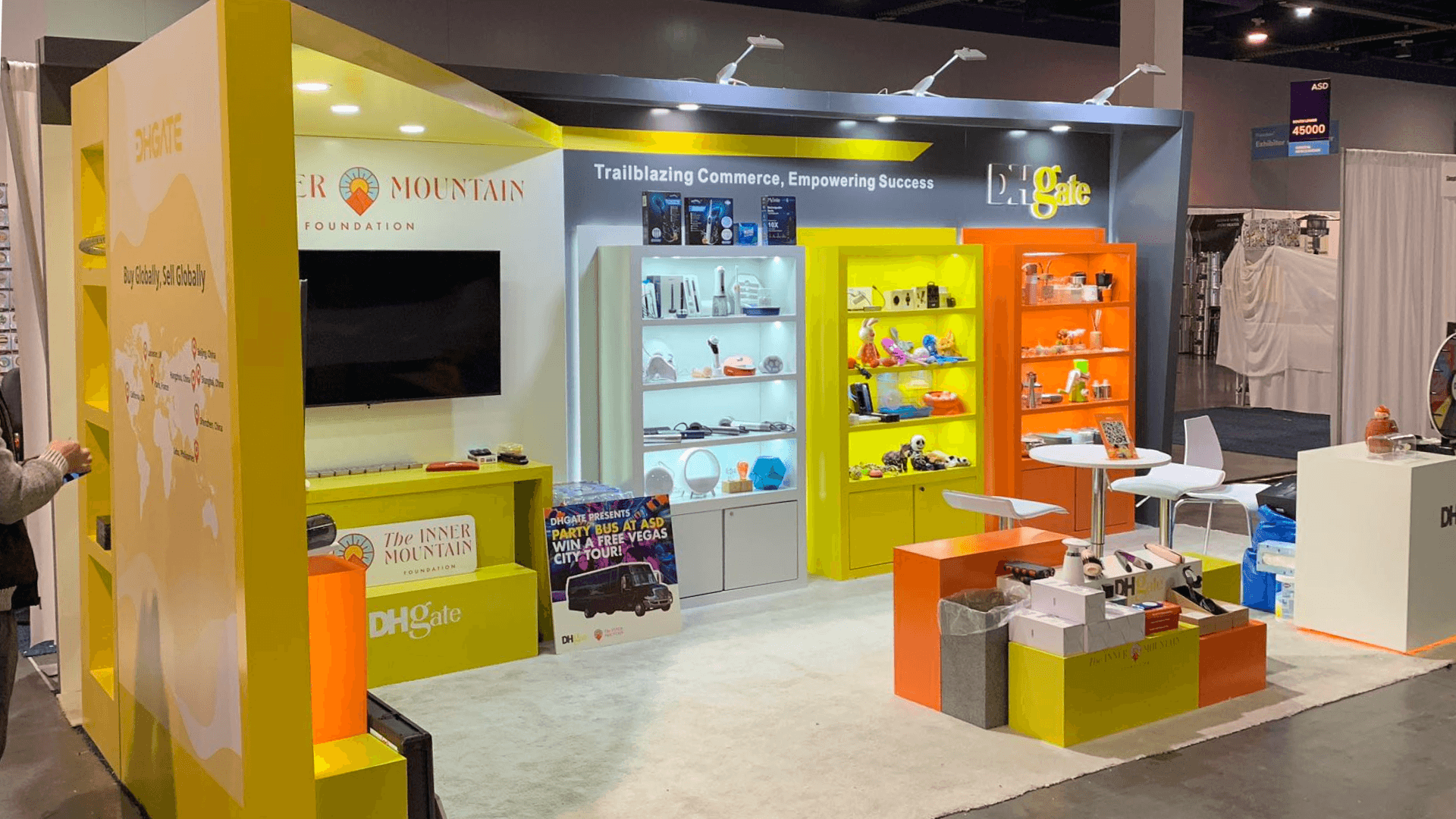
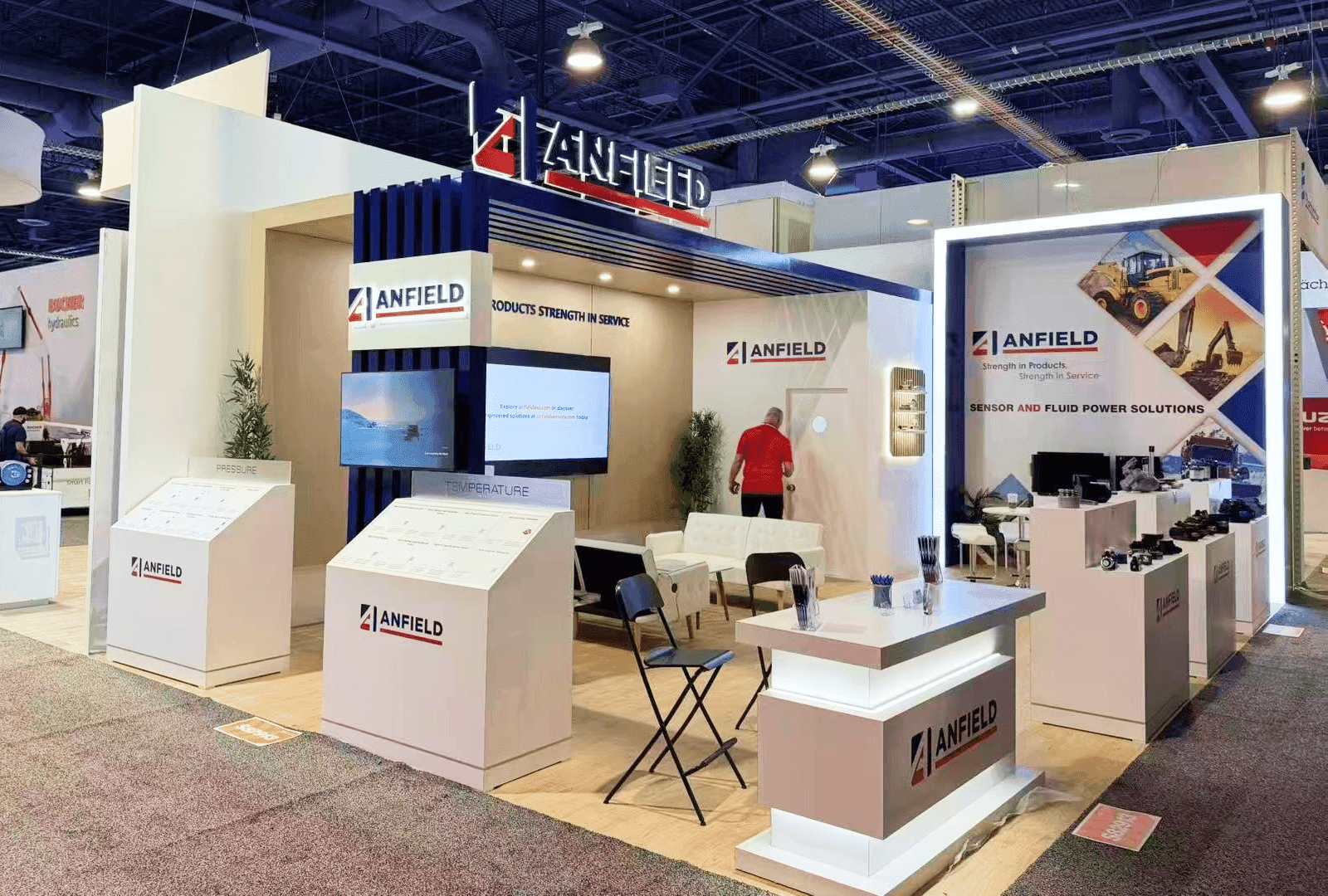
The center of a 20x20 booth should leave enough room for visitor circulation, display counters, staff movement, and short buyer conversations without making the space feel crowded.
Start With Product Zones
A 20x20 booth should not begin with furniture. It should begin with zones.
Before adding counters, shelves, tables, or seating, decide how the product line should be grouped. For ASD Market Week exhibitors, this usually means thinking about product category, buyer priority, packaging type, sample handling, and staff conversation points.
A useful 20x20 product booth may include:
one main product display wall
one feature product area
one or two display counters
a small buyer conversation point
hidden storage
readable booth graphics
enough open floor space for browsing
The goal is not to fill the 20x20 footprint. The goal is to make the product range easier to understand.
Use the Main Display Area Carefully
The main display area should help buyers understand the product category quickly. In a 20x20 booth, this may be a product wall, shelf system, feature counter, lighted display area, or a combination of display surfaces.
A strong main display area can support:
category grouping
product range visibility
packaging comparison
sample presentation
new product focus
brand message
buyer questions
The display should not give every product the same visual weight. Buyers need a clear starting point. If the booth tries to show everything at once, the product line becomes harder to read.
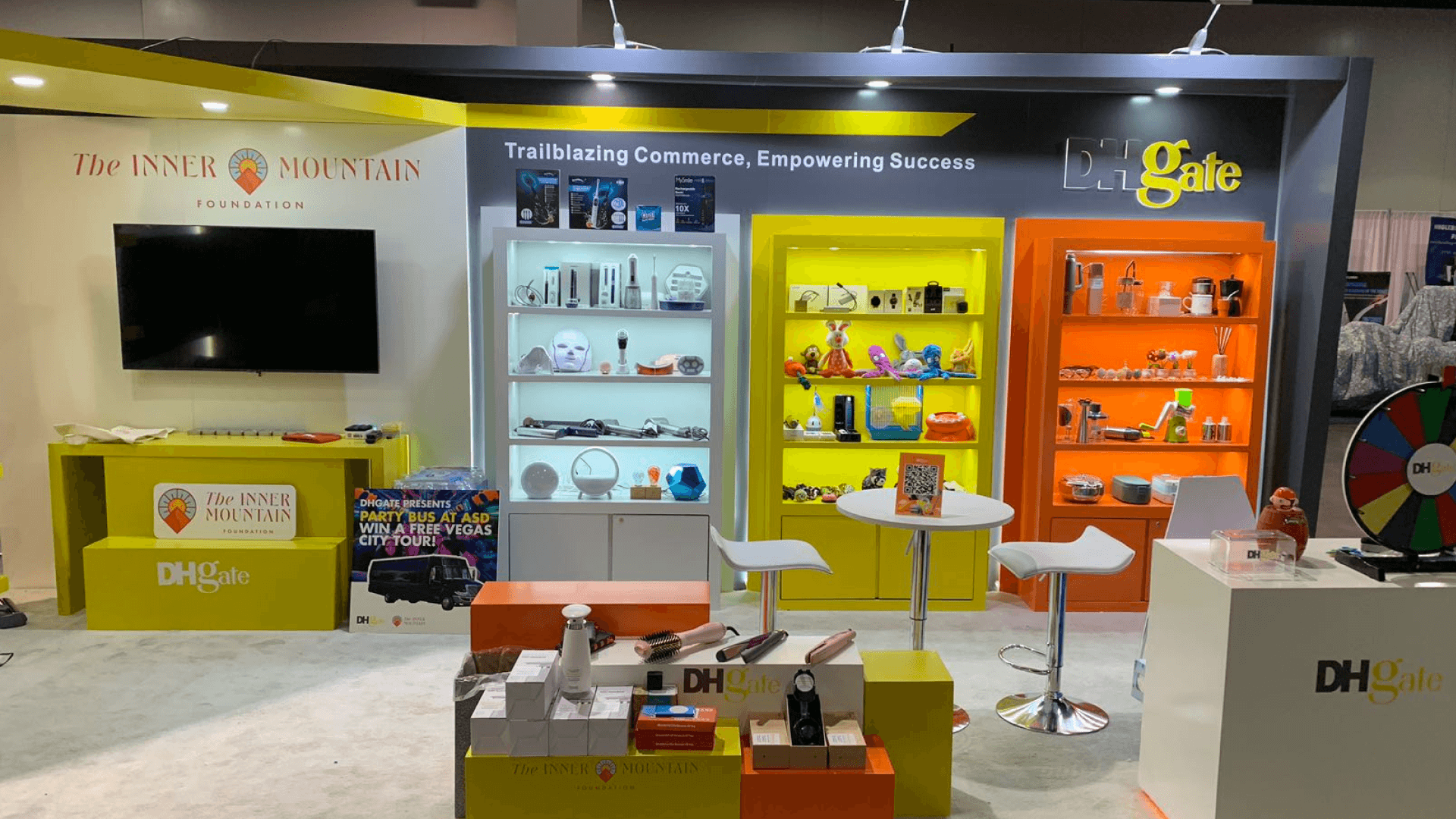
The center of a 20x20 booth should leave enough room for visitor circulation, display counters, staff movement, and short buyer conversations without making the space feel crowded.
Plan the Booth Center With Discipline
The center of a 20x20 booth is valuable. It can create openness, or it can make the booth feel crowded.
A common mistake is placing too many counters or tables in the middle. That may look useful in a rendering, but it can block visitor circulation during the show.
Booth area | Best role in a 20x20 layout |
|---|---|
Main display wall | Product category, brand message, product range |
Front counter | Greeting, lead capture, quick product question |
Side counter | Sample handling or product comparison |
Center space | Buyer pause zone and visitor circulation |
Back or side storage | Samples, catalogs, bags, tools, packaging |
Small meeting point | Short buyer conversation or follow-up discussion |
The booth should leave enough room for buyers to step in, compare products, and move out without blocking others.
Give Buyers a Place to Talk
A 20x20 booth gives exhibitors room for a real buyer conversation point. It does not need to be a closed meeting area. In many ASD booth layouts, a semi-open conversation spot works better.
The conversation point should be close enough to the product display for easy reference, but not so close that it blocks browsing.
This area can support:
product line explanation
wholesale or order questions
packaging discussion
buyer qualification
follow-up planning
short partner conversations
If every conversation happens at the front counter, the booth can become blocked. A separate buyer conversation point helps keep the booth moving.

A 20x20 booth rental can work well for ASD Market Week exhibitors when product zones, booth graphics, hidden storage, and buyer conversation space are planned together.
Booth Graphics Should Support Product Categories
For a 20x20 booth, graphics should help buyers understand what is being shown. They should not compete with products or turn the booth into a wall of text.
Graphics and brand presentation support should focus on clear message hierarchy. Useful graphics may include:
one main brand wall
short product category message
counter graphics
product family callouts
backwall visuals
simple aisle-facing text
The best graphics help buyers understand the booth faster. They do not need to explain every product detail.
Storage and Staff Flow Still Matter
A 20x20 booth needs storage, especially for product exhibitors. Staff may need space for backup samples, catalogs, bags, packaging, tools, chargers, and small operating items.
Storage should be close enough for staff to use, but not visible from the main browsing path. If storage is exposed, the booth looks messy. If storage is too far away, staff movement becomes awkward.
Staff flow also matters. Staff should be able to greet buyers, answer questions, access samples, and move to the conversation point without standing in front of the main display.
When a 20x20 Rental Booth Makes Sense
A Las Vegas trade show booth rental can work well for ASD Market Week exhibitors who need a branded product display booth without building a fully custom exhibit.
A 20x20 booth rental makes sense when the exhibitor needs:
a stronger product display area
one or two display counters
branded booth graphics
hidden storage
a buyer conversation point
practical visitor circulation
a flexible rental structure
The rental booth should still feel planned. It should not look like a generic structure with products added at the last minute.
20x20 Booth Planning Checklist
Before approving a 20x20 ASD booth layout, check:
Can buyers understand the main product category from the aisle?
Are product zones clearly separated?
Does the main display area have a clear focus?
Do counters have different roles?
Is there room for visitors to pause and browse?
Is there a buyer conversation point?
Are booth graphics easy to read?
Is storage hidden but accessible?
Can staff move without blocking products?
Has the booth been reviewed from the buyer’s point of view?
This checklist keeps the booth focused on how buyers actually move through the space.
FAQ
What should a 20x20 ASD booth include?
A 20x20 ASD booth should include a main product display area, display counters, booth graphics, hidden storage, visitor circulation space, and a small buyer conversation point.
Is a 20x20 booth good for ASD Market Week product exhibitors?
Yes. A 20x20 booth can work well for ASD exhibitors with multiple product categories, sample displays, packaging, buyer conversations, and stronger brand presentation needs.
How should products be arranged in a 20x20 booth?
Products should be grouped by category, buyer priority, product family, packaging type, or featured item. The main product category should be easy to understand from the aisle.
Should a 20x20 booth include a meeting area?
A 20x20 booth does not always need a formal meeting room, but it should include a buyer conversation point where staff can continue deeper product or wholesale discussions.
What is the biggest mistake in a 20x20 booth layout?
The biggest mistake is using the extra space to add too many counters, shelves, or messages. A 20x20 booth should make browsing easier, not more crowded.
Final Takeaway
A 20x20 booth at ASD Market Week should give product exhibitors more control over product zones, display counters, booth graphics, storage, and buyer conversations. The strongest layout is not the one with the most items. It is the one where buyers can understand the product range, browse comfortably, and speak with staff without blocking the booth.