At SEMA Show 2024, Nakamichi Car Audio needed a 20×20 booth that could make compact electronics feel clear, premium, and easy to approach inside a visually noisy hall. Car audio products do not win attention by size alone. They need controlled lighting, clean product hierarchy, and enough open space for visitors to stop, compare, and ask questions without the booth feeling crowded or overbuilt. The goal was to create a product-first environment that felt calm and technically credible from multiple approach angles.
Because this project was built for the SEMA show floor in Las Vegas, the booth also had to perform under real venue conditions: dense aisle traffic, product-security needs, fast move-in timing, and a layout that could stay readable while supporting both quick browsing and deeper conversations. That broader context is why this case naturally connects to SEMA Show.

💼
Client:
📅
Year/Exhibition:
📍
Location:
📐
Size:
🏢
Industry:
🏢
Venue Context:
Challenge
The main challenge was readability. At SEMA, attendees are surrounded by large graphics, bright finishes, vehicle displays, and aggressive product messaging, which makes smaller electronics easy to overlook. For Nakamichi Car Audio, the booth needed to keep head units, audio components, and related devices visible and understandable from multiple approach angles without letting the footprint collapse into a crowded retail wall. The layout had to stay open for traffic, support hands-on conversation, and still protect high-value product displays inside a compact 20×20 footprint.
The second challenge came from execution. Product-first booths only work when the display system is disciplined: lighting has to support legibility, counters need the right depth and spacing, fixtures must feel secure, and the unpack order has to protect the visual hierarchy of the booth. That is why this case also supports booth fabrication and pre-build checks in Las Vegas. When secure open merchandising, labeled components, and finish control are solved before move-in, the booth opens cleaner and feels more trustworthy on the show floor.
Design vs. On-site Execution
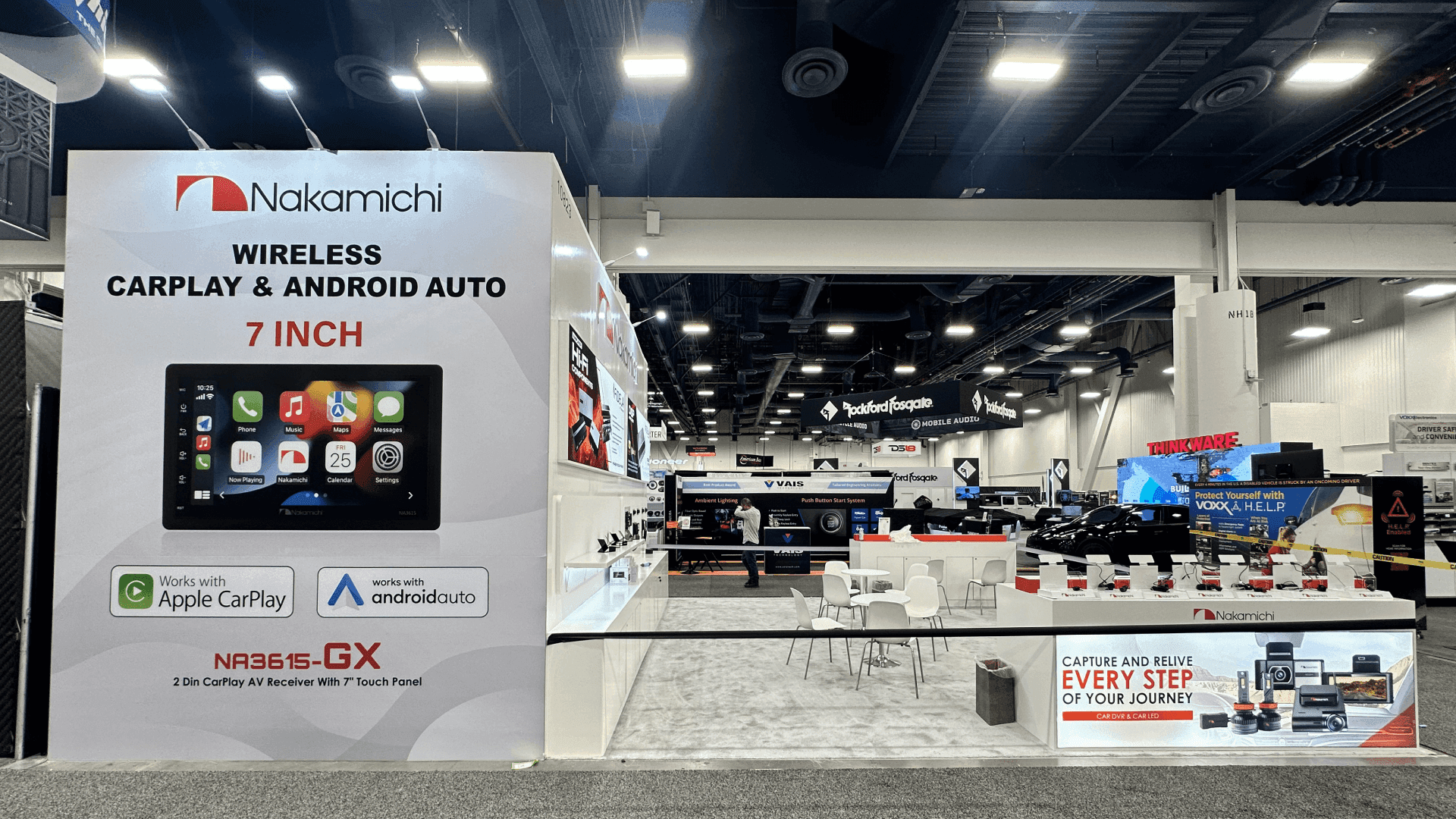
The concept was built around visual restraint. Instead of trying to fill the booth with too many display moments, the design created a calmer field where the products could lead. A strong graphic wall established quick brand recognition, controlled lighting helped smaller components stay readable, and edge-facing interaction points allowed visitors to engage without blocking the interior. The strategy was not to build louder, but to build clearer.
On site, that clarity only worked because installation followed the same logic as the layout. Product displays had to remain aligned, the branded walls had to support quick recognition, and the booth needed enough breathing room to prevent congestion at the edge counters. In a footprint like this, layout logic and installation order are tightly connected, which is why 20x20 trade show booth size planning is the right supporting size page for this case.
This project was also featured in our portfolio gallery, highlighting on-site visuals and exhibit details from the show floor.
View the Nakamichi booth at SEMA 2024 project gallery for real-event photos and visual highlights.
Hero Graphic Wall
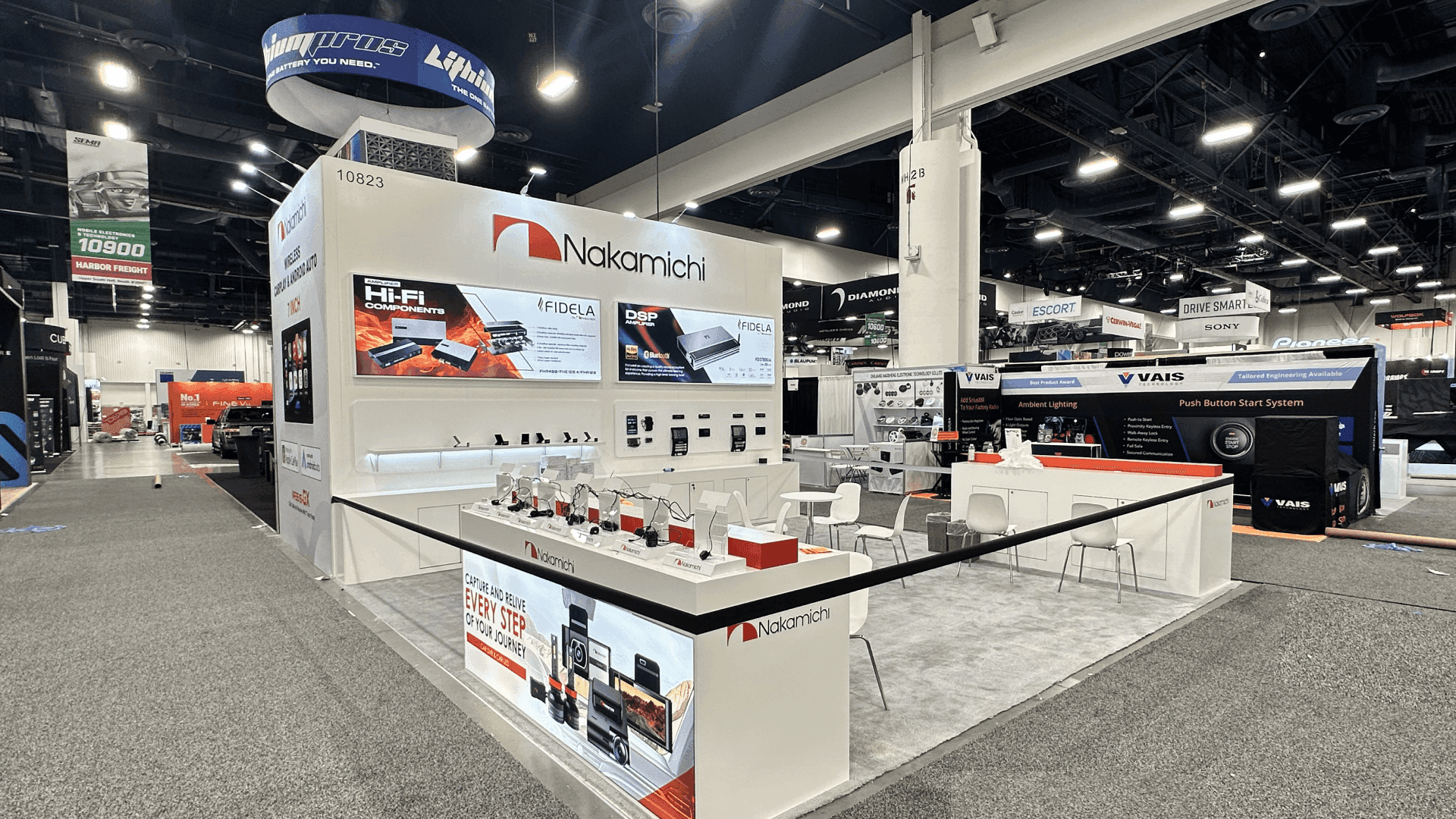
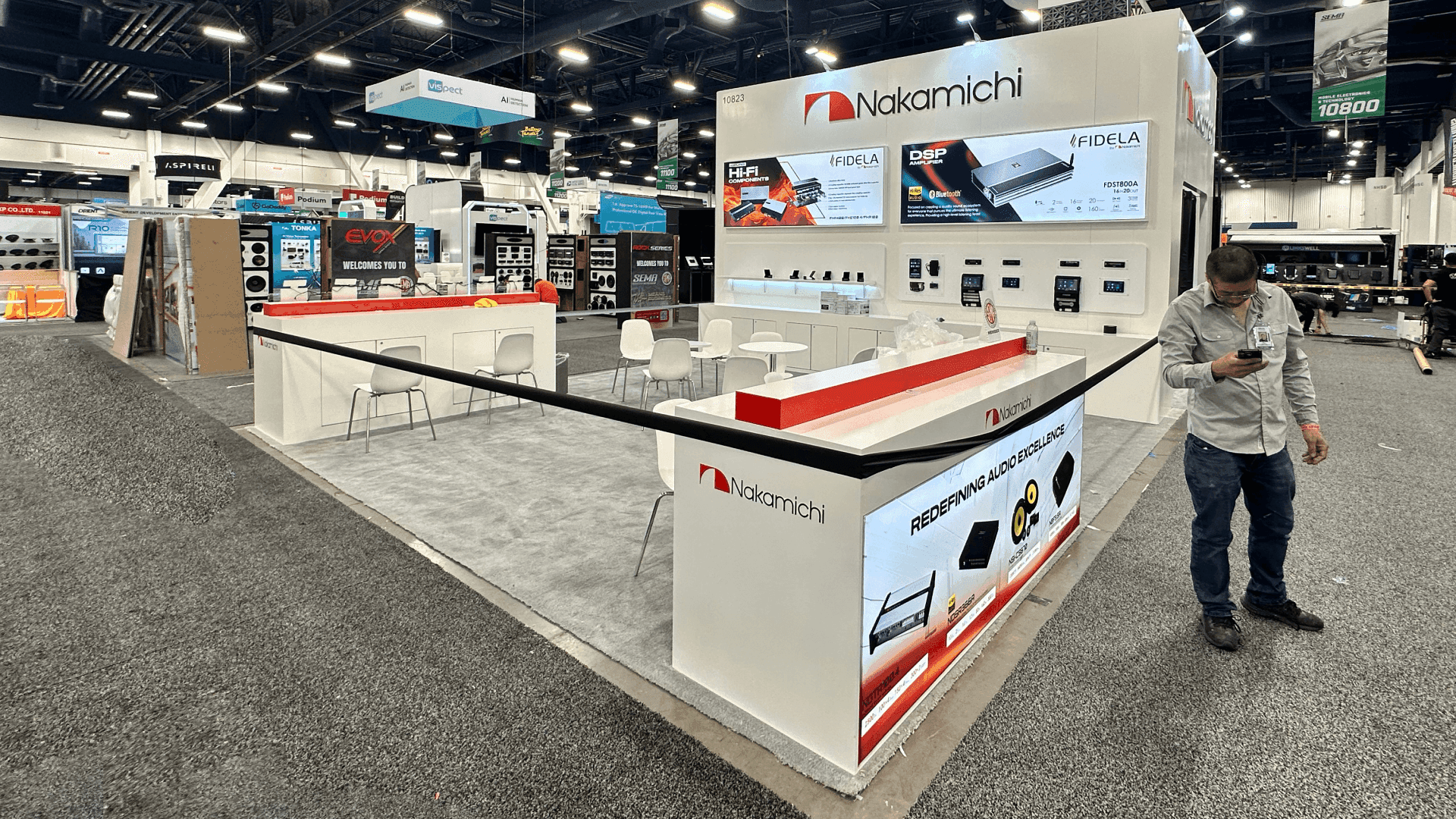
The hero wall anchored brand recognition from mid-range sightlines and gave visitors instant context. It created a clean visual stop without overwhelming nearby product zones, which was critical in a hall where competing displays could easily dilute attention.
Backlit Product Gallery
Backlit shelving improved legibility for compact electronics, printed specs, and small product details. The lighting strategy reduced glare and helped key features remain readable during fast walk-bys and quick conversations.
Perimeter Interactive Counters
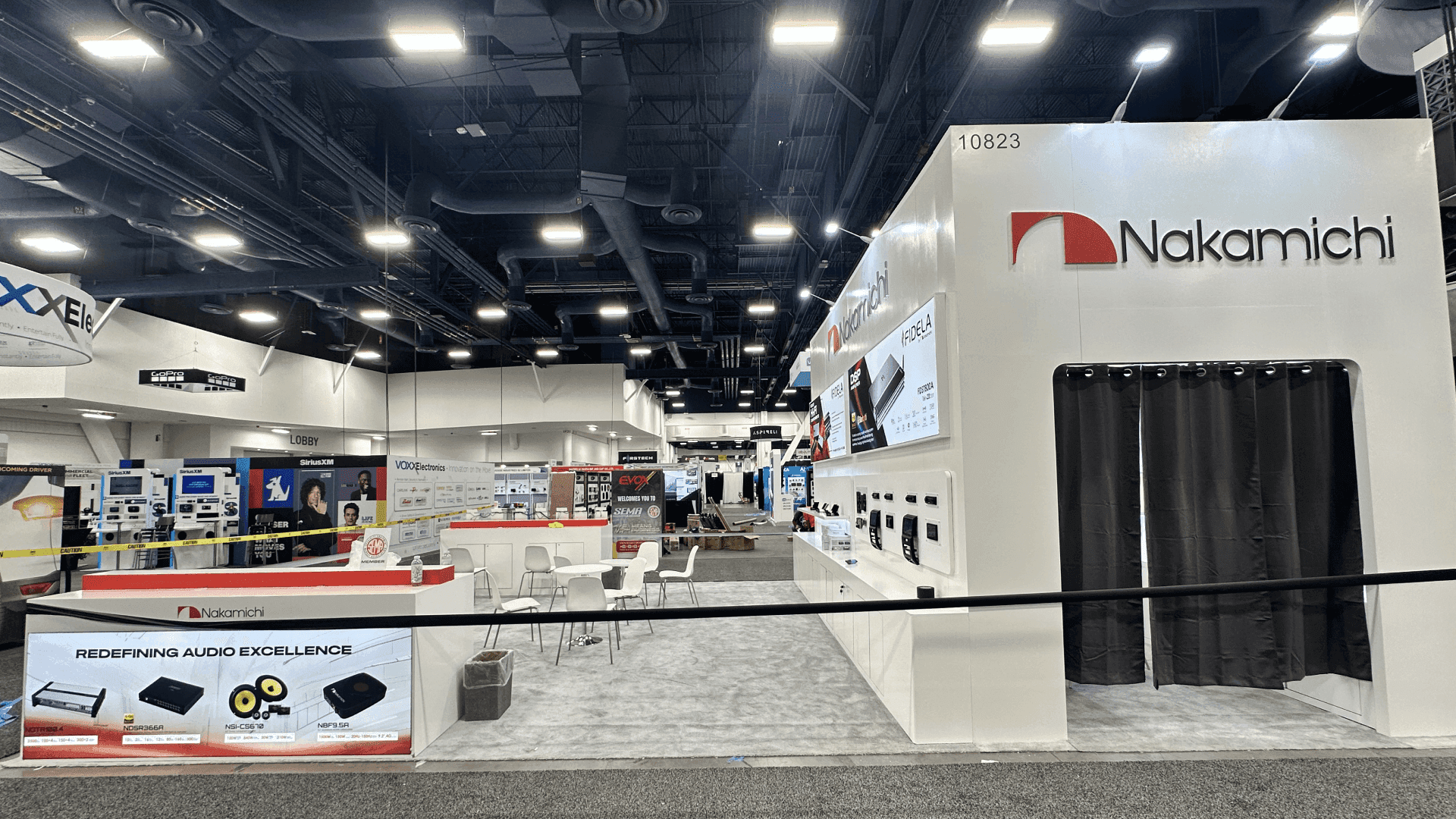
Edge-facing counters capture traffic without forcing visitors deep into the booth. This supports continuous flow while still enabling short, hands-on conversations—ideal for demonstrating compact devices and accessory details.
Co-Branded Private Suite
A semi-enclosed discussion area supports deeper conversations without disconnecting from the main display. It balances privacy and openness—useful for sales discussions, distributor meetings, and partner coordination during peak show hours.
On-site Highlights
This booth worked because the execution system protected the product-first concept from the beginning. In a compact electronics environment like SEMA, clarity depends on more than design. Product spacing, fixture stability, lighting direction, unpack order, and surface control all affect whether the booth feels premium and readable on opening day. The following highlights show how show-floor execution helped keep the space calm, organized, and technically credible.
Key Design Features & Show Floor Presence
Product-First Visual Hierarchy
Perimeter-Driven Traffic Capture
Controlled Lighting for Legibility
Secure Open Merchandising
Multi-Angle Brand Consistency
Outcome
The booth made compact car audio products easier to understand at a glance, even in the visually dense SEMA environment. That improved first impressions and reduced explanation friction.
Perimeter interaction points let visitors engage naturally without blocking the interior. That kept the booth active while protecting flow during peak traffic periods.
The hero wall, clean geometry, and consistent visual hierarchy helped the booth stay recognizable from multiple angles. This made the space feel more organized and more premium.
Because lighting, product placement, display security, and finish details were aligned before opening, the booth could start the show in a cleaner and more controlled condition.
For a car audio booth like this, the real challenge is not getting attention once. It is keeping the space readable long enough for visitors to understand what they are looking at. Smaller electronics are easy to bury under oversized graphics, crowded counters, or inconsistent lighting. What made this booth work was restraint: each zone had a clear job, product displays stayed visible without feeling exposed, and the perimeter invited people in without creating congestion.
Practical takeaway: if you want a 20×20 electronics booth to feel bigger and more premium, do not start by adding more structure. Start by improving hierarchy. Product spacing, lighting control, secure merchandising, and clean edge interaction often do more for performance than filling every surface. That is also where an experienced Las Vegas trade show booth builder adds value—by making sure the booth works as a show-floor system, not just a visual concept.
Quick Q&A
Q: What layout works best for compact electronics demos at SEMA?
A: Perimeter interaction works well because visitors can stop at an edge counter, evaluate a product quickly, and move on without blocking the interior of the booth.
Q: What is the most overlooked detail in car audio booth execution?
A: Lighting and display spacing. If smaller products are crowded together or lit inconsistently, the booth loses legibility and the technology feels less premium.