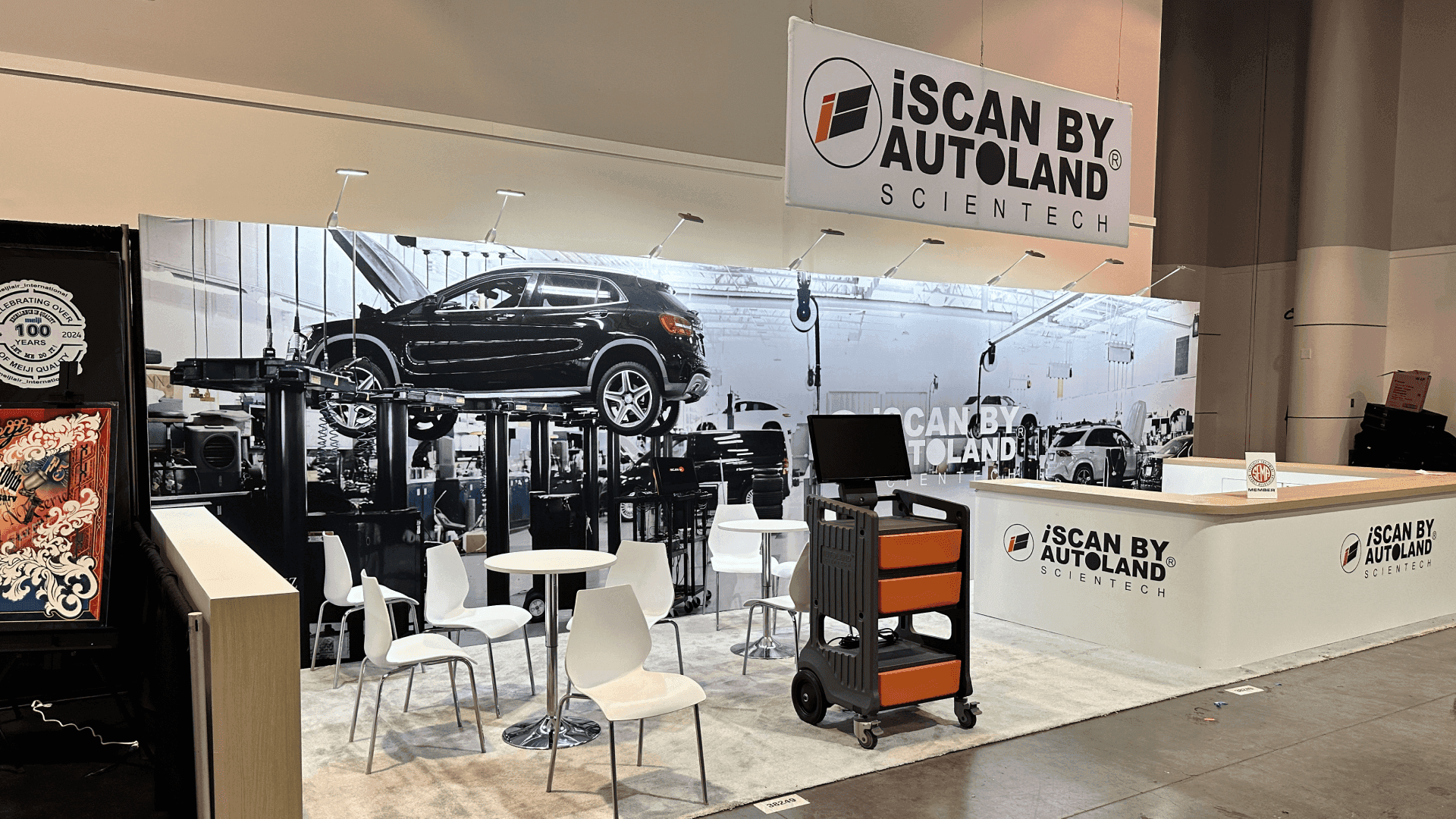
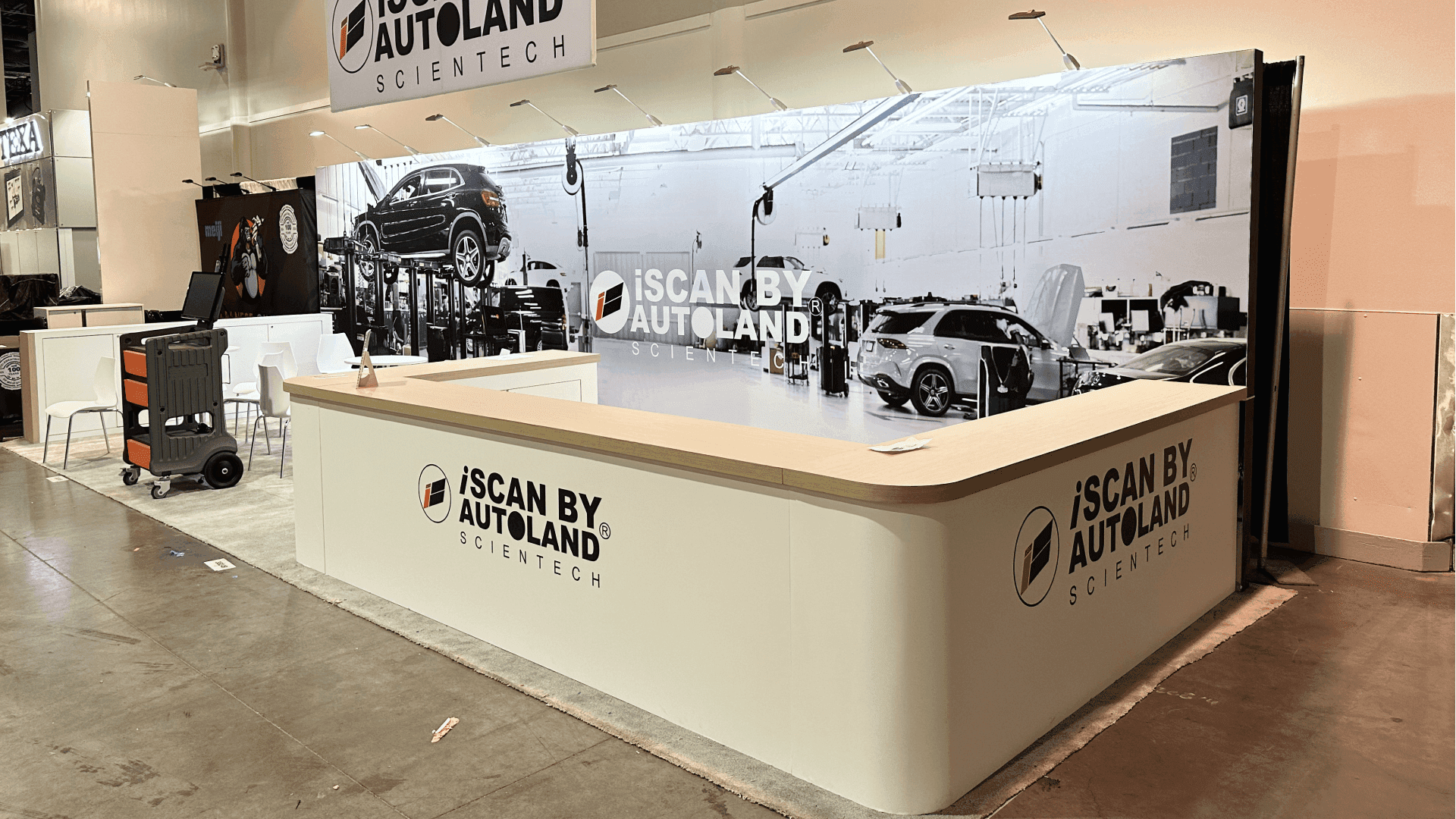
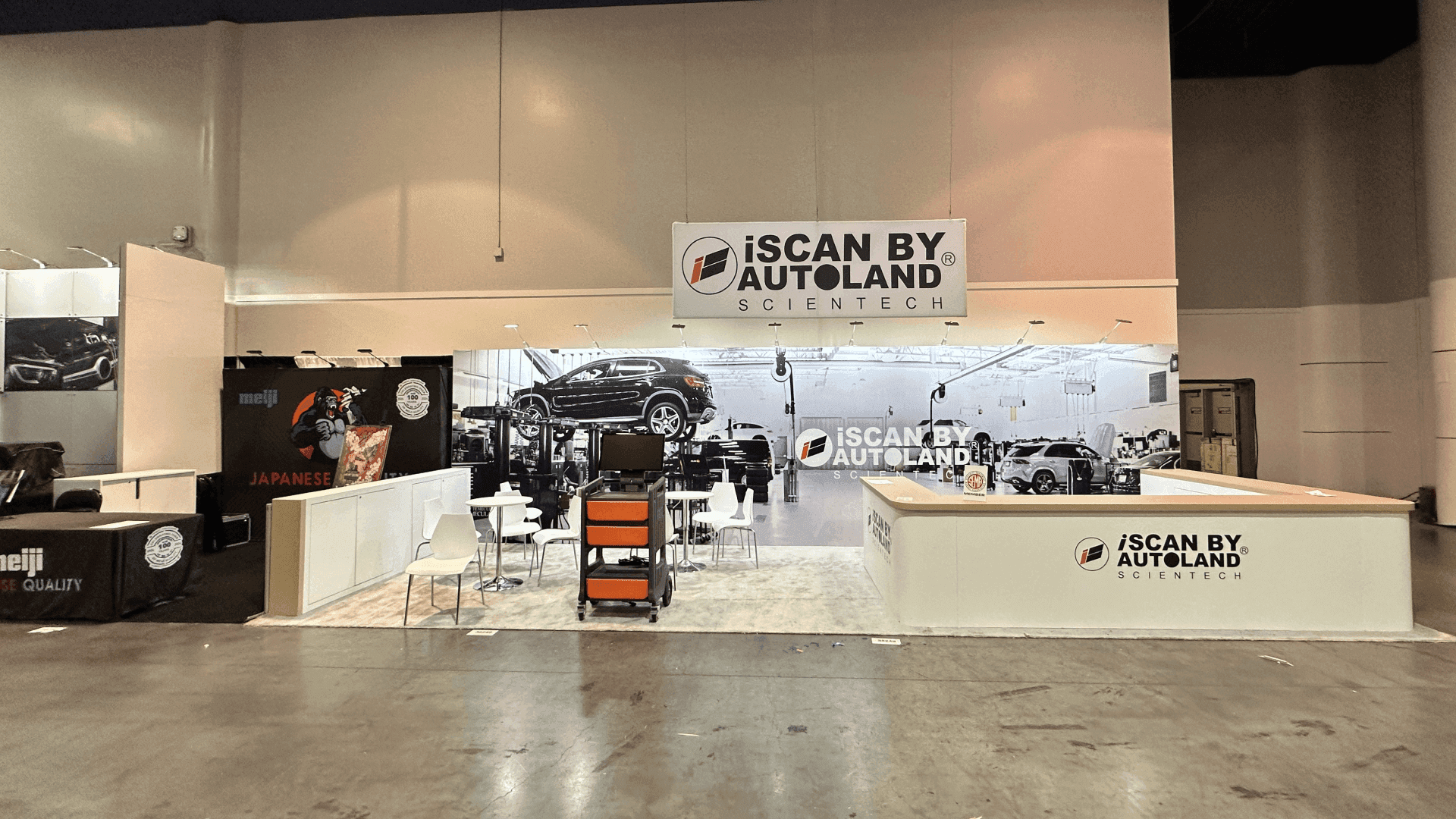
At SEMA Show 2024, iscan needed a 10×30 booth that could make technical automotive products feel clear, credible, and easy to approach inside a high-noise show environment. A narrow footprint changes how the booth performs. Instead of relying on size, the space had to use linear visibility, disciplined product placement, and clean technical messaging to pull visitors from pass-by attention into real conversation. The goal was to turn a long inline layout into a booth that felt structured rather than compressed.
Because this project was built for the SEMA show floor in Las Vegas, the booth also had to perform under real automotive trade show conditions: dense aisle traffic, short visitor attention windows, installation timing pressure, and the need to keep compact technical products legible without overfilling the space. That broader event context is why this case naturally connects to SEMA Show.

💼
Client:
📅
Year/Exhibition:
📍
Location:
📐
Size:
🏢
Industry:
🏢
Venue Context:
Challenge
The main challenge was footprint shape. A 10×30 layout offers length, but it can become visually flat or congested very quickly if too many product messages compete along the same line. For iscan, the booth needed to explain automotive diagnostics and inspection technology clearly while still feeling open enough for visitors to step in, stop, and ask questions. The space had to balance brand recognition, product visibility, and live discussion without making the aisle edge feel blocked.
The second challenge came from execution. In a product-driven inline booth, small details carry more weight: counter depth, screen placement, cable routing, display order, and clean finish lines all directly affect whether the booth feels premium or improvised. That is why this case also supports booth fabrication and pre-build checks in Las Vegas. When fixtures, mounting logic, and labeled components are solved before move-in, a narrow booth can open cleaner and perform with far more control.
Design vs. On-site Execution
The concept was built around linear clarity. Instead of trying to make the booth feel bigger than it was, the design used the long footprint to create a readable sequence: brand recognition first, product understanding second, and technical conversation third. That meant controlling where attention landed, how display surfaces were paced, and how visitors moved along the booth without feeling pushed into a single rigid path. The best use of a 10×30 space is often not density, but rhythm.
On site, that rhythm only worked because the install sequence supported it. Display elements had to stay visually aligned, powered surfaces had to feel clean, and the booth needed enough breathing room to avoid clutter at the aisle edge. In a booth like this, layout discipline and installation discipline are inseparable. The goal was not to fill every inch, but to keep the technical story readable from the first glance to the final conversation.
This project was also featured in our portfolio gallery, showcasing on-site visuals and key exhibit highlights from the event.
View the iScan booth at SEMA 2024 project gallery for real show-floor photos and visual references.
Aisle-Edge Brand Entry
The first read of the booth had to happen quickly. A clear front-facing brand zone helped visitors understand what kind of products were being shown before they committed to stepping deeper into the footprint.
Technical Product Display Run
A linear product zone gave the booth a controlled sequence for diagnostics-related displays, helping visitors move from visual recognition into more detailed explanation without getting lost in competing messages.
Live Demo Discussion Point
A focused demo position supported short, technical conversations without interrupting the rest of the booth. This gave the team a stable place to explain product use cases while keeping the aisle flow open.
Rear Support and Storage Logic
The back portion of the booth helped absorb practical needs such as materials, staff movement, and reset flow. That hidden support made the visible area feel cleaner and more intentional.
On-site Highlights
This booth worked because the execution logic protected the long, narrow footprint from becoming visually crowded. In a SEMA environment, inline booths do not have much room for correction once installation starts. Product order, screen placement, cable control, finish alignment, and clean aisle-facing presentation all shape whether the space feels organized on opening day. The following highlights show how show-floor execution helped keep the booth readable, technical, and calm under real Las Vegas conditions.
Key Design Features & Show Floor Presence
Linear Visual Hierarchy
Controlled Product Spacing
Clean Screen and Surface Integration
Open Aisle-Facing Engagement
Consistent Technical Brand Language
Outcome
The booth made technical automotive products easier to understand in a short amount of time, helping visitors move from recognition into more useful conversations.
By treating the 10×30 layout as a controlled sequence instead of forcing too much density into it, the booth felt more organized and more approachable on the show floor.
Aisle-facing clarity and focused demo points helped the team start conversations without blocking traffic, which improved booth usability during peak SEMA hours.
Because installation was planned around alignment, product order, and clean technical presentation, the booth could open in a more controlled and presentation-ready state.
A 10×30 booth does not give you much room to hide weak decisions. In a layout like this, every counter, screen, product mount, and wall surface either improves clarity or adds noise. What made this kind of booth work was not trying to force “big booth” behavior into a narrow footprint. It was treating the space as a controlled sequence: what visitors see first, where they stop, what they understand next, and how the team keeps the booth readable while conversations are happening.
Practical takeaway: if you want a narrow automotive booth to feel premium, do not solve it by adding more elements. Solve it by improving order. Product spacing, cable control, display pacing, and clean aisle-facing visibility usually matter more than visual quantity. That is also where an experienced Las Vegas trade show booth builder adds real value—by making sure the booth performs cleanly under real show-floor pressure.
Quick Q&A
Q: What breaks most 10×30 booth layouts?
A: Too many competing display moments. When every part of the booth tries to explain something at once, the footprint loses hierarchy and visitors stop reading it clearly.
Q: What is the most overlooked detail in a narrow product-driven booth?
A: Cable routing and counter spacing. If those are not controlled, the booth feels crowded quickly and even strong products become harder to evaluate.