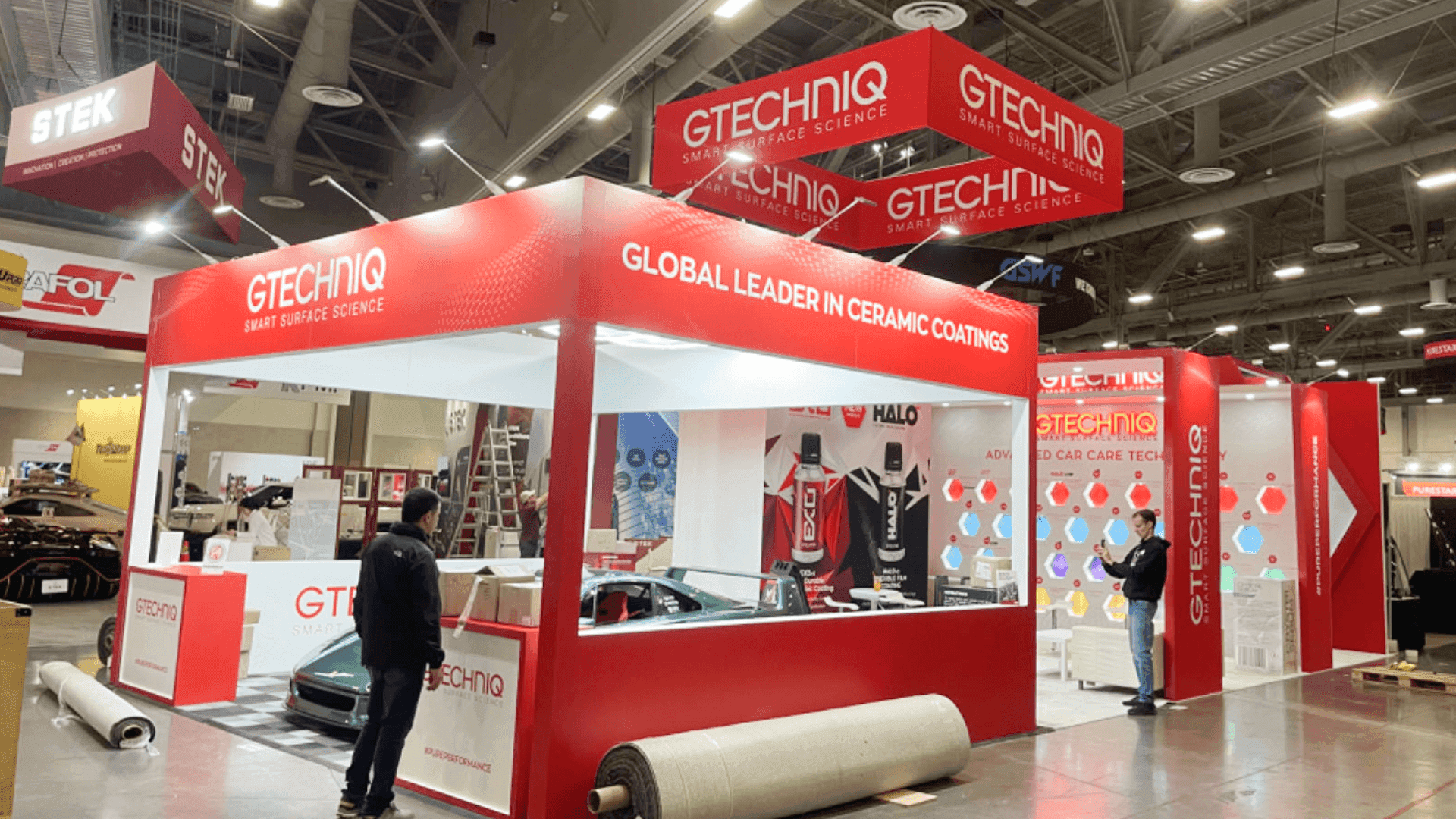
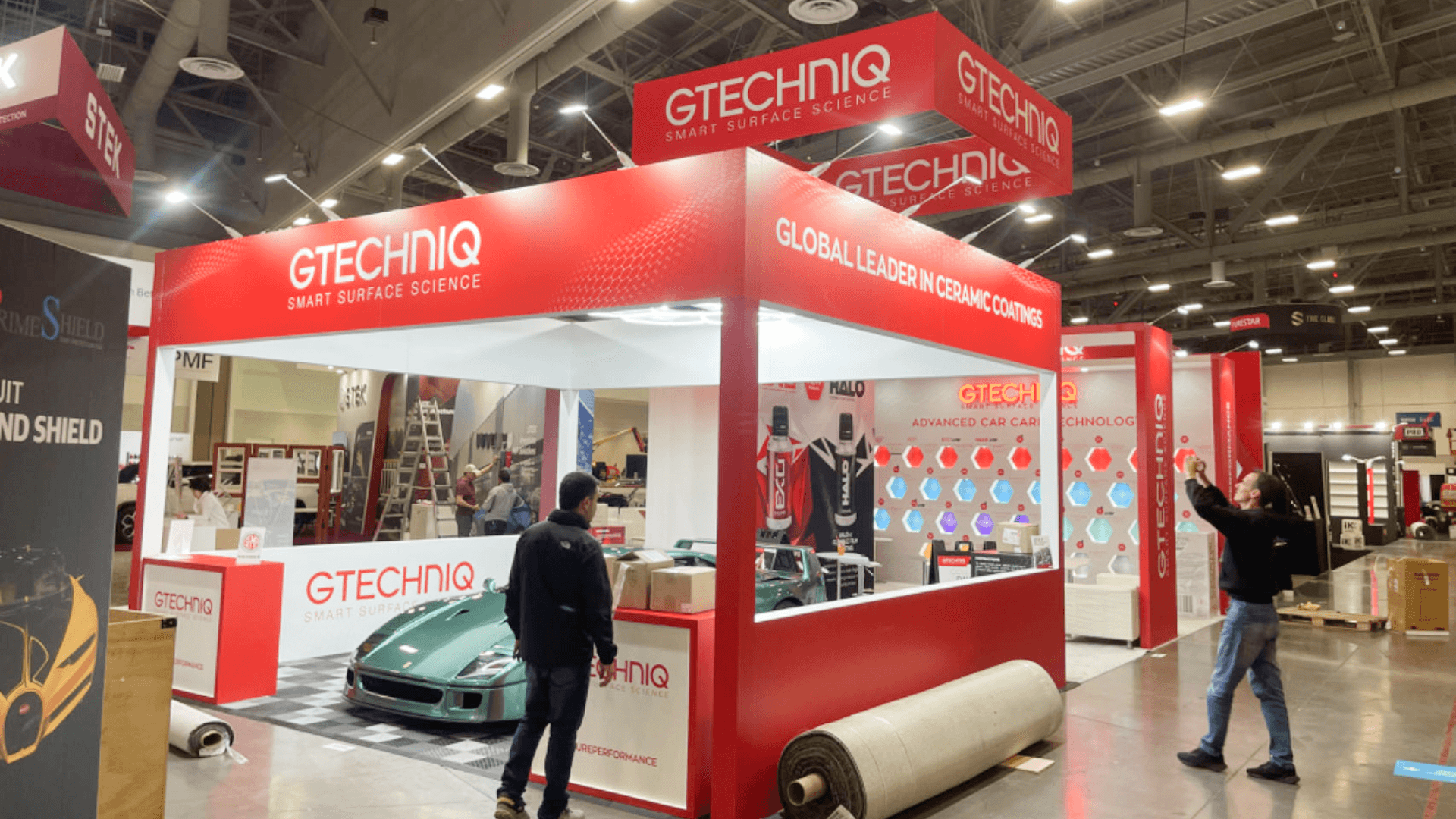
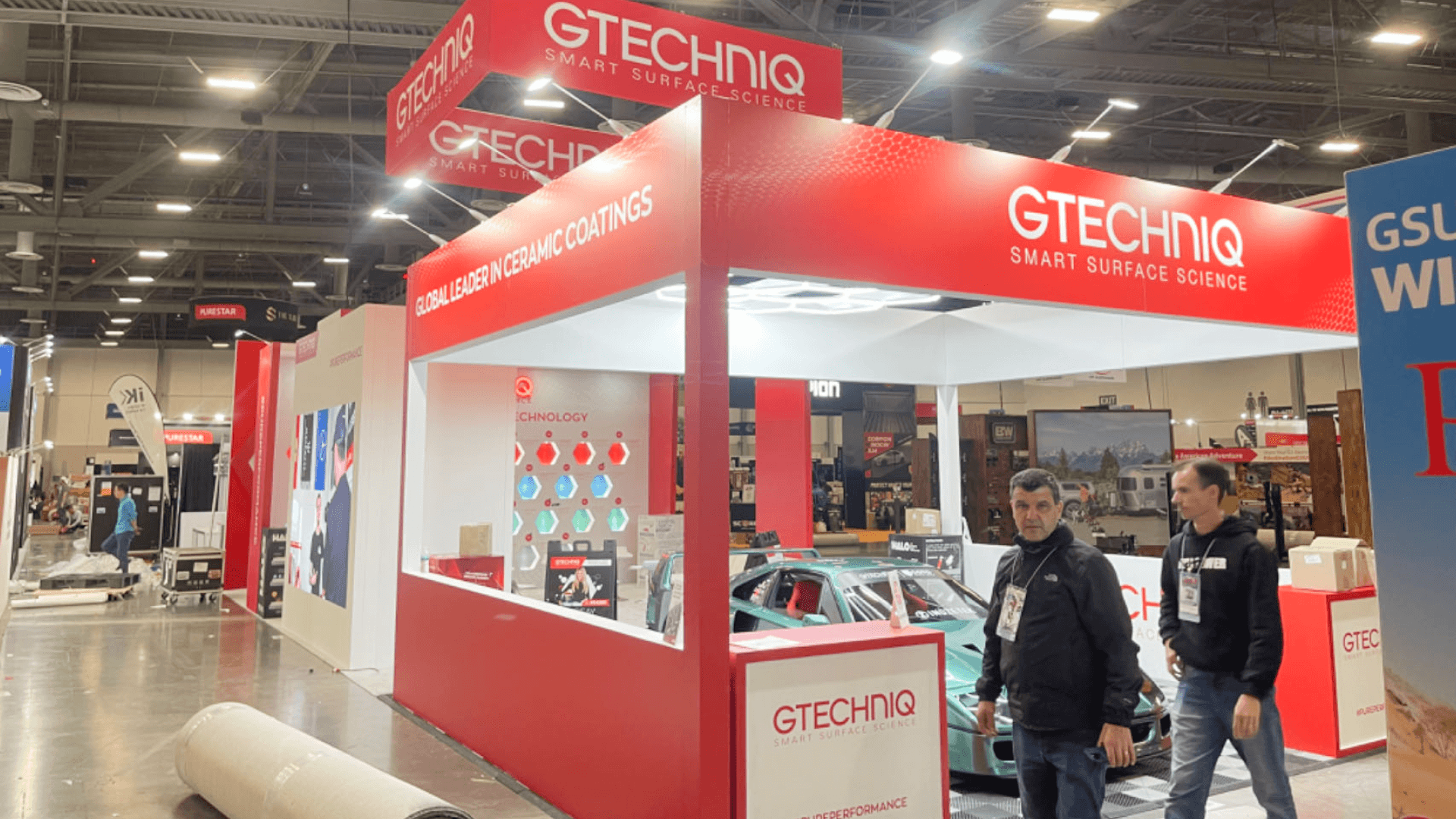
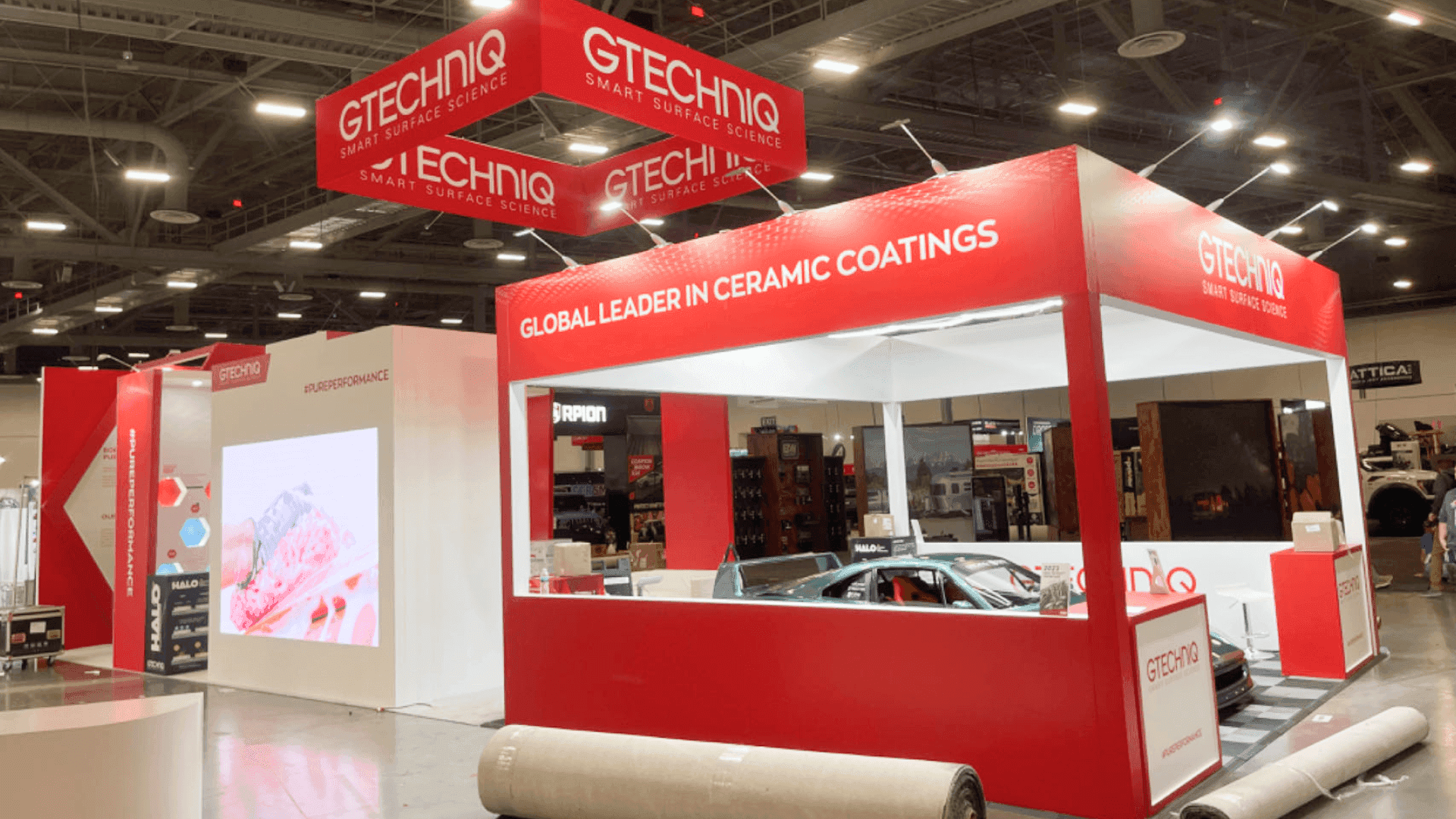
GTECHNIQ brought a large island booth to SEMA 2023, built to present ceramic coating technology, paint protection systems, and detailing performance in a way that automotive professionals could understand quickly from multiple aisles. Instead of treating the space like a simple product shelf, the booth used a suspended square sign, a full vehicle display, bold red perimeter architecture, and a large brand-led message wall to make the zone read instantly. In a car-care category where visitors compare coatings, PPF solutions, detailing systems, and installer-ready product lines in one pass, the booth had to feel technically credible while still staying open enough for movement around the vehicle. GTECHNIQ’s official positioning as Smart Surface Science and its official product direction in ceramic coatings and protective surface technologies support that booth logic.
Because SEMA traffic is vehicle-led and merchandise-heavy, we treated sightlines, vehicle visibility, product-wall readability, and overhead recognition as part of the booth system from day one. That allowed the space to support walk-up product inspection, installer conversations, and technical explanation without turning the front edge into a bottleneck. For a footprint like this, the real value of a 30x30 booth size guide is not just more area. It is having enough room for a real car display, product storytelling, and meeting flow without collapsing the island into a crowded red box. Circle Exhibit’s SEMA page specifically notes that 30×30 is a common working size for vehicle-display booths with product walls and meeting touchpoints.
To keep the installation predictable at LVCC, we planned the booth around vehicle staging, overhead sign timing, structure-first sequencing, and the practical order needed to get the car, product graphics, and display zones ready before traffic built. That same execution logic is why this case also connects naturally to logistics and pre-show coordination, because automotive booths with vehicles and heavy components depend on drayage timing, controlled vehicle access, and labor sequencing long before the show opens.
💼
Client:
📅
Year/Exhibition:
📍
Location:
📐
Size:
🏢
Industry:
🏢
Venue Context:
Challenge
The main challenge was balance. GTECHNIQ needed the booth to feel powerful and unmistakable from distance, but this kind of coating and protection brand can become visually repetitive very quickly if every wall just says the same thing louder. The booth had to support a real car display, coating technology storytelling, product-family recognition, and installer-facing conversations in one environment. Visitors needed to understand immediately that the brand was about premium surface protection, but the space also had to hold enough structure for more detailed discussion around ceramic coatings, PPF compatibility, and detailing use cases. GTECHNIQ’s official site supports that technical direction with product lines built around ceramic coatings, hydrophobic protection, and film-focused solutions such as HALO.
The second challenge came from execution. Once a booth depends on a real vehicle, suspended signs, a large red perimeter structure, and a product-tech wall, it stops being a simple display and becomes a sequencing problem. The car cannot go in at the wrong time. The graphics cannot land late. The structure has to establish the booth’s read before the smaller details go in. That is why this case also supports booth fabrication and pre-build checks in Las Vegas. In a booth like this, what protects the result is not just design intent. It is the ability to prebuild, label, stage, and install in the right order so the island stays sharp from the first aisle view to the final closeout. SEMA’s official guidance around vehicle access, heavy freight, and labor coordination makes that execution requirement especially relevant.
Design vs. On-site Execution
The concept was built around one clear priority: the booth had to read like a serious automotive protection brand before anyone stopped to ask a question. That is why the structure used one dominant red language, a suspended square sign, an open vehicle bay, and a strong internal product wall to organize the story around ceramic coatings, paint protection, and advanced car-care technology. The car acted as proof, not decoration. The overhead sign handled long-range visibility. The perimeter architecture gave the booth a clean frame so the island could feel bold without becoming visually messy.
On site, that concept only worked because the install sequence protected the same hierarchy. The hanging sign had to establish the booth from distance, the main fascia had to lock the perimeter read, and the vehicle zone had to stay open enough for visitors to look in without blocking circulation. In a footprint like this, layout logic and installation order are inseparable, which is exactly why a 30x30 booth size guide is the right structural reference for this kind of SEMA island. The goal was not just to build a large red box. It was to make a vehicle-led brand space feel disciplined, readable, and operational under real show-floor traffic.
Open Vehicle Display Bay
The central car display gave the booth an immediate automotive anchor and helped visitors understand the coating and protection context before they reached the product wall.
Suspended Brand Recognition Zone
The square hanging sign gave the booth long-range visibility across the hall, helping the island read clearly before visitors reached the fascia or vehicle zone.
Ceramic Technology Product Wall
A product-led wall with large-format visuals and technical messaging helped the booth move from emotional brand impact into coating-specific product explanation.
Installer Conversation Edge
The front and side counters gave the team room for short, practical conversations with installers, buyers, and detailers without interrupting the vehicle view or blocking traffic.
On-site Highlights
This booth worked because the execution system protected the same qualities that made the concept effective: vehicle visibility, long-range identity, and clean product storytelling. In a SEMA environment, booths with a real vehicle, suspended signage, and a large island perimeter depend on correct staging, freight order, labor timing, and closeout discipline. The following highlights show how show-floor execution helped keep the GTECHNIQ booth structured, readable, and operational under real LVCC conditions. SEMA’s official exhibitor guidance also makes clear that vehicle displays and heavy components require tight control over access timing, drayage, and installation sequencing.
On-Site Execution Highlights
Rigging + Suspended Sign Coordination
Vehicle Staging + Display Position Control
Drayage + Staged Delivery for Structure-First Build
Union Labor Sequencing + Finish Protection
Install Closeout + Show-Ready Vehicle Bay
Outcome
The suspended sign and perimeter fascia made the booth easy to identify from distance, helping GTECHNIQ stand out in a visually crowded automotive hall.
By anchoring the booth with a real car and then framing the coating story around it, the space made product relevance easier to understand at a glance.
The open island layout allowed short product conversations and deeper buyer discussions to happen without collapsing the booth into a single front counter.
Because the booth was planned around vehicle staging, suspended branding, and install order, it could open in a cleaner and more operational condition for heavy SEMA traffic.
What made this booth effective was not just the red structure or the hanging sign. It was the fact that the vehicle sat inside a controlled brand system. At SEMA, that matters more than just making noise. Visitors do not want to decode a booth for thirty seconds before they know what the brand is about. They want to see the category, see the proof, and understand the product logic quickly. By giving GTECHNIQ a real car, a strong suspended identity, and a dedicated ceramic-technology message wall, the booth turned coating performance into something visible and easy to approach. GTECHNIQ’s own product positioning around ceramic coatings, paint protection, and HALO for PPF supports that kind of vehicle-first booth logic.
Practical takeaway: if a car-care brand needs to support vehicle display, coating storytelling, and installer conversations at the same time, do not solve it by adding more graphics. Solve it with hierarchy. The strongest booths are the ones where the overhead identity, the vehicle bay, the product wall, and the install order already work together before the hall opens. That is also where an experienced Las Vegas trade show booth builder adds real value—by making sure the booth reads clearly from distance and still performs cleanly under real SEMA show-floor pressure. SEMA’s official venue guidance around heavy freight, vehicle access, and multi-day booth operations reinforces that conclusion.
Quick Q&A
Q: Why did this booth rely so heavily on a real vehicle?
A: Because the vehicle gave immediate proof of the product category. For a ceramic coating and paint-protection brand, the car makes the coating story legible before the technical explanation begins.
Q: What made the suspended sign important here?
A: In a large SEMA hall, suspended signage helps a booth hold long-range recognition and gives the island a clear identity before visitors reach the product wall.
Q: What execution factor matters most for a booth like this?
A: Sequence control. When the sign, structure, vehicle, and product zones do not install in the right order, the booth loses clarity fast.
Q: Why is vehicle staging such a big issue at SEMA?
A: Because SEMA official guidance makes clear that vehicle displays require controlled access timing, freight coordination, and safe positioning on the LVCC show floor.
Q: What is the most overlooked detail in a large car-care island booth?
A: Visual restraint. Even in a bold booth, too many competing product messages can weaken the core read. This booth worked because it let the structure, the car, and the coating wall do distinct jobs.


