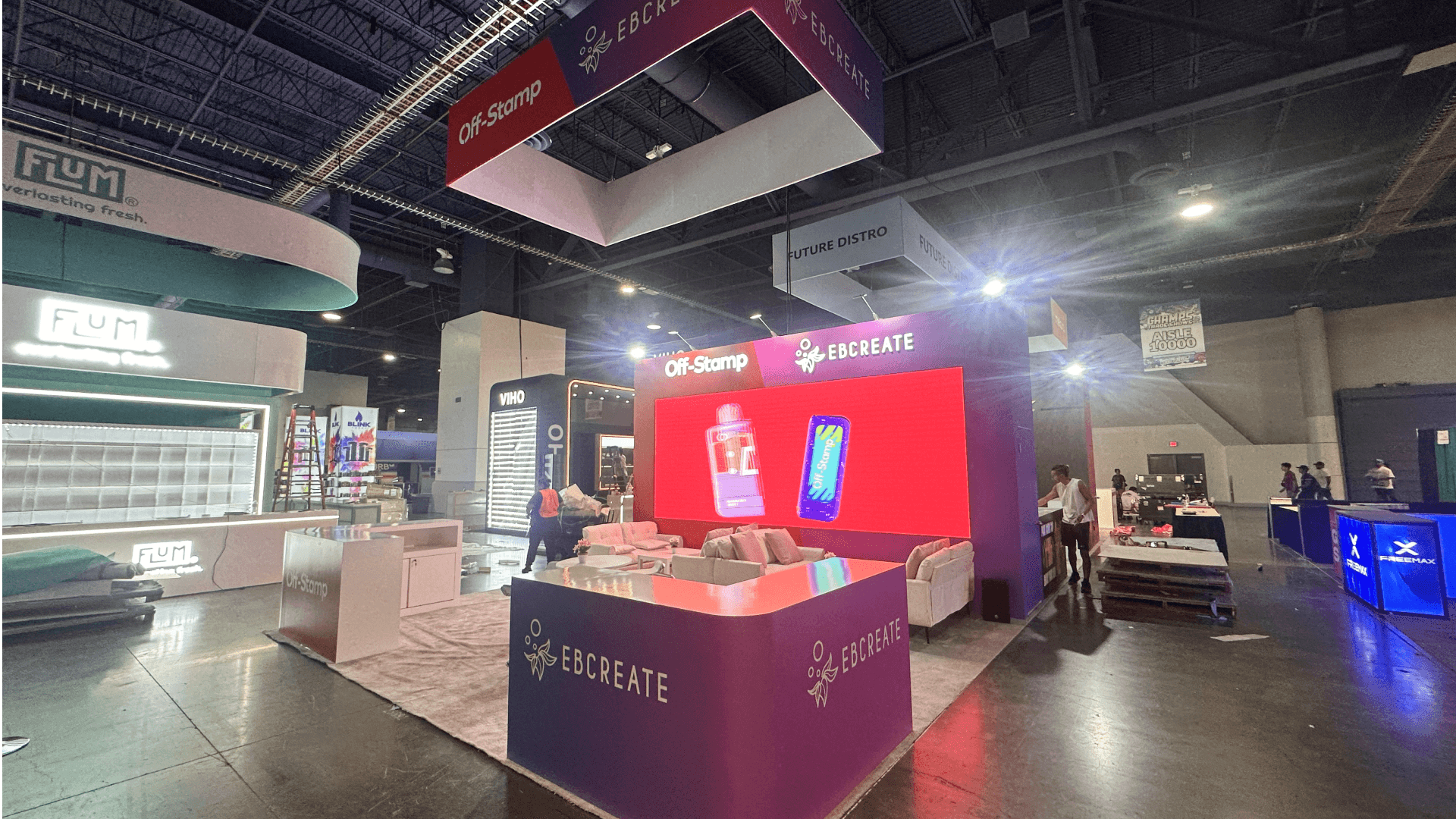
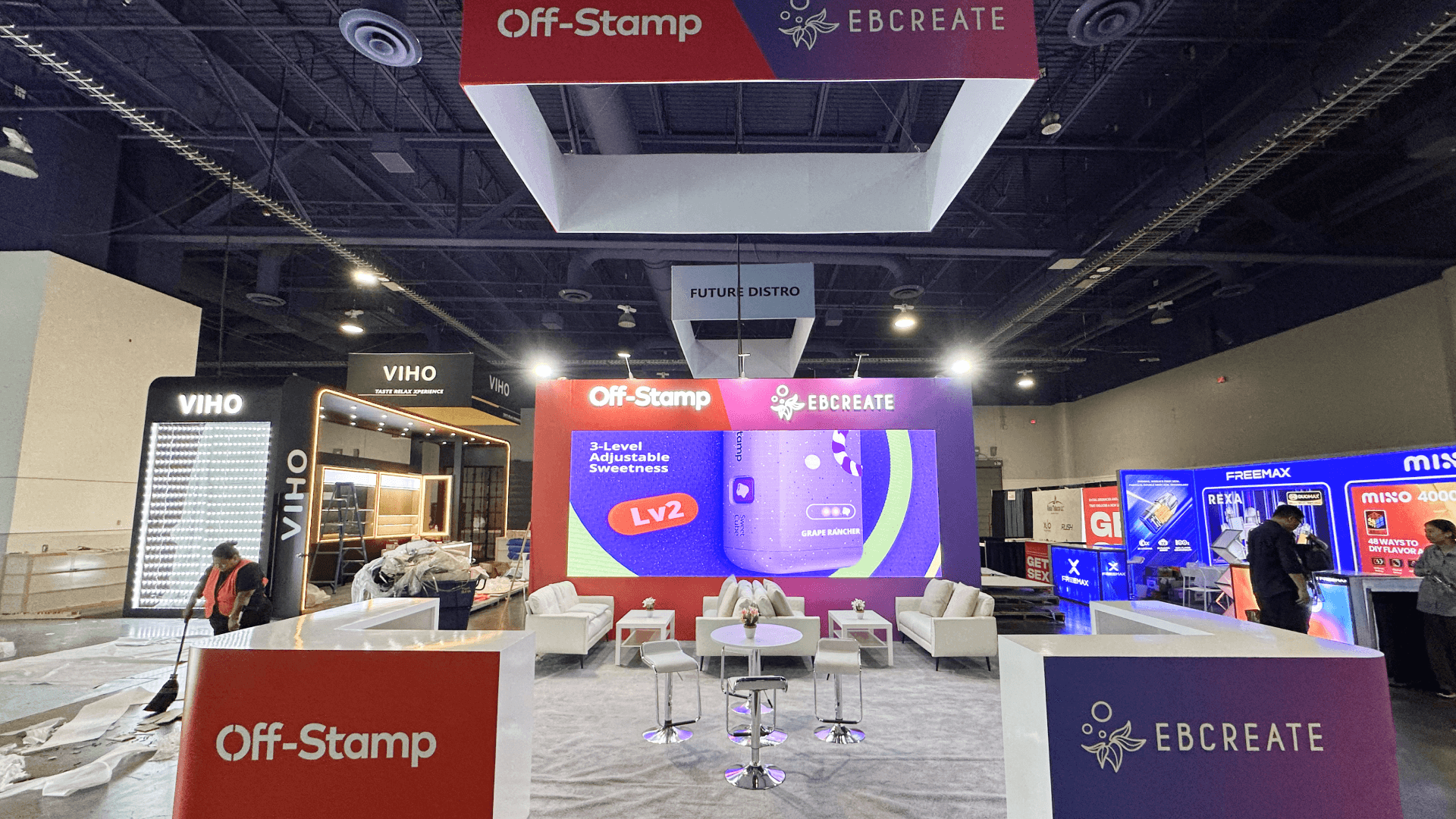
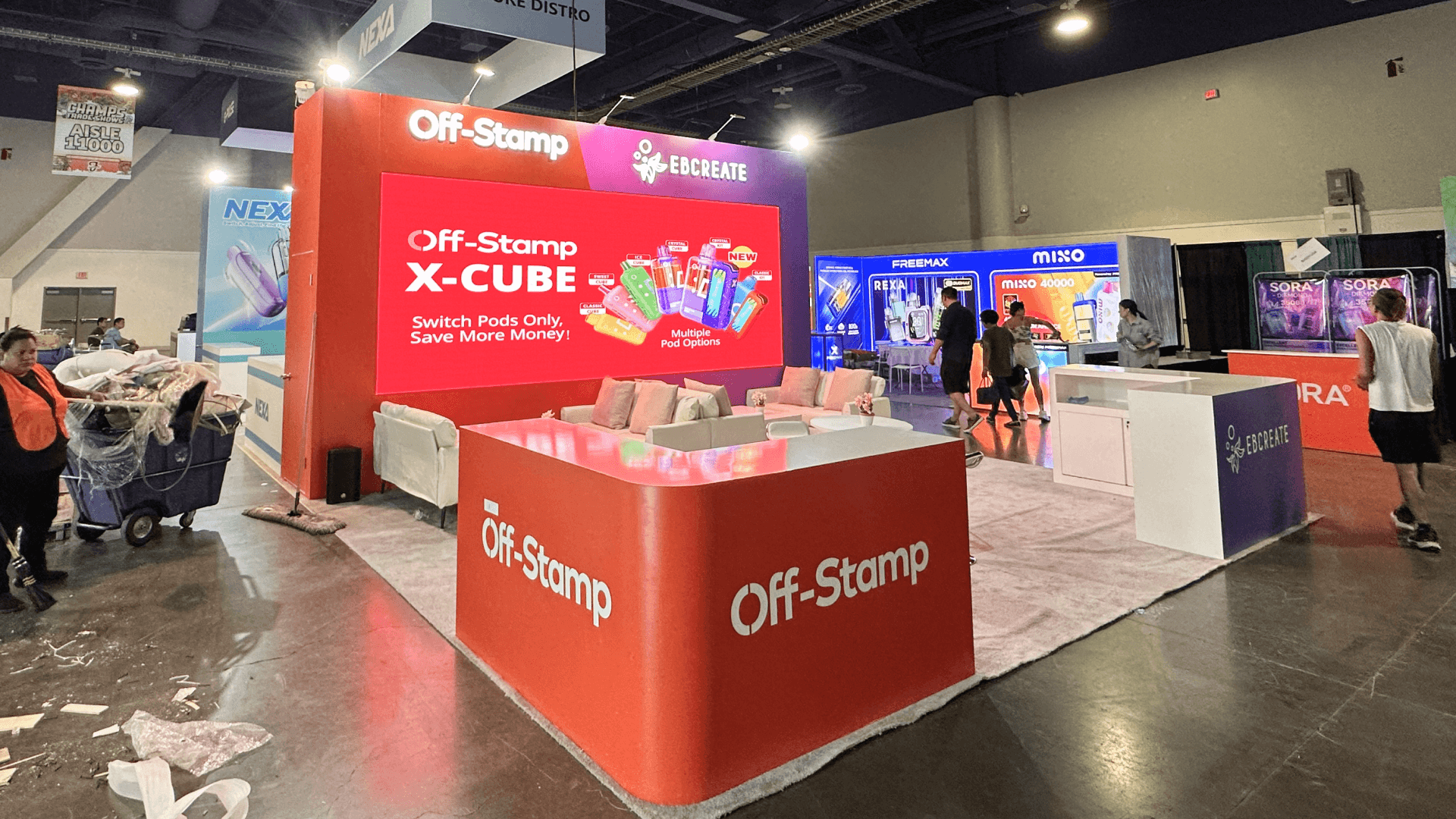
Geekbar brought a 20×60 island-style presence to CHAMPS Las Vegas 2025 with one clear goal: make the booth readable from long aisles while keeping product demos and retail-style interactions moving without bottlenecks. The build was planned around a large-format LED content wall, a suspended brand sign for overhead visibility, and a perimeter layout that kept scanning, sampling, and staff movement clean during peak traffic.
Because this was a Las Vegas show, execution details mattered as much as design: union labor call times, drayage release windows, and move-in scheduling shaped how we sequenced rigging, power drops, and final punch-list. For exhibitors preparing a similar Las Vegas build, our Las Vegas trade show booth builder team typically starts with install timing and freight flow, then works backward into structure and graphics so the booth looks “finished” the moment doors open.
This project was built for a CHAMPS Las Vegas booth environment where high-SKU product display, branded graphics, and buyer conversations needed to stay clear on a busy show floor.
💼
Client:
📅
Year/Exhibition:
📍
Location:
📐
Size:
🏢
Industry:
🏢
Venue Context:
Challenge
A 20×60 footprint gives you presence—but at CHAMPS it also creates a traffic problem if the booth doesn’t “read” instantly. The client needed long-range branding and a content-first hero moment, while still leaving enough open floor for scanning, quick conversations, and product touchpoints.
The key execution challenge in Las Vegas was timing: we had to align drayage availability, union labor scheduling, and the order of operations for overhead elements. The LED wall demanded clean power and data routing, and any late change to rigging or cable paths would ripple into finish work. To reduce risk, we treated the install like a controlled sequence rather than a single “big push,” staging components for fast set, quick testing, and predictable closeout.
Design vs. On-site Execution
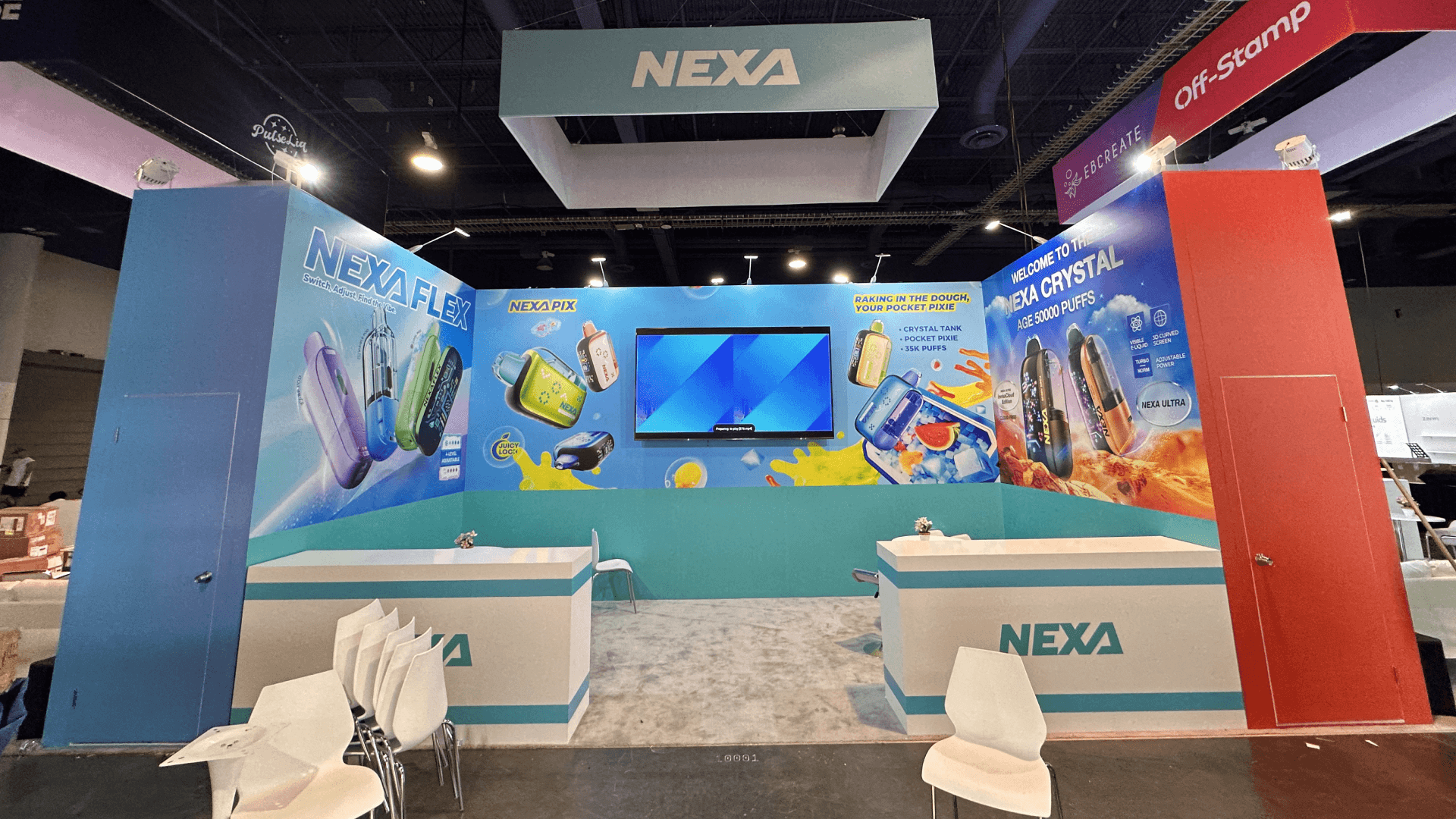
The concept focused on two things: (1) a bold brand envelope visible across aisles, and (2) an interior that felt open, not crowded. On-site, that meant prioritizing straight sightlines to the hero content wall and keeping counters and lounge elements off the main flow path.
Execution turned the concept into a checklist: pre-planned cable paths, defined “test points” for LED content, and a finish schedule that protected high-touch surfaces during move-in. If you’re planning a large-format island build, it helps to anchor the plan around on-site installation & dismantle requirements first—especially when rigging, power drops, and union coordination dictate what can happen (and when).
Zone 1 — Overhead Branding + Long-Aisle Recognition
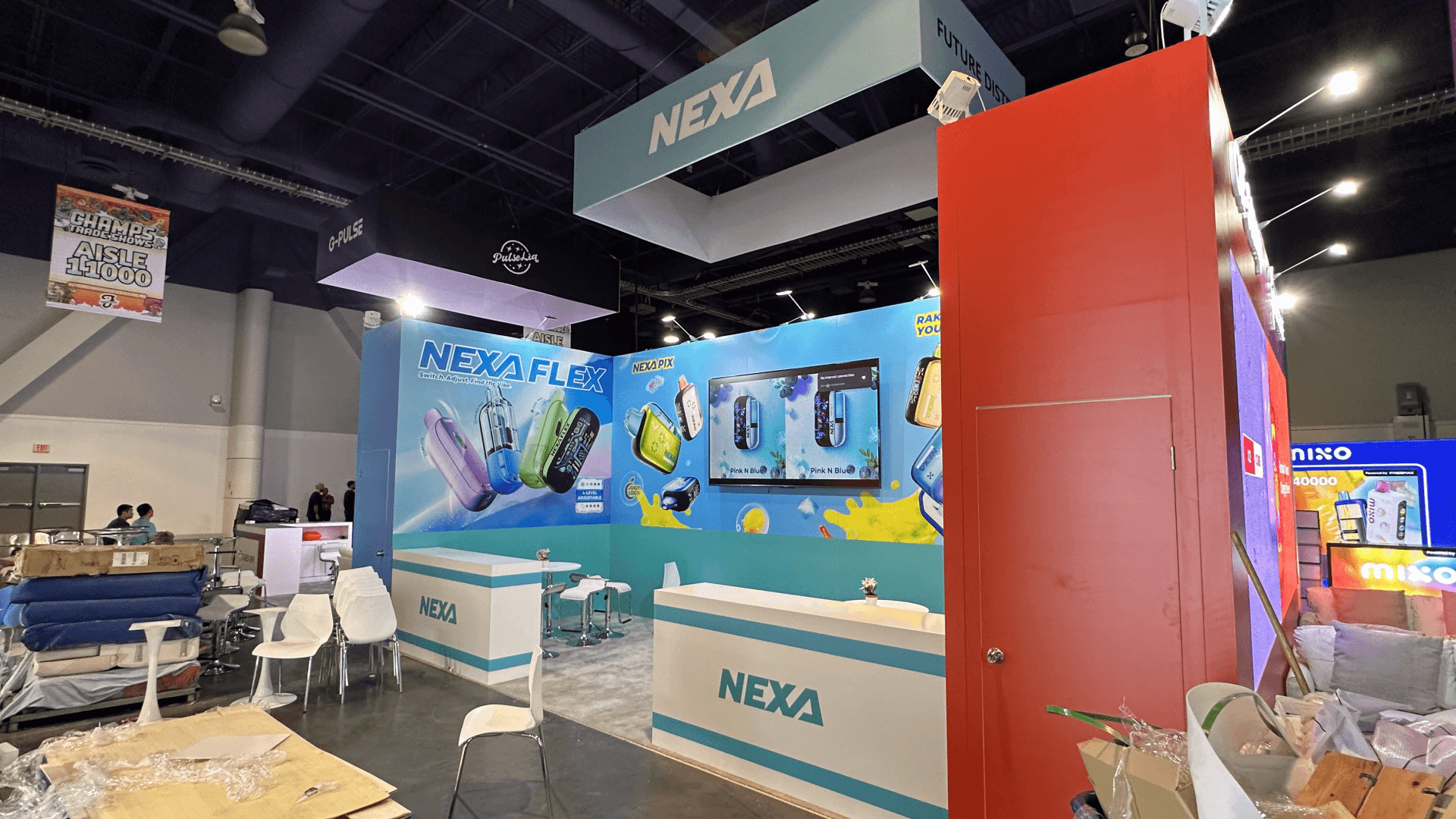
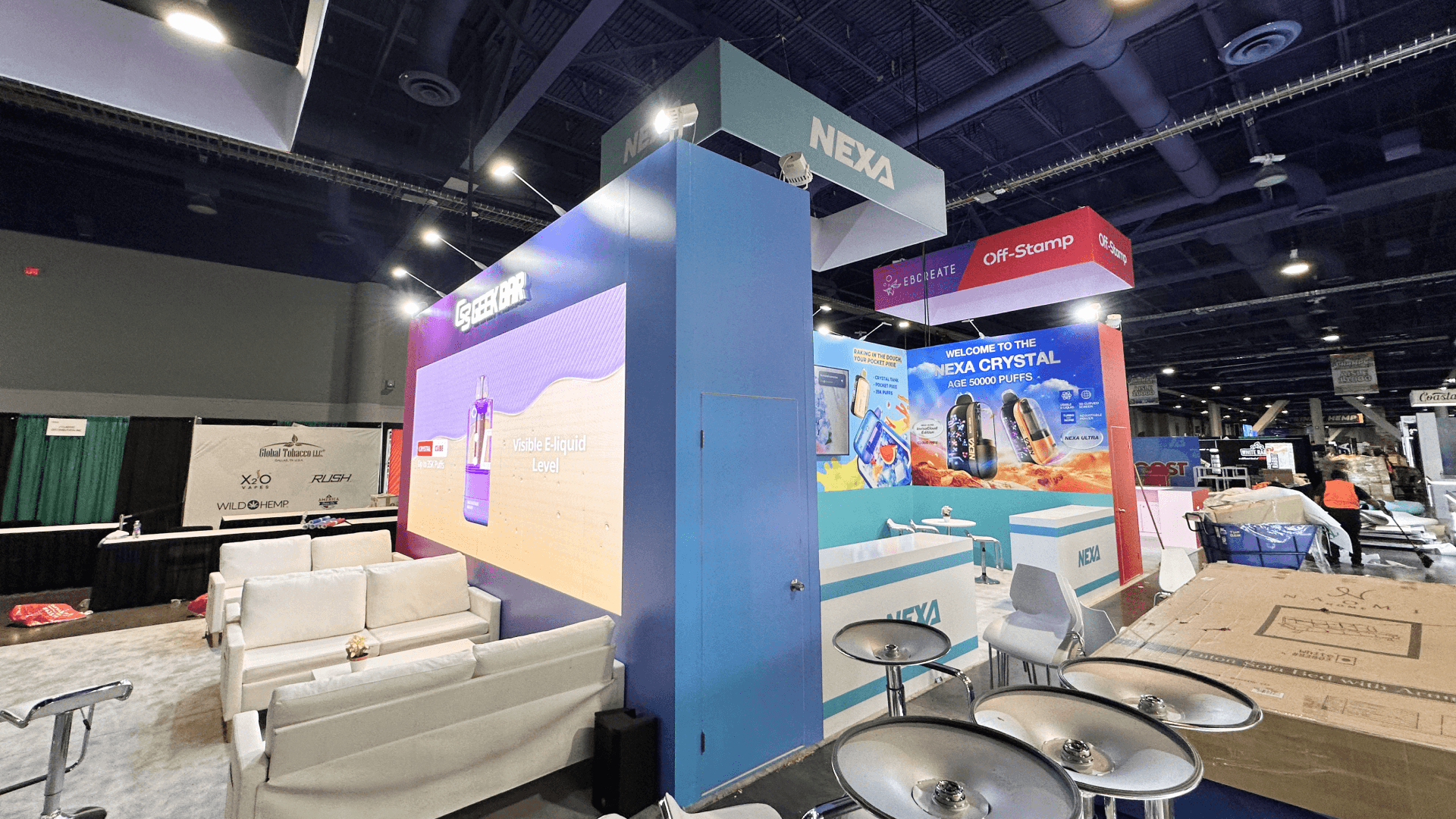
A suspended cube sign and tall perimeter walls established brand recognition from multiple approach angles. The zone was planned with clear overhead clearance, rigging alignment, and a “no-visual-noise” ceiling line so the booth stayed readable even in crowded aisles.
Zone 2 — LED Content Wall + Product Storytelling
The LED wall acted as the booth’s anchor—built for quick content swaps and strong daytime visibility. Power and data routing were kept clean and serviceable, with access planning that didn’t disrupt the client’s live operations once the show opened.
Zone 3 — Demo & Counter Interaction Without Bottlenecks
Counters were positioned to keep the main aisle edge open while still allowing fast product handoffs and short conversations. The layout intentionally avoided “dead corners” so staff could reset displays and manage lines without blocking walkways.
Zone 4 — Lounge / Meeting Pockets + Back-of-House Discipline
Soft seating created a calmer zone for longer talks, while keeping storage and operational clutter out of sight. The install plan protected carpet and seating surfaces during move-in, then finished with a tight punch-list to keep edges, lighting, and graphics crisp.
On-site Highlights
Rigging Coordination + Hanging Sign Alignment (LVCC)
Union labor coordination for overhead points and sign positioning so the cube stayed centered and readable from cross-aisles.
Power & Data Routing for the LED Wall
Planned cable paths and clean terminations to support reliable playback, quick testing, and a tidy serviceable finish.
Drayage Staging + Move-in Window Control
Freight and crates staged to match install sequence, reducing floor congestion and preventing “re-handle” delays.
Install Sequencing + Surface Protection
Structural set first, then electrical/AV test, then finish work—protecting high-touch counters and carpet before final wipe-down.
Punch-List Closeout + Aisle-Edge Cleanliness
Final walk-through focused on edge lines, lighting consistency, and removing visual clutter so the booth looked “open” and premium at doors.
Design Highlights — Brand Readability Meets Demo Efficiency
Overhead cube sign + tall perimeter walls for long-range visibility
LED wall as the hero storytelling surface
Open aisle-edge planning to prevent crowd compression
Counter + lounge zoning for two conversation speeds
Finish discipline under a tight Vegas move-in schedule
Outcome
Overhead branding + hero wall made the booth easy to spot and easy to understand at a glance.
Layout and counter placement protected flow during peak CHAMPS foot traffic.
Sequenced rigging, power, and finish work to reduce rework and protect final quality.
Clean edges, consistent lighting, and clutter control supported a premium brand impression.
Large booths fail when they try to do everything at the aisle edge. This one worked because the booth told a simple story from far away, then gave visitors a clear next step once they arrived—watch content, try product, talk, move on. In Las Vegas, the “design” is also the install plan: if rigging, power, and drayage aren’t mapped early, the booth looks rushed. For exhibitors scaling up beyond standard footprints, it’s helpful to reference a large-build baseline like 30×40 booth planning —then expand the same logic to your 20×60 flow and staffing.


