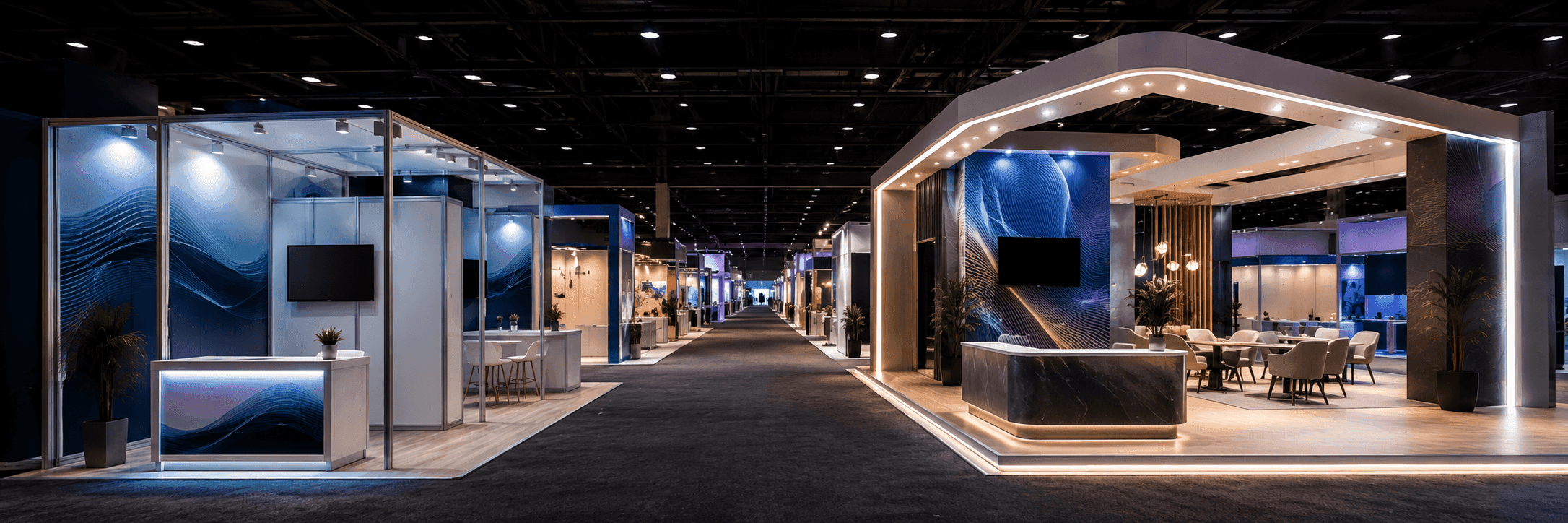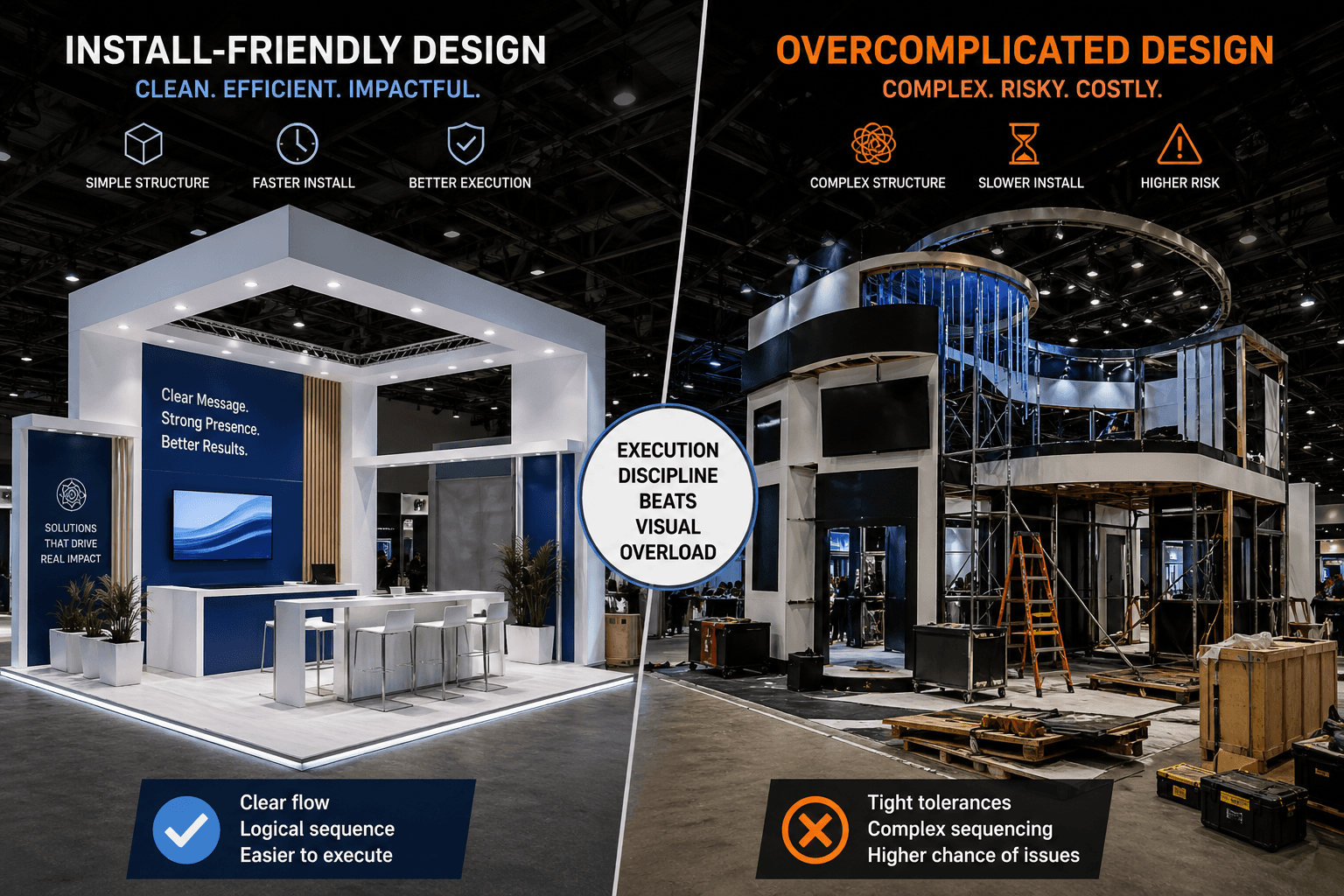
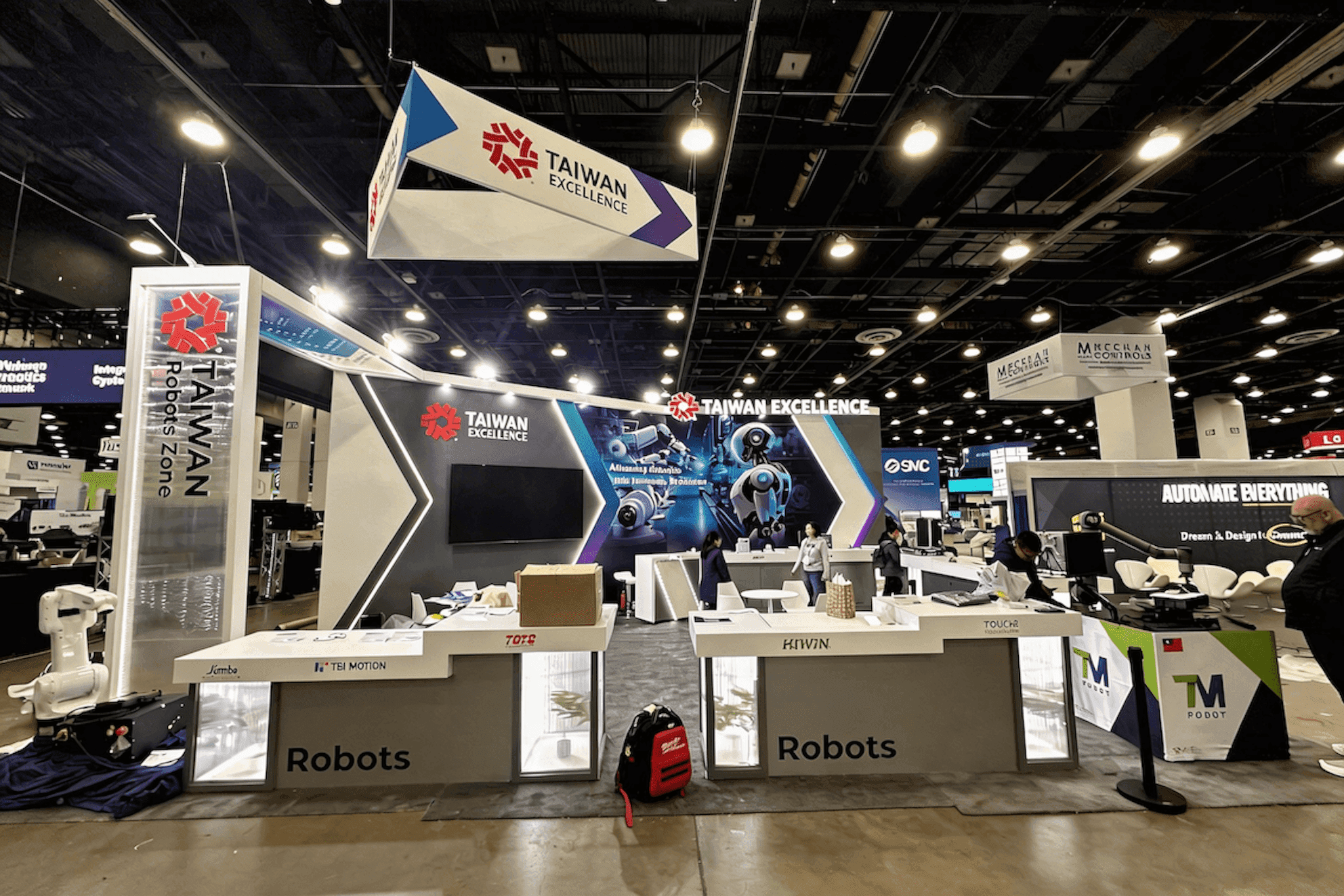
Split comparison of an install-friendly trade show booth and an overcomplicated booth structure, showing how cleaner design improves execution and setup control

Why Install-Friendly Booth Design Usually Outperforms Visual Complexity

Why Install-Friendly Booth Design Usually Outperforms Visual Complexity

Circle Exhibit Team

Industry professionals

Exhibition industry professional dedicated to delivering the latest insights and curated recommendations to you.

Exhibition industry professional dedicated to delivering the latest insights and curated recommendations to you.

Execution discipline often beats visual overload. A booth that installs cleanly, protects sequence, and supports field decisions usually performs better than one that looks ambitious but becomes harder to build, finish, and manage.

Execution discipline often beats visual overload. A booth that installs cleanly, protects sequence, and supports field decisions usually performs better than one that looks ambitious but becomes harder to build, finish, and manage.

Execution discipline often beats visual overload. A booth that installs cleanly, protects sequence, and supports field decisions usually performs better than one that looks ambitious but becomes harder to build, finish, and manage.

The most impressive booth is not always the one with the most going on

A lot of exhibitors still assume that more visual complexity means more impact.

More layers.
More structure.
More reveals.
More transitions.
More surfaces trying to prove that the booth is premium, custom, or unforgettable.

Sometimes that works.

But very often, the booth that performs better is the one that was easier to build correctly.

That is the part many teams underestimate.

A booth does not only need to look strong in concept.
It needs to survive the real conditions of move-in, finishing, adjustment, and live show use.

That is where install-friendly design usually wins.

Visual ambition becomes expensive when the field has to carry too much of it

Most complex booths do not fail because the idea was wrong.

They struggle because too much of the design’s success depends on everything going perfectly on the floor.

That usually creates pressure in areas like:

  • tight install tolerance

  • complex sequencing

  • too many visible transitions

  • finish surfaces that appear too early

  • structure that leaves little room for adjustment

  • overlapping work zones that increase rework risk

A booth can still get built under those conditions.

The question is whether it gets built cleanly, predictably, and with enough control left for the final stage to look the way the design promised.

That is why install-friendliness matters.

Install-friendly does not mean generic

This is an important distinction.

An install-friendly booth is not a boring booth.
It is not a low-effort booth.
And it is not a booth with no design ambition.

It is a booth whose ambition has been translated into something the field can actually execute well.

That usually means the design has made smarter decisions about:

  • what truly needs structural complexity

  • where visual emphasis should happen

  • which surfaces matter most

  • how parts should sequence

  • where adjustment needs to remain possible

  • how to protect clarity instead of stacking unnecessary difficulty

That is not less design.
It is more disciplined design.

Complexity often creates its own bottlenecks

This is where booths start losing momentum.

A visually overloaded booth often asks too many sensitive things to happen at once.

For example:

  • structure must settle before lighting can align

  • graphics depend on panels that are still being adjusted

  • trim details cannot finish until nearby systems stop moving

  • one reveal blocks access to another zone

  • the booth looks almost ready, but still behaves like an active construction site

None of this may be dramatic on its own.

But together, it slows the project down and makes the final finish more fragile.

That is why complexity often creates hidden labor pressure even before the show opens.

Simpler structure usually protects the best parts of the booth

A stronger booth often wins by deciding what should feel special and what should simply work.

That usually leads to a better hierarchy:

One or two strong visual moments

Instead of five or six competing ones.

Cleaner structure

Instead of multiple forms that fight for attention and install space.

Better finish control

Instead of more surface changes than the field can refine properly.

Clearer sequence

Instead of a booth that looks exciting in renderings but needs perfect choreography to finish correctly.

This is where install-friendly design becomes a performance advantage, not just an operations preference.

The field usually reveals whether the design was honest

This is the real test.

Once the booth reaches the floor, the design no longer lives in isolation. Now it has to survive:

  • freight timing

  • staging pressure

  • labor overlap

  • finishing sequence

  • access constraints

  • venue conditions

  • real adjustment under real time pressure

That is when the difference becomes obvious.

A cleaner booth often keeps tightening as the install moves forward.
A visually overloaded booth often keeps reopening itself.

That is usually the clearest sign that the design asked too much from the wrong stage of the project.

Logistics pressure exposes bad complexity quickly

This is where logistics and pre-show coordination matter.

A booth that depends on too many sensitive phases usually becomes much more vulnerable once freight timing, floor pressure, and access conditions begin affecting the sequence.

That can show up as:

  • the wrong materials arriving into unstable conditions

  • too many zones becoming active at once

  • delicate finishes needing protection too early

  • the center display getting trapped before the booth is truly ready

  • crews solving spacing issues that were actually design issues

A more install-friendly booth usually handles logistics better because its structure is clearer, its sequence is calmer, and its critical moments are easier to protect.

Graphics often suffer when the structure is doing too much

This is another reason visual overload can backfire.

A booth may have strong graphics and brand presentation in theory, but if the structural environment is too busy or unstable, the graphics have less room to succeed.

That usually happens when:

  • too many surfaces compete for message priority

  • sightlines are broken by unnecessary depth changes

  • graphics install timing gets pushed too late

  • the booth needs the messaging to rescue structural confusion

  • the final read becomes slower because the eye has too much to sort through

A cleaner design often gives the graphics more power, not less.

Because the message has a more stable and more readable place to live.

Fabrication quality becomes easier to protect in a cleaner booth

This is where booth fabrication and prebuild checks matter too.

A complex booth may be beautifully fabricated and still become harder to execute cleanly if too many transitions, finish dependencies, or assembly conditions remain sensitive all the way into install.

A more install-friendly booth usually gives fabrication a better chance to show up well on site because:

  • fit conditions are easier to maintain

  • prebuild lessons translate more clearly to field logic

  • packing and sequencing become more stable

  • the final finish depends less on perfect recovery under time pressure

That does not mean the booth becomes visually plain.

It means the craftsmanship has a better chance to stay visible instead of getting buried inside avoidable field stress.

Builder logic usually favors clarity over visual noise

This is one reason exhibitors benefit from working with a Las Vegas trade show booth builder that understands the difference between what looks complex and what performs well.

Because builder logic asks different questions than pure concept logic.

For example:

  • What will slow the install down?

  • What needs tolerance and access?

  • What should stay simple so the important moments can be strong?

  • What surface or structure is carrying real value?

  • What looks premium because it is clear, not because it is crowded?

Those questions often produce better booths.

Not less ambitious booths.
Better booths.

A booth can feel premium without feeling overloaded

This is where many strong projects separate themselves.

Premium does not always come from more layers.

Often it comes from:

  • cleaner geometry

  • better lighting emphasis

  • stronger one-two visual hierarchy

  • clearer message placement

  • calmer material transitions

  • a more controlled edge condition

  • better execution under real show-floor conditions

That is why install-friendly design often feels more premium in person than a visually overloaded booth that never quite reaches the finish quality it needed.

The audience may not know why one booth feels more resolved than another.

But they usually feel it.

The strongest booths usually make these tradeoffs on purpose

The best projects are rarely simple by accident.

They become cleaner because the design team chose to protect what mattered most.

That usually means tradeoffs like:

Fewer structural gestures, stronger main moments

Instead of too many competing features.

Cleaner transitions, better finish quality

Instead of more material events than the field can refine.

More forgiving sequence, less reactive install

Instead of perfect design depending on perfect field conditions.

More readable messaging, less visual conflict

Instead of asking the visitor to sort out the booth for themselves.

These are design choices.
They are also execution choices.

That is why they matter.

A practical way to judge complexity

If a booth feels “advanced,” it helps to ask:

Does the complexity create real value?

Or just more moving parts?

Will the field have room to execute this well?

Or does everything depend on perfect timing?

Is the booth clearer because of the complexity?

Or harder to read because of it?

If one thing slips, does the whole booth become more fragile?

That usually tells you a lot.

These questions often expose whether the booth is truly sophisticated or just overloaded.

Final thought

Install-friendly booth design usually outperforms visual complexity because the show floor rewards control more than theory.

A booth that sequences cleanly, protects its most important moments, supports field decision-making, and gives craftsmanship room to survive real conditions usually ends up looking stronger in the end.

That is why execution discipline often beats visual overload.

Not because complexity is bad.
Because complexity only works when the booth can still become itself cleanly once reality begins.

And that is where the better booths usually separate themselves.

Trying to build a booth that performs better on the floor, not just in renderings?
Start with a stronger Las Vegas trade show booth builder approach, then connect it to better logistics and pre-show coordination so the design stays clear, buildable, and easier to finish well.
The most impressive booth is not always the one with the most going on

A lot of exhibitors still assume that more visual complexity means more impact.

More layers.
More structure.
More reveals.
More transitions.
More surfaces trying to prove that the booth is premium, custom, or unforgettable.

Sometimes that works.

But very often, the booth that performs better is the one that was easier to build correctly.

That is the part many teams underestimate.

A booth does not only need to look strong in concept.
It needs to survive the real conditions of move-in, finishing, adjustment, and live show use.

That is where install-friendly design usually wins.

Visual ambition becomes expensive when the field has to carry too much of it

Most complex booths do not fail because the idea was wrong.

They struggle because too much of the design’s success depends on everything going perfectly on the floor.

That usually creates pressure in areas like:

  • tight install tolerance

  • complex sequencing

  • too many visible transitions

  • finish surfaces that appear too early

  • structure that leaves little room for adjustment

  • overlapping work zones that increase rework risk

A booth can still get built under those conditions.

The question is whether it gets built cleanly, predictably, and with enough control left for the final stage to look the way the design promised.

That is why install-friendliness matters.

Install-friendly does not mean generic

This is an important distinction.

An install-friendly booth is not a boring booth.
It is not a low-effort booth.
And it is not a booth with no design ambition.

It is a booth whose ambition has been translated into something the field can actually execute well.

That usually means the design has made smarter decisions about:

  • what truly needs structural complexity

  • where visual emphasis should happen

  • which surfaces matter most

  • how parts should sequence

  • where adjustment needs to remain possible

  • how to protect clarity instead of stacking unnecessary difficulty

That is not less design.
It is more disciplined design.

Complexity often creates its own bottlenecks

This is where booths start losing momentum.

A visually overloaded booth often asks too many sensitive things to happen at once.

For example:

  • structure must settle before lighting can align

  • graphics depend on panels that are still being adjusted

  • trim details cannot finish until nearby systems stop moving

  • one reveal blocks access to another zone

  • the booth looks almost ready, but still behaves like an active construction site

None of this may be dramatic on its own.

But together, it slows the project down and makes the final finish more fragile.

That is why complexity often creates hidden labor pressure even before the show opens.

Simpler structure usually protects the best parts of the booth

A stronger booth often wins by deciding what should feel special and what should simply work.

That usually leads to a better hierarchy:

One or two strong visual moments

Instead of five or six competing ones.

Cleaner structure

Instead of multiple forms that fight for attention and install space.

Better finish control

Instead of more surface changes than the field can refine properly.

Clearer sequence

Instead of a booth that looks exciting in renderings but needs perfect choreography to finish correctly.

This is where install-friendly design becomes a performance advantage, not just an operations preference.

The field usually reveals whether the design was honest

This is the real test.

Once the booth reaches the floor, the design no longer lives in isolation. Now it has to survive:

  • freight timing

  • staging pressure

  • labor overlap

  • finishing sequence

  • access constraints

  • venue conditions

  • real adjustment under real time pressure

That is when the difference becomes obvious.

A cleaner booth often keeps tightening as the install moves forward.
A visually overloaded booth often keeps reopening itself.

That is usually the clearest sign that the design asked too much from the wrong stage of the project.

Logistics pressure exposes bad complexity quickly

This is where logistics and pre-show coordination matter.

A booth that depends on too many sensitive phases usually becomes much more vulnerable once freight timing, floor pressure, and access conditions begin affecting the sequence.

That can show up as:

  • the wrong materials arriving into unstable conditions

  • too many zones becoming active at once

  • delicate finishes needing protection too early

  • the center display getting trapped before the booth is truly ready

  • crews solving spacing issues that were actually design issues

A more install-friendly booth usually handles logistics better because its structure is clearer, its sequence is calmer, and its critical moments are easier to protect.

Graphics often suffer when the structure is doing too much

This is another reason visual overload can backfire.

A booth may have strong graphics and brand presentation in theory, but if the structural environment is too busy or unstable, the graphics have less room to succeed.

That usually happens when:

  • too many surfaces compete for message priority

  • sightlines are broken by unnecessary depth changes

  • graphics install timing gets pushed too late

  • the booth needs the messaging to rescue structural confusion

  • the final read becomes slower because the eye has too much to sort through

A cleaner design often gives the graphics more power, not less.

Because the message has a more stable and more readable place to live.

Fabrication quality becomes easier to protect in a cleaner booth

This is where booth fabrication and prebuild checks matter too.

A complex booth may be beautifully fabricated and still become harder to execute cleanly if too many transitions, finish dependencies, or assembly conditions remain sensitive all the way into install.

A more install-friendly booth usually gives fabrication a better chance to show up well on site because:

  • fit conditions are easier to maintain

  • prebuild lessons translate more clearly to field logic

  • packing and sequencing become more stable

  • the final finish depends less on perfect recovery under time pressure

That does not mean the booth becomes visually plain.

It means the craftsmanship has a better chance to stay visible instead of getting buried inside avoidable field stress.

Builder logic usually favors clarity over visual noise

This is one reason exhibitors benefit from working with a Las Vegas trade show booth builder that understands the difference between what looks complex and what performs well.

Because builder logic asks different questions than pure concept logic.

For example:

  • What will slow the install down?

  • What needs tolerance and access?

  • What should stay simple so the important moments can be strong?

  • What surface or structure is carrying real value?

  • What looks premium because it is clear, not because it is crowded?

Those questions often produce better booths.

Not less ambitious booths.
Better booths.

A booth can feel premium without feeling overloaded

This is where many strong projects separate themselves.

Premium does not always come from more layers.

Often it comes from:

  • cleaner geometry

  • better lighting emphasis

  • stronger one-two visual hierarchy

  • clearer message placement

  • calmer material transitions

  • a more controlled edge condition

  • better execution under real show-floor conditions

That is why install-friendly design often feels more premium in person than a visually overloaded booth that never quite reaches the finish quality it needed.

The audience may not know why one booth feels more resolved than another.

But they usually feel it.

The strongest booths usually make these tradeoffs on purpose

The best projects are rarely simple by accident.

They become cleaner because the design team chose to protect what mattered most.

That usually means tradeoffs like:

Fewer structural gestures, stronger main moments

Instead of too many competing features.

Cleaner transitions, better finish quality

Instead of more material events than the field can refine.

More forgiving sequence, less reactive install

Instead of perfect design depending on perfect field conditions.

More readable messaging, less visual conflict

Instead of asking the visitor to sort out the booth for themselves.

These are design choices.
They are also execution choices.

That is why they matter.

A practical way to judge complexity

If a booth feels “advanced,” it helps to ask:

Does the complexity create real value?

Or just more moving parts?

Will the field have room to execute this well?

Or does everything depend on perfect timing?

Is the booth clearer because of the complexity?

Or harder to read because of it?

If one thing slips, does the whole booth become more fragile?

That usually tells you a lot.

These questions often expose whether the booth is truly sophisticated or just overloaded.

Final thought

Install-friendly booth design usually outperforms visual complexity because the show floor rewards control more than theory.

A booth that sequences cleanly, protects its most important moments, supports field decision-making, and gives craftsmanship room to survive real conditions usually ends up looking stronger in the end.

That is why execution discipline often beats visual overload.

Not because complexity is bad.
Because complexity only works when the booth can still become itself cleanly once reality begins.

And that is where the better booths usually separate themselves.

Trying to build a booth that performs better on the floor, not just in renderings?
Start with a stronger Las Vegas trade show booth builder approach, then connect it to better logistics and pre-show coordination so the design stays clear, buildable, and easier to finish well.
Message

Leave your message and we will get back to you ASAP

Send a Message

We’ll Be in Touch!

Message

Leave your message and we will get back to you ASAP

Address:

4915 Steptoe Street #300

Las Vegas, NV 89122