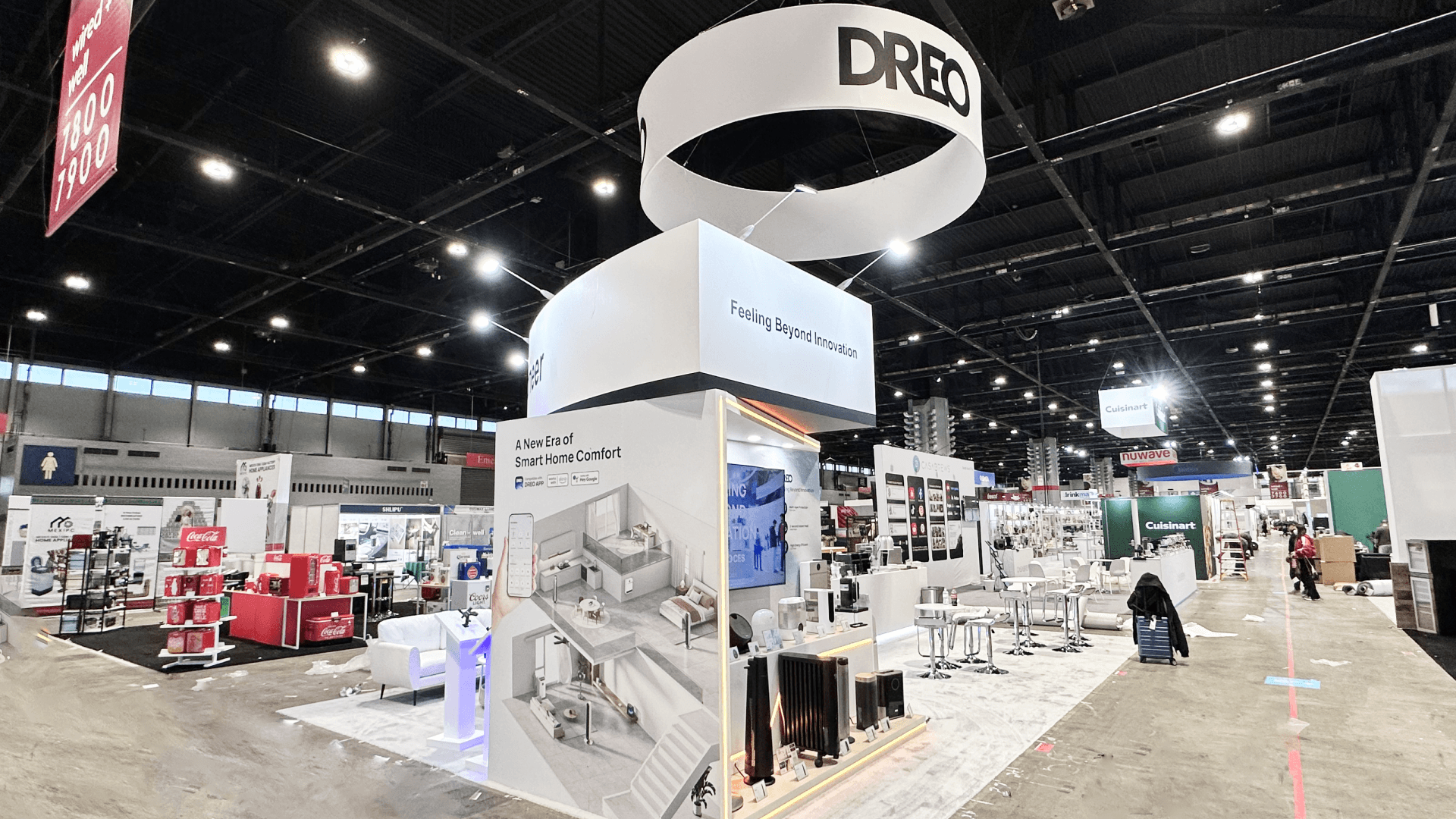
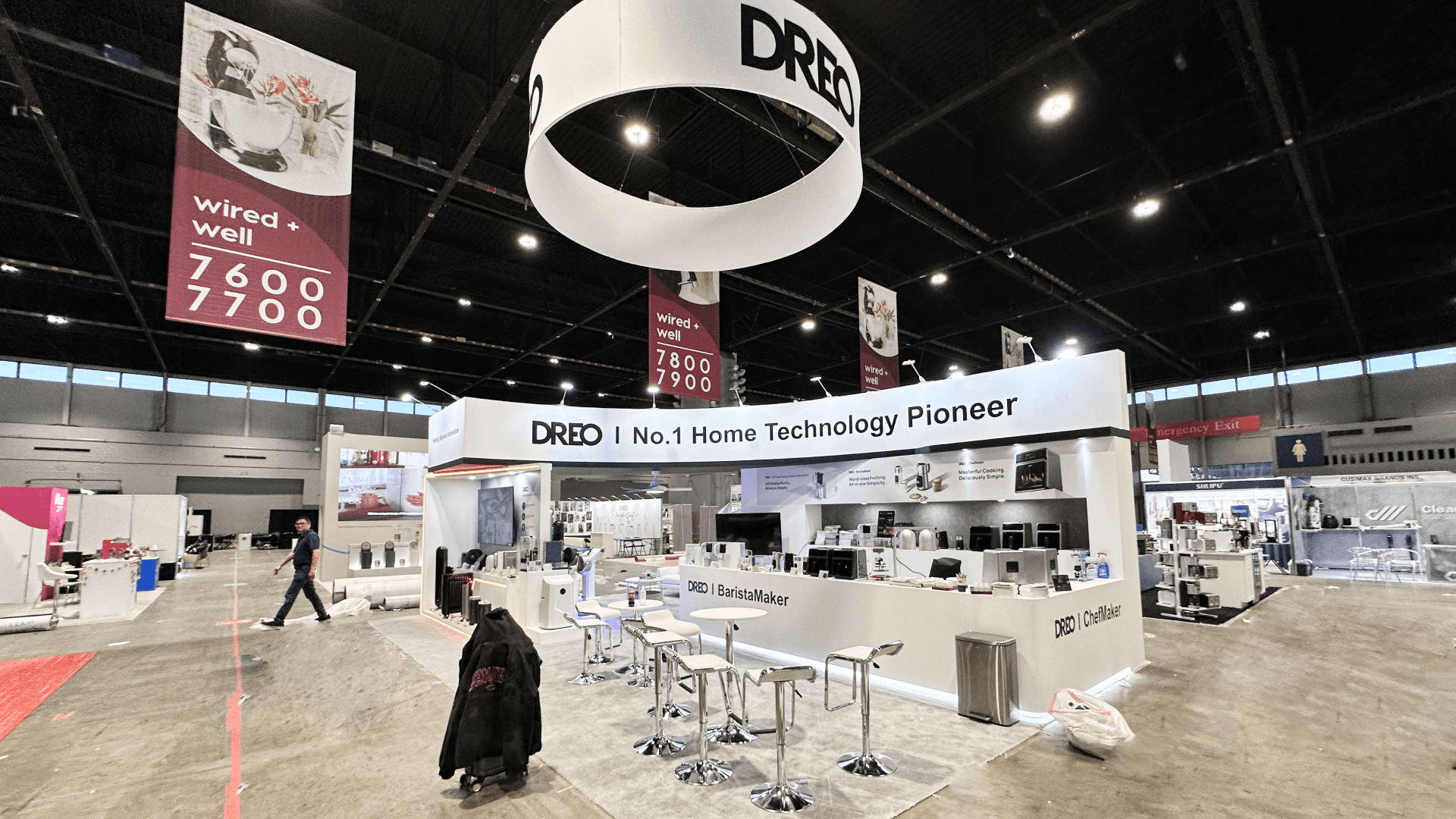
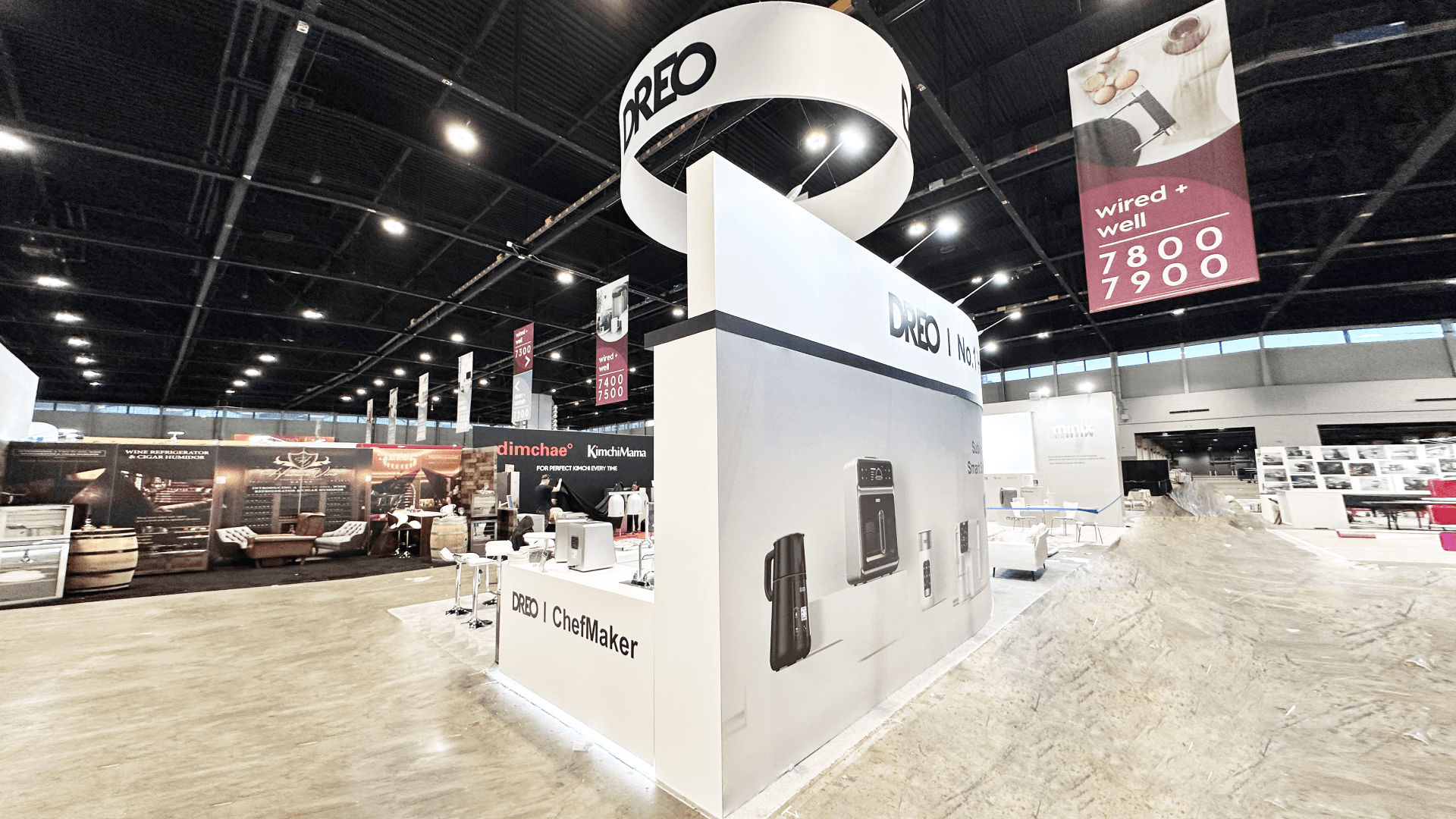
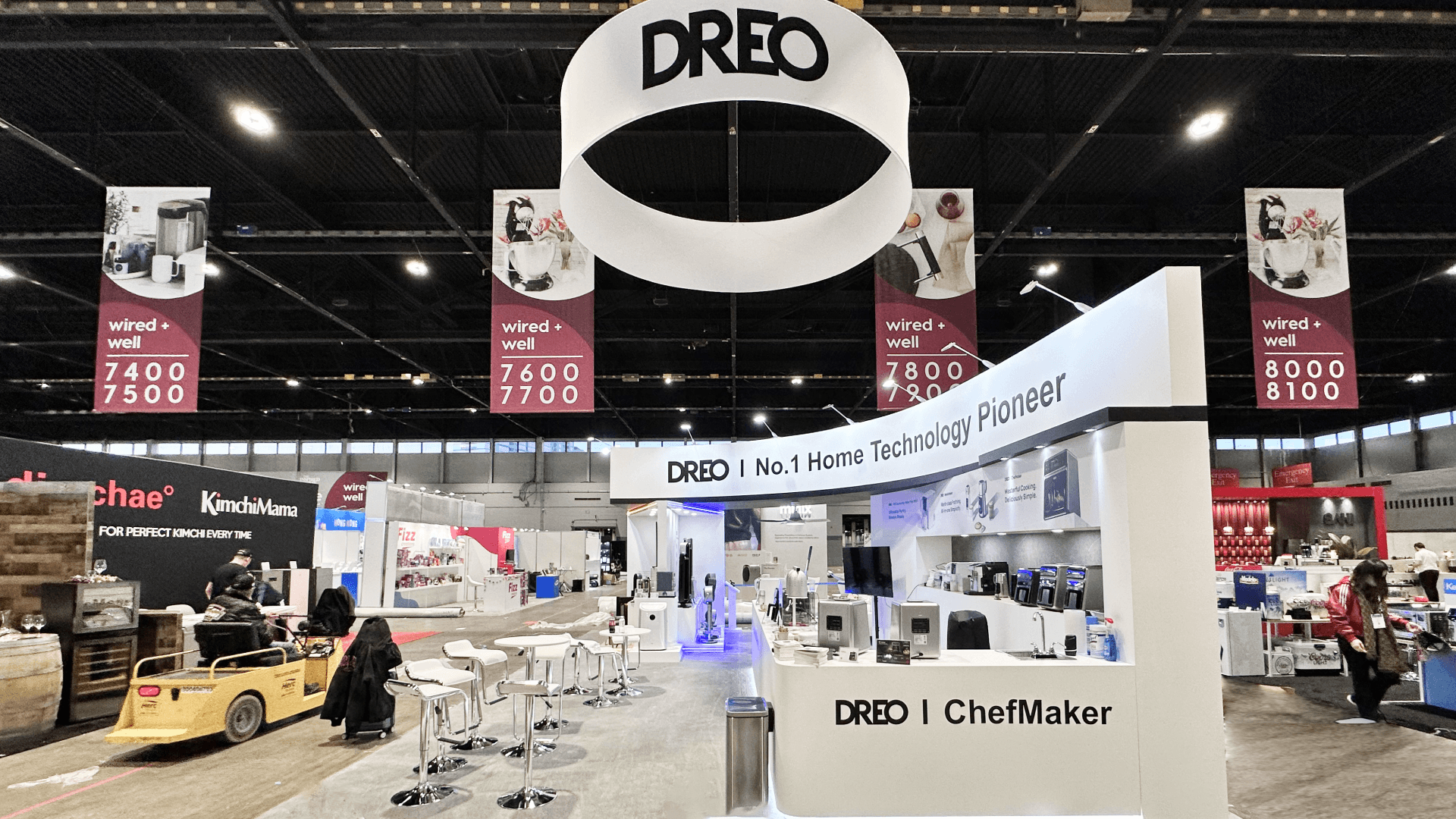
DREO brought a 20x30 island booth to IHS in 2025 with a product story built around smart home comfort, kitchen appliances, and everyday home technology. The booth needed to feel clean, premium, and easy to read from multiple aisles. A circular hanging sign, tall fascia walls, open front corners, and category-led product counters helped the space read quickly on the show floor.
Inside the booth, the layout balanced brand visibility with product access. Large perimeter walls carried the main story, while open counter zones introduced product families such as BaristaMaker and ChefMaker. The central path stayed open enough for movement, short conversations, and product browsing without making the booth feel crowded.
The final result was a 20x30 island booth that looked polished from distance, stayed open on the floor, and gave DREO a clearer way to present multiple home technology categories in one space.
💼
Client:
📅
Year/Exhibition:
📍
Location:
📐
Size:
🏢
Industry:
🏢
Venue Context:
Challenge
The main challenge was category control. DREO was not showing one single product line. The booth needed to present smart home comfort products, kitchen appliances, and lifestyle-driven technology in a way that still felt unified. If the categories blended together, the booth would lose clarity. If they were separated too hard, the booth would feel fragmented.
The second challenge was execution flow. This booth relied on a large circular hanging sign, tall overhead fascia, long product counters, and clean wall graphics. That made early coordination critical, especially for drayage timing, rigging sequence, and opening-day readiness. For a booth like this, logistics and pre-show coordination directly affect how clean the final presentation looks on the show floor.
The third challenge was keeping the footprint open. DREO needed product display, brand storytelling, casual seating, and meeting space, but the booth still had to invite visitors in from more than one direction. The layout had to support browsing and conversation without blocking the aisle view or making the island feel boxed in.
Design vs. On-site Execution
The concept started with visibility. The circular hanging sign established the brand from distance. The tall perimeter structure gave the booth presence and made room for category graphics, lifestyle visuals, and product messaging. From there, the plan moved into function: one side supported brand and lifestyle storytelling, while the longer counter runs helped organize product families and give visitors a clear browsing rhythm.
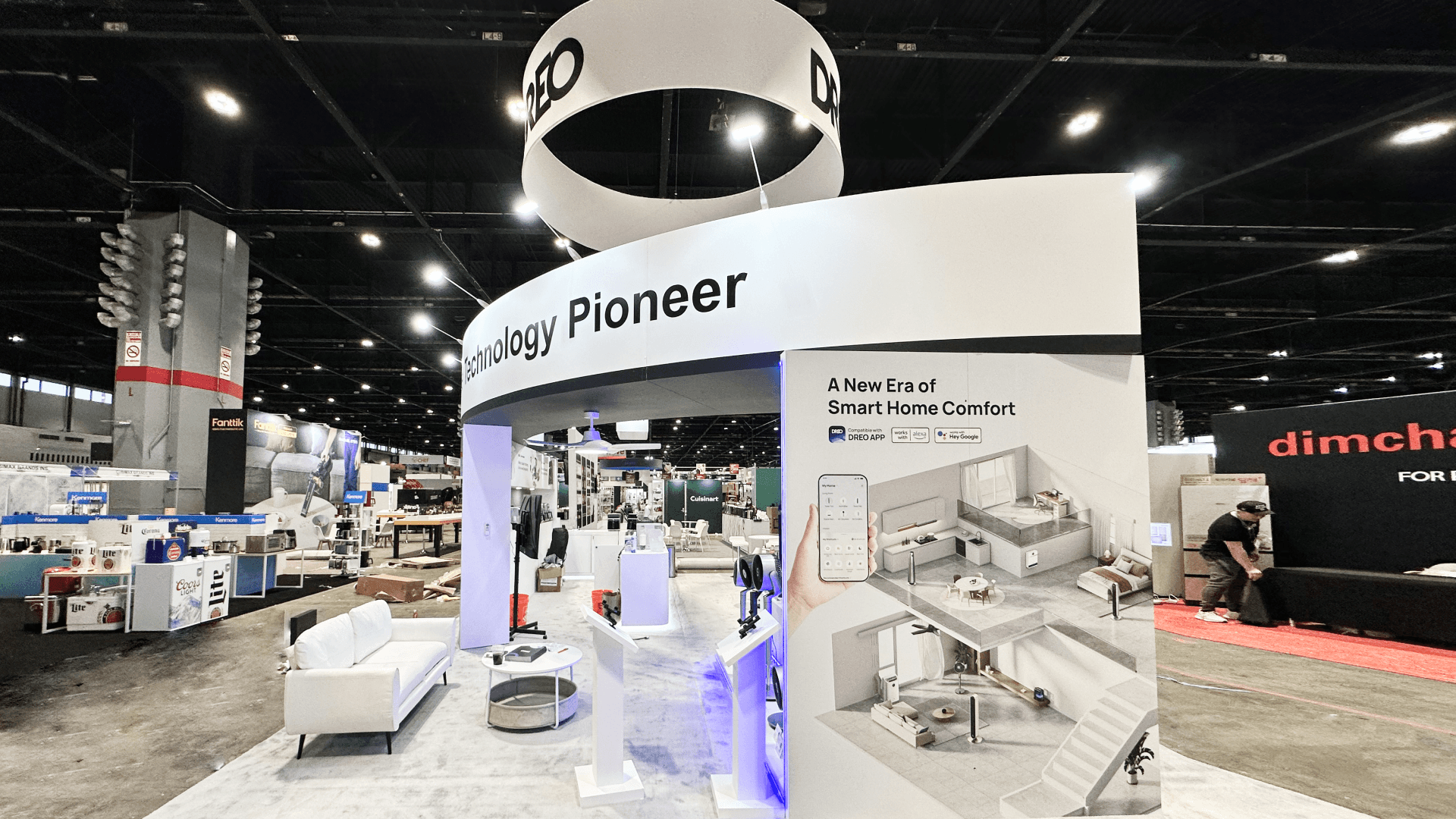
For a 20x30 trade show booth, the extra width only works when circulation stays clean. Here, the open corners and wide front approach made the booth easier to enter, while the counters created enough structure to guide attention without building visual barriers. That balance helped DREO show multiple product lines while keeping the booth readable.
On site, the installation sequence mattered. Structural walls and fascia had to land cleanly, the hanging sign had to align with the footprint, and the product counters needed to be placed with enough room for stools, demos, and visitor movement. Once lighting and graphics were dialed in, the booth felt more complete and more usable as a live product environment.
Front Lounge and Welcome Zone
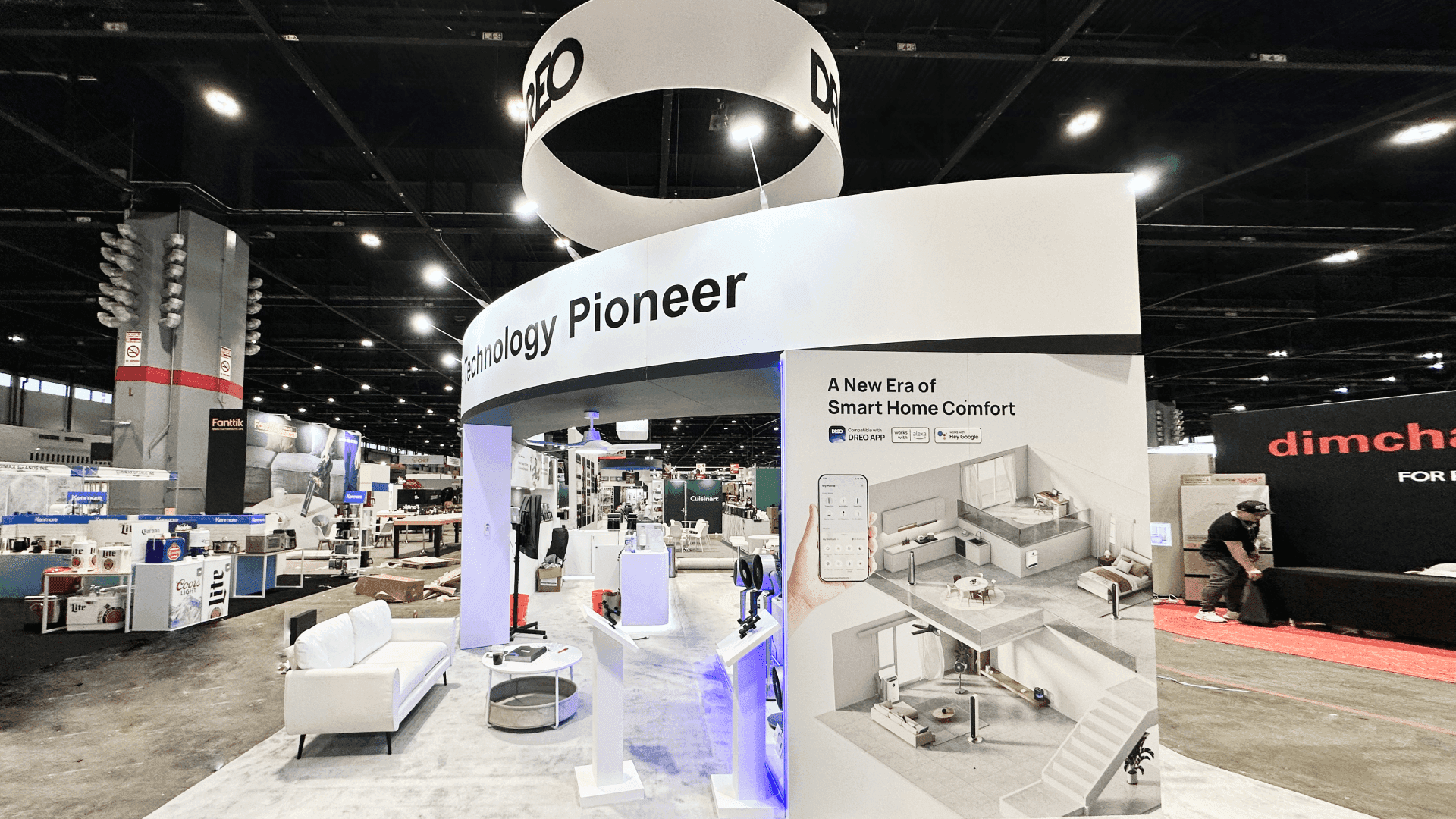
The front lounge area softened the booth entrance and gave DREO a more approachable first-contact space for casual conversation and short meetings.
Main Product Counter Zone
Long front counters organized the product presentation and gave visitors a straightforward way to browse key home technology categories from the aisle.
Lifestyle Graphic Wall
The tall wall graphics translated the product story into a home-use context, helping visitors connect appliances and comfort products with real-life applications.
Open Meeting and Demo Area
Bar tables, stools, and open floor space gave the booth enough flexibility for product discussion, quick demos, and ongoing traffic flow during the show.
On-site Highlights
This booth depended on more than visual presence. The circular hanging sign, product demo counters, power routing, open traffic lanes, and McCormick Place installation sequence all had to work together. For a 20x30 smart home booth, the execution goal was to make the booth visible from distance, keep the demo areas clean, and reduce last-minute install pressure before the show opened.
Smart Home Demo Flow for a 20×30 Island
Overhead Rigging and Ring Sign Coordination
Power and Data Routing for Demo Counters
Drayage Staging and Dock-to-Booth Control
Union Labor Install Sequencing
Traffic Flow Sightlines for Live Trials
Outcome
The booth supported repeated live trials while staying clean and easy to reset between conversations.
Rigging and sign installation were planned early, reducing risk and compressing on-site time.
Drayage staging and union labor timing were handled as a schedule system, not a last-minute scramble.
Visitors could engage quickly, and qualified buyers still had space for focused discussions.
What made this booth effective was the balance between presence and usability. DREO needed a booth that looked substantial, but it also needed to stay open and easy to browse. The hanging sign handled long-range recognition. The fascia walls carried the brand story. The counters organized the products. Once those pieces worked together, the booth felt more natural for live traffic.
The practical takeaway is simple. A home technology booth cannot rely on branding alone. It also needs clean category planning, traffic-aware counter placement, and a show-floor build that opens in a controlled condition. For brands preparing a launch booth with multiple appliance or comfort categories, working with an experienced trade show booth builder helps turn the concept into a booth that is easier to install, easier to read, and easier to use.
Quick Q&A
Q: Why was the hanging sign important?
A: It gave DREO a stronger overhead identity and made the island easier to spot from surrounding aisles.
Q: Why did the booth use long product counters?
A: The counters helped organize multiple product lines and made the browsing experience more structured for visitors.
Q: Why keep the corners open?
A: Open corners improved entry flow and helped the booth feel more welcoming instead of boxed in.
Q: What was the key execution priority on site?
A: Structural alignment and installation order. The hanging sign, fascia walls, counters, and graphics all needed to land cleanly to protect the final presentation.
Q: Why is this layout a good fit for IHS?
A: It supports category-led presentation, open browsing, and brand visibility, which are all important for home appliance and home technology exhibitors.


