Why Prebuild Checks Matter Before a Las Vegas Booth Installation

Circle Exhibit Team
Industry professionals
Exhibition industry professional dedicated to delivering the latest insights and curated recommendations to you.
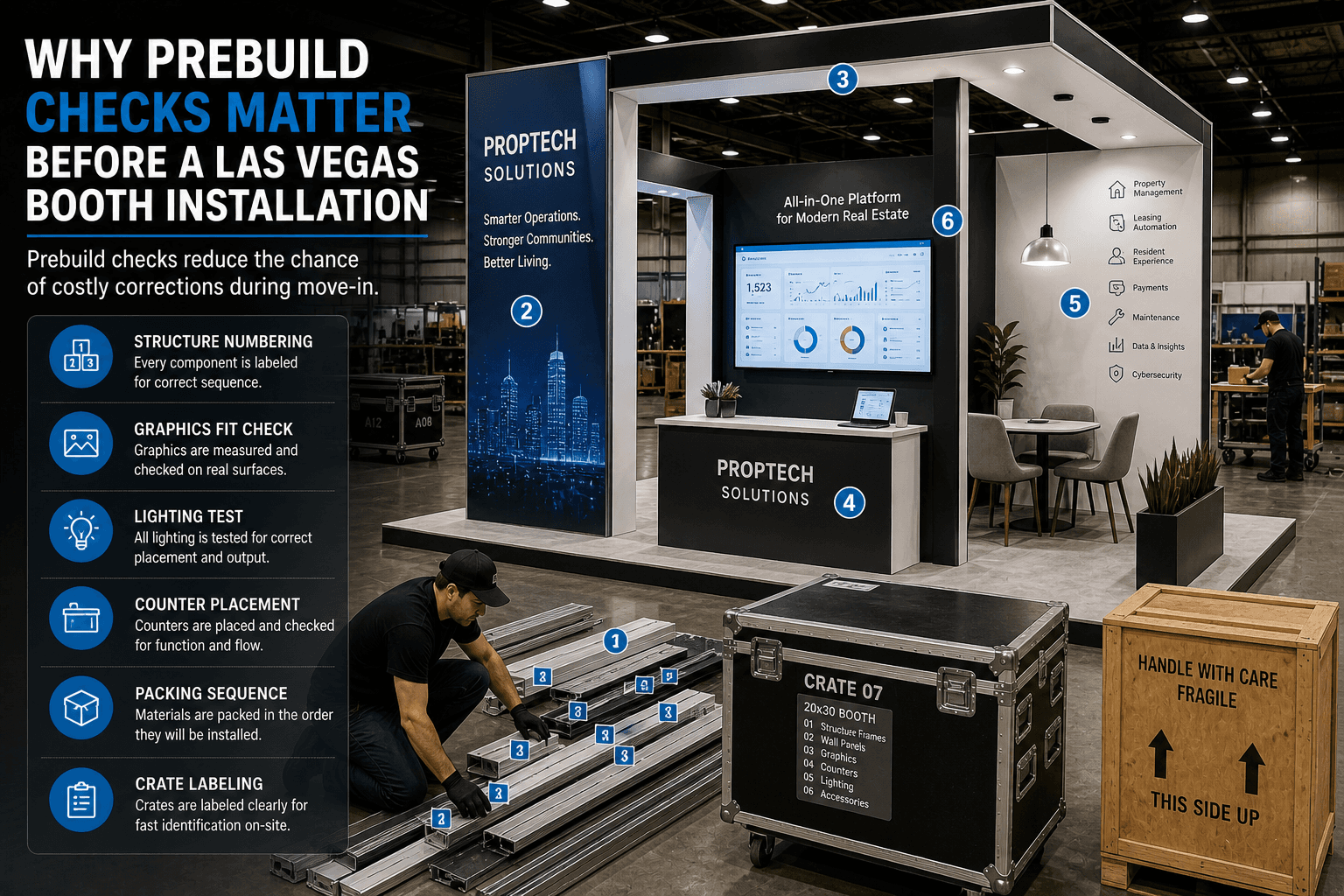
Prebuild checks reduce the chance of costly corrections during move-in by catching real execution issues before the booth reaches the show floor. In Las Vegas, that means checking structure numbering, graphics fit, lighting, counter placement, packing sequence, and crate labeling before installation begins.
A booth problem is always cheaper in the warehouse than on the show floor
That is the simplest reason prebuild checks matter.
A booth can look complete in drawings, approved in renderings, and still carry small problems that become expensive once the project reaches live install conditions. On paper, those issues often look minor. On site, they turn into labor delay, rework, finish damage, or last-minute compromise.
That is why prebuild checks before booth installation are not just a technical formality.
They are where the team tests whether the booth is actually ready to become a field installation.
Prebuild should test execution, not just assembly
A lot of teams talk about prebuild as if it simply means putting the booth together once.
That is not enough.
A real prebuild should ask whether the booth can move through the actual install sequence cleanly. The point is not only to confirm that parts connect. The point is to confirm that the booth can be built, packed, staged, and reinstalled in a way that holds up under Las Vegas show-floor pressure.
That means prebuild should check things like:
what opens first
what parts belong together
what surfaces need exact fit
what lighting needs testing early
what counters or walls affect spacing
what packing order supports the install
what crate labels help the field move faster
That is much more useful than a simple yes-or-no assembly exercise.
Structure numbering is one of the first real control systems
This is one of the most practical prebuild actions.
When the structural logic is clear in the warehouse, the field crew spends less time guessing later. When it is unclear, even a well-built booth can lose time because the team has to decode the system during move-in.
That is why structure numbering matters so much.
Good numbering helps answer:
What installs first?
The booth should not rely on memory under pressure.
What belongs to which section?
The crew should not have to sort structure live.
What follows next?
The numbering should support the install sequence, not just inventory control.
A booth that is properly numbered usually installs with more rhythm because the system is already readable before the freight ever leaves the warehouse.
Graphics fit should be checked against real surfaces, not assumptions
This is another area where prebuild prevents expensive field corrections.
A graphic file may be approved, and the wall may be fabricated correctly, but that still does not guarantee the final fit will behave the way the booth needs it to. Small alignment issues, edge conditions, cutouts, seams, and lightbox tolerances often reveal themselves more honestly during prebuild than they do on a screen.
That is why graphics fit should be checked physically.
The team should be looking for:
seam alignment
trim accuracy
edge cleanliness
cutout placement
graphic-to-structure relationships
whether the message still reads correctly on the real surface
A booth that skips this step often discovers its “small” graphic issue when the installation crew is already on the clock.
Lighting tests protect more than appearance
Lighting is not just a final mood layer.
In many booths, lighting affects how the structure reads, how the graphics show up, and whether the demo or product surface feels finished. A light that technically turns on is not the same as a light that is ready for show-floor use.
That is why prebuild should include real lighting checks, such as:
fixture placement
evenness of wash
shadow behavior
hot spots on graphics
how the light interacts with materials and counters
whether the intended emphasis is actually happening
Catching those issues in the warehouse is far better than trying to adjust them while other install phases are already moving around the booth.
Counter placement should be tested in relation to the whole booth
Counters are often treated like simple furniture pieces.
They are not.
A counter affects:
traffic entry
first-stop behavior
demo spacing
conversation distance
screen sightlines
how much usable room stays in front of the booth
That is why counter placement should be checked during prebuild as part of the whole booth system, not as an isolated object.
The real question is not just:
Does the counter fit?
It is:
Does the counter sit in the right place for how the booth actually needs to work?
That is the kind of issue that is much easier to correct in the warehouse than at move-in.
Packing sequence is part of installation quality
This is where a lot of teams underestimate prebuild.
A booth can be fabricated beautifully and still install poorly if the packing sequence does not match the build sequence. If the first-pass components are buried behind later-phase parts, the field crew loses time before real progress even starts.
That is why prebuild should also confirm:
what gets packed first
what needs immediate access later
what stays protected until a later phase
what should travel grouped together
what should not be buried inside the wrong crate
Packing is not a shipping detail only.
It is part of the installation plan.
Crate labeling should tell the field what to do next
This is another execution step that matters more than people think.
Crate labeling should not only identify contents. It should support sequence.
A useful label system helps the crew understand:
release priority
section identity
phase order
what is sensitive
what belongs to structure versus finish
what can remain closed longer
When crate labeling is weak, the field spends time opening, checking, resorting, and repacking mentally before the install even starts moving properly.
That is why labeling should be tested during prebuild, not improvised at the end.
Las Vegas move-in conditions make prebuild even more valuable
This is especially true in Las Vegas, where timing pressure, venue logistics, freight handling, and labor coordination can expose small weaknesses quickly.
A booth that reaches the show floor without strong prebuild discipline is more likely to run into problems like:
missing sequence clarity
wrong materials opened too early
graphics entering unstable conditions
unnecessary labor overlap
finish adjustments under time pressure
avoidable confusion at the exact moment the booth should be tightening up
That is why prebuild matters so much before a Las Vegas booth installation.
It gives the team a chance to solve problems where the environment is still controllable.
A 20x30 booth benefits a lot from this kind of preparation
This becomes especially practical in a 20x30 trade show booth.
A 20x30 is large enough to support more meaningful separation between structure, demo, meeting, and display zones, but that also means the booth can carry more sequence complexity than a smaller footprint.
That is where prebuild helps.
It can confirm:
the order of structure zones
where counters affect spacing
how graphics relate to the major surfaces
whether the packing logic supports zone-by-zone install
how the booth should tighten as the build progresses
In other words, prebuild helps the 20x30 behave more like an organized system instead of just a larger footprint with more parts.
Good prebuild makes Las Vegas booth installation coordination easier
This is one reason strong warehouse discipline supports Las Vegas booth installation coordination so directly.
If the booth has already been tested for numbering, fit, lighting, packing, and labeling, the installation team starts with a much better operating condition. The crew is not solving basic booth identity on site. They are executing a system that already proved itself earlier.
That usually helps with:
faster structure start
cleaner handoff between phases
less confusion under labor pressure
fewer unnecessary pauses
better finish protection
That is the real value.
Prebuild does not eliminate every field problem.
It reduces the number of avoidable ones.
Better builder logic usually starts long before move-in
This is one reason exhibitors benefit from booth build support in Las Vegas that treats prebuild as a real execution step instead of a soft internal check.
Because the builder is not just trying to prove that the booth exists.
The builder is trying to prove that the booth can survive real install conditions with less friction attached to it.
That is a much more useful standard.
And it usually shows up in the details:
better numbering
clearer packing logic
more disciplined fit checks
stronger sequencing
fewer surprises at the venue
That is the kind of preparation that actually changes move-in quality.
A practical prebuild checklist
The strongest prebuild process usually confirms these things clearly:
1. Structure numbering
The booth can be read and sequenced quickly in the field.
2. Graphics fit
The message system fits the real surfaces cleanly.
3. Lighting test
The visible finish will behave correctly under real lighting conditions.
4. Counter placement
The booth still works spatially once real components are in place.
5. Packing sequence
The field will receive materials in usable order.
6. Crate labeling
The crew can understand what to release and open next.
When those six areas are handled early, the install usually starts from clarity instead of recovery.
Final thought
Prebuild checks matter before a Las Vegas booth installation because they catch field problems while the booth is still in the best possible place to fix them.
That includes:
structure numbering
graphics fit
lighting behavior
counter placement
packing sequence
crate labeling
These are not small warehouse details. They are real installation control points.
And on move-in day, they often decide whether the booth starts with confidence or starts by paying for problems that should have been solved earlier.
That is why prebuild matters.
Not because it sounds thorough.
Because it protects the real work that happens later.
Trying to reduce show-floor corrections before your Las Vegas install begins?
Start with prebuild checks before booth installation, then connect them to booth build support in Las Vegas so fabrication, packing, and field execution stay aligned before move-in starts.
A booth problem is always cheaper in the warehouse than on the show floor
That is the simplest reason prebuild checks matter.
A booth can look complete in drawings, approved in renderings, and still carry small problems that become expensive once the project reaches live install conditions. On paper, those issues often look minor. On site, they turn into labor delay, rework, finish damage, or last-minute compromise.
That is why prebuild checks before booth installation are not just a technical formality.
They are where the team tests whether the booth is actually ready to become a field installation.
Prebuild should test execution, not just assembly
A lot of teams talk about prebuild as if it simply means putting the booth together once.
That is not enough.
A real prebuild should ask whether the booth can move through the actual install sequence cleanly. The point is not only to confirm that parts connect. The point is to confirm that the booth can be built, packed, staged, and reinstalled in a way that holds up under Las Vegas show-floor pressure.
That means prebuild should check things like:
what opens first
what parts belong together
what surfaces need exact fit
what lighting needs testing early
what counters or walls affect spacing
what packing order supports the install
what crate labels help the field move faster
That is much more useful than a simple yes-or-no assembly exercise.
Structure numbering is one of the first real control systems
This is one of the most practical prebuild actions.
When the structural logic is clear in the warehouse, the field crew spends less time guessing later. When it is unclear, even a well-built booth can lose time because the team has to decode the system during move-in.
That is why structure numbering matters so much.
Good numbering helps answer:
What installs first?
The booth should not rely on memory under pressure.
What belongs to which section?
The crew should not have to sort structure live.
What follows next?
The numbering should support the install sequence, not just inventory control.
A booth that is properly numbered usually installs with more rhythm because the system is already readable before the freight ever leaves the warehouse.
Graphics fit should be checked against real surfaces, not assumptions
This is another area where prebuild prevents expensive field corrections.
A graphic file may be approved, and the wall may be fabricated correctly, but that still does not guarantee the final fit will behave the way the booth needs it to. Small alignment issues, edge conditions, cutouts, seams, and lightbox tolerances often reveal themselves more honestly during prebuild than they do on a screen.
That is why graphics fit should be checked physically.
The team should be looking for:
seam alignment
trim accuracy
edge cleanliness
cutout placement
graphic-to-structure relationships
whether the message still reads correctly on the real surface
A booth that skips this step often discovers its “small” graphic issue when the installation crew is already on the clock.
Lighting tests protect more than appearance
Lighting is not just a final mood layer.
In many booths, lighting affects how the structure reads, how the graphics show up, and whether the demo or product surface feels finished. A light that technically turns on is not the same as a light that is ready for show-floor use.
That is why prebuild should include real lighting checks, such as:
fixture placement
evenness of wash
shadow behavior
hot spots on graphics
how the light interacts with materials and counters
whether the intended emphasis is actually happening
Catching those issues in the warehouse is far better than trying to adjust them while other install phases are already moving around the booth.
Counter placement should be tested in relation to the whole booth
Counters are often treated like simple furniture pieces.
They are not.
A counter affects:
traffic entry
first-stop behavior
demo spacing
conversation distance
screen sightlines
how much usable room stays in front of the booth
That is why counter placement should be checked during prebuild as part of the whole booth system, not as an isolated object.
The real question is not just:
Does the counter fit?
It is:
Does the counter sit in the right place for how the booth actually needs to work?
That is the kind of issue that is much easier to correct in the warehouse than at move-in.
Packing sequence is part of installation quality
This is where a lot of teams underestimate prebuild.
A booth can be fabricated beautifully and still install poorly if the packing sequence does not match the build sequence. If the first-pass components are buried behind later-phase parts, the field crew loses time before real progress even starts.
That is why prebuild should also confirm:
what gets packed first
what needs immediate access later
what stays protected until a later phase
what should travel grouped together
what should not be buried inside the wrong crate
Packing is not a shipping detail only.
It is part of the installation plan.
Crate labeling should tell the field what to do next
This is another execution step that matters more than people think.
Crate labeling should not only identify contents. It should support sequence.
A useful label system helps the crew understand:
release priority
section identity
phase order
what is sensitive
what belongs to structure versus finish
what can remain closed longer
When crate labeling is weak, the field spends time opening, checking, resorting, and repacking mentally before the install even starts moving properly.
That is why labeling should be tested during prebuild, not improvised at the end.
Las Vegas move-in conditions make prebuild even more valuable
This is especially true in Las Vegas, where timing pressure, venue logistics, freight handling, and labor coordination can expose small weaknesses quickly.
A booth that reaches the show floor without strong prebuild discipline is more likely to run into problems like:
missing sequence clarity
wrong materials opened too early
graphics entering unstable conditions
unnecessary labor overlap
finish adjustments under time pressure
avoidable confusion at the exact moment the booth should be tightening up
That is why prebuild matters so much before a Las Vegas booth installation.
It gives the team a chance to solve problems where the environment is still controllable.
A 20x30 booth benefits a lot from this kind of preparation
This becomes especially practical in a 20x30 trade show booth.
A 20x30 is large enough to support more meaningful separation between structure, demo, meeting, and display zones, but that also means the booth can carry more sequence complexity than a smaller footprint.
That is where prebuild helps.
It can confirm:
the order of structure zones
where counters affect spacing
how graphics relate to the major surfaces
whether the packing logic supports zone-by-zone install
how the booth should tighten as the build progresses
In other words, prebuild helps the 20x30 behave more like an organized system instead of just a larger footprint with more parts.
Good prebuild makes Las Vegas booth installation coordination easier
This is one reason strong warehouse discipline supports Las Vegas booth installation coordination so directly.
If the booth has already been tested for numbering, fit, lighting, packing, and labeling, the installation team starts with a much better operating condition. The crew is not solving basic booth identity on site. They are executing a system that already proved itself earlier.
That usually helps with:
faster structure start
cleaner handoff between phases
less confusion under labor pressure
fewer unnecessary pauses
better finish protection
That is the real value.
Prebuild does not eliminate every field problem.
It reduces the number of avoidable ones.
Better builder logic usually starts long before move-in
This is one reason exhibitors benefit from booth build support in Las Vegas that treats prebuild as a real execution step instead of a soft internal check.
Because the builder is not just trying to prove that the booth exists.
The builder is trying to prove that the booth can survive real install conditions with less friction attached to it.
That is a much more useful standard.
And it usually shows up in the details:
better numbering
clearer packing logic
more disciplined fit checks
stronger sequencing
fewer surprises at the venue
That is the kind of preparation that actually changes move-in quality.
A practical prebuild checklist
The strongest prebuild process usually confirms these things clearly:
1. Structure numbering
The booth can be read and sequenced quickly in the field.
2. Graphics fit
The message system fits the real surfaces cleanly.
3. Lighting test
The visible finish will behave correctly under real lighting conditions.
4. Counter placement
The booth still works spatially once real components are in place.
5. Packing sequence
The field will receive materials in usable order.
6. Crate labeling
The crew can understand what to release and open next.
When those six areas are handled early, the install usually starts from clarity instead of recovery.
Final thought
Prebuild checks matter before a Las Vegas booth installation because they catch field problems while the booth is still in the best possible place to fix them.
That includes:
structure numbering
graphics fit
lighting behavior
counter placement
packing sequence
crate labeling
These are not small warehouse details. They are real installation control points.
And on move-in day, they often decide whether the booth starts with confidence or starts by paying for problems that should have been solved earlier.
That is why prebuild matters.
Not because it sounds thorough.
Because it protects the real work that happens later.
Trying to reduce show-floor corrections before your Las Vegas install begins?
Start with prebuild checks before booth installation, then connect them to booth build support in Las Vegas so fabrication, packing, and field execution stay aligned before move-in starts.
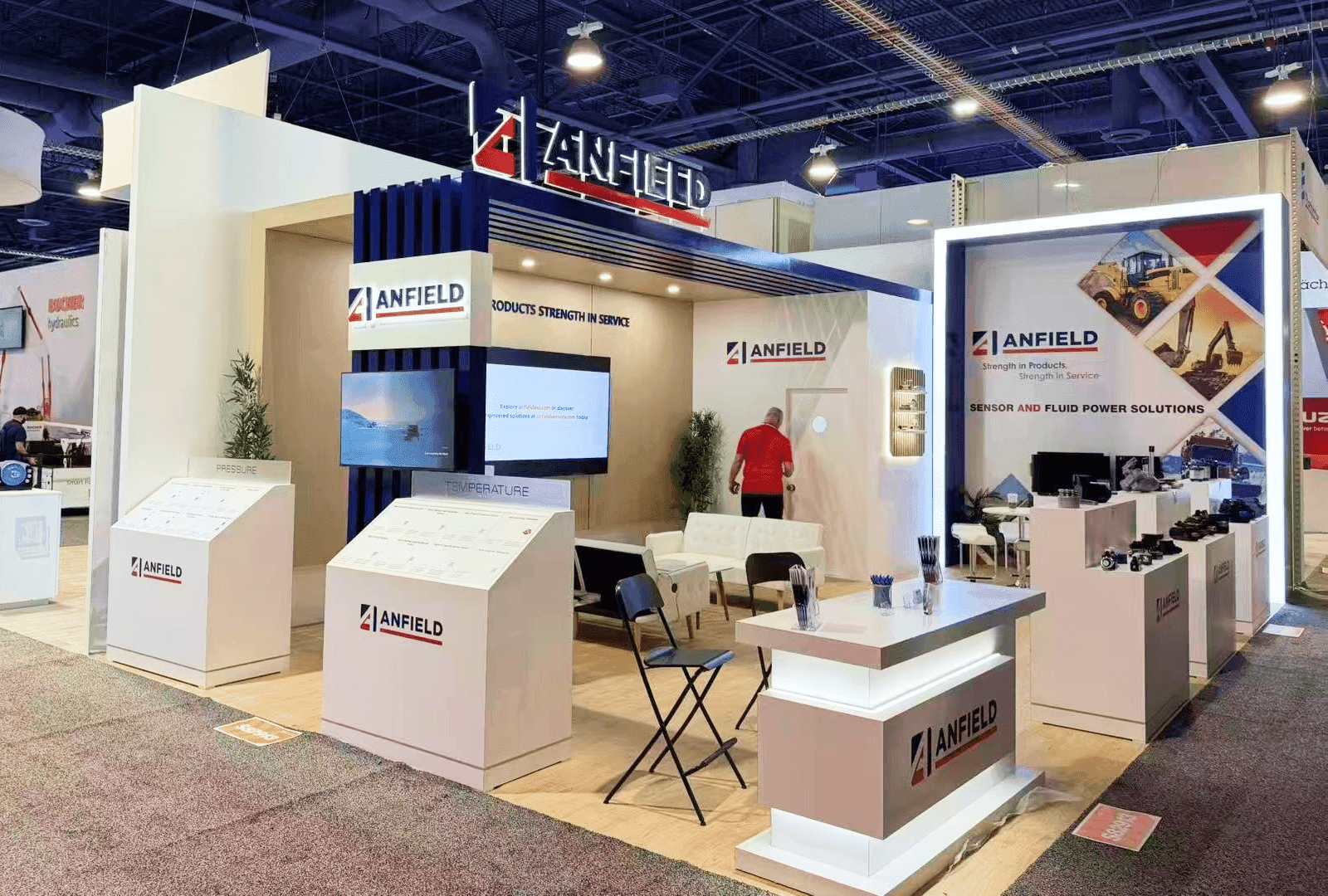
Exhibition Cases
Message
Leave your message and we will get back to you ASAP
Send a Message
We’ll Be in Touch!
Message
Leave your message and we will get back to you ASAP
Address:
4915 Steptoe Street #300
Las Vegas, NV 89122