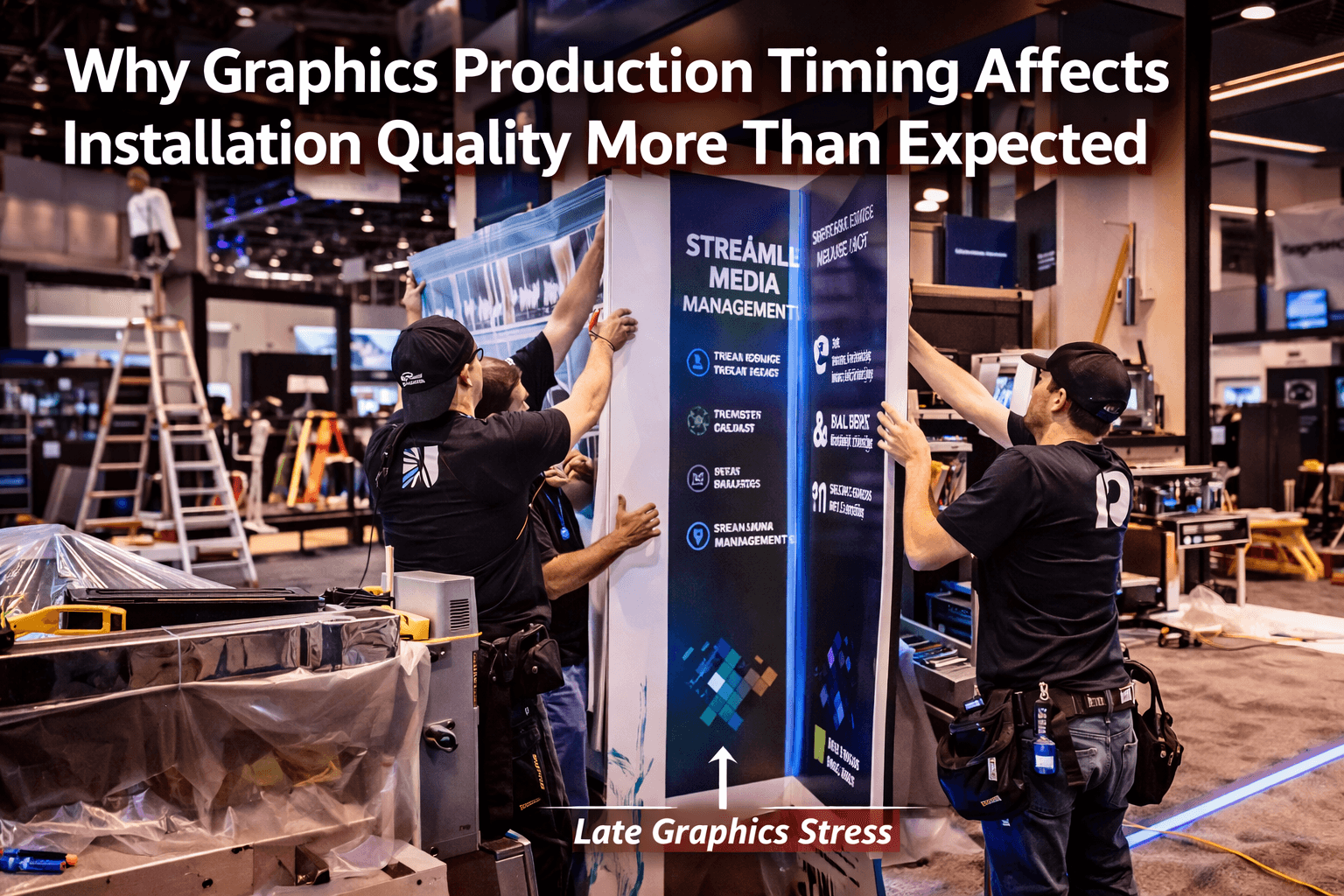
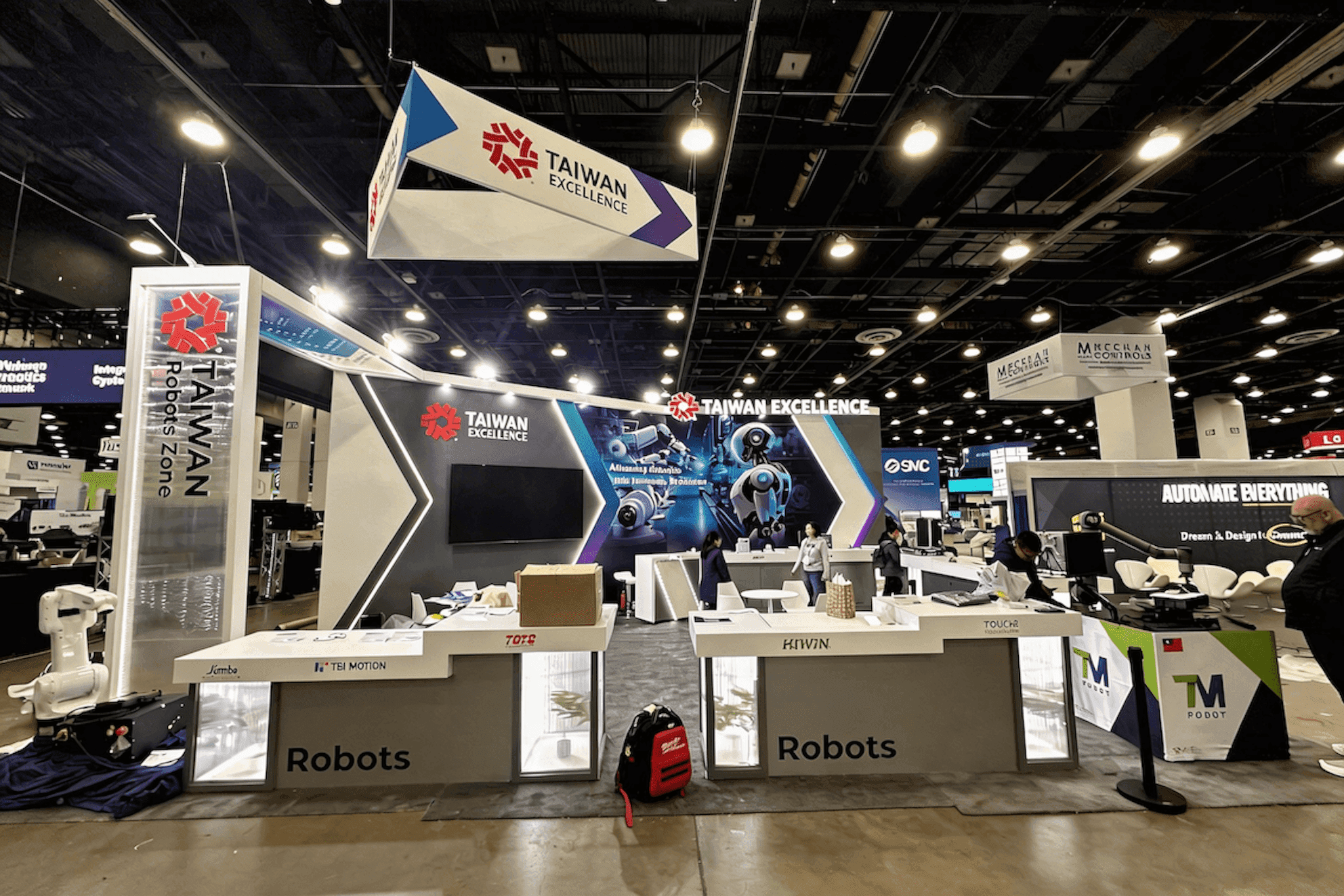
Trade show booth graphics installation with late-arriving printed panels, active install crew, and finish work under schedule pressure in Las Vegas

Why Graphics Production Timing Affects Installation Quality More Than Expected

Why Graphics Production Timing Affects Installation Quality More Than Expected

Circle Exhibit Team

Industry professionals

Exhibition industry professional dedicated to delivering the latest insights and curated recommendations to you.

Exhibition industry professional dedicated to delivering the latest insights and curated recommendations to you.

Late graphics do more than delay the final look of a booth. They disrupt finish quality, crew sequencing, and schedule control at the exact stage when the installation should be tightening up.

Late graphics do more than delay the final look of a booth. They disrupt finish quality, crew sequencing, and schedule control at the exact stage when the installation should be tightening up.

Late graphics do more than delay the final look of a booth. They disrupt finish quality, crew sequencing, and schedule control at the exact stage when the installation should be tightening up.

Graphics are often treated like the last easy step

That is usually where the trouble starts.

A lot of teams assume the structure is the hard part, the flooring is the sensitive part, and the graphics can simply go in near the end once everything else is standing.

On paper, that sounds reasonable.

On site, it often creates one of the most avoidable quality problems in the whole install.

Late graphics do not just delay the booth

They change how the booth gets finished.

When printed panels, lightbox skins, branded headers, or wall graphics arrive late, the install crew has to keep working in a space that should already be moving into finish mode.

That changes the tone of the whole build.

Instead of tightening the booth, the team is still holding it open.

The real damage usually shows up in the last 20 percent

This is the stage when the booth should start looking clean.

Edges should be lining up. Surfaces should be protected. Final adjustments should be small.

But if graphics are late, that last stage becomes unstable again.

Panels are leaned against finished walls. Crews reopen areas that should have been closed. Tools and ladders stay active longer than expected. People who should be detailing are still waiting on visual components that define the final look.

That is where quality starts slipping.

A booth can be structurally done and still not feel finished

Graphics are often what make the booth look complete.

They turn frame into message.
They turn walls into brand.
They turn a working structure into a real presentation.

When they arrive late, the booth can look half-built even if the hard construction work is basically over.

That creates pressure.

And pressure is where rushed finishing mistakes usually happen.

Late graphics also create crew conflict

This is one of the most underestimated effects.

A booth install works best when the trades are tapering off in the right order. Structure settles first. Flooring is protected properly. Final hardware gets locked in. Graphics go up when the surfaces are ready for them.

When graphics arrive too late, that order breaks.

Now the graphics crew needs the same access that another crew thought it had already finished using. Ladders return to zones that were supposed to stay clean. Protected surfaces get reopened. People start working around each other again instead of handing the booth forward in sequence.

That is not just inefficient.
It usually lowers finish quality too.

Graphics timing affects alignment more than people expect

A printed panel or branded skin does not live on its own.

It depends on the condition of the surface behind it.

If the frame is true, the reveal looks sharp.
If the wall is settled, the seam reads clean.
If the surface has been protected well, the install finishes properly.

But when graphics come in under time pressure, the booth often has less patience for those checks.

The piece may still be installed.
It just may not be installed as cleanly as it should have been.

The later the graphics arrive, the more “temporary” the booth becomes

That is the real problem.

A booth should gradually stop behaving like a work zone.

Late graphics reverse that.

Finished areas stop feeling finished.
Clean zones stop feeling protected.
The install keeps carrying temporary behavior longer than it should.

That is why late graphics are rarely just a print issue.
They become a booth behavior issue.

Good graphics timing supports better logistics, not just better visuals

This is where logistics and pre-show coordination become critical.

Graphics should not just be produced on time.
They should be delivered in a way that matches install order.

The crew needs to know:

  • what goes in first

  • what stays protected

  • what belongs to the final pass

  • what should not be opened too early

If those answers are not clear, even on-time graphics can still create unnecessary pressure.

If the answers are clear, the booth usually installs with much less friction.

Builder planning gets stronger when graphics timing is treated as part of the build

This is one reason many exhibitors benefit from working with a Las Vegas trade show booth builder that treats graphics as part of the installation system, not as a decorative layer added at the end.

Because that is what graphics really are.

They affect:

  • sequence

  • access

  • finish timing

  • protection

  • final presentation quality

If graphics timing is disconnected from build timing, the booth may still go up, but it usually finishes under more stress than necessary.

This matters even more on NAB-type booths

On NAB Show floors, many booths combine technical hardware, operator areas, monitor walls, workflow graphics, messaging panels, and branded structural surfaces.

That means graphics are not just background.

They often help explain what the visitor is looking at.

When those pieces land late, the booth loses both finish quality and message clarity at the same time. The hardware may be present, but the booth still does not fully read.

That weakens the whole presentation.

Production timing is really a quality-control decision

That is the part teams often miss.

Graphics timing is not only about whether the printer hits a deadline.

It is about whether the booth gets enough stable time to become precise.

A better timeline gives the crew room to install carefully.
A tighter timeline forces the booth to absorb risk at the moment when it should be becoming more exact.

That is why print timing affects installation quality more than many teams expect.

What better graphics timing usually improves

When the timing is right, several things get easier at once:

Cleaner seams and panel alignment

The install team has time to place and adjust properly.

Less surface damage

Finished areas are not reopened unnecessarily.

Fewer crew overlaps

The booth moves forward instead of doubling back.

Better schedule control

The final stage becomes detail work, not recovery work.

Stronger visual finish

The booth actually looks complete when it should.

Final thought

Graphics are often the last visible layer people notice.

But they should not be the last problem the crew has to solve.

If production timing is handled properly, the booth finishes cleaner, calmer, and with less conflict between trades.

If production timing slips too far, the entire last stage of the install starts working harder than it should.

That is why graphics timing matters so much.

Not only because it affects what the booth says.

Because it affects how well the booth gets finished at all.

Trying to improve booth finish quality before show week?
Start with a stronger graphics and brand presentation process, then connect it to a Las Vegas trade show booth builder approach that keeps production timing aligned with installation quality.
Graphics are often treated like the last easy step

That is usually where the trouble starts.

A lot of teams assume the structure is the hard part, the flooring is the sensitive part, and the graphics can simply go in near the end once everything else is standing.

On paper, that sounds reasonable.

On site, it often creates one of the most avoidable quality problems in the whole install.

Late graphics do not just delay the booth

They change how the booth gets finished.

When printed panels, lightbox skins, branded headers, or wall graphics arrive late, the install crew has to keep working in a space that should already be moving into finish mode.

That changes the tone of the whole build.

Instead of tightening the booth, the team is still holding it open.

The real damage usually shows up in the last 20 percent

This is the stage when the booth should start looking clean.

Edges should be lining up. Surfaces should be protected. Final adjustments should be small.

But if graphics are late, that last stage becomes unstable again.

Panels are leaned against finished walls. Crews reopen areas that should have been closed. Tools and ladders stay active longer than expected. People who should be detailing are still waiting on visual components that define the final look.

That is where quality starts slipping.

A booth can be structurally done and still not feel finished

Graphics are often what make the booth look complete.

They turn frame into message.
They turn walls into brand.
They turn a working structure into a real presentation.

When they arrive late, the booth can look half-built even if the hard construction work is basically over.

That creates pressure.

And pressure is where rushed finishing mistakes usually happen.

Late graphics also create crew conflict

This is one of the most underestimated effects.

A booth install works best when the trades are tapering off in the right order. Structure settles first. Flooring is protected properly. Final hardware gets locked in. Graphics go up when the surfaces are ready for them.

When graphics arrive too late, that order breaks.

Now the graphics crew needs the same access that another crew thought it had already finished using. Ladders return to zones that were supposed to stay clean. Protected surfaces get reopened. People start working around each other again instead of handing the booth forward in sequence.

That is not just inefficient.
It usually lowers finish quality too.

Graphics timing affects alignment more than people expect

A printed panel or branded skin does not live on its own.

It depends on the condition of the surface behind it.

If the frame is true, the reveal looks sharp.
If the wall is settled, the seam reads clean.
If the surface has been protected well, the install finishes properly.

But when graphics come in under time pressure, the booth often has less patience for those checks.

The piece may still be installed.
It just may not be installed as cleanly as it should have been.

The later the graphics arrive, the more “temporary” the booth becomes

That is the real problem.

A booth should gradually stop behaving like a work zone.

Late graphics reverse that.

Finished areas stop feeling finished.
Clean zones stop feeling protected.
The install keeps carrying temporary behavior longer than it should.

That is why late graphics are rarely just a print issue.
They become a booth behavior issue.

Good graphics timing supports better logistics, not just better visuals

This is where logistics and pre-show coordination become critical.

Graphics should not just be produced on time.
They should be delivered in a way that matches install order.

The crew needs to know:

  • what goes in first

  • what stays protected

  • what belongs to the final pass

  • what should not be opened too early

If those answers are not clear, even on-time graphics can still create unnecessary pressure.

If the answers are clear, the booth usually installs with much less friction.

Builder planning gets stronger when graphics timing is treated as part of the build

This is one reason many exhibitors benefit from working with a Las Vegas trade show booth builder that treats graphics as part of the installation system, not as a decorative layer added at the end.

Because that is what graphics really are.

They affect:

  • sequence

  • access

  • finish timing

  • protection

  • final presentation quality

If graphics timing is disconnected from build timing, the booth may still go up, but it usually finishes under more stress than necessary.

This matters even more on NAB-type booths

On NAB Show floors, many booths combine technical hardware, operator areas, monitor walls, workflow graphics, messaging panels, and branded structural surfaces.

That means graphics are not just background.

They often help explain what the visitor is looking at.

When those pieces land late, the booth loses both finish quality and message clarity at the same time. The hardware may be present, but the booth still does not fully read.

That weakens the whole presentation.

Production timing is really a quality-control decision

That is the part teams often miss.

Graphics timing is not only about whether the printer hits a deadline.

It is about whether the booth gets enough stable time to become precise.

A better timeline gives the crew room to install carefully.
A tighter timeline forces the booth to absorb risk at the moment when it should be becoming more exact.

That is why print timing affects installation quality more than many teams expect.

What better graphics timing usually improves

When the timing is right, several things get easier at once:

Cleaner seams and panel alignment

The install team has time to place and adjust properly.

Less surface damage

Finished areas are not reopened unnecessarily.

Fewer crew overlaps

The booth moves forward instead of doubling back.

Better schedule control

The final stage becomes detail work, not recovery work.

Stronger visual finish

The booth actually looks complete when it should.

Final thought

Graphics are often the last visible layer people notice.

But they should not be the last problem the crew has to solve.

If production timing is handled properly, the booth finishes cleaner, calmer, and with less conflict between trades.

If production timing slips too far, the entire last stage of the install starts working harder than it should.

That is why graphics timing matters so much.

Not only because it affects what the booth says.

Because it affects how well the booth gets finished at all.

Trying to improve booth finish quality before show week?
Start with a stronger graphics and brand presentation process, then connect it to a Las Vegas trade show booth builder approach that keeps production timing aligned with installation quality.
Message

Leave your message and we will get back to you ASAP

Send a Message

We’ll Be in Touch!

Message

Leave your message and we will get back to you ASAP

Address:

4915 Steptoe Street #300

Las Vegas, NV 89122