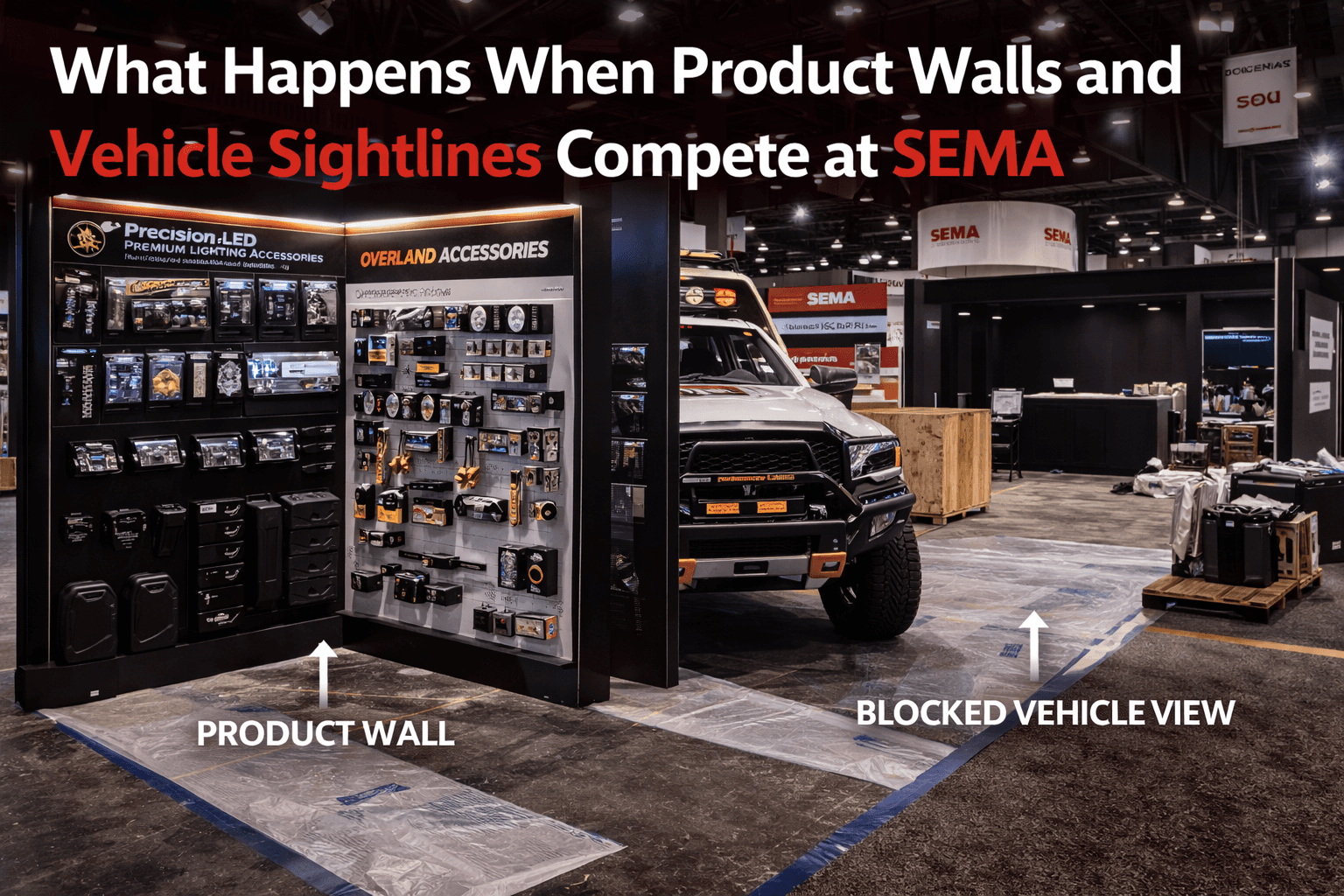
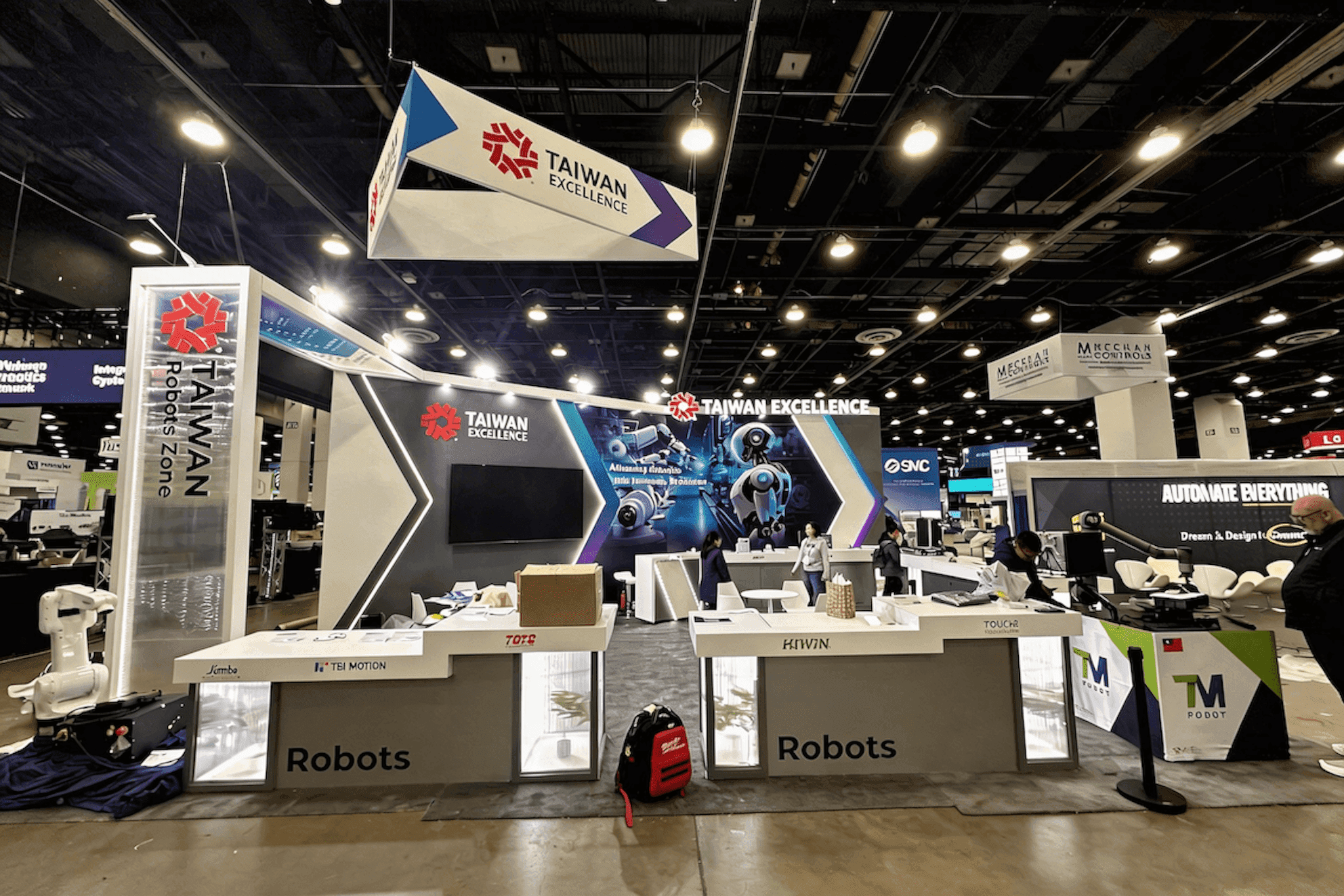
SEMA booth in Las Vegas with a product display wall blocking the front view of a display vehicle, showing poor sightline hierarchy between product and vehicle zones

What Happens When Product Walls and Vehicle Sightlines Compete at SEMA

What Happens When Product Walls and Vehicle Sightlines Compete at SEMA

Circle Exhibit Team

Industry professionals

Exhibition industry professional dedicated to delivering the latest insights and curated recommendations to you.

Exhibition industry professional dedicated to delivering the latest insights and curated recommendations to you.

At SEMA, bad sightline hierarchy weakens both the product display and the booth itself. When product walls compete with the best vehicle view, the whole layout becomes harder to read.

At SEMA, bad sightline hierarchy weakens both the product display and the booth itself. When product walls compete with the best vehicle view, the whole layout becomes harder to read.

At SEMA, bad sightline hierarchy weakens both the product display and the booth itself. When product walls compete with the best vehicle view, the whole layout becomes harder to read.

The booth starts losing before people even step in

At SEMA, the first read usually happens fast.

A visitor sees the booth, notices the vehicle, scans the surrounding products, and decides within a few seconds whether the display feels worth a closer look.

That first moment is where sightline problems do the most damage.

If a product wall cuts across the best angle of the vehicle, the booth starts weakening its own strongest asset before the story even begins.

The issue is not the product wall by itself

A product wall is not automatically a problem.

In many SEMA booths, it is necessary. It helps explain categories, gives the display more commercial value, and turns a visually strong vehicle into a clearer product story.

The problem starts when the product wall takes the position that the vehicle needed most.

That is when the booth stops behaving like one connected display and starts behaving like two separate arguments competing for attention.

Vehicle booths need a visual leader

Most SEMA vehicle booths work best when one element clearly leads.

In most cases, that leader is the vehicle.

That does not mean the products are secondary in importance.
It means they need to enter the story in the right order.

A better booth usually works like this:

1. The vehicle earns the stop

It creates the first visual reason to look.

2. The product wall explains the system

It gives visitors category context after the initial stop.

3. The booth deepens into product interaction or conversation

The layout moves naturally from attention to understanding.

When that order breaks, the booth becomes harder to read.

A blocked front view weakens everything around it

This is what many teams miss.

When the best vehicle angle gets interrupted by a product wall, the booth does not simply “show more product.” It usually shows less of everything well.

The vehicle loses its clean first read.
The wall becomes harder to understand because it is now carrying too much responsibility.
The overall booth feels more crowded because the center visual logic is no longer clean.

That is why poor sightline hierarchy does not help the product wall either. It weakens the very clarity the wall was supposed to provide.

The center vehicle needs breathing room

In most automotive booths, the center display works because it feels deliberate.

There is enough open space around it for the visitor to read:

  • stance

  • wheel fitment

  • front profile

  • accessory integration

  • overall build intent

Once that breathing room is gone, the vehicle becomes visually compressed.

It may still be impressive up close, but it stops performing as strongly from the aisle.

That is usually when the booth starts feeling crowded instead of premium.

Product walls should support the angle, not cut across it

A strong product wall usually works best when it sits beside or slightly behind the lead vehicle angle.

That allows it to do its real job:

  • support category understanding

  • give the booth commercial depth

  • create the next step after the visual stop

It should not stand where the visitor needed the cleanest vehicle read.

That is why wall placement is rarely just about available space.
It is about sequence.

If the wall shows up too early in the visual path, it starts competing.
If it enters just after the first vehicle read, it starts helping.

The worst conflict usually happens at the front third of the booth

This is where many SEMA layouts go wrong.

Teams want maximum exposure, so they pull the product wall forward. That seems efficient because the wall becomes easier to see from the aisle.

But the front third of the booth is often where the center vehicle needs the most protection.

Once that zone gets crowded by tall display walls, stacked product faces, or heavy vertical elements, the front of the booth begins to flatten. The visitor no longer gets a clear sense of what should matter first.

That is where the booth loses hierarchy.

A 30x40 booth gives more room to separate these roles

This is one reason a 30x40 trade show booth works so well for SEMA vehicle displays.

That footprint often gives enough room to separate:

  • the clean vehicle sightline

  • the product wall zone

  • the circulation path

  • the conversation area

In a tighter booth, those roles tend to collapse into each other. In a better 30x40, the wall can still be prominent without cutting off the best front or three-quarter vehicle read.

That is where the booth starts feeling balanced instead of overfilled.

Graphics can either clean up the conflict or make it worse

This is where graphics and brand presentation matter.

A product wall already carries a lot of visual weight. If the graphic treatment is too dense, too loud, or too large for its placement, the wall becomes even more aggressive.

A better graphic approach helps the wall read clearly without pulling all the attention away from the vehicle.

That usually means:

  • shorter category messaging

  • cleaner visual grouping

  • fewer competing headlines

  • clearer product-family structure

  • graphics that support, not overpower, the center display

The wall should explain the booth, not visually dominate it.

Builder thinking matters because sightlines are structural, not decorative

This is one reason exhibitors benefit from working with a Las Vegas trade show booth builder that understands how sightlines behave in a live booth.

Because the problem is not just visual styling.

It is structural.

Wall height, wall position, vehicle angle, entry condition, aisle view, and circulation all affect whether the booth feels clean or conflicted. A wall that looks fine on a flat layout can still be in the wrong place once the vehicle and real viewing angles are in play.

That is why sightline hierarchy has to be solved in the layout, not just in the graphics file.

A better SEMA booth usually follows this logic

The strongest booths usually get these priorities right:

Vehicle first

The center display keeps its strongest angle.

Product wall second

The wall supports the product story without blocking the main read.

Circulation third

Visitors can move from vehicle to product without friction.

Conversation last

Sales activity happens after the booth has visually explained itself.

That sequence keeps the booth easier to understand and much easier to trust.

Final thought

At SEMA, product walls are valuable.

But they should not win the wrong battle.

If the wall blocks the best vehicle sightline, the booth starts hurting its own strongest visual asset. And once that happens, the products do not really win either. The entire booth becomes harder to read.

That is why bad sightline hierarchy weakens both the product and the booth.

The better layout is usually the one where the wall supports the vehicle story instead of stepping in front of it.

Planning a vehicle booth for SEMA Show?
Start with SEMA booth planning, then shape the layout with a Las Vegas trade show booth builder approach that keeps product walls visible without sacrificing the vehicle’s strongest sightlines.
The booth starts losing before people even step in

At SEMA, the first read usually happens fast.

A visitor sees the booth, notices the vehicle, scans the surrounding products, and decides within a few seconds whether the display feels worth a closer look.

That first moment is where sightline problems do the most damage.

If a product wall cuts across the best angle of the vehicle, the booth starts weakening its own strongest asset before the story even begins.

The issue is not the product wall by itself

A product wall is not automatically a problem.

In many SEMA booths, it is necessary. It helps explain categories, gives the display more commercial value, and turns a visually strong vehicle into a clearer product story.

The problem starts when the product wall takes the position that the vehicle needed most.

That is when the booth stops behaving like one connected display and starts behaving like two separate arguments competing for attention.

Vehicle booths need a visual leader

Most SEMA vehicle booths work best when one element clearly leads.

In most cases, that leader is the vehicle.

That does not mean the products are secondary in importance.
It means they need to enter the story in the right order.

A better booth usually works like this:

1. The vehicle earns the stop

It creates the first visual reason to look.

2. The product wall explains the system

It gives visitors category context after the initial stop.

3. The booth deepens into product interaction or conversation

The layout moves naturally from attention to understanding.

When that order breaks, the booth becomes harder to read.

A blocked front view weakens everything around it

This is what many teams miss.

When the best vehicle angle gets interrupted by a product wall, the booth does not simply “show more product.” It usually shows less of everything well.

The vehicle loses its clean first read.
The wall becomes harder to understand because it is now carrying too much responsibility.
The overall booth feels more crowded because the center visual logic is no longer clean.

That is why poor sightline hierarchy does not help the product wall either. It weakens the very clarity the wall was supposed to provide.

The center vehicle needs breathing room

In most automotive booths, the center display works because it feels deliberate.

There is enough open space around it for the visitor to read:

  • stance

  • wheel fitment

  • front profile

  • accessory integration

  • overall build intent

Once that breathing room is gone, the vehicle becomes visually compressed.

It may still be impressive up close, but it stops performing as strongly from the aisle.

That is usually when the booth starts feeling crowded instead of premium.

Product walls should support the angle, not cut across it

A strong product wall usually works best when it sits beside or slightly behind the lead vehicle angle.

That allows it to do its real job:

  • support category understanding

  • give the booth commercial depth

  • create the next step after the visual stop

It should not stand where the visitor needed the cleanest vehicle read.

That is why wall placement is rarely just about available space.
It is about sequence.

If the wall shows up too early in the visual path, it starts competing.
If it enters just after the first vehicle read, it starts helping.

The worst conflict usually happens at the front third of the booth

This is where many SEMA layouts go wrong.

Teams want maximum exposure, so they pull the product wall forward. That seems efficient because the wall becomes easier to see from the aisle.

But the front third of the booth is often where the center vehicle needs the most protection.

Once that zone gets crowded by tall display walls, stacked product faces, or heavy vertical elements, the front of the booth begins to flatten. The visitor no longer gets a clear sense of what should matter first.

That is where the booth loses hierarchy.

A 30x40 booth gives more room to separate these roles

This is one reason a 30x40 trade show booth works so well for SEMA vehicle displays.

That footprint often gives enough room to separate:

  • the clean vehicle sightline

  • the product wall zone

  • the circulation path

  • the conversation area

In a tighter booth, those roles tend to collapse into each other. In a better 30x40, the wall can still be prominent without cutting off the best front or three-quarter vehicle read.

That is where the booth starts feeling balanced instead of overfilled.

Graphics can either clean up the conflict or make it worse

This is where graphics and brand presentation matter.

A product wall already carries a lot of visual weight. If the graphic treatment is too dense, too loud, or too large for its placement, the wall becomes even more aggressive.

A better graphic approach helps the wall read clearly without pulling all the attention away from the vehicle.

That usually means:

  • shorter category messaging

  • cleaner visual grouping

  • fewer competing headlines

  • clearer product-family structure

  • graphics that support, not overpower, the center display

The wall should explain the booth, not visually dominate it.

Builder thinking matters because sightlines are structural, not decorative

This is one reason exhibitors benefit from working with a Las Vegas trade show booth builder that understands how sightlines behave in a live booth.

Because the problem is not just visual styling.

It is structural.

Wall height, wall position, vehicle angle, entry condition, aisle view, and circulation all affect whether the booth feels clean or conflicted. A wall that looks fine on a flat layout can still be in the wrong place once the vehicle and real viewing angles are in play.

That is why sightline hierarchy has to be solved in the layout, not just in the graphics file.

A better SEMA booth usually follows this logic

The strongest booths usually get these priorities right:

Vehicle first

The center display keeps its strongest angle.

Product wall second

The wall supports the product story without blocking the main read.

Circulation third

Visitors can move from vehicle to product without friction.

Conversation last

Sales activity happens after the booth has visually explained itself.

That sequence keeps the booth easier to understand and much easier to trust.

Final thought

At SEMA, product walls are valuable.

But they should not win the wrong battle.

If the wall blocks the best vehicle sightline, the booth starts hurting its own strongest visual asset. And once that happens, the products do not really win either. The entire booth becomes harder to read.

That is why bad sightline hierarchy weakens both the product and the booth.

The better layout is usually the one where the wall supports the vehicle story instead of stepping in front of it.

Planning a vehicle booth for SEMA Show?
Start with SEMA booth planning, then shape the layout with a Las Vegas trade show booth builder approach that keeps product walls visible without sacrificing the vehicle’s strongest sightlines.
Message

Leave your message and we will get back to you ASAP

Send a Message

We’ll Be in Touch!

Message

Leave your message and we will get back to you ASAP

Address:

4915 Steptoe Street #300

Las Vegas, NV 89122