Use the TISE Move-In Window as the Frame, Not the Sequence
TISE uses a targeted move-in schedule, but that schedule establishes the time frame for installation; it does not determine when every sample, slab, machine, or display component should reach its final position. Current move-in information and individual target timing are managed through the Exhibitor Resource Center (ERC).
Targeted move-in: an assigned move-in window for an exhibitor. It defines when installation can take place, not the order of every task inside that window.
Booth freight, product freight, and show services may become ready at different times. A crate can reach the booth before the fixture that receives its contents is finished, while product placement may depend on access or another installation step that is still underway.
The better question is therefore not only, “When can we move in?” but “What must already be ready before this product can be placed, connected, or tested?”
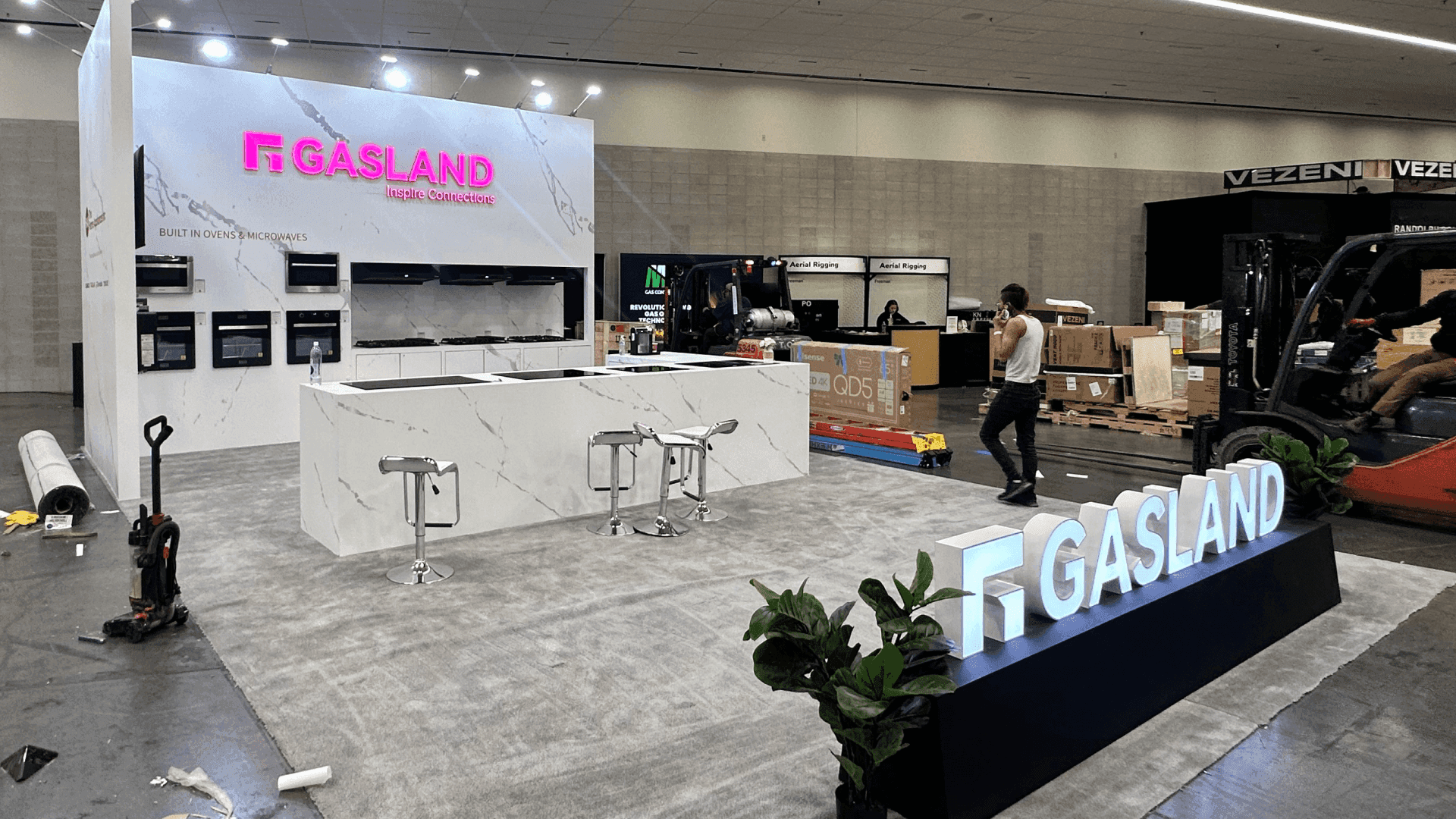
Samples should enter after the display system is stable so final merchandising can be completed without repeated handling or rework.
Show Services Can Hold Up the Next Placement Step
A product can already be on the show floor and still be waiting for the next installation step. At TISE, EAC crews may handle booth installation and dismantling, while services such as electrical, freight handling, rigging, internet, and plumbing remain with designated show-service providers.
That division affects product placement directly. A slab may be on site but still need handling or rigging before final positioning. Equipment may already be where it belongs physically but unable to move into connection and testing until the required power, plumbing, internet, or other service is available.
In this article, a service gate is a required show service that must be completed before the next placement, connection, or testing step can begin.
The practical response is to keep the necessary access open until that gate is cleared. Closing walls, finishing counters, or completing surrounding displays too early can turn a temporary service delay into avoidable installation rework.
Samples Belong After the Display System Is Ready
Flooring and surface samples usually belong later in the sequence, after the structure, sample hardware, and graphics are stable. Bringing them in earlier can mean repeated handling while racks, shelving, graphic references, labels, or storage areas are still being adjusted.
A useful sequence is:
Structure → Display Hardware → Graphics → Samples → Merchandising → Replacement Stock
Here, display ready means the fixtures, graphics, labels, and storage that support the product are settled enough for final merchandising.
A booth can already be standing while its product presentation is still changing. Waiting until the display system is stable allows the final sample arrangement to be completed once instead of rebuilt around ongoing installation work. Replacement stock can follow once the main presentation is in place and hidden storage is ready.
Once the samples are installed, the next question is how buyers should browse and compare them. That display task is covered in SURFACES booth planning; this article stays with when the samples should enter and remain in their final merchandising position.
Slabs Need Access Before the Booth Closes Around Them
Large stone follows almost the opposite logic. The critical issue is often not how late the material can arrive, but how long the route to its final position remains open. As installation progresses, walls, counters, flooring, display structures, or other equipment can narrow that path, so a booth may look closer to completion while becoming harder to move a large slab through.
A practical sequence is:
Placement Access → Support or Mounting Area Ready → Slab Positioning → Surrounding Work → Inspection Readiness
The receiving area and support condition should be ready before the slab is moved into position. That reduces the chance of repositioning heavy material while surrounding construction continues.
For large stone, the more useful question may be when access disappears, not when booth construction is officially complete. Slab placement may need to happen before adjacent structures or finishes are closed out simply because the same material will be much harder to move later.
Placement solves the installation problem, but it does not determine how visitors should inspect or evaluate the material. That layer is covered in STONE booth planning.

Slabs and equipment need different placement timing: large stone depends on open access, while machinery must reach final position before service connection and testing.
Equipment Must Reach Final Position Before It Can Be Tested
Getting a machine onto the booth floor does not make it demo-ready. It first needs to reach the position where it will actually operate.
A practical sequence is:
Final Position → Required Services → Connection → Operational Test → Final Surrounding Work → Viewer Clearance
Positioning comes first because service connections need to work with the machine’s final location. Electrical, plumbing, internet, or other required connections also need to remain accessible while the unit is installed and tested.
Surrounding finish work should not close around the equipment too soon. Counters, structures, or finished elements can make service points harder to reach, limit operator access, or complicate adjustments if testing reveals a problem.
Before the booth is considered ready, confirm more than whether the machine turns on. The operator should have usable working space, service points should remain accessible, and visitors need enough clearance to watch or approach the equipment without interfering with operation. Only after positioning, connection, and testing are complete should surrounding finish work close in around the machine.
Use a Different Final Readiness Check for Each Product Type
A single “booth complete” check is not enough because samples, slabs, and equipment fail in different ways.
Product | Ready When | Final Check |
|---|---|---|
Samples | Display hardware, graphics, and final merchandising are in place | Labels, missing pieces, product order, replacement stock, overall display condition |
Slabs | Material is supported, positioned, and accessible | Support or mounting, inspection access, intended surfaces and edges accessible, surrounding clearance |
Equipment | Final position, required services, connection, and operational testing are complete | Service access, operation, operator position, visitor clearance, operator or demo staff readiness |
For samples, readiness is mainly about presentation and replenishment. For slabs, it is about support and inspection access. For equipment, it is about operation, service access, and safe use once the show opens.
The final review should confirm that each product is ready for the way visitors and staff will actually use it—not simply that the surrounding booth looks finished.
FAQ
Should booth freight and product freight arrive together at TISE?
Not necessarily. Their timing should follow the installation sequence, available placement access, and service dependencies rather than assuming booth freight and product freight need to arrive at the same stage.
When should stone slabs be placed in a TISE booth?
Place slabs after the receiving area and support condition are ready, but while the route to the final position is still open. Waiting until surrounding construction is complete can make placement much harder.
When should equipment be tested during TISE move-in?
Test equipment after it reaches its final operating position and the required services are connected. The final check should also confirm operator access and enough visitor clearance for show-floor use.