How ICAS Exhibitor Seniority Works
Under the 2026 exhibitor rules, seniority is based on consecutive years of exhibition. Organizations with the same seniority receive access to online booth selection at the same time, so seniority can affect which spaces remain available when an exhibitor’s selection window opens.
ICAS can also change an assigned location when necessary while making reasonable efforts to provide comparable space. That makes it risky to build the entire concept around one exact floor position before the assignment is final. Seniority influences when an exhibitor selects and what inventory may still be available; whether the finished booth works well still depends on how effectively the confirmed space supports the exhibitor’s business task.

ICAS seniority can affect when exhibitors enter the booth-selection process, while the final layout should remain flexible until the assigned space is confirmed.
What Else Can Affect ICAS Booth Selection?
Sponsorship
ICAS may include preferred booth locations in a convention sponsorship agreement, while current rules require at least 50% of designated prime booth locations to remain available for senior exhibitors. Sponsorship can expand the locations available to an exhibitor, but it does not change the booth’s underlying functional requirements: the selected space still has to support the conversations, media, staffing, storage, and other functions the exhibit needs.
Combined Seniority and Shared Booths
ICAS also allows exhibitors to coordinate space selection. Organizations selecting multiple booths together may combine seniority, while exhibitors planning either a combined selection or a shared single booth must provide advance written notice before the Booth Draw. Current rules limit a shared single booth to two exhibitors, so any concept that depends on adjacent units or a shared configuration should stay flexible until that arrangement is confirmed.
Once a shared or combined arrangement is confirmed, the question changes from securing space to making several organizations work clearly within it. Brand separation, visitor routing, shared resources, and operating responsibilities are the focus of ICAS shared booth planning.
What to Decide Before Booth Selection—and What to Finalize Later
The most useful distinction before booth selection is between the functional brief and the final geometry.
Decide before booth selection | Finalize after the space is confirmed |
|---|---|
Target visitor and desired next step | Exact entry direction |
Minimum functional footprint | Open-side assumptions |
Required staff capacity | Final counter orientation |
Essential media or display functions | Frontage-dependent graphics |
Meeting and storage needs | Adjacency-dependent structure |
Non-negotiable booth functions | Final media, storage, and circulation positions |
The first column defines what the booth has to accomplish, so those requirements remain useful even if the location changes. The second depends on the actual shape and orientation of the assigned space, which is why locking those decisions too early can force unnecessary redesign later.
Lock the functional brief early and the final geometry later.
Why Late Setup and Early Dismantling Matter Beyond This Year
At ICAS, setup and dismantling are not only current-show execution issues. The 2026 rules connect late setup and early dismantling directly to exhibitor seniority, so on-site behavior can affect a company’s position in a future booth-selection cycle.
The rules apply increasing seniority deductions depending on how late setup begins or how early dismantling starts. An organization that reserves booth space but does not exhibit or send representatives can lose its seniority entirely. ICAS also states that booths must be set up by Monday at 5:00 p.m. unless advance arrangements have been made.
Returning exhibitors should therefore settle final-session staffing and breakdown responsibilities before the show begins. Screens, graphics, counters, stored materials, and reusable components should have clear ownership, and the team should know when dismantling can start without affecting seniority. At ICAS, execution this year can influence the booth-selection position available in a future year.
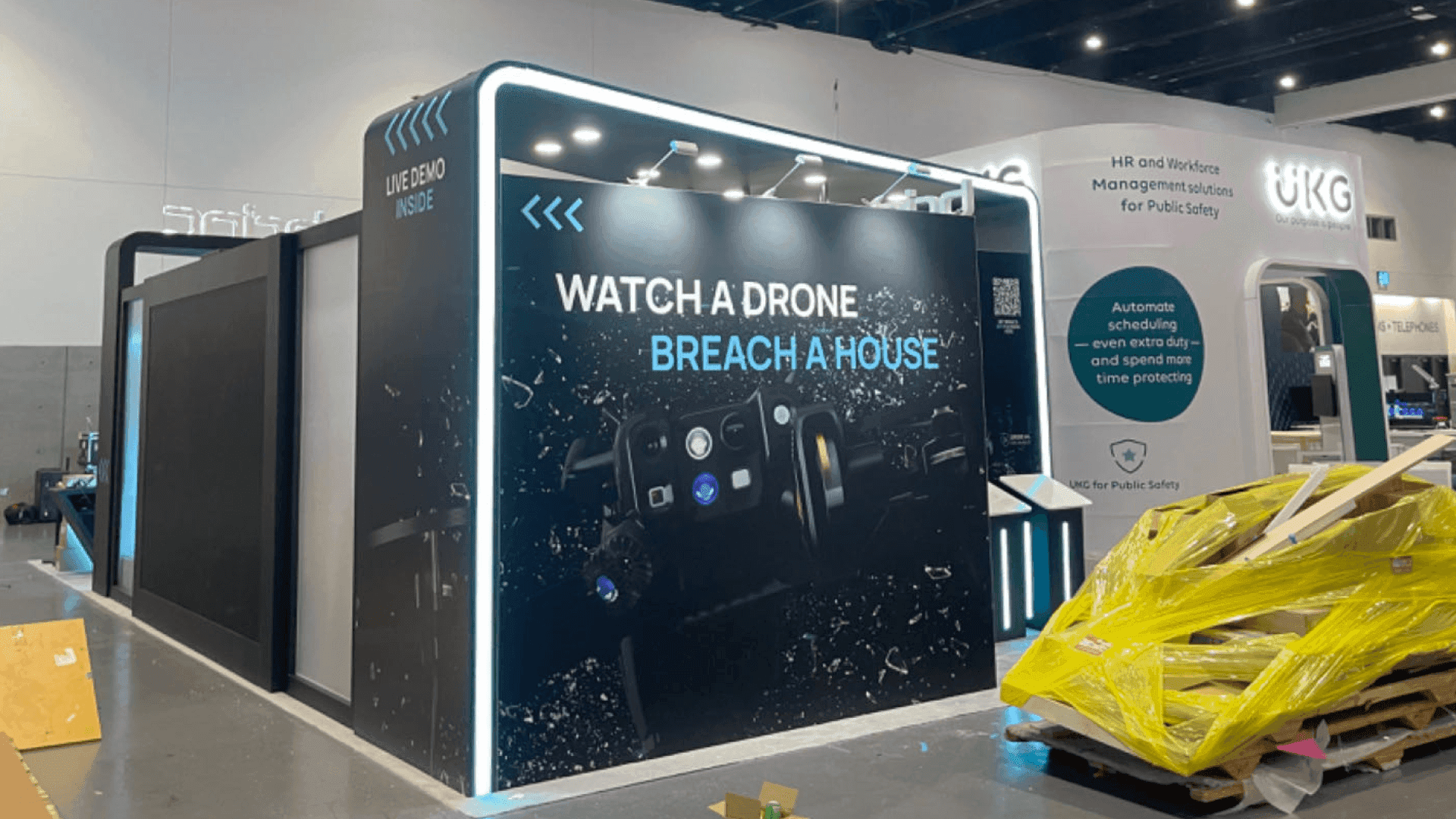
Reusable structure, media hardware, and storage can carry forward across ICAS events while graphics and orientation adapt to each confirmed booth assignment.
Build for Repeat ICAS Participation Without Locking Into One Floor Position
Multi-year planning does not mean repeating the same floor plan every year. A more useful approach is to preserve components that remain valuable across different booth assignments—such as reusable walls, counters, storage, media hardware, and standard mounting systems—while allowing graphics, messaging, open-side configuration, media content, and selected furniture positions to adapt to the confirmed footprint.
That approach gives returning exhibitors useful assets to carry forward without forcing every future ICAS booth into one fixed orientation. The goal is a reusable exhibit system that can absorb annual changes rather than a layout tied to one exact floor position.
Once the Space Is Confirmed, Lock the Geometry
After the booth assignment is confirmed, decisions that were intentionally left open can finally be resolved: actual open sides, entry direction, graphic frontage, media placement, counter orientation, storage position, and any elements that depend on adjacent booth space.
At that point, the functional brief can become a production-ready layout. Drawings, structural decisions, media placement, graphics, and technical requirements can then move into exhibit design and engineering using the confirmed footprint rather than assumptions about the floor plan.
FAQ
How is ICAS exhibitor seniority calculated?
ICAS seniority is based on consecutive years of exhibition. Organizations with the same seniority receive access to the online booth-selection process at the same time.
Does sponsorship affect ICAS booth selection?
Yes. Sponsorship may include preferred booth locations, while current ICAS rules require at least 50% of designated prime locations to remain available to senior exhibitors.
Can exhibitors combine seniority at ICAS?
Yes. Exhibitors selecting booths together may combine seniority, subject to ICAS advance-request requirements.
Can two exhibitors share one ICAS booth?
Yes. Current ICAS rules allow a maximum of two exhibitors to share one booth, subject to advance notice and the applicable sharing terms.
Can early booth dismantling affect ICAS seniority?
Yes. Dismantling before the official end of the exhibit portion can reduce the seniority used for future booth selection.