Circle Exhibit Team
Industry professionals
Exhibition industry professional dedicated to delivering the latest insights and curated recommendations to you.
Booth size changes how visitors enter, stop, watch demos, and move into sales conversations. The right footprint should match the way people move, ask questions, view products, and interact with staff.
Quick Answer: How does booth size change visitor flow at a trade show?
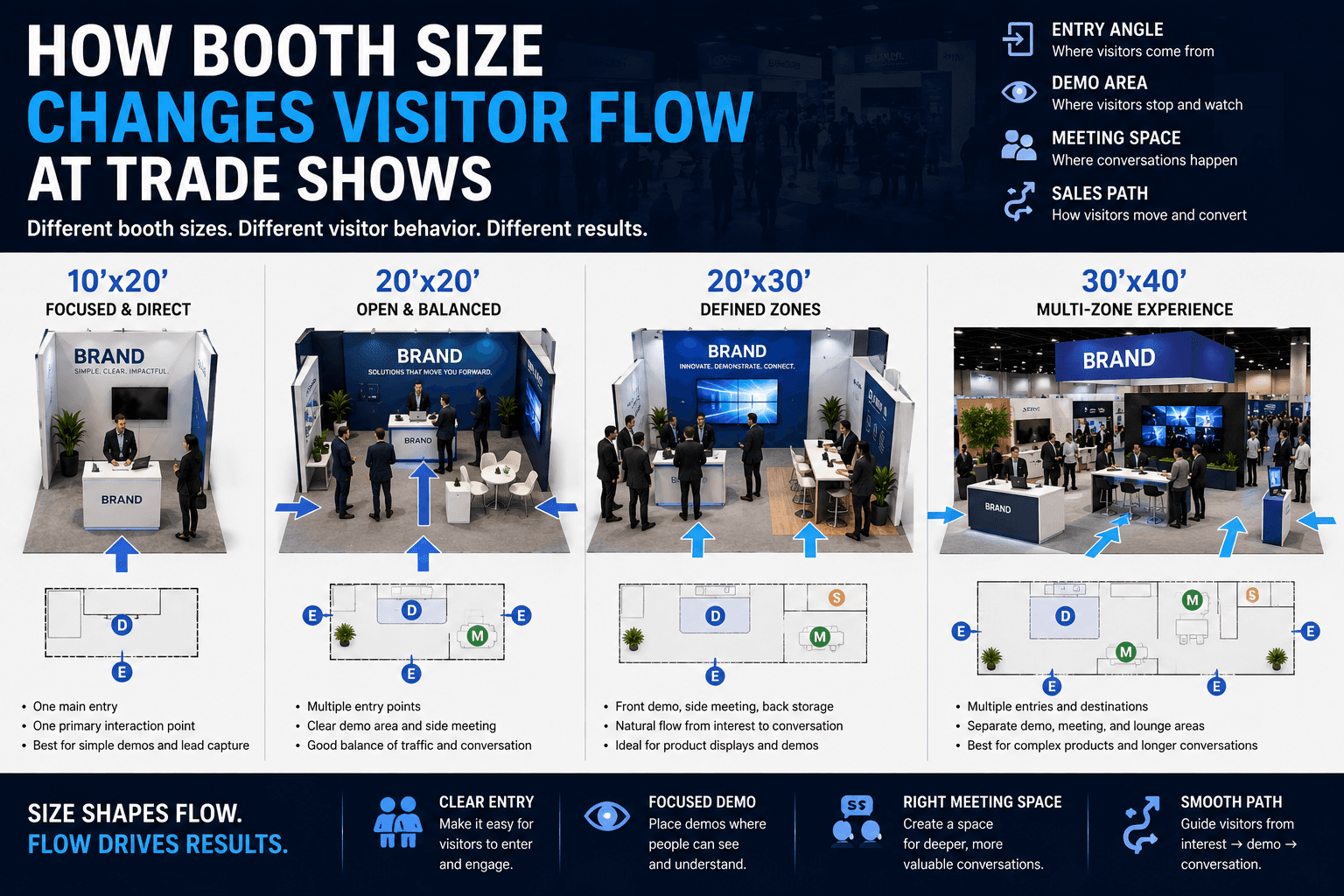
Booth size changes how visitors enter, stop, watch demos, and move into sales conversations. A 10x20 booth needs one direct path and one focused interaction point, while 20x20, 20x30, and 30x40 booths can support clearer zones for demos, meetings, storage, product displays, and staff handoff.
Quick Answer: How does booth size change visitor flow at a trade show?
Booth size changes how visitors enter, stop, watch demos, and move into sales conversations. A 10x20 booth needs one direct path and one focused interaction point, while 20x20, 20x30, and 30x40 booths can support clearer zones for demos, meetings, storage, product displays, and staff handoff.
Booth size is not just a square-footage decision. It changes how visitors approach the booth, where they pause, how a demo is watched, and whether a sales conversation can happen without blocking traffic. A 10x20 booth needs a direct path. A 20x20 booth needs controlled open entry. A 20x30 booth can separate demos from meetings. A 30x40 booth needs stronger routing so visitors do not drift through the space without engaging.
Booth Size Changes Behavior, Not Just Floor Area
Booth size changes what people can do inside the space.
A larger booth does not automatically create better traffic flow. It only gives the exhibitor more ways to organize movement. If those zones are not planned, visitors may walk through without stopping, crowd the wrong counter, or interrupt a meeting that should be happening away from the aisle.
A smaller booth can work well when the path is clear. A larger booth can fail when the path is unclear.
That is why trade show booth size planning should start with booth behavior:
Where do visitors enter?
What do they see first?
Where should they stop?
Where does the demo happen?
Where do staff stand?
Where does a serious buyer conversation continue?
Where does storage stay hidden?
The footprint is only useful when it supports these actions.
A 10x20 Booth Needs One Direct Path
A 10x20 booth works best when the visitor path is simple.
This footprint does not have much room for competing zones. If the booth tries to hold a reception counter, demo station, product display, meeting table, storage, and staff cluster at the same time, the front edge can get blocked quickly.
A 10x20 booth usually needs:
one clear aisle-facing message
one main counter or product interaction point
one staff position near the front
limited furniture
storage hidden under or behind the counter
a clear path in and out
The booth should not ask visitors to figure out where to go.
A good 10x20 layout often works like this: the visitor sees the message, steps toward one counter or demo, asks a short question, then either moves on or schedules a deeper conversation outside the booth.
The mistake is trying to make a 10x20 behave like a larger exhibit. It should stay focused.
A 20x20 Booth Needs Open Entry and a Clear First Stop
A 20x20 booth gives visitors more ways to enter, which is both useful and risky.
With a 20x20 footprint, visitors may come from two sides or more. The booth can feel more open than a 10x20, but it can also lose direction if there is no clear stopping point.
A good 20x20 booth usually needs:
open corners or open entry lanes
one main brand wall or screen
one demo counter
one compact meeting point
one hidden storage area
staff positions that do not block entry
The key is to make the booth open without making it vague.
If every side looks equally important, visitors may walk through the booth without engaging. A 20x20 layout should give people freedom to enter, but still guide them toward one obvious first action: watch the demo, ask at the counter, view the product, or scan a screen.
For exhibitors planning a compact demo booth, 20x20 booth planning should focus on where visitors stop, not just where structures fit.
A 20x30 Booth Can Separate Demo Flow From Meeting Flow
A 20x30 booth gives exhibitors enough room to create a fuller visitor journey.
This size can support a front demo area, product wall, meeting counter, storage, staff movement, and a clearer transition from interest to conversation. That extra space matters when the booth needs to do more than one thing at the same time.
A 20x30 layout can usually support:
one front demo zone
one product or sample display wall
one meeting counter or small conversation area
one brand wall or screen area
one storage or service zone
a clearer staff path
The value of 20x30 is separation.
The demo does not have to happen at the same place as the sales conversation. The product wall does not need to compete with the meeting area. Staff can qualify visitors at the front and move serious buyers to the side or back.
A 20x30 booth is often a good fit when the exhibitor needs product display and buyer conversation in the same footprint.
A 30x40 Booth Needs Stronger Routing
A 30x40 booth gives more space, but it also needs more control.
Visitors may approach from several aisles. Some will enter near the demo zone. Some will walk toward the product display. Others may stop at a reception counter or screen wall. Without a clear route, the booth can feel active but unfocused.
A 30x40 layout may include:
reception or qualifier point
large product display
screen wall or hero graphic
demo area
semi-private meeting space
storage and service access
multiple staff positions
more than one entry path
The risk with 30x40 is not usually crowding. The risk is weak direction.
A large booth should not feel like an open room filled with features. It should help visitors understand where to enter, what to view first, and where the right conversation happens next.
The bigger the booth, the more important routing becomes.
Booth Size and Visitor Flow Comparison
Booth Size | Visitor Flow Pattern | Best Use | Main Risk |
|---|---|---|---|
10x20 | Direct front entry with one focused stop | Simple demo, reception, small product display | Counter and staff block the front |
20x20 | Open entry from corners or multiple sides | Demo counter plus compact meeting area | Visitors enter without knowing where to stop |
20x30 | Clearer path from demo to meeting | Product display, demo zone, buyer conversation | Extra space gets wasted without zone planning |
30x40 | Multi-zone flow with several entry angles | Large product display, screen wall, meetings, demos | Traffic scatters without routing |
This table should not be used as a size specification chart.
The point is behavior. Each booth size changes how people move and how staff should manage the booth.
Demo Areas Change as the Booth Gets Larger
Demo planning changes with booth size.
In a 10x20 booth, the demo usually has to be one simple interaction. It might be a screen, product sample, counter demo, or short staff explanation.
In a 20x20 booth, the demo can sit near the aisle while a small meeting area moves to the side.
In a 20x30 booth, the demo can become its own zone with a product wall or screen nearby.
In a 30x40 booth, the demo may become part of a larger sequence: reception, screen view, product display, technical explanation, then sales conversation.
A good demo area should answer:
What should visitors see or try first?
How many people can stop at one time?
Where does staff stand during the demo?
Does the demo need a screen, product sample, counter, or device?
Where does the visitor go after the demo?
The demo should pull visitors into the booth. It should not block the booth.
Meeting Space Should Match the Type of Conversation
Meeting space should not be added just because the booth has room.
A meeting area only works when it supports the conversation without hurting traffic flow. A small booth may need a standing counter instead of chairs. A 20x20 booth can support a compact table. A 20x30 booth can create a clearer side meeting zone. A 30x40 booth may allow several meeting areas or a more private space.
Conversation Type | Better Booth Fit | Layout Note |
|---|---|---|
Quick lead qualification | 10x20 or 20x20 | Use a standing counter or compact table |
Product fit discussion | 20x20 or 20x30 | Move slightly away from the demo counter |
Technical review | 20x30 or 30x40 | Add screen or documentation support |
Enterprise buyer meeting | 30x40 | Use a quieter side or rear zone |
Partner discussion | 20x30 or 30x40 | Keep away from the busiest aisle edge |
The meeting area should not sit where visitors are waiting to watch a demo.
If meetings and demos share the same space, both become weaker.
Entry Angle Changes What Visitors Notice First
Entry angle affects message placement.
A 10x20 booth usually has one main front. A corner booth has two important views. A 20x20 or larger island-style layout may have traffic from several directions.
The booth needs to decide what visitors should see first from each angle.
That first visual anchor may be:
a branded wall
a screen
a demo counter
a product display
a reception point
a hanging sign or overhead structure
The anchor should match the visitor path.
If the demo is the first stop, the screen and counter should be readable from the aisle. If the product display is the first stop, the display should not be hidden behind furniture. If reception is the first step, the counter should not block the rest of the booth.
Entry angle is not a small detail. It shapes the first decision a visitor makes.
Staff Placement Changes With Booth Size
Staff should stand where the visitor path needs support.
In a 10x20 booth, staff usually need to stay near the front but avoid blocking the entry. In a 20x20 booth, one person can qualify visitors near the aisle while another handles the demo or meeting area. In a 20x30 booth, staff roles can separate more clearly. In a 30x40 booth, staff need assigned zones so the booth does not feel unmanaged.
A simple staff plan may include:
greeter or qualifier
demo lead
technical expert
sales lead
meeting host
floating support person
The larger the booth, the more important handoff becomes.
A visitor should not watch a demo and then wonder who to speak with next. The layout and staff positions should make that step obvious.
Rental Booths Still Need Size-Specific Planning
Rental booths should not use the same layout for every footprint.
A customizable booth rental in Las Vegas works best when the rental system is adjusted to the booth size. A 20x20 rental booth may need open corners and one strong demo counter. A 20x30 rental booth may need a demo wall, meeting counter, product display, and storage. A larger rental or hybrid booth may need stronger routing and more defined zones.
Rental planning should still consider:
visitor entry
demo behavior
graphic visibility
meeting space
storage access
staff movement
installation sequence
Rental does not mean one-size-fits-all.
The structure may be reusable, but the visitor flow still needs to fit the booth size.
Booth Construction Should Match the Flow Plan
The booth should be built around how people will use it.
At Las Vegas trade shows, booth construction has to connect with freight timing, drayage, installation, graphics placement, power access, and final setup. A clean layout on paper can still create problems if the build sequence does not support the visitor flow.
This is where a Las Vegas booth construction team helps connect footprint planning with show-site execution.
For example:
demo counters need power access
meeting areas need enough clearance
screen walls need viewing distance
storage should not block staff movement
product displays should not interrupt entry paths
graphics should be readable from the main aisle angle
The booth should be built for real movement, not just for a rendering.
Modular Structures Can Help When Booth Sizes Change
Modular structures can help exhibitors adapt flow across different booth sizes.
A company may use a 20x20 layout at one show and a 20x30 layout at another. Some walls, counters, shelves, monitor mounts, and graphic systems may be reused, but the flow still needs to change with the footprint.
Good modular booth structure planning should consider:
which walls can be reused
which graphics need to change
how counters shift by booth size
how storage fits each footprint
whether staff flow remains clear
how the installation sequence changes
Modular does not mean generic.
It means the booth system can be adjusted when the booth size and visitor path change.
OPTECH Example: Software Demos Need Controlled Flow
Software demo booths show how booth size affects conversation flow.
For OPTECH booth planning for software demos, the booth may need a screen-based demo, a front qualification point, a compact meeting counter, and a quieter area for software or property technology conversations.
If the booth is too small, all of those actions compete at one counter. If the booth is larger but unstructured, visitors may not know where the demo starts.
A software demo booth should plan:
where visitors first understand the product category
where the screen demo happens
where staff qualify interest
where deeper buyer conversations happen
how the booth avoids crowding around one monitor
This applies beyond OPTECH. Any software demo booth needs a clear path from interest to explanation to sales conversation.
Booth size decides how much separation is possible.
Booth Size Planning Checklist
A good booth size decision should come from visitor behavior.
Checklist
What should visitors notice first from the aisle?
How many entry angles does the booth need to support?
Is the booth mainly for demos, meetings, product display, or lead capture?
Does the booth need one demo point or several zones?
How many staff members need working positions?
Where should sales conversations happen after the demo?
How much hidden storage is needed?
Does the booth need screens, counters, samples, or AV?
Can visitors move without blocking the aisle?
Does the booth size support the installation sequence?
Is the footprint large enough for the conversation type?
Will rental or modular components need to shift by size?
This checklist keeps booth size tied to real show-floor behavior.
It also helps exhibitors avoid choosing a size only because it looks better in a rendering.
Final Takeaway
Booth size changes visitor flow because it changes what people can do inside the space.
A 10x20 booth needs focus. A 20x20 booth needs open entry and a clear first stop. A 20x30 booth can separate demo flow from meeting flow. A 30x40 booth needs stronger routing, staff control, and zone planning.
The right booth size is not always the largest one.
It is the size that gives visitors a clear way to enter, understand the product, watch or try the demo, and continue into the right conversation without creating traffic confusion.
That is what booth size planning should solve.
Booth Size Changes Behavior, Not Just Floor Area
Booth size changes what people can do inside the space.
A larger booth does not automatically create better traffic flow. It only gives the exhibitor more ways to organize movement. If those zones are not planned, visitors may walk through without stopping, crowd the wrong counter, or interrupt a meeting that should be happening away from the aisle.
A smaller booth can work well when the path is clear. A larger booth can fail when the path is unclear.
That is why trade show booth size planning should start with booth behavior:
Where do visitors enter?
What do they see first?
Where should they stop?
Where does the demo happen?
Where do staff stand?
Where does a serious buyer conversation continue?
Where does storage stay hidden?
The footprint is only useful when it supports these actions.
A 10x20 Booth Needs One Direct Path
A 10x20 booth works best when the visitor path is simple.
This footprint does not have much room for competing zones. If the booth tries to hold a reception counter, demo station, product display, meeting table, storage, and staff cluster at the same time, the front edge can get blocked quickly.
A 10x20 booth usually needs:
one clear aisle-facing message
one main counter or product interaction point
one staff position near the front
limited furniture
storage hidden under or behind the counter
a clear path in and out
The booth should not ask visitors to figure out where to go.
A good 10x20 layout often works like this: the visitor sees the message, steps toward one counter or demo, asks a short question, then either moves on or schedules a deeper conversation outside the booth.
The mistake is trying to make a 10x20 behave like a larger exhibit. It should stay focused.
A 20x20 Booth Needs Open Entry and a Clear First Stop
A 20x20 booth gives visitors more ways to enter, which is both useful and risky.
With a 20x20 footprint, visitors may come from two sides or more. The booth can feel more open than a 10x20, but it can also lose direction if there is no clear stopping point.
A good 20x20 booth usually needs:
open corners or open entry lanes
one main brand wall or screen
one demo counter
one compact meeting point
one hidden storage area
staff positions that do not block entry
The key is to make the booth open without making it vague.
If every side looks equally important, visitors may walk through the booth without engaging. A 20x20 layout should give people freedom to enter, but still guide them toward one obvious first action: watch the demo, ask at the counter, view the product, or scan a screen.
For exhibitors planning a compact demo booth, 20x20 booth planning should focus on where visitors stop, not just where structures fit.
A 20x30 Booth Can Separate Demo Flow From Meeting Flow
A 20x30 booth gives exhibitors enough room to create a fuller visitor journey.
This size can support a front demo area, product wall, meeting counter, storage, staff movement, and a clearer transition from interest to conversation. That extra space matters when the booth needs to do more than one thing at the same time.
A 20x30 layout can usually support:
one front demo zone
one product or sample display wall
one meeting counter or small conversation area
one brand wall or screen area
one storage or service zone
a clearer staff path
The value of 20x30 is separation.
The demo does not have to happen at the same place as the sales conversation. The product wall does not need to compete with the meeting area. Staff can qualify visitors at the front and move serious buyers to the side or back.
A 20x30 booth is often a good fit when the exhibitor needs product display and buyer conversation in the same footprint.
A 30x40 Booth Needs Stronger Routing
A 30x40 booth gives more space, but it also needs more control.
Visitors may approach from several aisles. Some will enter near the demo zone. Some will walk toward the product display. Others may stop at a reception counter or screen wall. Without a clear route, the booth can feel active but unfocused.
A 30x40 layout may include:
reception or qualifier point
large product display
screen wall or hero graphic
demo area
semi-private meeting space
storage and service access
multiple staff positions
more than one entry path
The risk with 30x40 is not usually crowding. The risk is weak direction.
A large booth should not feel like an open room filled with features. It should help visitors understand where to enter, what to view first, and where the right conversation happens next.
The bigger the booth, the more important routing becomes.
Booth Size and Visitor Flow Comparison
Booth Size | Visitor Flow Pattern | Best Use | Main Risk |
|---|---|---|---|
10x20 | Direct front entry with one focused stop | Simple demo, reception, small product display | Counter and staff block the front |
20x20 | Open entry from corners or multiple sides | Demo counter plus compact meeting area | Visitors enter without knowing where to stop |
20x30 | Clearer path from demo to meeting | Product display, demo zone, buyer conversation | Extra space gets wasted without zone planning |
30x40 | Multi-zone flow with several entry angles | Large product display, screen wall, meetings, demos | Traffic scatters without routing |
This table should not be used as a size specification chart.
The point is behavior. Each booth size changes how people move and how staff should manage the booth.
Demo Areas Change as the Booth Gets Larger
Demo planning changes with booth size.
In a 10x20 booth, the demo usually has to be one simple interaction. It might be a screen, product sample, counter demo, or short staff explanation.
In a 20x20 booth, the demo can sit near the aisle while a small meeting area moves to the side.
In a 20x30 booth, the demo can become its own zone with a product wall or screen nearby.
In a 30x40 booth, the demo may become part of a larger sequence: reception, screen view, product display, technical explanation, then sales conversation.
A good demo area should answer:
What should visitors see or try first?
How many people can stop at one time?
Where does staff stand during the demo?
Does the demo need a screen, product sample, counter, or device?
Where does the visitor go after the demo?
The demo should pull visitors into the booth. It should not block the booth.
Meeting Space Should Match the Type of Conversation
Meeting space should not be added just because the booth has room.
A meeting area only works when it supports the conversation without hurting traffic flow. A small booth may need a standing counter instead of chairs. A 20x20 booth can support a compact table. A 20x30 booth can create a clearer side meeting zone. A 30x40 booth may allow several meeting areas or a more private space.
Conversation Type | Better Booth Fit | Layout Note |
|---|---|---|
Quick lead qualification | 10x20 or 20x20 | Use a standing counter or compact table |
Product fit discussion | 20x20 or 20x30 | Move slightly away from the demo counter |
Technical review | 20x30 or 30x40 | Add screen or documentation support |
Enterprise buyer meeting | 30x40 | Use a quieter side or rear zone |
Partner discussion | 20x30 or 30x40 | Keep away from the busiest aisle edge |
The meeting area should not sit where visitors are waiting to watch a demo.
If meetings and demos share the same space, both become weaker.
Entry Angle Changes What Visitors Notice First
Entry angle affects message placement.
A 10x20 booth usually has one main front. A corner booth has two important views. A 20x20 or larger island-style layout may have traffic from several directions.
The booth needs to decide what visitors should see first from each angle.
That first visual anchor may be:
a branded wall
a screen
a demo counter
a product display
a reception point
a hanging sign or overhead structure
The anchor should match the visitor path.
If the demo is the first stop, the screen and counter should be readable from the aisle. If the product display is the first stop, the display should not be hidden behind furniture. If reception is the first step, the counter should not block the rest of the booth.
Entry angle is not a small detail. It shapes the first decision a visitor makes.
Staff Placement Changes With Booth Size
Staff should stand where the visitor path needs support.
In a 10x20 booth, staff usually need to stay near the front but avoid blocking the entry. In a 20x20 booth, one person can qualify visitors near the aisle while another handles the demo or meeting area. In a 20x30 booth, staff roles can separate more clearly. In a 30x40 booth, staff need assigned zones so the booth does not feel unmanaged.
A simple staff plan may include:
greeter or qualifier
demo lead
technical expert
sales lead
meeting host
floating support person
The larger the booth, the more important handoff becomes.
A visitor should not watch a demo and then wonder who to speak with next. The layout and staff positions should make that step obvious.
Rental Booths Still Need Size-Specific Planning
Rental booths should not use the same layout for every footprint.
A customizable booth rental in Las Vegas works best when the rental system is adjusted to the booth size. A 20x20 rental booth may need open corners and one strong demo counter. A 20x30 rental booth may need a demo wall, meeting counter, product display, and storage. A larger rental or hybrid booth may need stronger routing and more defined zones.
Rental planning should still consider:
visitor entry
demo behavior
graphic visibility
meeting space
storage access
staff movement
installation sequence
Rental does not mean one-size-fits-all.
The structure may be reusable, but the visitor flow still needs to fit the booth size.
Booth Construction Should Match the Flow Plan
The booth should be built around how people will use it.
At Las Vegas trade shows, booth construction has to connect with freight timing, drayage, installation, graphics placement, power access, and final setup. A clean layout on paper can still create problems if the build sequence does not support the visitor flow.
This is where a Las Vegas booth construction team helps connect footprint planning with show-site execution.
For example:
demo counters need power access
meeting areas need enough clearance
screen walls need viewing distance
storage should not block staff movement
product displays should not interrupt entry paths
graphics should be readable from the main aisle angle
The booth should be built for real movement, not just for a rendering.
Modular Structures Can Help When Booth Sizes Change
Modular structures can help exhibitors adapt flow across different booth sizes.
A company may use a 20x20 layout at one show and a 20x30 layout at another. Some walls, counters, shelves, monitor mounts, and graphic systems may be reused, but the flow still needs to change with the footprint.
Good modular booth structure planning should consider:
which walls can be reused
which graphics need to change
how counters shift by booth size
how storage fits each footprint
whether staff flow remains clear
how the installation sequence changes
Modular does not mean generic.
It means the booth system can be adjusted when the booth size and visitor path change.
OPTECH Example: Software Demos Need Controlled Flow
Software demo booths show how booth size affects conversation flow.
For OPTECH booth planning for software demos, the booth may need a screen-based demo, a front qualification point, a compact meeting counter, and a quieter area for software or property technology conversations.
If the booth is too small, all of those actions compete at one counter. If the booth is larger but unstructured, visitors may not know where the demo starts.
A software demo booth should plan:
where visitors first understand the product category
where the screen demo happens
where staff qualify interest
where deeper buyer conversations happen
how the booth avoids crowding around one monitor
This applies beyond OPTECH. Any software demo booth needs a clear path from interest to explanation to sales conversation.
Booth size decides how much separation is possible.
Booth Size Planning Checklist
A good booth size decision should come from visitor behavior.
Checklist
What should visitors notice first from the aisle?
How many entry angles does the booth need to support?
Is the booth mainly for demos, meetings, product display, or lead capture?
Does the booth need one demo point or several zones?
How many staff members need working positions?
Where should sales conversations happen after the demo?
How much hidden storage is needed?
Does the booth need screens, counters, samples, or AV?
Can visitors move without blocking the aisle?
Does the booth size support the installation sequence?
Is the footprint large enough for the conversation type?
Will rental or modular components need to shift by size?
This checklist keeps booth size tied to real show-floor behavior.
It also helps exhibitors avoid choosing a size only because it looks better in a rendering.
Final Takeaway
Booth size changes visitor flow because it changes what people can do inside the space.
A 10x20 booth needs focus. A 20x20 booth needs open entry and a clear first stop. A 20x30 booth can separate demo flow from meeting flow. A 30x40 booth needs stronger routing, staff control, and zone planning.
The right booth size is not always the largest one.
It is the size that gives visitors a clear way to enter, understand the product, watch or try the demo, and continue into the right conversation without creating traffic confusion.
That is what booth size planning should solve.
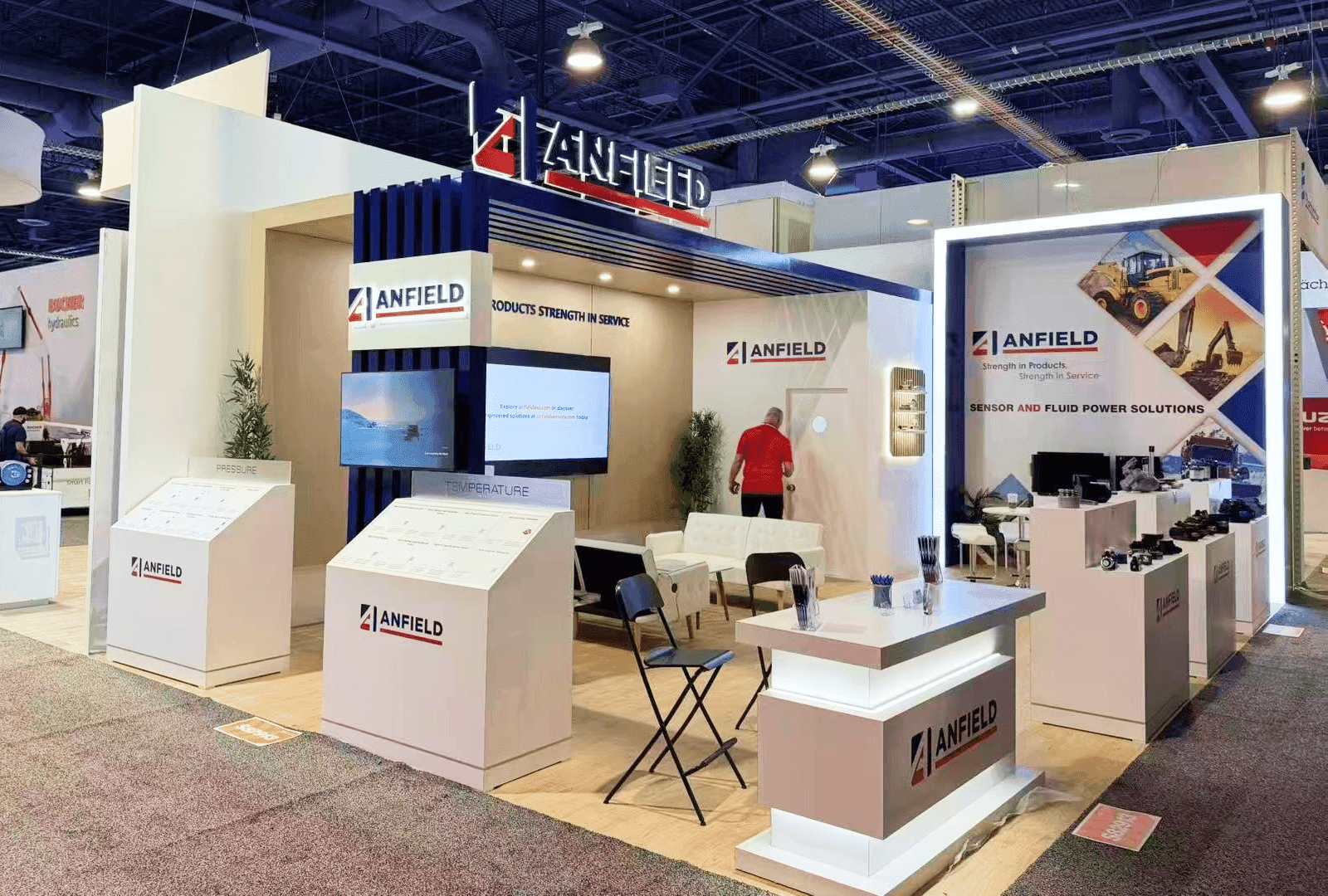
Planning the Right Booth Size for a Trade Show?
Start with visitor flow, then match the footprint to demo needs, meeting space, aisle visibility, staff placement, storage, and show-site setup.
The first two hours of setup can affect floor marking, crate access, structure staging, graphics checks, power confirmation, and final closeout. Circle Exhibit teams help exhibitors plan on-site installation and dismantle support so booth components move into place with a clear crew sequence.