Choose the Buyer Before the Product Menu
The priority buyer may own membership and engagement, events and education, finance and revenue, operations, or technology and data. These are accountability areas rather than fixed job titles, so choose the person who owns the business result, can move the evaluation forward, and has a problem that can become relevant through a short interaction.
Ask three questions:
Who is directly responsible for the result?
Who can advance the evaluation after the show?
Whose problem can be made clear without touring the platform?
Stakeholders who need cross-module, governance, integration, or technical evaluation belong in the later full-platform demo. The team is ready to choose an outcome when it can finish this sentence without naming a product module:
Our first Holiday Showcase demo is designed for [buyer role] who needs to understand [business problem].

Association Technology Demo Outcome Planning at Holiday Showcase 2026, Chicago, IL
Match the Buyer’s Problem to One Lead Outcome
The buyer’s responsibility and business problem should point to a single lead outcome.
Priority Buyer | Primary Association Problem | Lead Outcome | Holiday Showcase 2026 Context | First Visible Change Direction |
|---|---|---|---|---|
Membership / Engagement | Scattered member activity hides engagement gaps, renewal risks, or the next action. | Member Growth & Engagement | Membership Reimagined | Member signal or status → clear action |
Events / Education | Disconnected registration, attendance, or learning steps slow staff and participants. | Event & Education Delivery | Education Without Limits | Registration or learning input → clear status |
Finance / Revenue | Payment, sponsorship, renewal, or revenue activity lacks useful visibility. | Revenue Growth & Financial Visibility | Revenue Reinvented | Financial activity → traceable result |
Operations | Manual work, duplicate entry, or unclear handoffs slow the team. | Operational Efficiency | Tech That Transforms / Timeless Leadership | Manual step → visible workflow or staff action |
Technology / Data | Integration, permission, data quality, or governance issues reduce trust in the system. | Technology Integration & Data Governance | Tech That Transforms | Data input → connected or governed response |
These theme connections are Circle Exhibit’s planning interpretation of Association Forum’s 2026 Holiday Showcase materials. They are not official exhibitor categories or required demo formats.
Select one lead outcome and move the others into the scheduled platform review. Product breadth, a recent feature release, or an AI label does not justify adding more opening messages.
Use a Tie-Breaker When Two Outcomes Compete
When two outcomes appear equally important, let the buyer break the tie:
Buyer Accountability: Which outcome is the buyer expected to improve?
Problem Urgency: Which problem creates the strongest reason to act?
Visible Change: Which outcome can become clear in one short interaction?
Full-Demo Path: Which choice leads naturally to the right deeper evaluation?
If no outcome satisfies both buyer accountability and visible change, do not run a broad platform tour. Use the booth conversation to clarify the problem, then schedule a targeted full demo.
When Should AI Lead the First Demo?
AI should lead only when the buyer is evaluating governance, automation controls, or data use and the capability materially affects the buying decision. If the buyer came to solve a renewal, registration, reporting, workflow, or integration problem, lead with that outcome and let AI support it. The label alone is not a reason to change the demo.
Show One Change the Buyer Can Recognize
The selected outcome becomes useful only when the buyer can see a specific change in one workflow. A membership buyer, for example, might see a scattered renewal status become one clear staff action. An event, revenue, operations, or data workflow should reach the same kind of understandable result.
The change may appear on screen or become clear through a concrete conversation. It can demonstrate how the product handles the selected workflow, but it cannot prove deployment, system compatibility, long-term performance, or ROI. Showing more features does not make the outcome more convincing.
The scope is narrow enough when the team can finish this sentence:
The first demo should show how [input or problem] becomes [visible result] for [priority buyer].
If the sentence needs several outcomes, the booth interaction is still trying to do too much.

Association Technology Full-Platform Demo Handoff at Holiday Showcase 2026, Chicago, IL
Know When to Move From the Booth to a Full Demo
The booth interaction should answer one question: is this buyer’s problem important enough to continue? Use the opening demo to establish relevance and show one visible change. Cross-module workflows, integrations, configuration, permissions, data migration, deployment conditions, and deeper technical questions belong in the scheduled full demo.
Move the visitor into that next stage when:
The buyer confirms that the problem is relevant.
Questions shift to integration, configuration, or deployment.
Several modules must be compared.
Additional stakeholders need to participate.
The booth is no longer suitable for the required depth.
Before the show, agree on which modules stay out of the opening interaction, what triggers the handoff, who owns the follow-up, and which questions require Product or Technical involvement. When a trigger appears, capture the question and arrange the next session instead of opening more product tabs.
Put the Demo Decision in Writing Before Booth Planning
Marketing, Product, Design, and the onsite team do not need another product summary. Before booth planning begins, they need four shared decisions:
Buyer: The priority buyer, that buyer’s accountability, and the primary association problem.
Opening Demo: The lead outcome, selected workflow, visible change, and excluded modules.
Full-Demo Handoff: The trigger for deeper evaluation and the person responsible for follow-up.
Open Conditions: Product questions about features, permissions, or workflow limits, separated from technical questions about integrations, data access, devices, or deployment.
Together, these decisions form the Association Outcome Brief. A designer or presenter who missed the original discussion should still be able to understand the buyer, opening workflow, stopping point, and unresolved conditions.
Move the Brief Into Booth Planning
Once the brief is approved, booth design and engineering can translate the selected workflow and visible change into screen, counter, equipment, storage, and viewing requirements. Detailed screen placement, utilities, technical fallback, and booth layout belong in the next planning stage.
Comparable Execution Reference
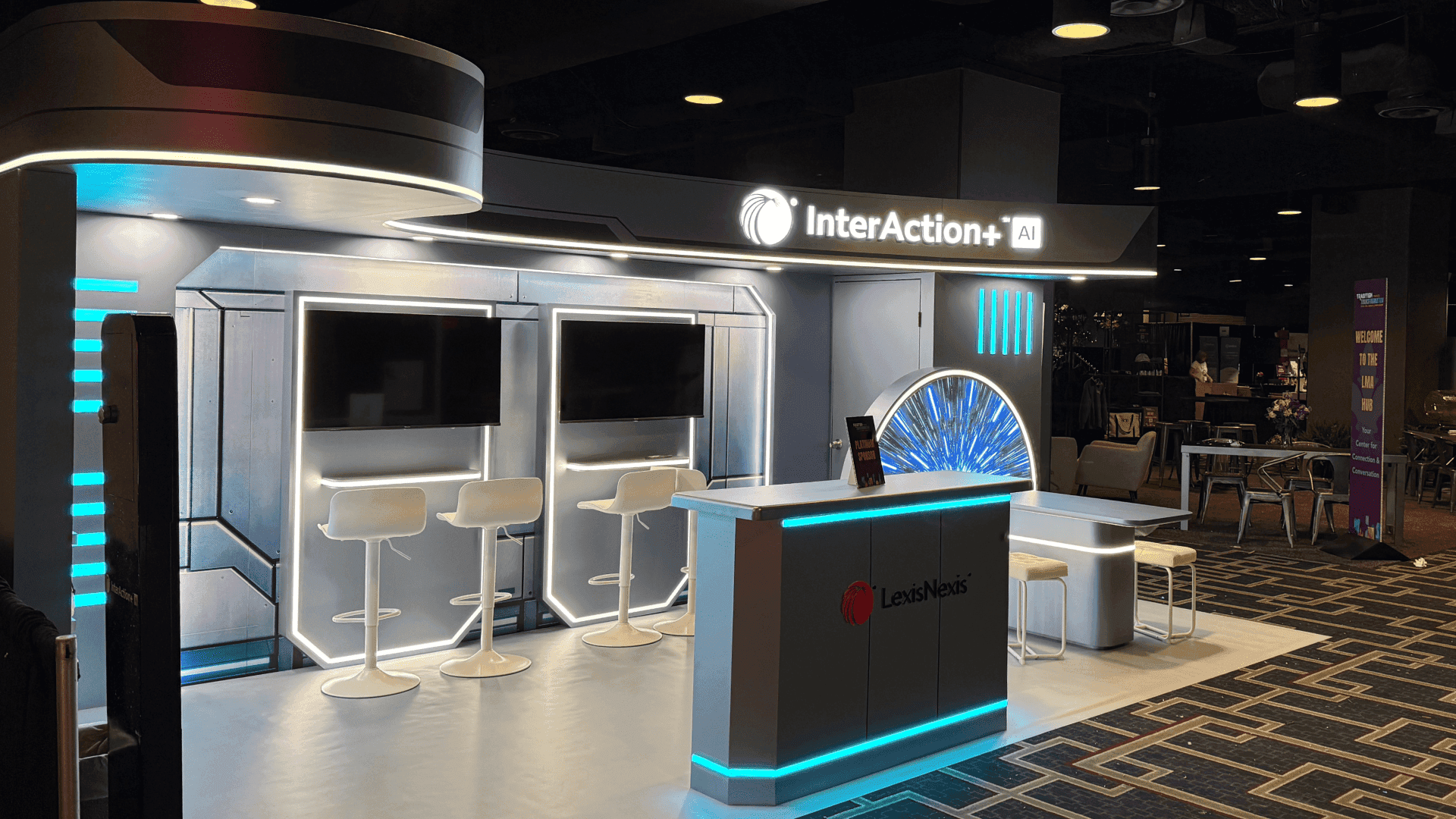
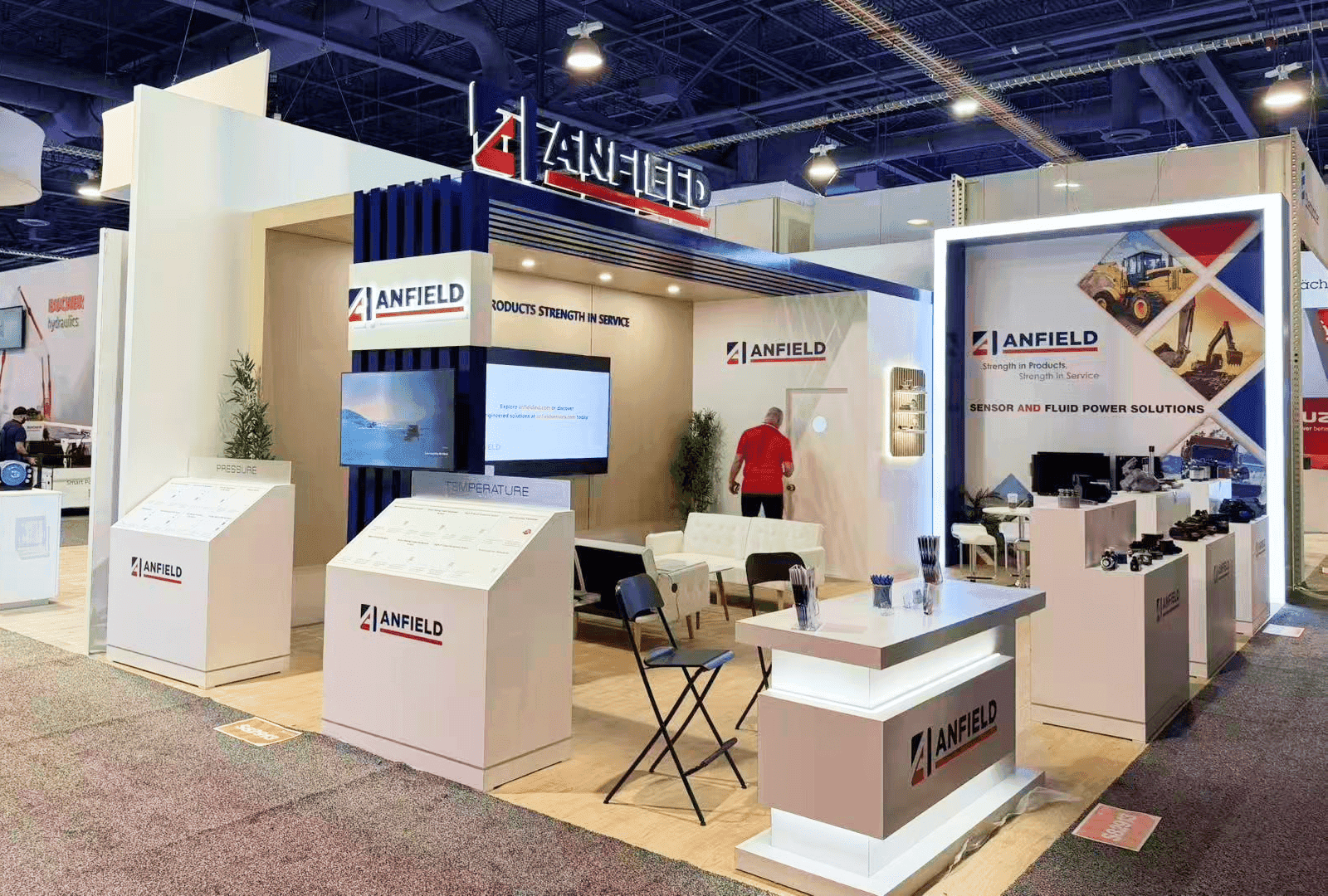
For a comparable execution reference, review this association technology demo booth project. This project is a comparable professional-association technology booth reference, not a Holiday Showcase project or evidence that one association outcome will perform better than another.
Use it to study how a product demonstration and buyer conversation share the same exhibit space. Do not use it to infer Holiday Showcase results, AMS buyer preferences, outcome priority, leads, sales, or ROI.
Frequently Asked Questions
What if two buyer roles are equally important?
Use buyer accountability, problem urgency, and the full-demo path to choose one primary buyer. Qualify the second buyer separately or include that role in the follow-up demo rather than splitting the first interaction into two equal priorities.
Should AI lead whenever the platform includes AI features?
No. It should lead only when governance, automation control, or data use materially affects the buying decision. Otherwise, the capability should support the selected association outcome.
When should a visitor move to a full-platform demonstration?
Make the transition after problem relevance is confirmed and the questions shift to cross-module workflows, integrations, deployment, or additional stakeholders. Assign a clear owner to capture the questions and arrange the next session.
Final Takeaway
If the team still disagrees about the buyer, outcome, visible change, or handoff point, the booth is not ready to plan.