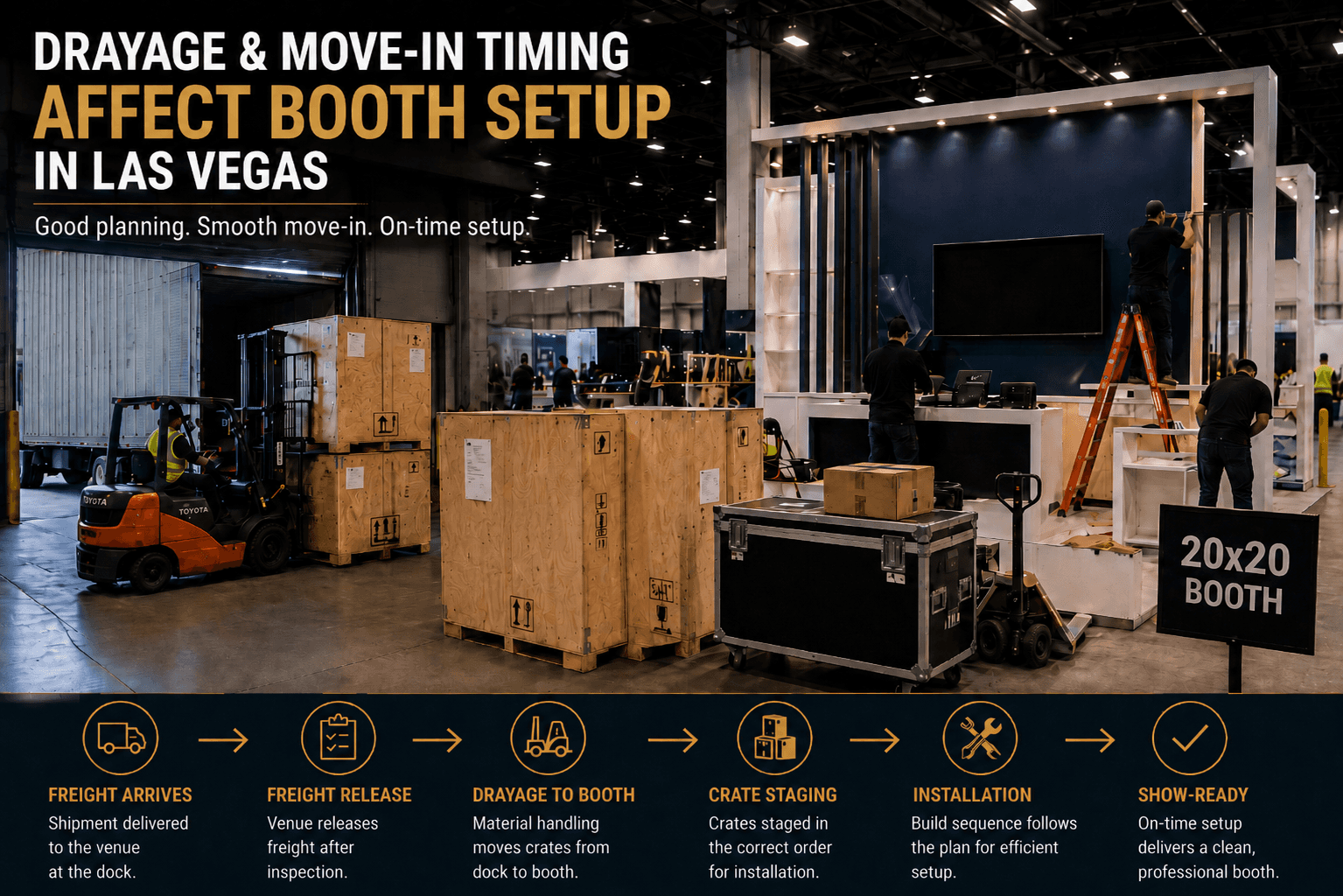
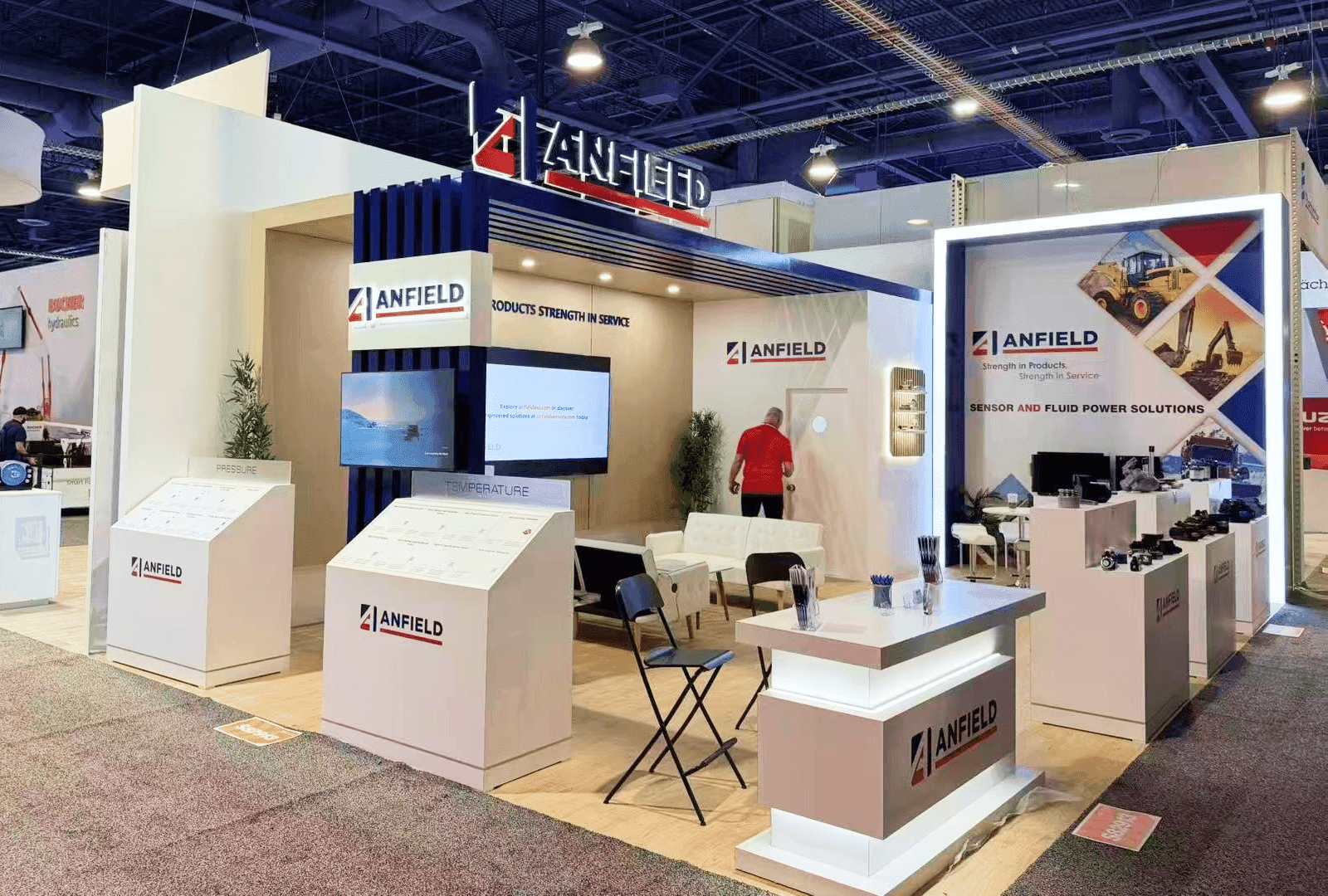
Las Vegas trade show booth move-in scene with drayage, freight release, crate staging, dock-to-booth movement, and installation crew setup sequence

/

/

/

/

How Drayage and Move-In Timing Affect Booth Setup in Las Vegas

How Drayage and Move-In Timing Affect Booth Setup in Las Vegas

How Drayage and Move-In Timing Affect Booth Setup in Las Vegas

How Drayage and Move-In Timing Affect Booth Setup in Las Vegas

Published:

Jan 6, 2026

Updated:

Jan 6, 2026

Circle Exhibit Team

Industry professionals

Exhibition industry professional dedicated to delivering the latest insights and curated recommendations to you.

Exhibition industry professional dedicated to delivering the latest insights and curated recommendations to you.

Drayage and move-in timing affect when booth materials reach the booth space, how crates are staged, and when the install crew can begin. Strong coordination helps prevent setup delays before the booth build starts.

Drayage and move-in timing affect when booth materials reach the booth space, how crates are staged, and when the install crew can begin. Strong coordination helps prevent setup delays before the booth build starts.

Drayage and move-in timing affect when booth materials reach the booth space, how crates are staged, and when the install crew can begin. Strong coordination helps prevent setup delays before the booth build starts.

Quick Answer: How do drayage and move-in timing affect booth setup?

Drayage and move-in timing affect when booth materials reach the show floor, how crates are staged, and when installation crews can begin setup. In Las Vegas, freight release, dock access, material handling, and crate order can directly influence booth setup sequence, crew timing, and final show-floor readiness.

Quick Answer: How do drayage and move-in timing affect booth setup?

Drayage and move-in timing affect when booth materials reach the show floor, how crates are staged, and when installation crews can begin setup. In Las Vegas, freight release, dock access, material handling, and crate order can directly influence booth setup sequence, crew timing, and final show-floor readiness.

Booth setup in Las Vegas does not start only when the crew begins building walls, counters, graphics, or lighting. It often starts earlier, when freight is released, crates are moved from dock to booth, and materials arrive in the right order. If drayage and move-in timing are not planned well, the booth can lose setup time before installation begins.


Drayage Is Part of the Booth Setup Sequence

Drayage affects booth setup because the install crew cannot build with materials they cannot access.

A booth may be designed, fabricated, packed, and shipped correctly, but the setup still depends on when those materials reach the booth space. If the main structure arrives late, graphics cannot be installed. If counters arrive before flooring or wall frames, the crew may need to move them again later.

That is why logistics and pre-show coordination should connect freight planning with the real booth setup order.

A good drayage plan should clarify:

  • which crates are needed first

  • which materials can stay packed until later

  • where large pieces should be staged

  • how graphics and hardware are labeled

  • when empty crates should be removed

Drayage is not just a shipping detail. It shapes how quickly the booth can become build-ready.

Move-In Timing Controls Crew Efficiency

Move-in timing affects how much pressure the installation team faces.

A shipment can be “at the venue” but still not available to the crew. Freight may still need to move through material handling, dock-to-booth movement, and crate staging before the first wall or counter can be installed.

When move-in timing is clear, the crew can start in the right order. When it is unclear, setup becomes reactive.

For a Las Vegas booth, timing can affect:

  • floor marking

  • structure setup

  • counter placement

  • graphic installation

  • lighting and screen setup

  • product display staging

  • final cleaning and walkthrough

This is where Las Vegas trade show booth builder support matters. The booth should be planned for how it moves into the hall, not only how it looks in the final design.

Crate Staging Should Match the Install Order

Crate staging can make the first hours of setup faster or slower.

If first-needed materials are buried behind later-stage items, the crew loses time before meaningful installation begins. If graphics are not packed with the correct wall frames, or hardware is inside the wrong case, the booth may stall during the most important early setup window.

A practical crate plan should separate:

Crate Group

Why It Matters

First-stage structure

Needed before graphics, counters, and lighting

Graphics

Must match the correct walls, frames, or counters

Hardware

Should be easy to find during early setup

Lighting / AV

Needs protection and correct timing

Counters / cabinets

Affect demo zones, storage, and visitor flow

Product display items

Usually placed after main structure is stable

The goal is simple: the first-needed crate should not be the last one opened.

Installation Works Better When Logistics and Labor Are Connected

Installation should follow the order in which materials become available.

A booth setup usually starts with footprint confirmation, first-stage structure, counters, graphics, lighting, screens, product placement, and final checks. If freight order does not support that sequence, the crew may need to pause, rearrange materials, or return to unfinished steps later.

Strong on-site installation support should begin before the crew arrives. The install team needs to know what is arriving, where it will be staged, and what should be opened first.

This is especially important for booths with:

  • screen-based demos

  • large graphics

  • product displays

  • custom counters

  • lighting needs

  • multiple crates

  • tight move-in windows

The smoother the handoff between logistics and installation, the less time is lost during setup.

Drayage and Move-In Checklist

Use this checklist before the booth ships or enters the venue.

Checklist

  • Are first-needed crates clearly labeled?

  • Does the crate order match the installation sequence?

  • Are graphics packed with the correct frames or surfaces?

  • Is hardware easy to find during the first install phase?

  • Do counters, lighting, and AV have separate labels?

  • Is there a plan for dock-to-booth movement?

  • Who tracks freight release at the venue?

  • Can the crew start if only partial freight has arrived?

  • When should empty crates be removed?

  • Are power, AV, and screen needs included in the move-in plan?

  • Is final booth readiness scheduled before opening day?

This checklist keeps drayage tied to real booth behavior, not just shipping paperwork.

Final Takeaway

Drayage and move-in timing affect booth setup because they control when materials become available, where crates are staged, and how quickly the installation crew can begin.

For Las Vegas trade shows, the key is not only getting freight to the venue. The booth team also needs freight release, dock-to-booth movement, crate staging, installation order, and final readiness to work together.

A smoother booth setup starts before the first wall goes up.

It starts when logistics, drayage, and installation are planned as one connected sequence.

Drayage Is Part of the Booth Setup Sequence

Drayage affects booth setup because the install crew cannot build with materials they cannot access.

A booth may be designed, fabricated, packed, and shipped correctly, but the setup still depends on when those materials reach the booth space. If the main structure arrives late, graphics cannot be installed. If counters arrive before flooring or wall frames, the crew may need to move them again later.

That is why logistics and pre-show coordination should connect freight planning with the real booth setup order.

A good drayage plan should clarify:

  • which crates are needed first

  • which materials can stay packed until later

  • where large pieces should be staged

  • how graphics and hardware are labeled

  • when empty crates should be removed

Drayage is not just a shipping detail. It shapes how quickly the booth can become build-ready.

Move-In Timing Controls Crew Efficiency

Move-in timing affects how much pressure the installation team faces.

A shipment can be “at the venue” but still not available to the crew. Freight may still need to move through material handling, dock-to-booth movement, and crate staging before the first wall or counter can be installed.

When move-in timing is clear, the crew can start in the right order. When it is unclear, setup becomes reactive.

For a Las Vegas booth, timing can affect:

  • floor marking

  • structure setup

  • counter placement

  • graphic installation

  • lighting and screen setup

  • product display staging

  • final cleaning and walkthrough

This is where Las Vegas trade show booth builder support matters. The booth should be planned for how it moves into the hall, not only how it looks in the final design.

Crate Staging Should Match the Install Order

Crate staging can make the first hours of setup faster or slower.

If first-needed materials are buried behind later-stage items, the crew loses time before meaningful installation begins. If graphics are not packed with the correct wall frames, or hardware is inside the wrong case, the booth may stall during the most important early setup window.

A practical crate plan should separate:

Crate Group

Why It Matters

First-stage structure

Needed before graphics, counters, and lighting

Graphics

Must match the correct walls, frames, or counters

Hardware

Should be easy to find during early setup

Lighting / AV

Needs protection and correct timing

Counters / cabinets

Affect demo zones, storage, and visitor flow

Product display items

Usually placed after main structure is stable

The goal is simple: the first-needed crate should not be the last one opened.

Installation Works Better When Logistics and Labor Are Connected

Installation should follow the order in which materials become available.

A booth setup usually starts with footprint confirmation, first-stage structure, counters, graphics, lighting, screens, product placement, and final checks. If freight order does not support that sequence, the crew may need to pause, rearrange materials, or return to unfinished steps later.

Strong on-site installation support should begin before the crew arrives. The install team needs to know what is arriving, where it will be staged, and what should be opened first.

This is especially important for booths with:

  • screen-based demos

  • large graphics

  • product displays

  • custom counters

  • lighting needs

  • multiple crates

  • tight move-in windows

The smoother the handoff between logistics and installation, the less time is lost during setup.

Drayage and Move-In Checklist

Use this checklist before the booth ships or enters the venue.

Checklist

  • Are first-needed crates clearly labeled?

  • Does the crate order match the installation sequence?

  • Are graphics packed with the correct frames or surfaces?

  • Is hardware easy to find during the first install phase?

  • Do counters, lighting, and AV have separate labels?

  • Is there a plan for dock-to-booth movement?

  • Who tracks freight release at the venue?

  • Can the crew start if only partial freight has arrived?

  • When should empty crates be removed?

  • Are power, AV, and screen needs included in the move-in plan?

  • Is final booth readiness scheduled before opening day?

This checklist keeps drayage tied to real booth behavior, not just shipping paperwork.

Final Takeaway

Drayage and move-in timing affect booth setup because they control when materials become available, where crates are staged, and how quickly the installation crew can begin.

For Las Vegas trade shows, the key is not only getting freight to the venue. The booth team also needs freight release, dock-to-booth movement, crate staging, installation order, and final readiness to work together.

A smoother booth setup starts before the first wall goes up.

It starts when logistics, drayage, and installation are planned as one connected sequence.

Planning Booth Logistics for a Las Vegas Show?

Start with freight timing, drayage, crate staging, and installation sequence before move-in begins. A stronger logistics plan helps the booth team reach show-floor readiness with fewer avoidable delays.

The first two hours of setup can affect floor marking, crate access, structure staging, graphics checks, power confirmation, and final closeout. Circle Exhibit teams help exhibitors plan on-site installation and dismantle support so booth components move into place with a clear crew sequence.