Start With What Buyers Can See From the Aisle
Buyers should be able to recognize the product category and understand how the collection is organized before they enter the booth.
From the aisle, three things should be clear:
the main product category
the structure of the collection or assortment
a representative selection of products
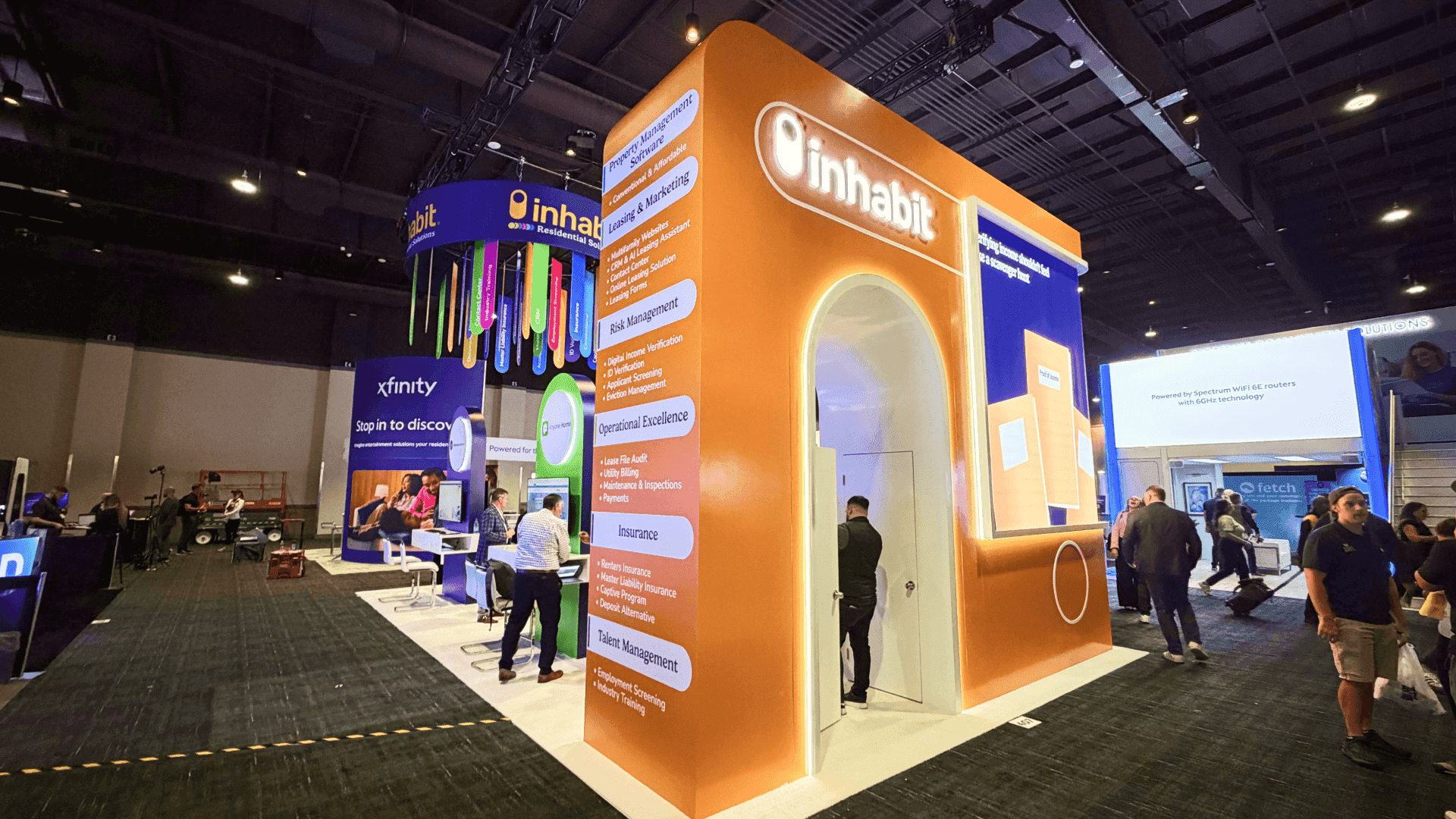
Avoid filling the entrance with unrelated items or every available variation. A reception counter placed to one side keeps the first display visible and gives buyers room to decide whether to step in.

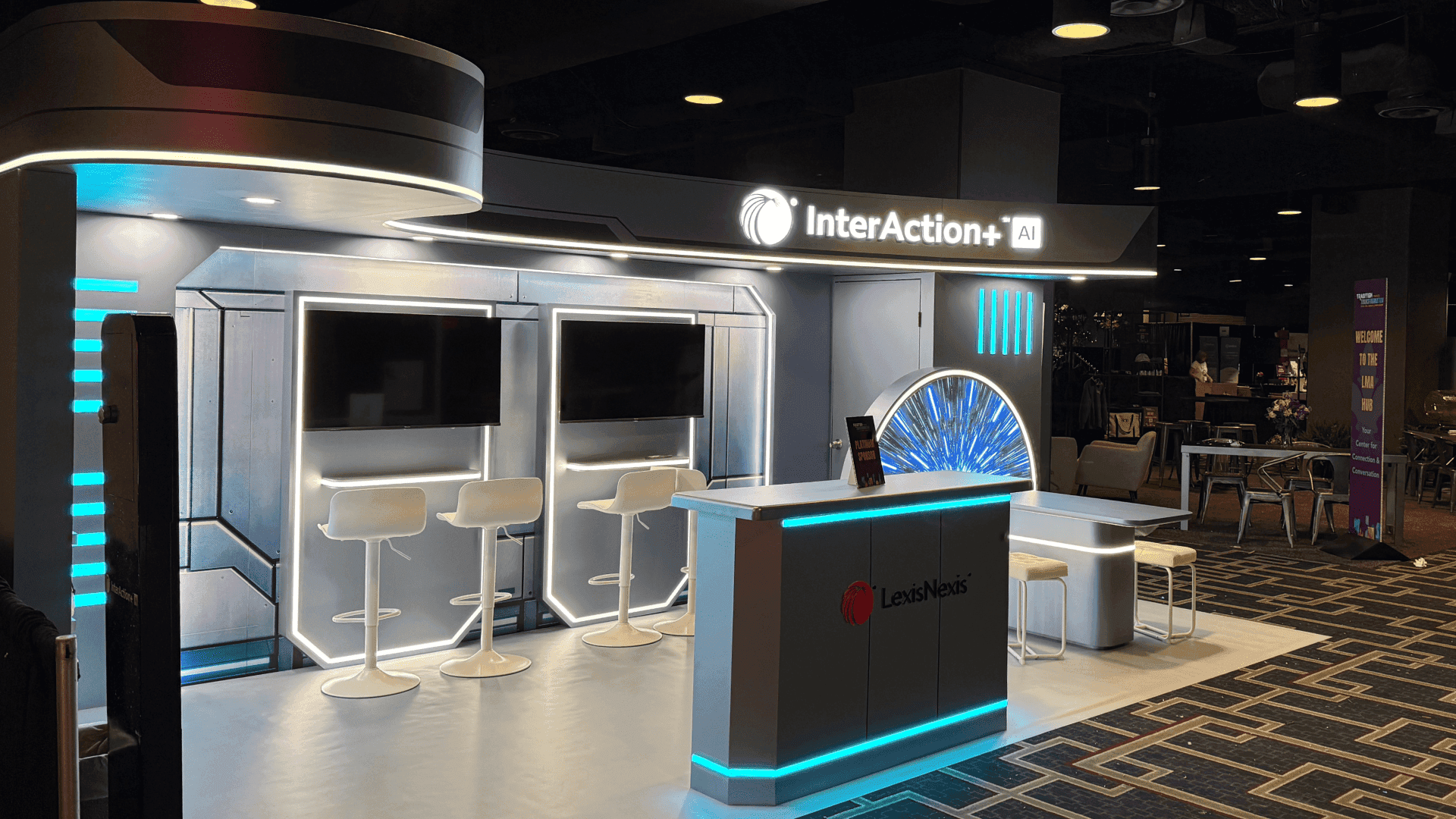
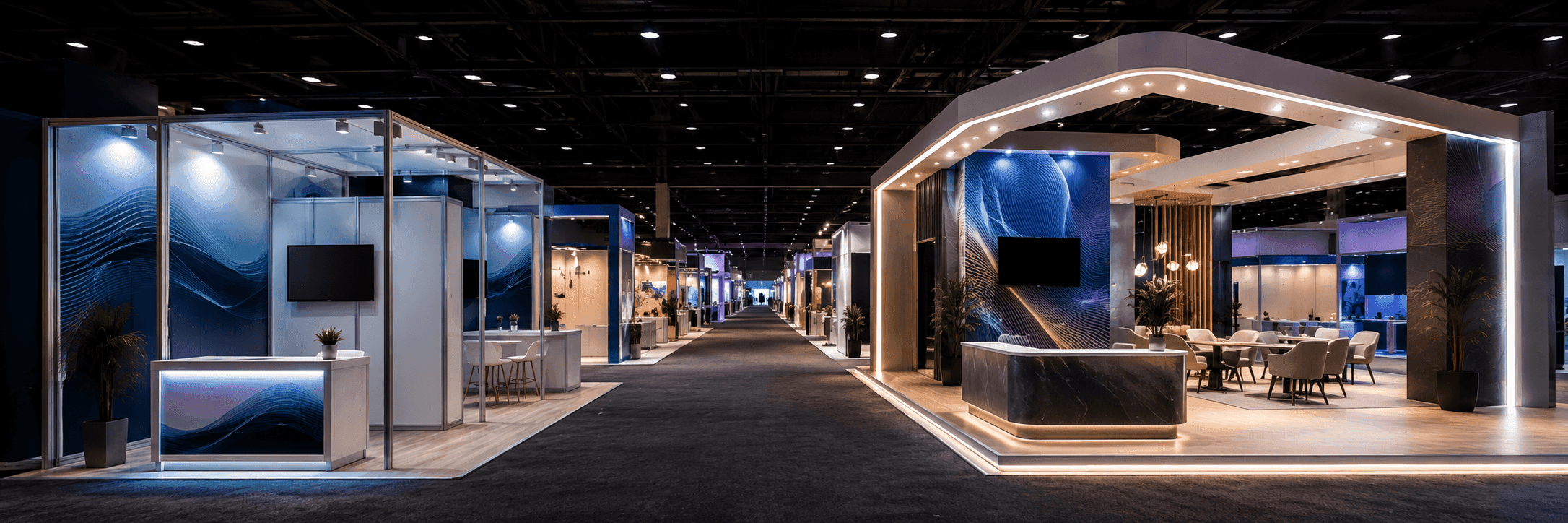
A clear aisle view helps buyers recognize the product category and understand the wider assortment before entering the booth.
Build the Buying Path in Clear Stages
Buyers normally scan the category, review the range, compare a few products, and ask questions before discussing quantities or follow-up. The layout should allow that process to move forward without sending them back through the same crowded space.
Buyer Stage | What the Buyer Is Deciding | What the Space Should Provide |
|---|---|---|
Aisle view | Is the category relevant? | Clear collection or category signal |
Product discovery | Is the range worth reviewing? | Open browsing edge |
Comparison | Which products fit the need? | Focused comparison surface |
Appointment | What needs a deeper conversation? | Quieter spot beside the display |
Order writing | What quantities and next steps are needed? | Space outside the main browsing path |
These stages do not need walls or formal boundaries. A small amount of separation is enough to keep browsing, product discussion, and order writing from competing for the same space.
Leave Room for Product Comparison
Related items should sit close enough for buyers to compare materials, colors, features, or price levels without moving back across the display. Show enough of the assortment to support a decision, but not so much that the comparison area becomes another crowded product wall.
Leave a clear surface for handling samples and checking a line sheet. Buyers can then narrow their choices before moving into pricing, quantity, or order questions.
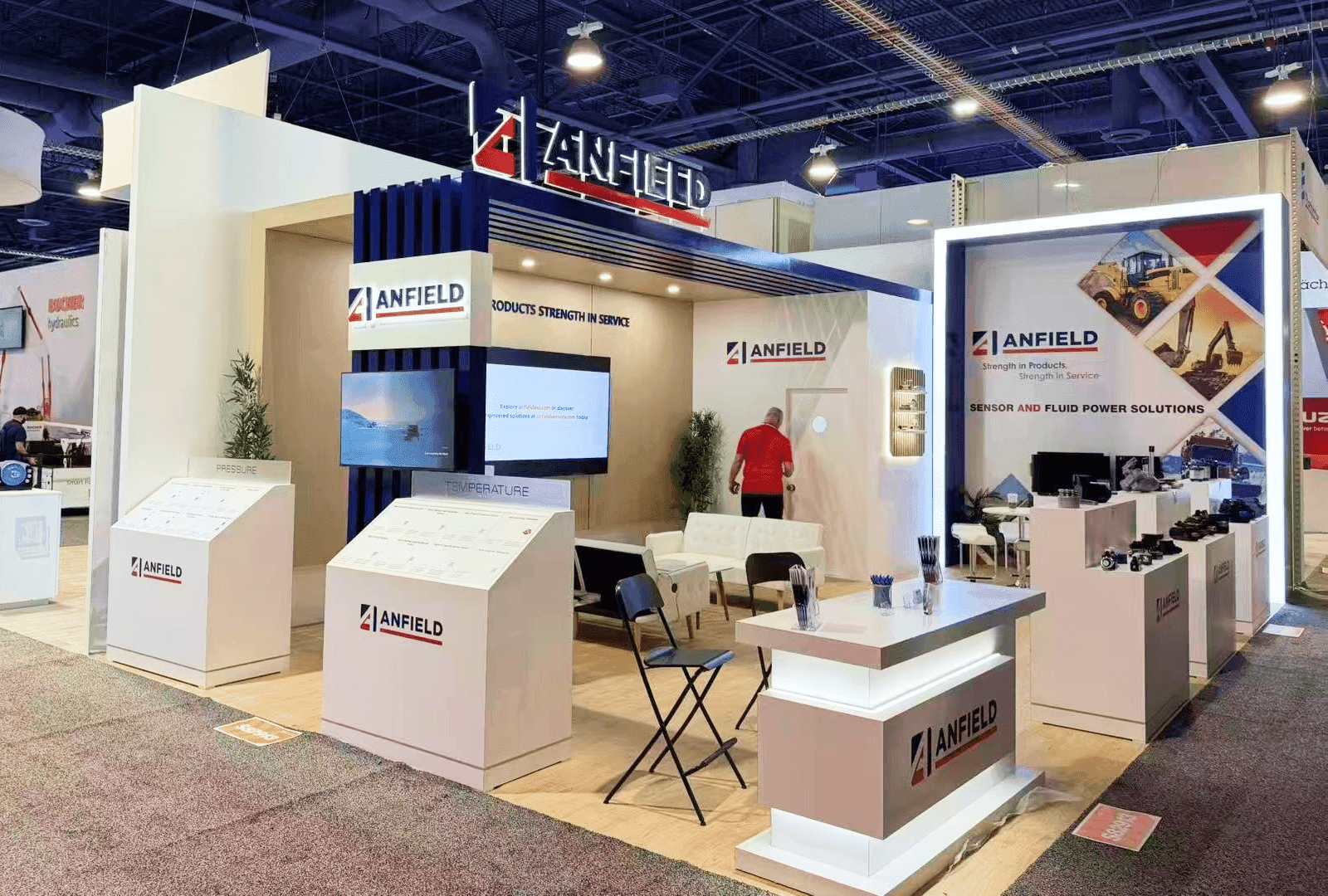
Related products, samples, and a line sheet arranged together so wholesale buyers can compare options before discussing quantities.
Take Longer Buying Conversations Off the Aisle
Short questions can stay beside the product. Longer discussions should begin after the buyer has reviewed the range and identified the items that matter.
Order writing works better beyond the entrance and front display edge, where it will not slow people who are still browsing. Clear booth layout and visitor flow planning can keep forms, tablets, and product references close to the conversation while leaving the aisle open.
Keep Staff Materials Close but Out of the Way
The following items should remain easy for staff to reach without entering the buyer’s main browsing and comparison space:
replacement samples and extra literature
completed forms and follow-up materials
used samples and loose display items
Staff should not need to cross the visitor route whenever they replace a sample or retrieve a document. A defined place for these materials also makes daily resets easier and keeps the product display available for comparison.
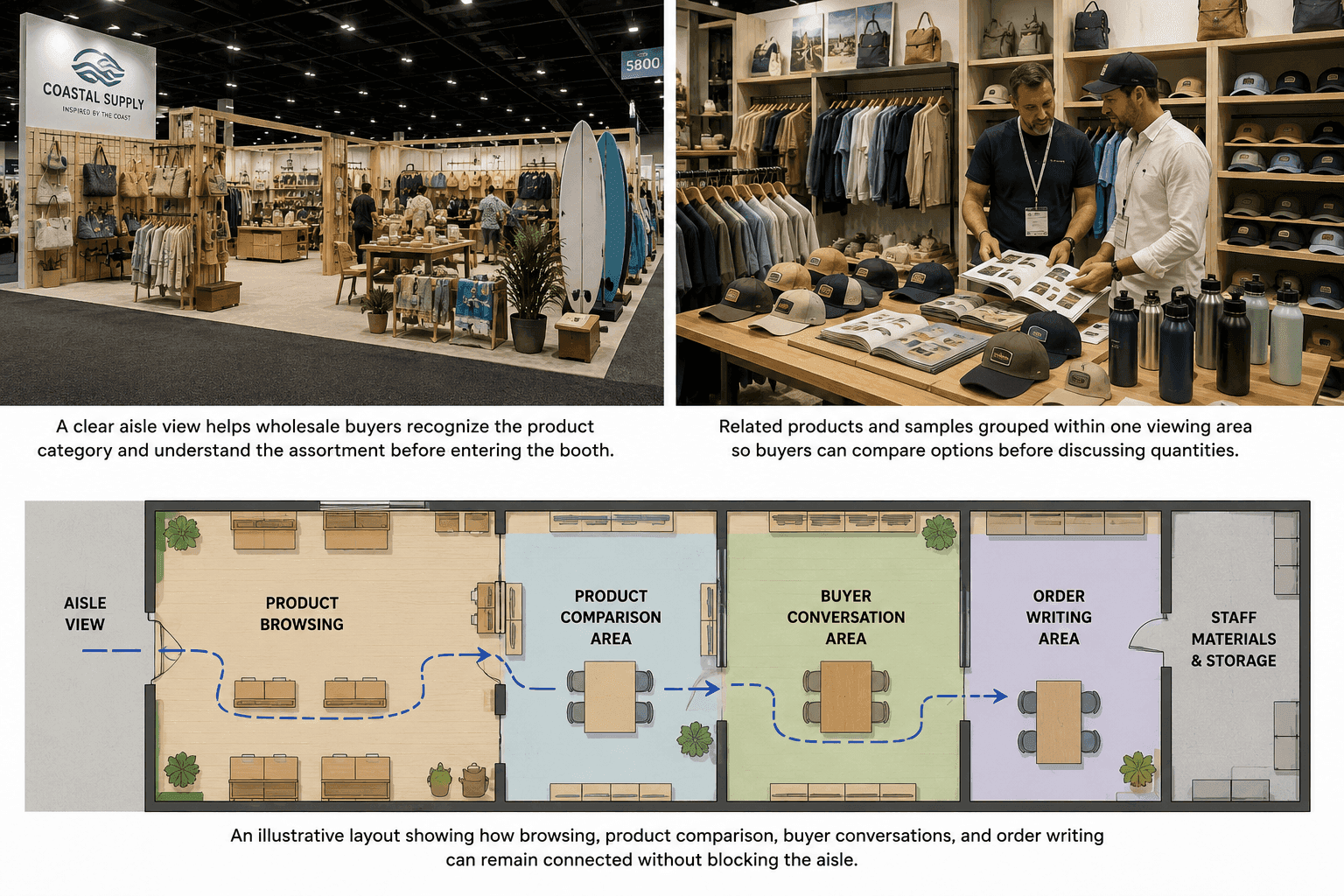
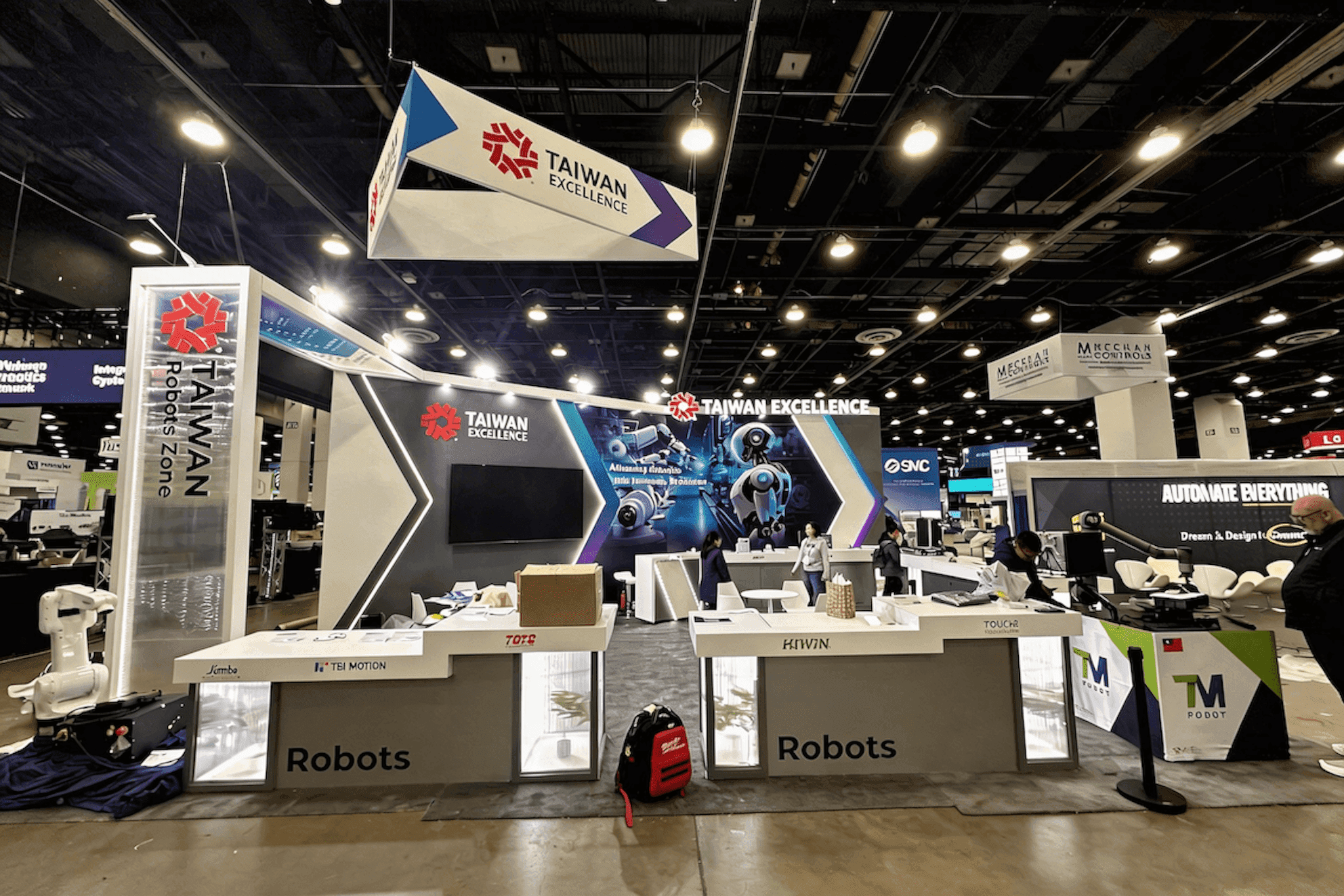
An illustrative layout showing how browsing, product comparison, buyer conversations, and order writing can remain connected without blocking the aisle.
Where the Buying Path Gets Blocked
A reception counter at the entrance can make the booth feel closed before buyers see the range. The same problem appears when too many products cover the first wall and there is no obvious place to pause and compare related items.
Appointments and order writing can also slow the booth when they take over the main browsing area. Repeated staff movement across the visitor route for samples or sales materials interrupts both product review and conversation.
FAQ
Where should product browsing begin in a wholesale booth?
Browsing should start at an open display edge where buyers can recognize the category and see enough of the range to decide whether to step in. Keep reception counters, appointment tables, and dense product displays away from the entrance.
How should buyer appointments fit into the booth flow?
Appointments work best after buyers have browsed and compared the products that interest them. Place the conversation slightly to the side of the main display so pricing, quantities, and follow-up can be discussed without pulling other visitors into the same space.
Where should order writing take place?
Order writing should happen just beyond the main browsing area, close enough for staff to check samples, line sheets, or product details. Buyers need a stable place to record quantities and next steps without blocking the display or narrowing the visitor route.