What Does Chicago Build Give You to Start With?
Chicago Build’s organizer materials distinguish between a supplied booth package and Raw Space. The current exhibitor service information refers to the supplied setup as a Shell Scheme Package; this article uses Shell Scheme for that organizer-provided starting condition.
The current Shell Scheme includes an 8-foot back drape, 3-foot side drapes, a draped table, two chairs, a wastebasket, identification signage, and black carpet. Raw Space does not include that package.
Starting Point | Chicago Build Provides | What Still Needs Planning |
|---|---|---|
Shell Scheme | Drape, table, chairs, wastebasket, ID sign, black carpet | Branding, products, screens, counters, storage, demo setup, added furniture, lighting, utilities |
Raw Space | Exhibit footprint | Structure, flooring, walls, graphics, fixtures, storage, lighting, screens, equipment integration, installation scope |
Neither option gives you a finished exhibit. The real difference is how far the organizer has already taken the project before your own booth planning begins.

A Shell Scheme can work when the supplied booth already covers the basic structure and only focused graphics, screens, counters, furniture, or product displays still need to be added.
What Still Has to Be Built After You Book the Space?
For some Chicago Build exhibitors, the remaining work is fairly focused. A building-product supplier may only need stronger graphics, product samples, a counter, and somewhere to discuss applications or specifications.
A software company with one primary demo may need a screen, workstation, power, and a technical conversation point. That is still very different from creating an entire booth environment from an empty footprint.
The calculation changes when the product begins to shape the space. HVACR equipment, larger building systems, or integrated displays can introduce clearance, access, fixtures, support, and installation requirements that the supplied setup does not solve.
The scope grows again when several activities need to happen at once—multiple demos, longer technical discussions, meetings, concealed storage, replacement products, or support equipment.
A useful way to judge the difference is:
Is the remaining work mainly completing the booth, or is it effectively creating the booth environment?
If most of the remaining scope is graphics, screens, counters, furniture, and storage rather than new architecture, a Chicago rental booth can often cover that work without forcing the project into a more complex starting condition.
Starting Space Is Not the Same as Exhibit Solution
Shell Scheme and Raw Space describe where the project starts. Rental, modular, hybrid, and custom describe how the unfinished booth is completed.
Raw Space can still use a rental or modular exhibit. Shell Scheme can still be upgraded with screens, graphics, counters, storage, and other components.
The decisions therefore happen in sequence:
Which starting space fits the Chicago Build exhibit task?
What exhibit system should complete it?
When Does Shell Scheme Start to Limit the Booth?
Shell Scheme becomes less useful when the exhibit starts depending on space or structure that focused additions cannot provide efficiently.
One common trigger is equipment. An HVACR unit or larger building system may determine its own access, clearance, support, utilities, and installation path. At that point, the supplied booth boundary can start getting in the way of the layout rather than helping define it.
Another trigger is simultaneous activity. One screen and one conversation point may be easy to accommodate. Several demos running alongside technical discussions, meetings, and support functions require much more deliberate circulation and separation.
A focused BIM or software demo may work well within an upgraded Shell Scheme. But once several demos and technical conversations need to happen at the same time, screen positions, visitor flow, and conversation space start to shape the booth. In that situation, planning the AI and digital construction demo flow for Chicago Build should be worked out before deciding whether the supplied setup still gives the team enough room to operate.
A simple test helps:
If the exhibit keeps being changed to fit the supplied setup, the starting condition may no longer be helping the booth.
When Does Raw Space Add Work Without Adding Value?
Raw Space gives exhibitors more control, but that control is only useful when it solves a real show-floor problem.
If the booth mainly needs strong graphics, product samples, one screen, a counter, short conversations, and compact storage, starting from an empty footprint can introduce flooring, structural planning, engineering, approvals, and additional installation coordination without materially improving the exhibit.
The better question is not:
Which option gives us more freedom?
It is:
What would we actually use that freedom to change?
If the answer does not involve product access, demo operation, buyer flow, equipment integration, or the physical brand environment, Raw Space may simply create more project scope.
Which Starting Point Fits Different Chicago Build Exhibitors?
Chicago Build’s exhibitor mix makes the choice easier to understand when it is tied to what actually has to happen in the booth.
Chicago Build Exhibit Task | Likely Starting Point | Why |
|---|---|---|
Building-product samples, graphics, short specification conversations | Shell Scheme may be enough | Most of the remaining work is presentation and branding rather than architecture. |
AI / BIM software with one primary demo | Shell Scheme + focused upgrades may work | A screen, workstation, power, and conversation point may be enough to complete the booth. |
Several demos plus storage and meetings | Raw Space becomes more relevant | Parallel activities need more control over circulation, separation, and support space. |
HVACR or physical equipment integration | Raw Space more likely | Equipment access, support, utilities, and installation can begin to determine the layout. |
Fire or security systems with several physical displays | Depends on the equipment scope | Compact displays may work within the supplied setup; integrated systems may need greater control. |
Large building systems with demos and technical meetings | Raw Space more likely | Product access and several functional zones turn the booth into a working environment rather than a simple display. |
This does not mean every HVACR exhibitor needs Raw Space or every software company should use Shell Scheme. The point is that the actual Chicago Build display task determines how much control over the starting space is useful.
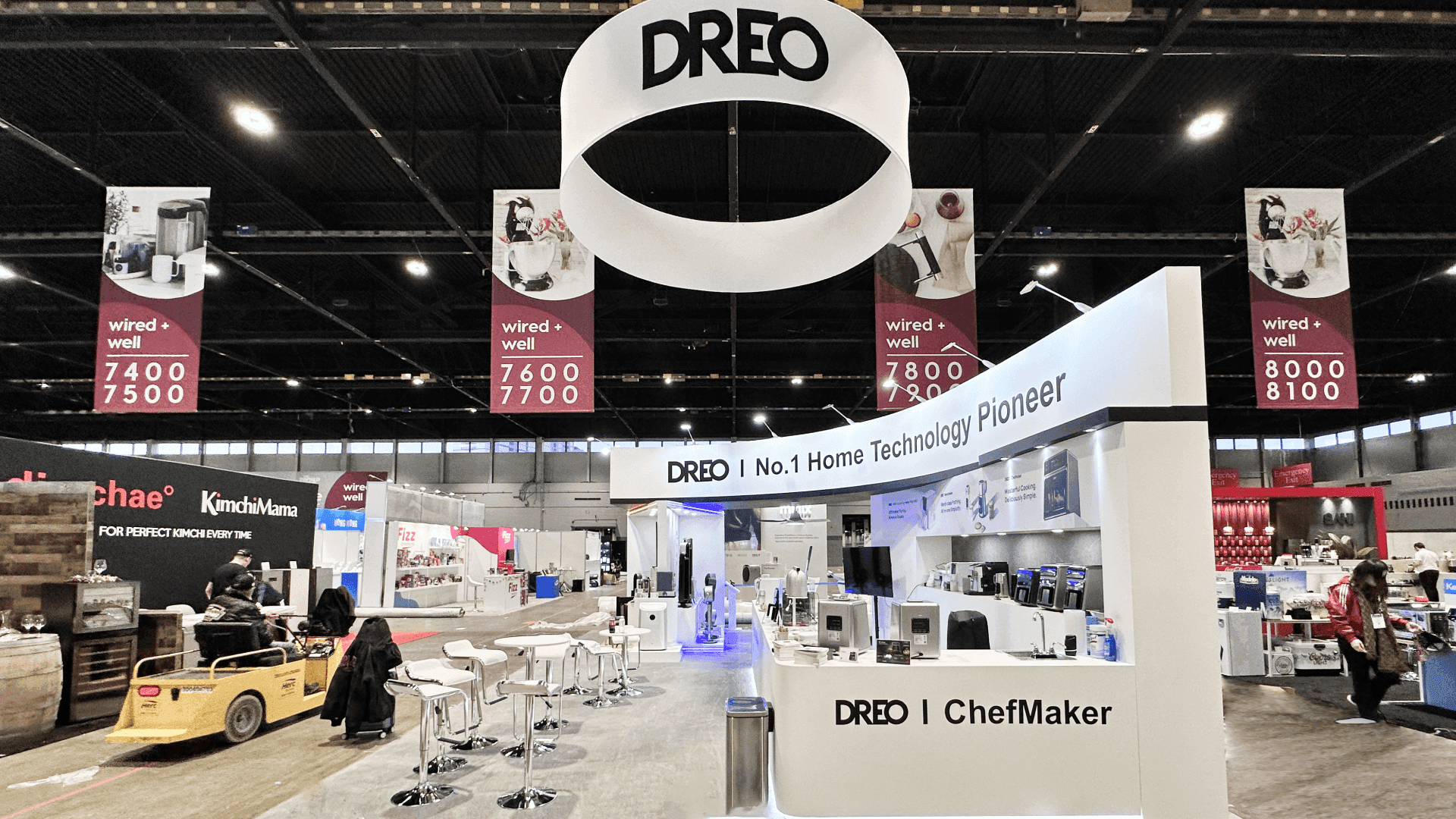
Raw Space becomes more useful when equipment access, multiple demo zones, storage, or structural requirements need greater control over the finished booth environment.
Shell Scheme or Raw Space: Make the Decision
At this point, the choice should be fairly narrow.
Choose Shell Scheme when the unfinished work mainly completes an already useful starting setup.
Choose Raw Space when the unfinished work changes the physical environment itself.
Do not choose Raw Space simply for “more flexibility.” Choose it when that control solves a real display, demo, equipment, meeting, or structural problem.
Shell Scheme works when the remaining scope completes the booth. Raw Space makes more sense when the remaining scope effectively creates the booth.
FAQ
Can a Chicago Build Shell Scheme support a screen demo?
Yes. One primary screen, a workstation or counter, manageable power, and a small technical conversation area may fit within an upgraded Shell Scheme. Several simultaneous demos may need more control over circulation and support space.
Does choosing Raw Space mean the Chicago Build booth has to be fully custom?
No. Raw Space defines the starting condition, not the finished exhibit system. Rental, modular, hybrid, and custom solutions may all work depending on the actual booth requirements.
When is Shell Scheme no longer enough for Chicago Build?
It becomes less suitable when equipment, multiple demos, substantial storage, integrated displays, stronger structural branding, or several buyer activities require more control than focused upgrades can provide.
Choose the Starting Point That Leaves the Right Work Behind
The right Chicago Build starting point is the one that leaves a sensible amount of unfinished work.
If the supplied setup already supports the core display, screen, conversation, and branding needs, Shell Scheme can keep the remaining project focused. When equipment, several active zones, or greater structural control drive the booth, Raw Space becomes useful because that added responsibility is solving an actual show-floor problem.
Once that choice is made, there is little value in continuing to compare the two options. The project has moved into exhibit-system and build planning.