Decide What the Metric Needs to Prove
Before choosing a number, define the level of claim the demonstration needs to support:
Product action: The product completed a visible task, such as generating an interaction summary with the required fields.
Operational outcome: The action changed a defined process, such as shortening an after-call task under controlled conditions.
Business outcome: A measurable change occurred across an actual customer operation, such as a documented reduction in service costs over a stated period.
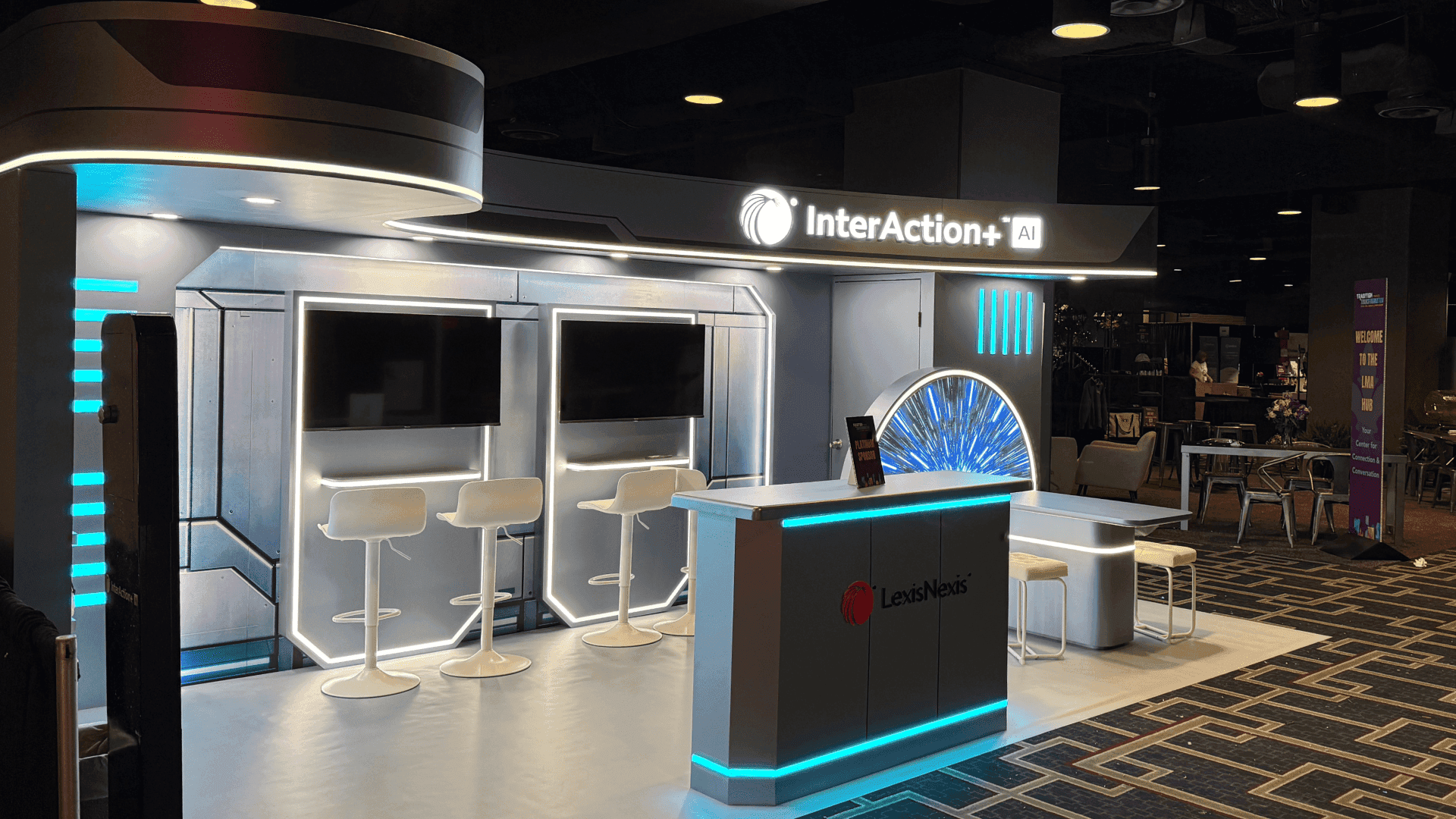
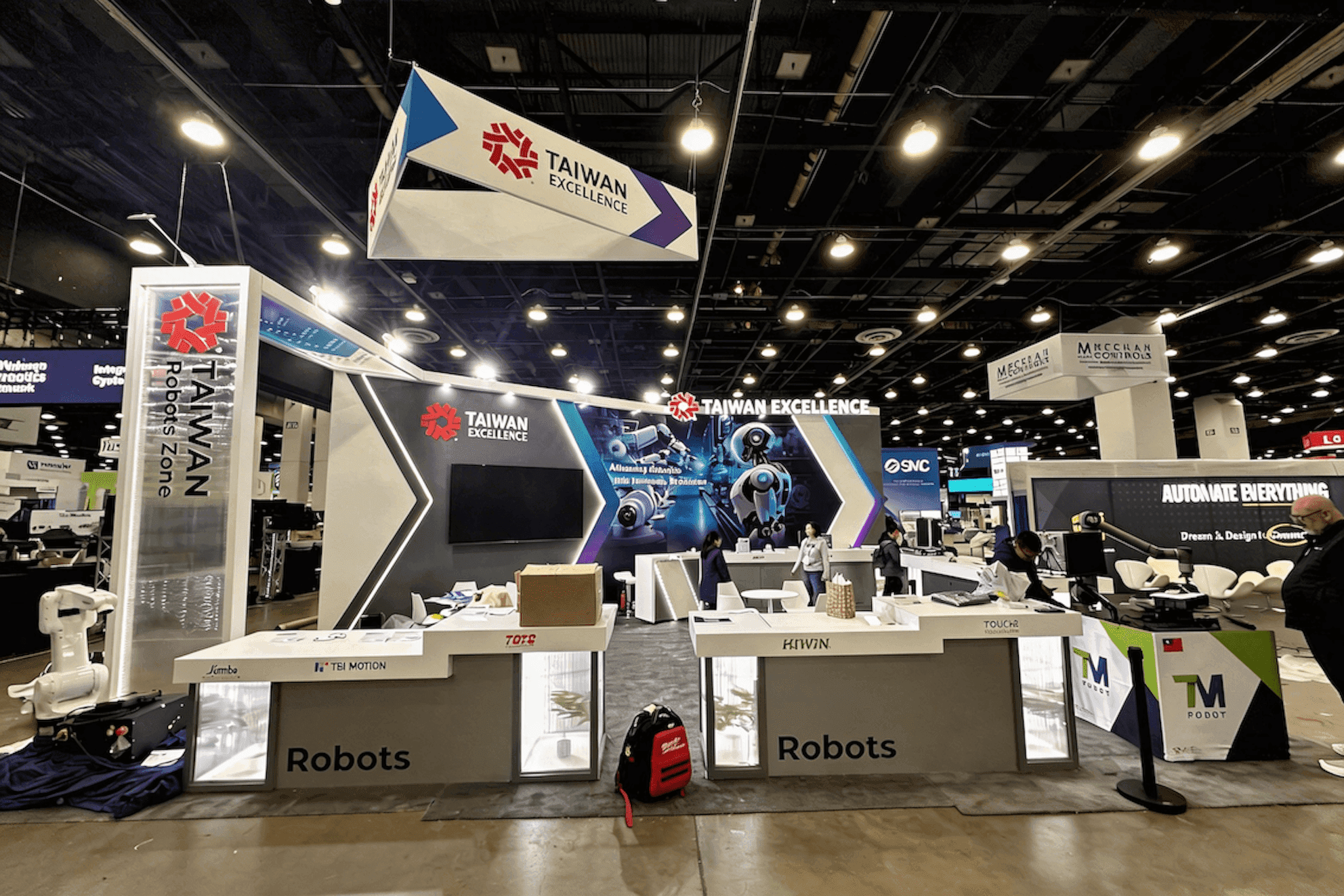
A live demonstration can usually prove a product action because the buyer can see the input and output. A controlled comparison may support an operational outcome when both workflows use the same conditions, while a customer-wide result requires documented deployment evidence and cannot be inferred from a short demo. If the use case is still open, trade show booth design for AI products can help the team build the demonstration around one buyer problem visitors recognize; once the workflow is fixed, choose a metric that supports only the result they can actually observe.

Label each demo metric by evidence type so CCW buyers can understand what the result proves—and what it does not.
Tie It to One Visible Workflow Step
A buyer should be able to point to the part of the demonstration that produced the metric, so define the trigger, completion point, and unit before presenting the number. “Response time,” for example, is unclear unless the team specifies when timing begins and what counts as a complete response. Producing an answer, avoiding a transfer, and completing the customer’s requested action are also different outcomes and should not share one definition of “resolved.”
For a short demonstration, use one primary proof task. Additional information can support it, but every screen does not need its own KPI.
Workflow step | Useful metric | Define before showing it |
|---|---|---|
Customer submits an inquiry → AI returns a complete response | Response time | The start point, end point, and processing included |
Virtual agent receives a request → requested action is completed | Task completion rate | What counts as completion and whether human help is included |
Interaction ends → agent completes the required notes | After-call work time | Which tasks are included and what baseline is used |
Task completion rate is more accurate here than containment rate. A conversation can remain contained without successfully completing the customer’s request.
Identify the Evidence Type
A buyer also needs to know what kind of evidence produced the result. Each category supports a different type of statement.
Evidence type | Use it to show | Suggested label |
|---|---|---|
Live output | What the product did during the demonstration | “Generated live from the interaction shown.” |
Controlled test | A defined comparison under repeatable conditions | “Measured using the same predefined inputs for both workflows.” |
Simulated result | Modeled behavior using synthetic data or operating conditions | “Simulated using synthetic interactions; not a production result.” |
Customer-derived result | An outcome from a documented customer deployment | “Derived from a customer deployment measured over the stated period.” |
These categories are not a ranking. Live output can confirm that a visible function works, controlled testing can support a specific comparison, and simulation can demonstrate a repeatable scenario without exposing customer information. Customer-derived evidence can support an operational or business result, but only within the documented scope of that deployment. Avoid wording that extends the claim beyond its source: a live output does not prove the same performance across every contact center, a simulated result is not actual customer performance, and a customer-derived result should not be called “typical” unless broader evidence supports that statement.
Add the Context a Buyer Needs
After identifying the evidence source, add enough context for the buyer to interpret the number:
Source and baseline: Identify the dataset or test and what the result is being compared with.
Timeframe and sample: State the measurement period and the number of interactions, agents, cases, or tasks included.
Conditions and limitations: Note the language, channel, inquiry type, configuration, human involvement, and any material boundary on the result.
A claim such as “30% faster” does not identify what became faster, how the comparison was made, or whether the result came from testing or deployment. Replace every bracketed field in the following structure with verified information:
In a controlled test of [sample size] [interaction type], the AI-assisted workflow reduced [metric] from [baseline] to [result] compared with [comparator]. Results apply to [test conditions] and should not be treated as [known limitation].
This wording does not make the claim more impressive; it gives the buyer enough information to evaluate it.

Complete a Metric Evidence Card before final demo approval to keep every on-screen claim traceable, credible, and easy to explain.
Decide What Buyers See First
The first view does not need the full methodology. Use a simple information hierarchy:
Show first: The visible workflow, one primary metric, and a short evidence label.
Keep ready: The supporting details needed to verify the claim.
Discuss afterward: Deployment requirements, customer examples, and whether the result applies to another operating environment.
A dashboard filled with KPIs adds little proof if the buyer cannot identify which result matters or how it relates to the workflow. In the CCW AI demo booth plan, the visible workflow and primary metric should lead the first explanation, while supporting evidence remains available for the buyer conversation that follows.
Approve the Claim With a Metric Evidence Card
Before the demonstration enters final production, place the claim and its supporting information on one review card so product, marketing, sales, and demo staff approve the same version.
Metric Evidence Card
Field | Approval question |
|---|---|
Workflow step | Which visible step produced the result? |
Claim supported | Does it show a product action, operational outcome, or business outcome? |
Metric and unit | What exactly is being measured, and in which unit? |
Evidence type | Is the result live, controlled, simulated, or customer-derived? |
Data source | Which test, dataset, or deployment produced the number? |
Baseline or comparator | What is the result being compared with? |
Timeframe | When was it measured, and over what period? |
Denominator or sample size | How many interactions, agents, cases, or tasks were included? |
Operating conditions | Which language, channel, configuration, and level of human involvement applied? |
Known limitation | What does the result not prove? |
Evidence owner | Who can answer detailed questions about the claim? |
An illustrative card might state that the AI creates a post-call summary and that the claim is limited to shortening a defined after-call task under controlled conditions. The metric would compare a verified test result with a verified baseline, identify the test set and its limitations, and name the product demonstration lead as the evidence owner.
Do not publish illustrative numbers as performance data. Every figure on the final card should come from a verified source; if the team cannot complete the evidence type, comparator, sample, conditions, or limitation fields, revise the claim or remove the metric.
Frequently Asked Questions
Is simulated data acceptable in a CCW booth demonstration?
Yes. Simulation is useful when customer data is private or the team needs a repeatable scenario. Label it as simulated, state what was modeled, and do not present it as evidence from a live customer deployment.
Can a demo metric be compared with a customer case-study result?
Yes, but label the two results separately. The demo metric explains what happened in the shown workflow, while the case study reports what happened in a documented deployment. Do not combine them into one claim.
How many metrics should appear in a short AI or CCaaS demo?
Usually one primary metric is enough. Add a second only when it clarifies another part of the same buyer question. If visitors cannot tell which result matters, the demonstration is carrying too many numbers.