Booth Display Planning for Baby and Children’s Product Exhibitors
At ABC Kids Expo, buyers are often moving quickly between many product categories. A booth needs to help them understand what the product is, who it is for, how it works, and why it belongs in a retail or distribution conversation.
The best layouts are not crowded with every sample at once. They give buyers a clear path: see the product, understand the use case, inspect the details, then speak with the team.
Product display shelves: Shelving or display walls can organize smaller products, accessories, packaging, colorways, and product families. The goal is not to fill every inch. The goal is to make the product line readable from a short distance.
Stroller, wagon, or baby gear demo areas: Larger juvenile products need more than a static display. Buyers may want to check scale, folding details, wheel movement, handles, storage features, material feel, or how the product works in a real use scenario.
Packaging and retail presentation zones: Many buyers are not only judging the product. They are also judging how it will look on a shelf, in a store display, or online. Packaging samples, retail cards, product labels, and simple signage can help tell that story without making the booth feel busy.
Buyer conversation counters: ABC Kids Expo is a relationship-driven show. A counter or small meeting area gives staff a place to discuss pricing, MOQ, delivery timing, product specs, retail fit, and distribution questions without blocking the front of the booth.
Lifestyle graphics and brand messaging: Baby and children’s products need both practical clarity and emotional context. For exhibitors, graphics and brand presentation should explain product use, age range, safety cues, lifestyle setting, and brand value before the staff conversation begins.
Hidden storage for samples and packaging: Samples, catalogs, bags, boxes, tools, packaging inserts, and staff items should not sit in buyer view. Hidden storage helps the booth stay clean and keeps the product presentation easier to judge.

A 20x30 booth gives baby product exhibitors room for product displays, demo areas, buyer conversations, staff movement, and hidden storage.
Show-Ready Booth Support for ABC Kids Expo
A good booth plan is not only about the first rendering. It also needs to work during move-in, product placement, staff setup, buyer traffic, and final show-site checks.
Baby and children’s product exhibitors often bring more physical samples than expected. Packaging, accessories, replacement parts, product cards, and catalogs all need a place to go.
Booth details reviewed early: Product count, display height, demo space, counter placement, graphics, packaging samples, storage, and staff workflow should be reviewed before the layout is approved.
Product display layout: Hero products, supporting accessories, packaged goods, demo items, and buyer discussion areas should each have a role. When everything is placed at the same priority, buyers have a harder time knowing where to look first.
Packaging visibility: Packaging should be easy to review but not allowed to take over the booth. A clean product display with a few strong packaging cues usually works better than a crowded retail shelf.
Mandalay Bay setup planning: For exhibitors at Mandalay Bay, booth planning should account for move-in timing, product samples, graphics placement, material handling, storage access, and final setup checks.
Storage and reuse planning: Baby and children’s product exhibitors often bring samples, packaging, display parts, graphics, and reusable booth elements that may be needed again after the show. Storage planning helps keep extra materials organized during the event and makes it easier to reuse booth elements for another trade show, product launch, or updated layout.
Clear scope before work begins: Exhibitors should know what is included before production starts, including layout direction, rental or build elements, graphics, display support, installation coordination, dismantle planning, and show-site support.
One team managing the process: From the first booth direction to final dismantle, the exhibitor needs a clear team managing design, production details, installation timing, product display priorities, and show-site communication.
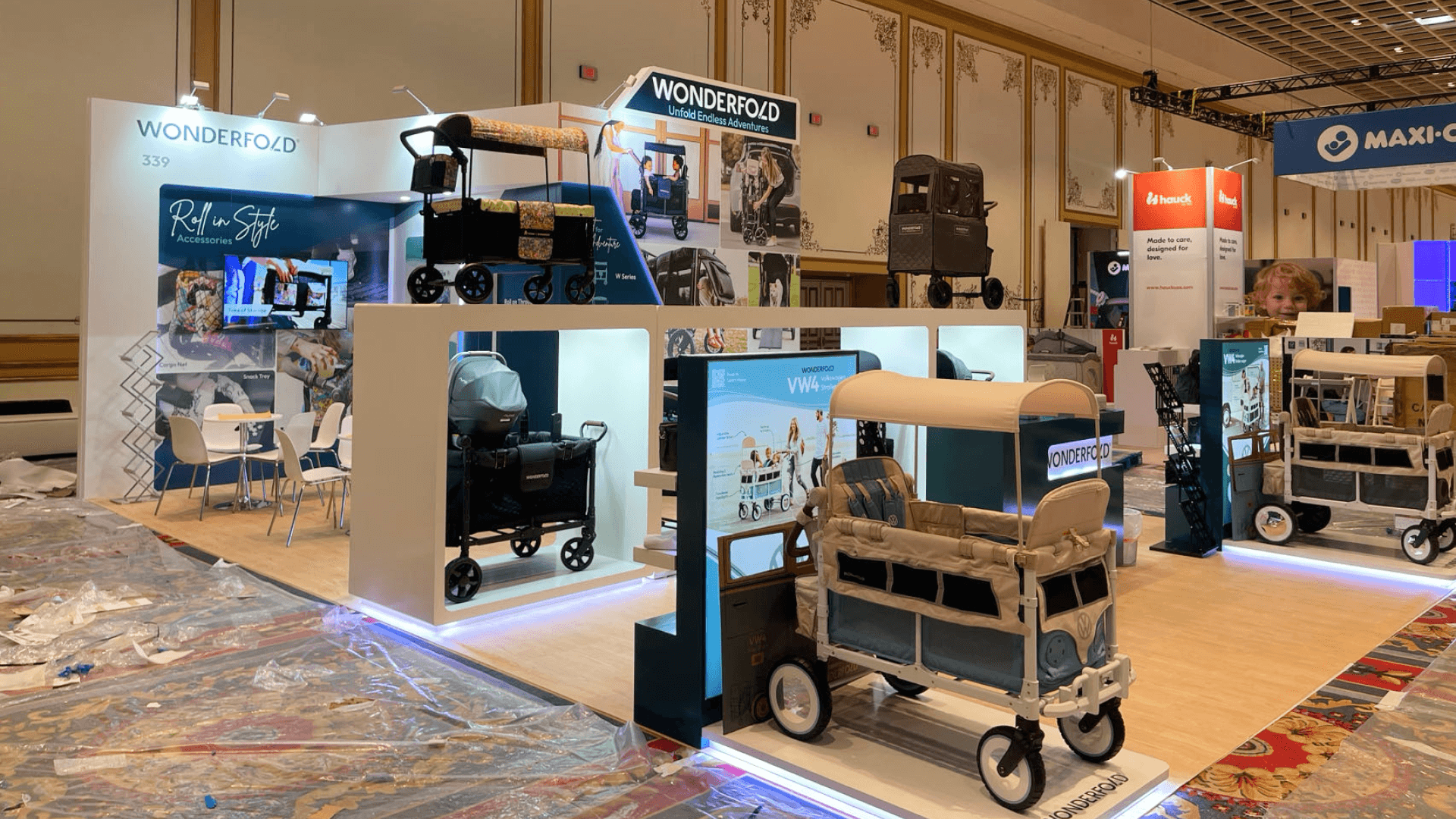
Larger baby gear needs open space so buyers can check scale, movement, materials, packaging, and use details without blocking booth traffic.
How Booth Design Helps Buyers Understand Baby Products
Baby and children’s product buyers look at a booth differently from a general attendee. They are judging product quality, usability, safety cues, packaging clarity, retail fit, and whether the brand feels prepared for the market.
Booth design helps organize that judgment.
A clear first impression: Buyers should understand the product category before entering the booth. Product placement, graphics, lighting, and aisle-facing messaging should work together.
A simple product path: The booth should guide buyers from first look to product review, then into staff conversation. If too many products compete for attention at once, the booth can feel scattered.
Space for hands-on review: Many juvenile products need inspection. Buyers may want to touch materials, compare sizes, check folding details, review packaging, or ask how the product works for different age ranges.
A clean brand environment: Visible boxes, crowded counters, unclear graphics, or blocked product access can make the booth feel unfinished. A clean booth makes the product easier to evaluate and the brand easier to trust.
Booth Size Options for ABC Kids Expo Exhibitors
The right booth size depends on the product category, number of samples, and how buyers need to interact with the products. A compact accessory line may need a very different layout from a stroller, wagon, furniture, or full product family.
Booth option | Best for | What the layout should support |
|---|---|---|
10x10 booth | Focused product line or first-time exhibitor | One display wall, small counter, simple graphics, limited storage, and direct buyer flow |
10x20 booth | Product line with packaging, accessories, or light demo needs | Product shelving, sample review area, graphics, counter space, and basic storage |
20x20 booth | Exhibitors needing open visibility and buyer conversations | Product display zones, demo area, meeting counter, hidden storage, and staff movement |
20x30 booth | Larger baby gear, stroller, wagon, furniture, or multi-product displays | Product storytelling, demo space, buyer meeting area, packaging review, storage, and clearer traffic flow |
Custom island booth | Larger brands or full category presentations | Multiple product zones, lifestyle graphics, meeting areas, storage, and stronger brand presence |
A 20x30 booth is often a practical fit for baby and children’s product exhibitors because it gives larger products room to be seen, touched, compared, and discussed.
For strollers, wagons, nursery products, furniture, or multi-product displays, 20x30 planning can separate product display from buyer conversation. It also gives staff more room to manage samples, packaging, catalogs, and visitor movement.
Before choosing a booth size, exhibitors should confirm three things: how many products need to be shown, how buyers need to interact with them, and how much storage is needed for samples and packaging.
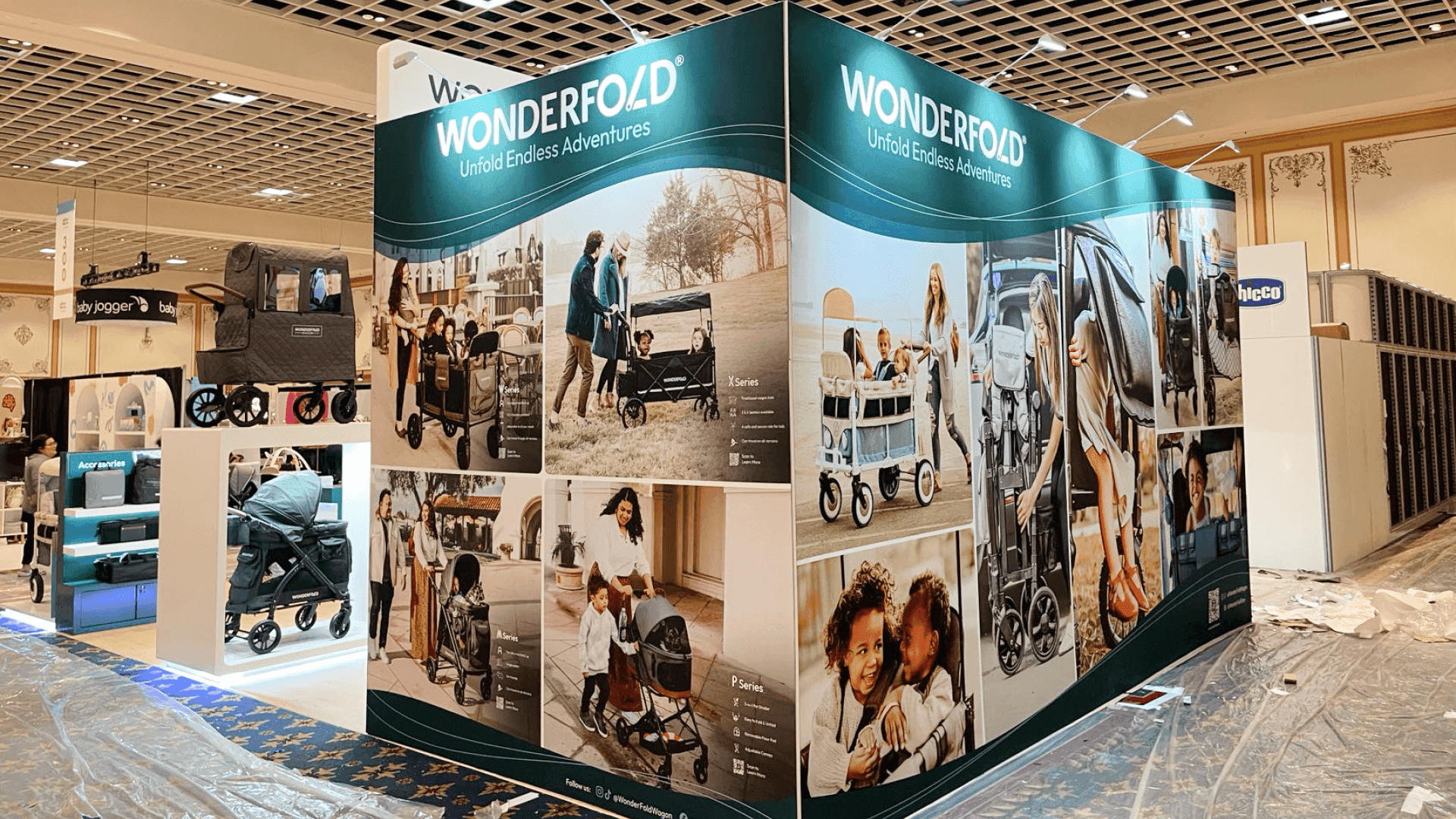
Packaging and product graphics help retail buyers understand shelf presentation, age range, product value, and brand positioning before deeper conversations begin.
ABC Kids Expo Booth Planning Checklist
Before approving an ABC Kids Expo booth direction, exhibitors should check whether the layout is ready for real buyer movement and product review at Mandalay Bay.
First look: Can buyers understand the product category from the aisle?
Hands-on review: Is there enough room for buyers to touch, compare, or inspect the product without crowding the booth?
Retail presentation: Are packaging, product labels, and key selling points visible without making the display feel busy?
Staff workflow: Can the team manage samples, answer questions, and continue buyer conversations without blocking traffic?
Opening-day readiness: Are product placement, graphics, storage access, and move-in details checked before the show opens?
WonderFold ABC Kids Expo Booth Reference
Real booth references help exhibitors understand how product displays, buyer movement, graphics, storage, and booth size work together before approving a booth direction.
The WonderFold ABC Kids Expo 2023 project gallery is a useful reference for exhibitors with larger juvenile products, stroller or wagon-style displays, and buyer-facing product demonstrations.
The WonderFold ABC Kids Expo 20x30 booth case study can also help exhibitors review how a 20x30 booth supports product visibility, display space, brand messaging, staff movement, and buyer conversations at a juvenile product event.
These references should be used as planning examples, not fixed templates. The right booth layout still depends on product type, number of samples, demo needs, storage, and buyer conversation flow.
FAQ
What should a baby product booth at ABC Kids Expo include?
A baby product booth should include clear product displays, demo space, product graphics, packaging visibility, buyer conversation areas, and hidden storage for samples, boxes, catalogs, and staff items.
Is a 20x30 booth a good size for ABC Kids Expo exhibitors?
A 20x30 booth can work well for baby gear, stroller, wagon, furniture, or multi-product exhibitors because it gives the brand room for product display, buyer conversations, demo space, and storage.
How should exhibitors display larger baby products at ABC Kids Expo?
Larger products should be placed where buyers can see scale, inspect details, and understand use cases without blocking traffic. The booth should allow space for product review, staff explanation, and follow-up buyer conversations.
Plan an ABC Kids Expo Booth
ABC Kids Expo booth planning should start with how buyers evaluate juvenile products. Before approving a layout, exhibitors should confirm how products will be displayed, where buyers will review them, and how storage will stay out of sight.
For baby and children’s product exhibitors comparing 20x30 booth planning, product display layouts, or Mandalay Bay show-site support, Circle Exhibit can help plan an ABC Kids Expo booth that connects product visibility, demo areas, graphics, buyer meetings, storage, installation, and Las Vegas show-site execution from the beginning.