ZOSI brought a 20x20 booth to CES in 2024 to present smart security cameras, AI-enabled surveillance products, and connected home monitoring solutions in a highly competitive consumer electronics environment. The booth needed to be visible from the aisle, clear enough for fast product scanning, and structured enough to support live product explanation around camera quality, smart home compatibility, and outdoor security use cases.
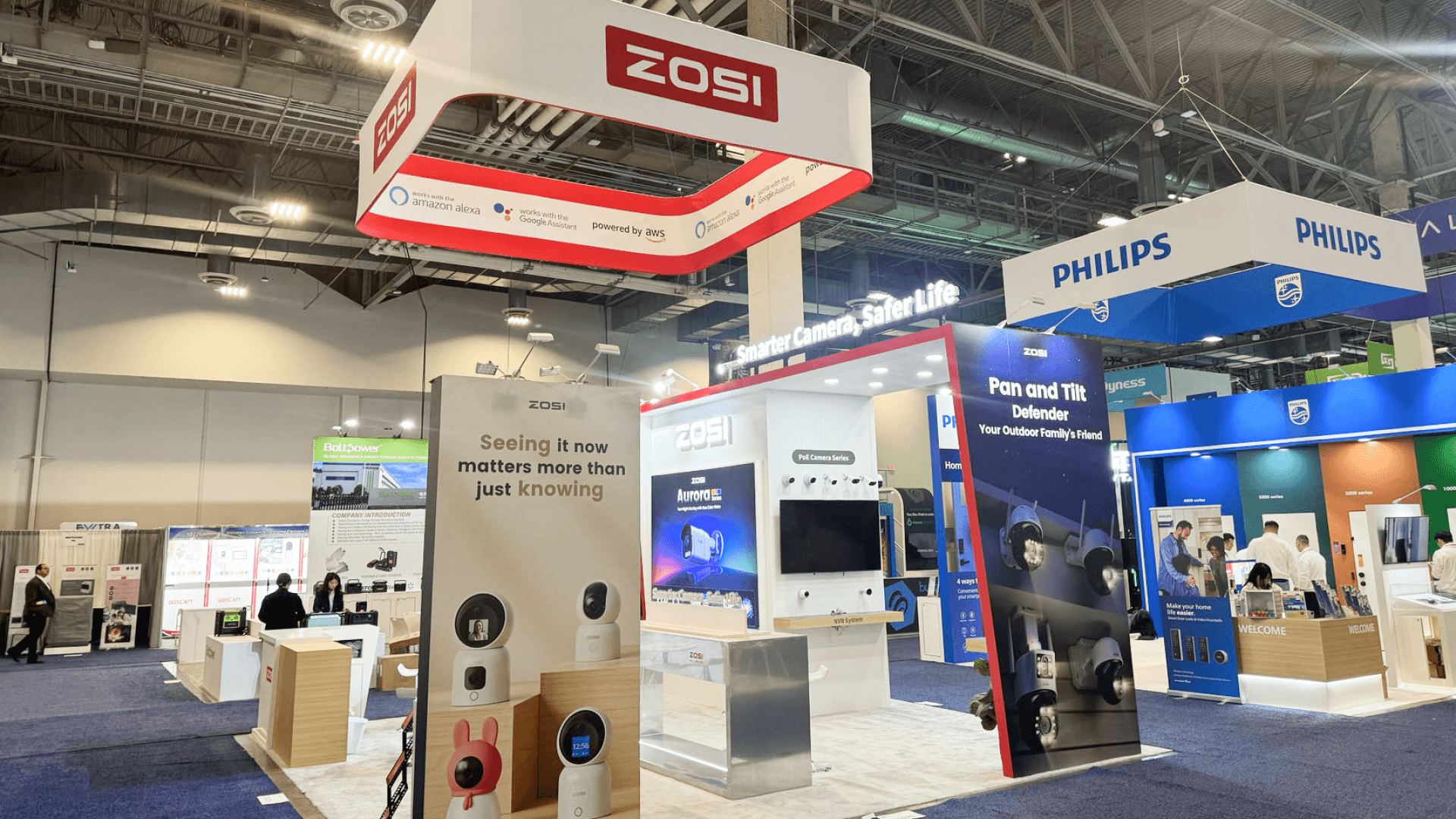
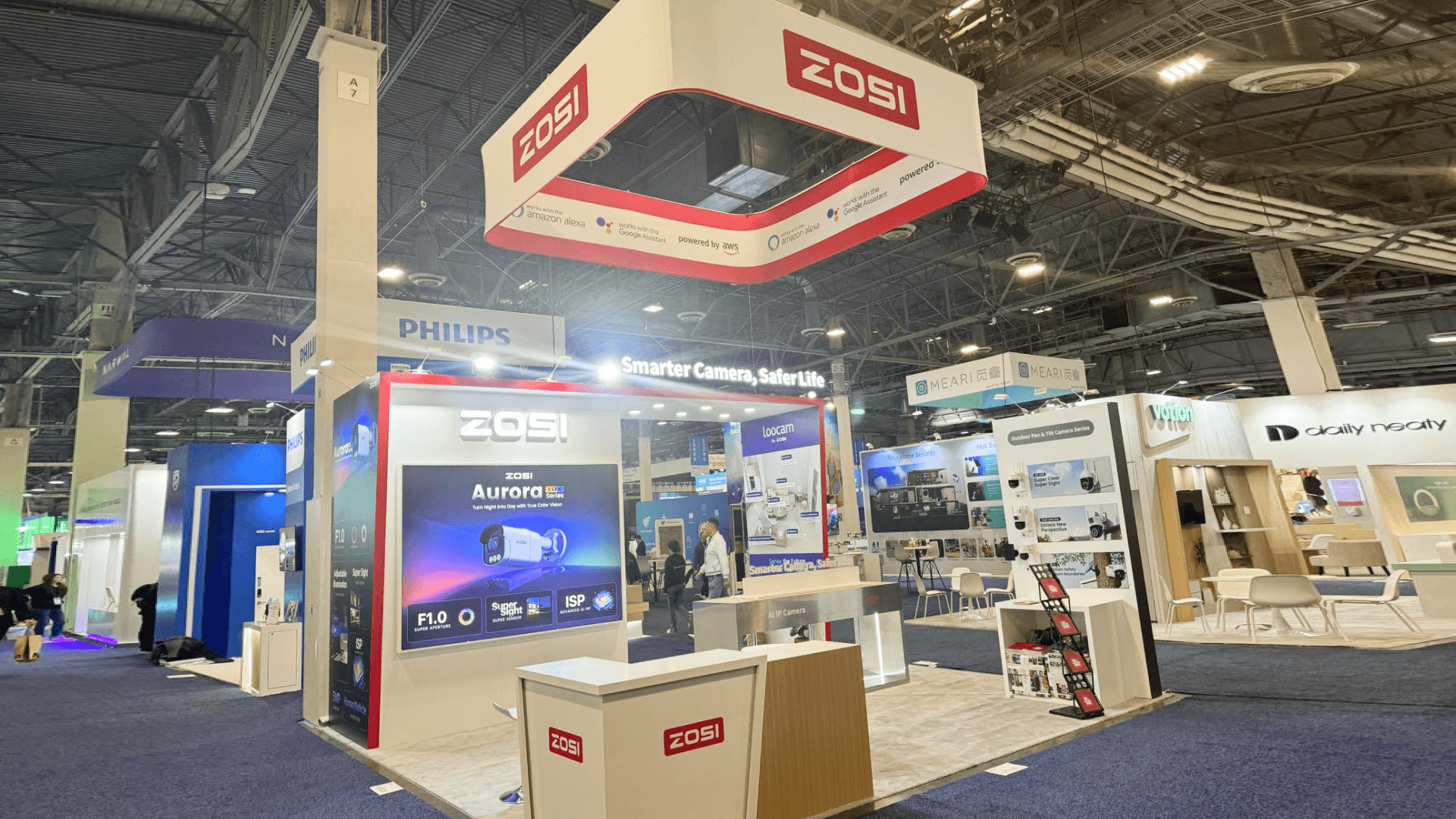
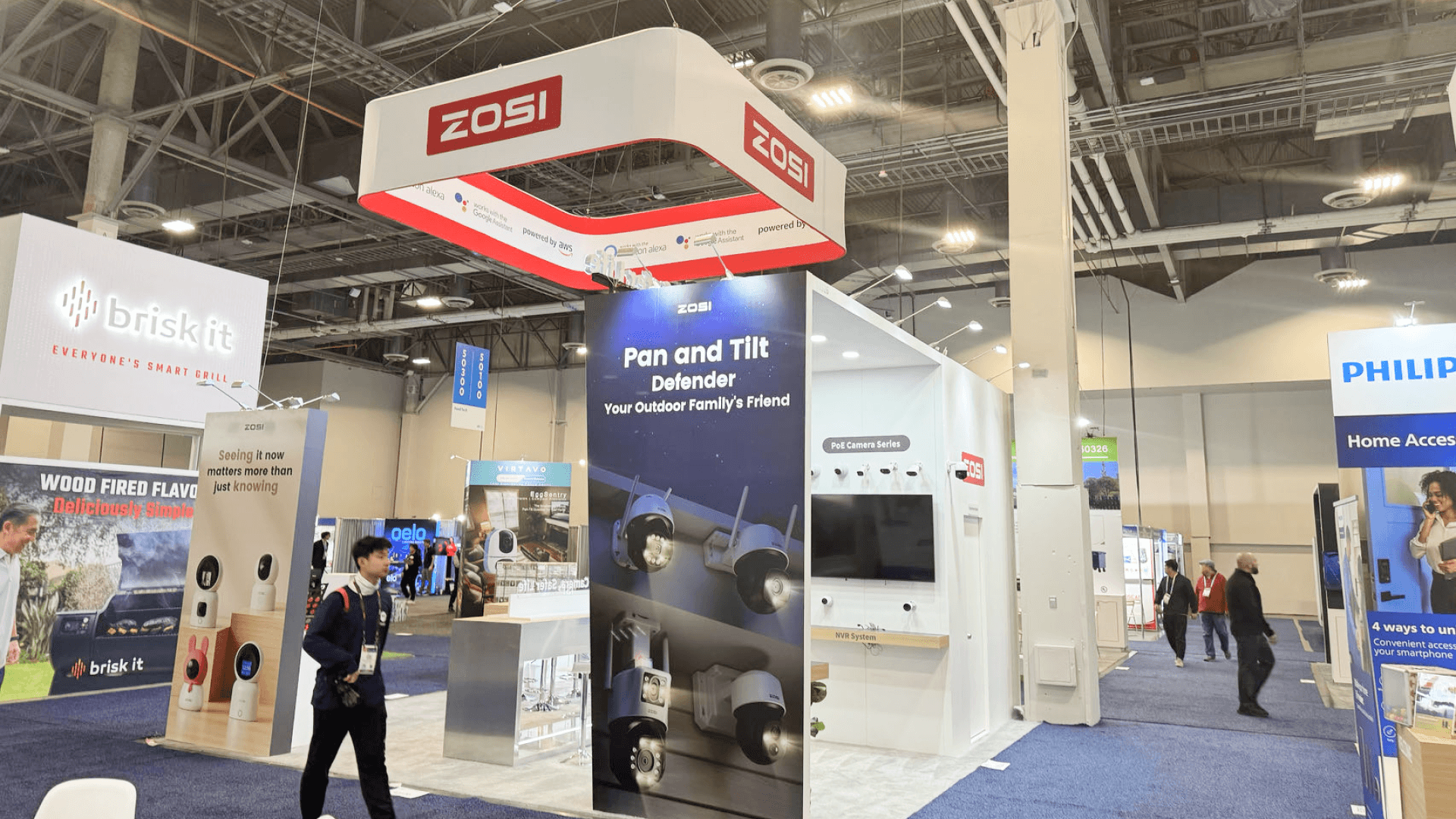
The layout was built around strong vertical recognition. A suspended square hanging sign gave the booth long-range visibility across the Las Vegas Convention Center floor, while the front demo wall and product counters helped visitors quickly understand ZOSI’s core categories: Aurora camera technology, pan-and-tilt security cameras, PoE camera systems, and smart home monitoring devices.
The final booth gave ZOSI a compact but highly readable CES presence, balancing overhead branding, demo-wall storytelling, product counters, and open visitor flow inside a 20x20 footprint.
💼
Client:
📅
Year/Exhibition:
📍
Location:
📐
Size:
🏢
Industry:
🏢
Venue Context:
Challenge
The main challenge was visibility. CES is crowded with consumer electronics brands, smart home products, security devices, and connected hardware displays. ZOSI needed a booth that could be recognized from a distance while still making the product story easy to understand when visitors reached the aisle.
The second challenge was product clarity. Security camera booths can become visually busy fast because every product has its own feature set: night vision, optical zoom, AI processing, pan-and-tilt control, PoE systems, and home monitoring use cases. The booth had to organize those details through a clear demo wall, front product counter, and large-format graphic surfaces instead of forcing visitors to decode too much information at once.
The third challenge was execution accuracy. The booth included a suspended hanging sign, illuminated branding, display screens, product counters, and multiple camera demo areas. That made booth fabrication and prebuild checks important because each graphic surface, counter edge, lighting point, and product display zone had to align before the booth could open cleanly.
Design vs. On-site Execution
The concept focused on fast recognition and practical product explanation. ZOSI did not need a closed booth or an overly complicated structure. It needed a CES-ready environment where visitors could see the brand from above, understand the camera categories from the aisle, and step into product conversations without crowding the front edge.
For a 20x20 trade show booth, overhead visibility and floor-level clarity have to work together. The hanging sign helped pull attention from across the hall, while the front wall and counters handled the closer product story. This balance made the booth easier to scan, easier to approach, and easier for staff to use during live conversations.
On site, the execution depended on controlled sequencing. The hanging sign, structural frame, graphics, product counters, display screens, and camera demo areas had to be installed in the right order so the booth stayed open and clean. Once the final reset was complete, the booth felt organized, visible, and ready for CES traffic.
Overhead Hanging Sign Zone
The suspended ZOSI sign gave the booth stronger long-range visibility and helped visitors locate the brand across the busy CES show floor.
Aurora Camera Demo Wall
The main demo wall introduced ZOSI’s Aurora camera series with feature-led messaging around night vision, aperture, image processing, and smart security use cases.
Front Product Counter
The front counter created a practical point for product explanation, quick visitor engagement, sample viewing, and staff-led conversations around home security devices.
Pan-and-Tilt Security Display
The vertical display surface helped highlight outdoor security camera applications and gave the booth a stronger category signal from side-aisle traffic.
On-site Highlights
This booth depended on visibility control, product clarity, and precise installation sequencing. The 20x20 island had to carry a strong CES presence without making the space feel overloaded. The on-site execution focused on hanging sign coordination, demo-wall alignment, power and screen readiness, counter placement, product reset, and final aisle-facing cleanup so ZOSI could open with a polished smart security presentation.
Smart Security Demo Flow for a 20×20 CES Booth
Overhead Sign Coordination
Demo Wall Alignment
Power and Display Readiness
Drayage and Product Staging
Union Labor Install Sequencing
Outcome
The overhead sign and large-format graphics helped ZOSI stand out in a crowded smart home and consumer electronics environment.
The booth organized camera features, security use cases, and product categories into a more readable aisle-facing presentation.
Front counters and open access points helped staff move visitors from quick interest into practical discussions about smart cameras and home monitoring systems.
With controlled staging, display checks, and final product reset, the booth opened in a polished condition suited to CES visitor traffic.
What made this booth work was the balance between recognition and explanation. ZOSI needed to be visible across the CES floor, but the booth also had to make camera features easy to understand at close range. The hanging sign created distance visibility, while the demo wall, product counters, and vertical security display helped visitors connect the brand with real smart home and outdoor camera use cases.
The practical takeaway is that consumer electronics booths should be planned around how visitors actually scan products. At CES, people move quickly, compare many devices, and often decide within seconds whether a booth is worth stopping for. For smart security brands preparing for CES or another Las Vegas technology event, an experienced Las Vegas trade show booth builder can help turn a 20x20 footprint into a clearer, more usable product demonstration environment.
Quick Q&A
Q: Why does a smart security booth need overhead visibility?
A: CES halls are crowded, and overhead branding helps visitors locate the booth before they reach the aisle.
Q: What matters most for a camera demo booth?
A: Clear feature messaging, working display screens, product visibility, and enough space for staff-led explanation.
Q: Why use a 20x20 island booth for this type of product?
A: It gives the brand enough room for overhead signage, demo counters, feature walls, and multi-side visitor access.
Q: What on-site details affected the final result?
A: Hanging sign alignment, power checks, graphic installation, product placement, and final counter reset were the key execution points.
Q: Why is this layout a good fit for CES?
A: It supports fast scanning, strong brand recall, and direct product conversation in a busy consumer electronics environment.


