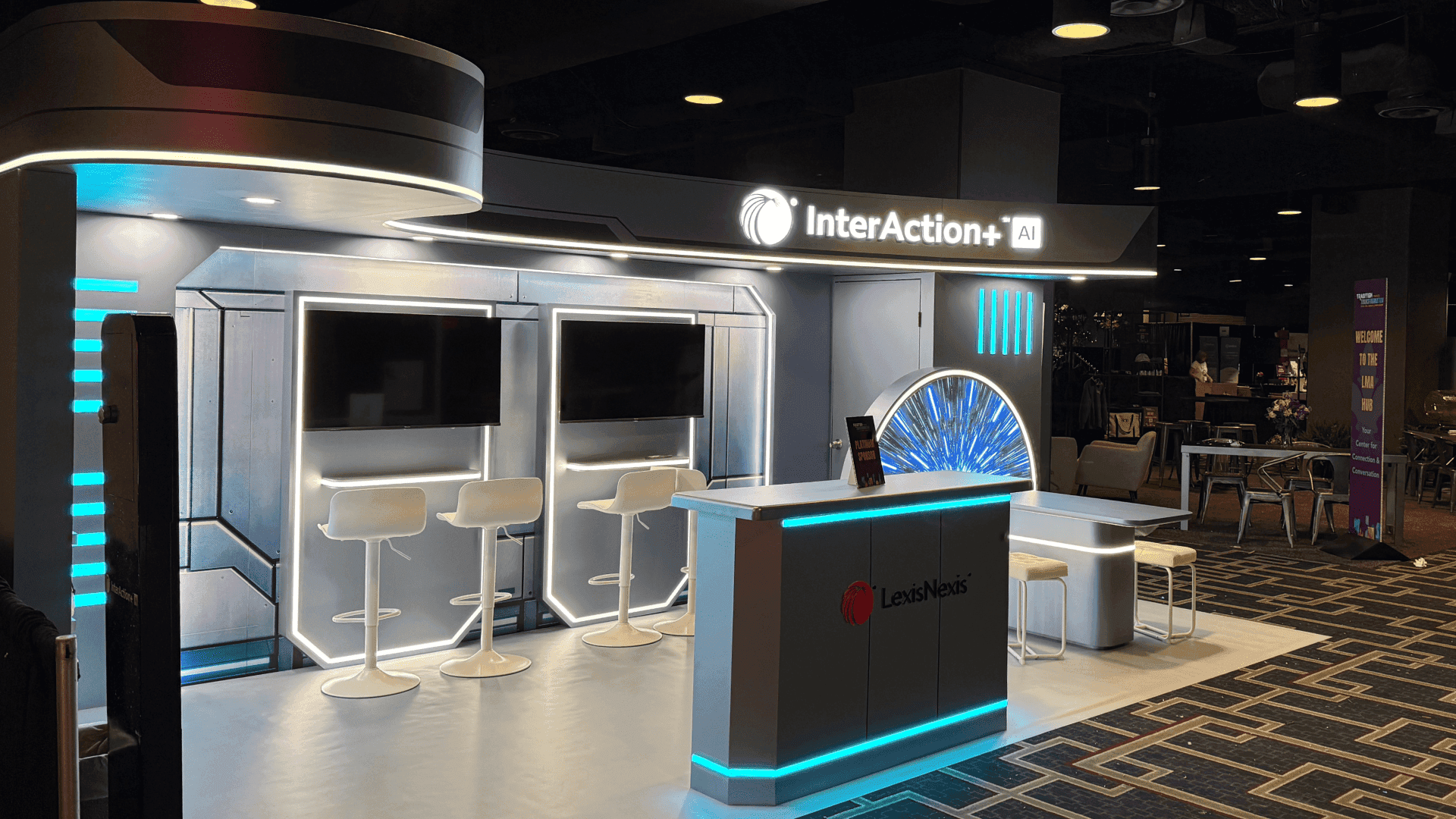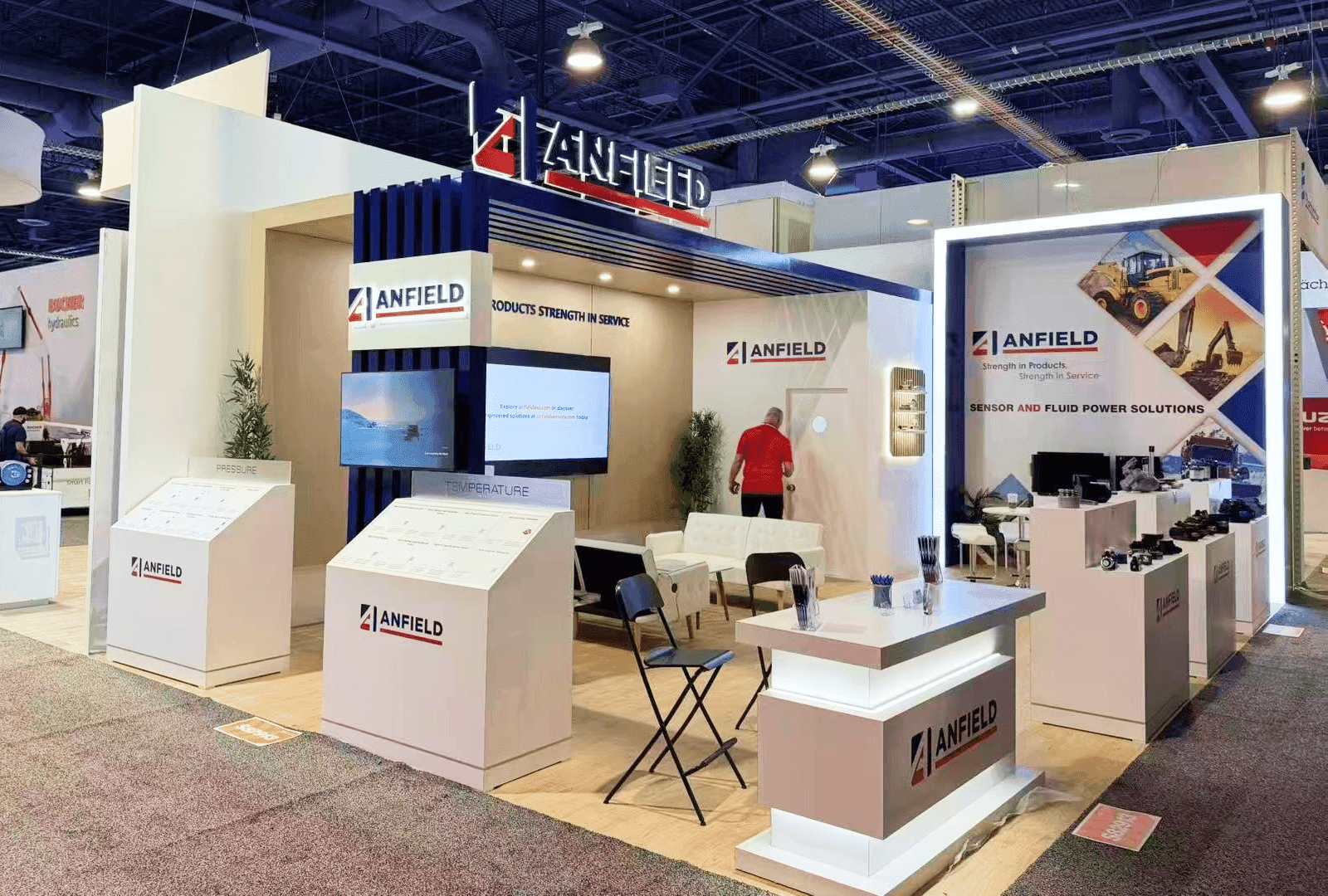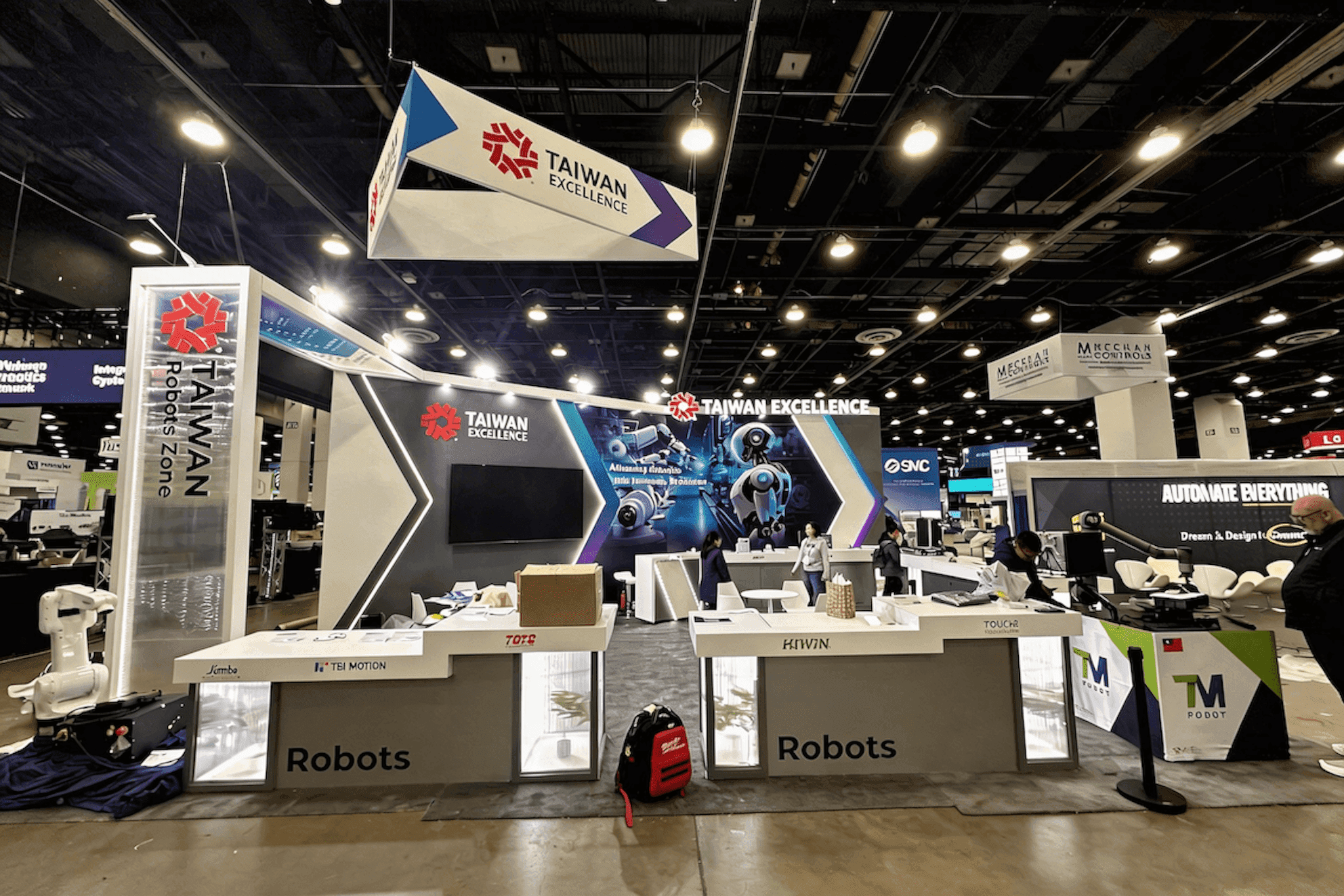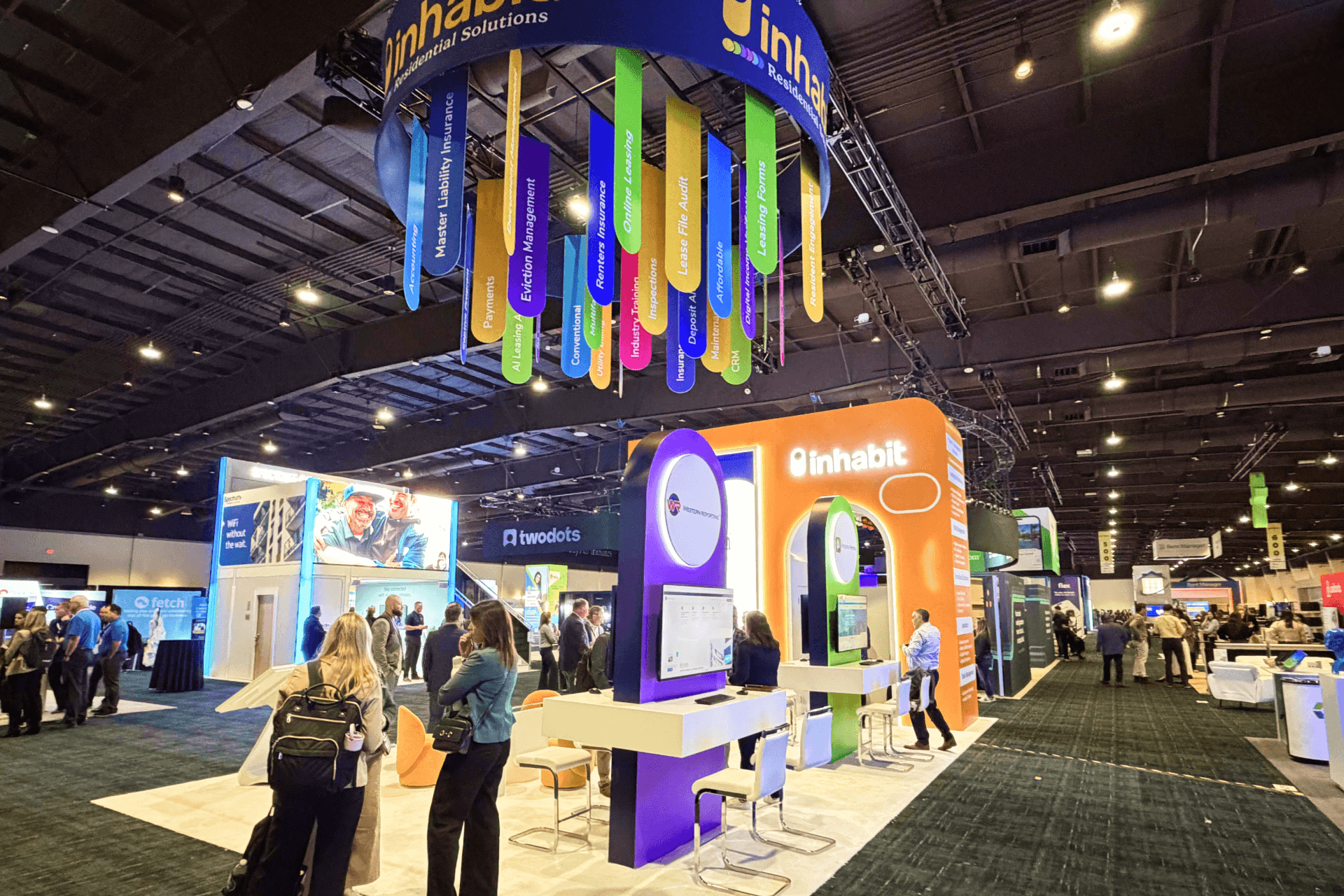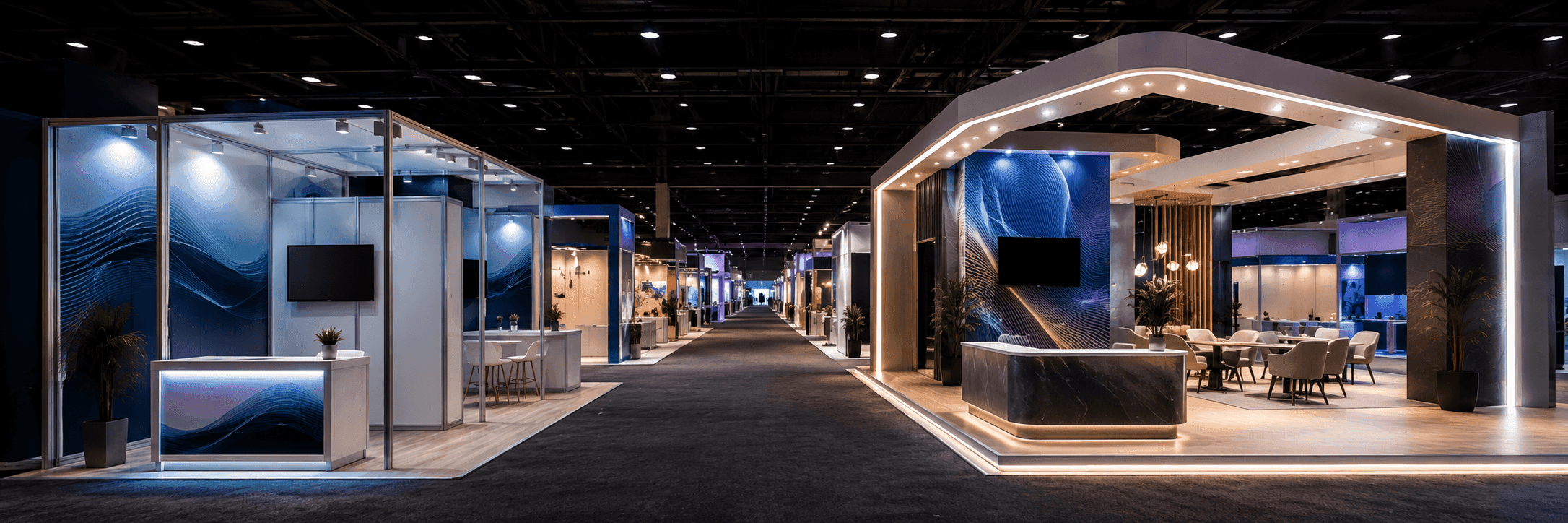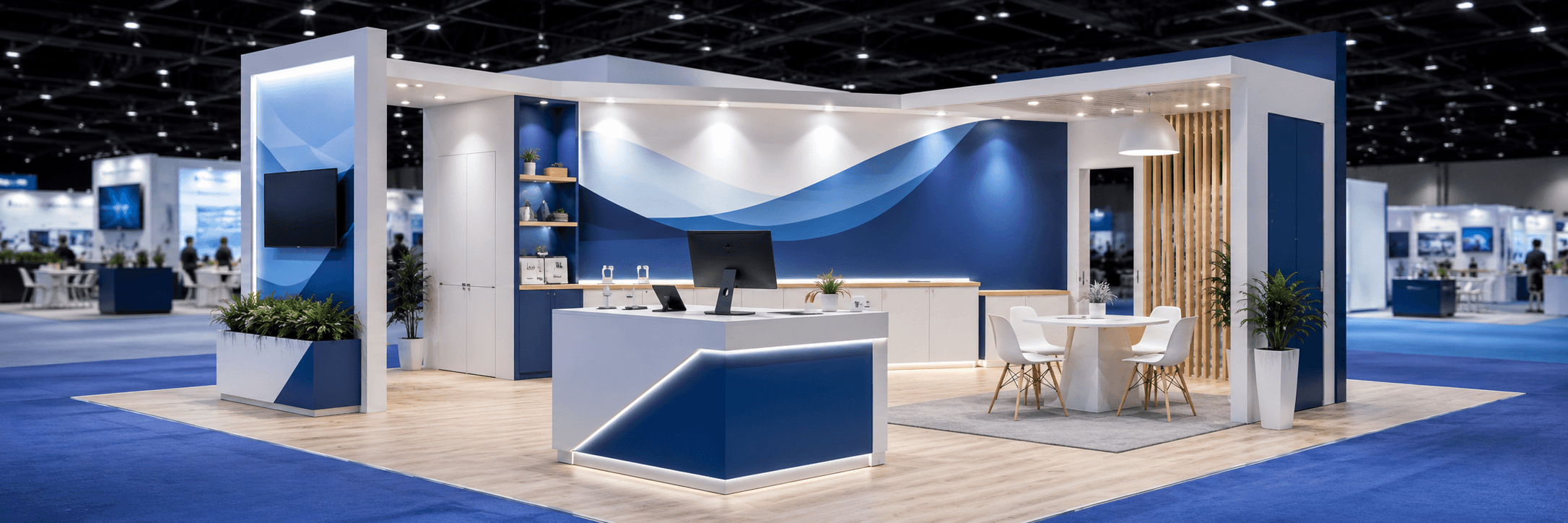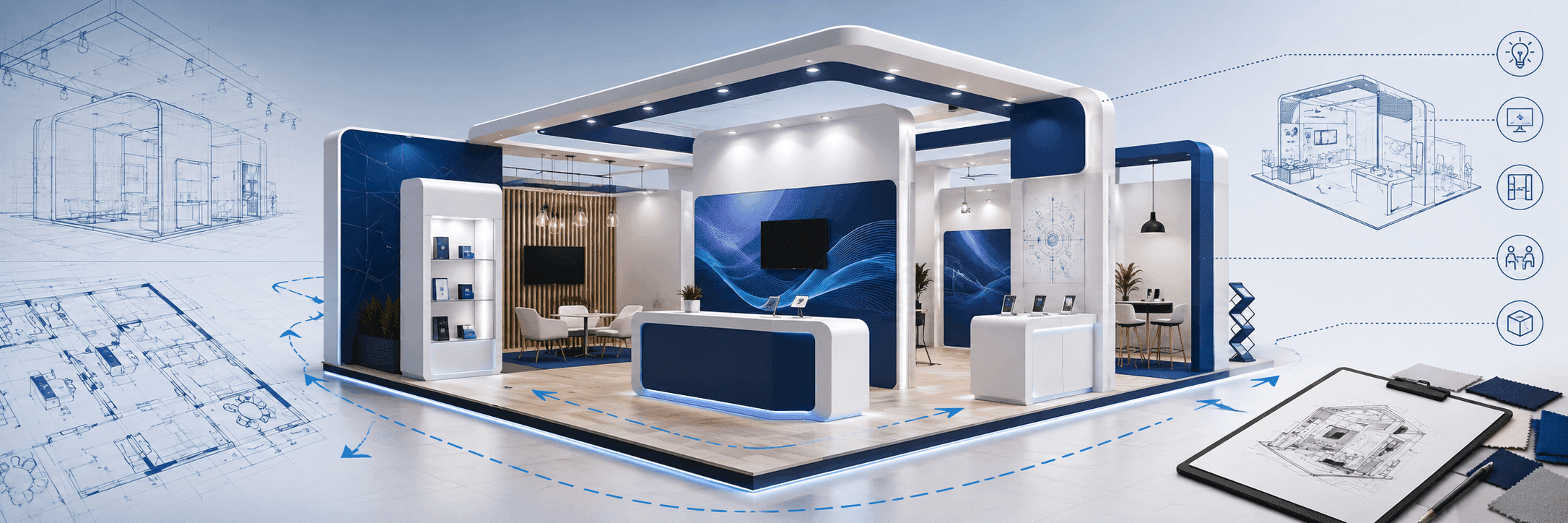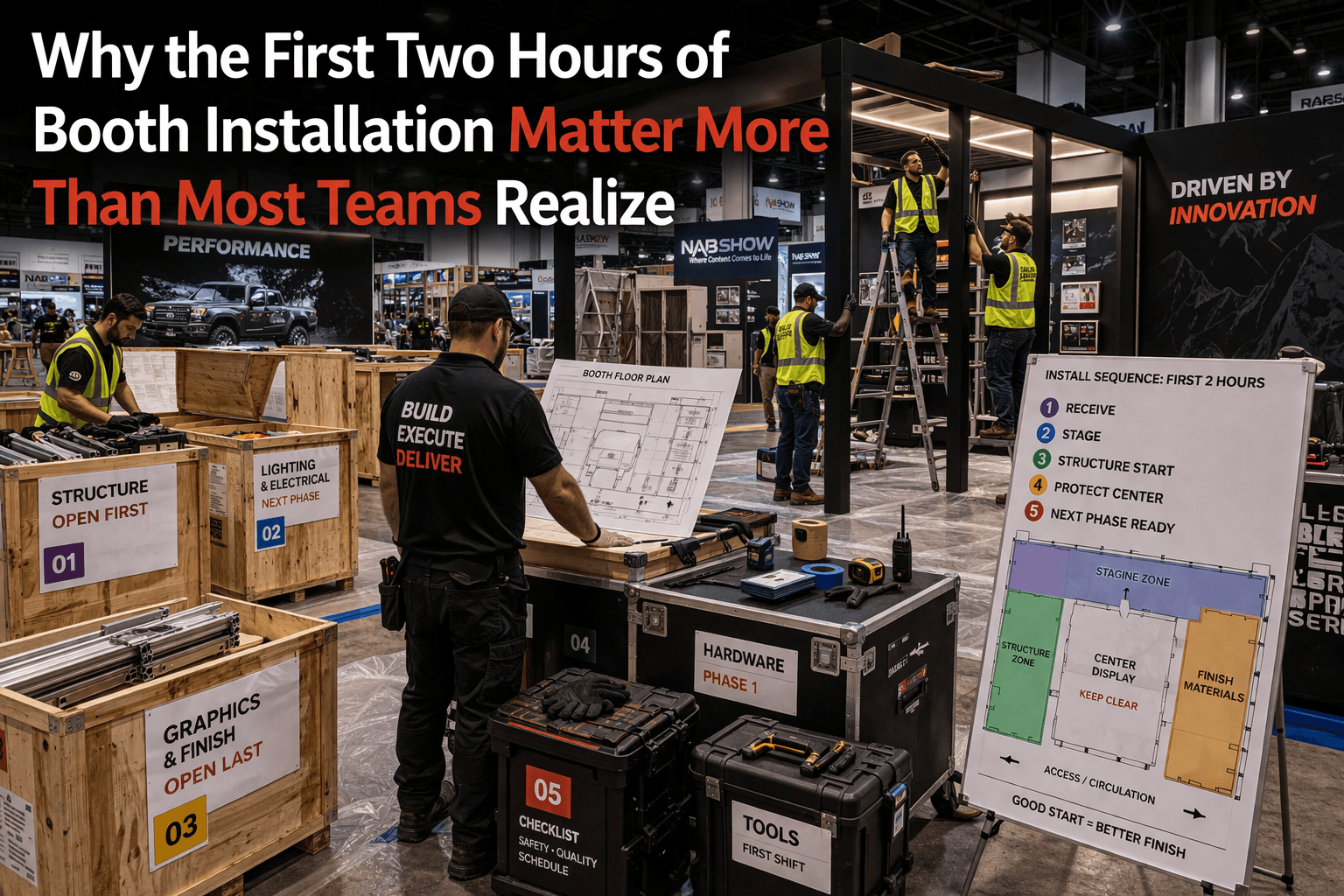
Early Las Vegas booth installation scene with floor marking, crate checks, structure staging, crew sequencing, power confirmation, graphics check, and punch-list control

/

/

/

/

Why the First Two Hours of Booth Installation Matter in Las Vegas

Why the First Two Hours of Booth Installation Matter in Las Vegas

Why the First Two Hours of Booth Installation Matter in Las Vegas

Why the First Two Hours of Booth Installation Matter in Las Vegas

Published:

Jan 6, 2026

Updated:

Jan 6, 2026

Circle Exhibit Team

Industry professionals

Exhibition industry professional dedicated to delivering the latest insights and curated recommendations to you.

Exhibition industry professional dedicated to delivering the latest insights and curated recommendations to you.

The first two hours set the pace for structure, graphics, power, and final closeout. When floor marking, crate checks, and crew sequencing are handled early, the rest of the booth installation has a clearer path.

The first two hours set the pace for structure, graphics, power, and final closeout. When floor marking, crate checks, and crew sequencing are handled early, the rest of the booth installation has a clearer path.

The first two hours set the pace for structure, graphics, power, and final closeout. When floor marking, crate checks, and crew sequencing are handled early, the rest of the booth installation has a clearer path.

Quick Answer: Why do the first two hours of booth installation matter?

The first two hours of booth installation set the pace for floor marking, crate checks, structure staging, graphics placement, power access, and crew sequencing. If this early phase is disorganized, the booth can lose valuable setup time before the main installation work even begins.

Quick Answer: Why do the first two hours of booth installation matter?

The first two hours of booth installation set the pace for floor marking, crate checks, structure staging, graphics placement, power access, and crew sequencing. If this early phase is disorganized, the booth can lose valuable setup time before the main installation work even begins.

Booth installation can lose time before the main structure is even standing. In Las Vegas convention halls, the first two hours often decide whether the crew starts with control or spends the rest of move-in fixing avoidable sequencing problems. This early window matters because floor marks, crates, power points, graphics, and labor flow all begin to connect at once.


The First Two Hours Decide the Setup Rhythm

The first two hours matter because they turn a booth plan into a working install sequence.

Before the booth structure rises, the crew needs to confirm the footprint, identify the right crates, stage the first components, check power access, and understand who does what next. If this phase is rushed or unclear, later steps can slow down even when the booth materials are ready.

That is why on-site installation and dismantle support should not begin with assembly alone. It should begin with control.

A strong first two hours usually includes:

  • floor marking

  • crate check

  • install sequence review

  • structure staging

  • power point confirmation

  • graphics check

  • crew role assignment

  • first punch-list risk review

This early window does not look dramatic, but it sets the pace for everything that follows.

Floor Marking Prevents Layout Drift

Floor marking should happen before major booth components are unpacked.

In a Las Vegas convention hall, a small layout shift can affect the entire booth. If the walls, counters, storage area, or demo zone are placed incorrectly at the start, the crew may need to adjust structure, graphics, flooring, and power access later.

Floor marking helps confirm:

  • booth boundary

  • main wall position

  • counter placement

  • storage location

  • entry path

  • demo zone position

  • meeting area placement

  • power or cable access points

This is especially important for booths with multiple zones. A 20x30 layout, for example, may need a demo counter, product display wall, meeting counter, storage, and staff path to line up correctly from the start.

If the first marks are wrong, the booth can still be built, but the install becomes harder to control.

Crate Checks Keep the Crew From Losing Time

A crate check should confirm that the right materials are available before assembly starts.

The crew should not discover missing hardware, mislabeled graphics, or buried components halfway through the install. The first two hours should identify which crates hold structure, graphics, counters, lights, AV, flooring, and tools.

A practical crate check asks:

  • Are the first-needed crates at the booth space?

  • Are structural components easy to identify?

  • Are graphics packed where the crew can access them?

  • Are counters, cabinets, and hardware labeled clearly?

  • Are lighting and power-related pieces separated?

  • Are any fragile or AV components protected?

  • Are empty crates creating movement problems?

This step protects crew timing.

If the team has to search for parts after the build begins, the booth loses momentum.

Structure Staging Should Match the Install Order

Structure staging affects how quickly the booth can take shape.

A booth is not built by unloading everything at once. The crew needs the right parts in the right sequence. Wall frames, towers, counters, storage units, graphics, lighting, and AV pieces should be staged so the next step is clear.

A simple staging sequence may look like this:

Early Install Area

Why It Matters

Floor marks

Confirms layout before components move into position

Primary structure

Creates the base for graphics, counters, and AV

Counters / cabinets

Defines demo, reception, storage, or meeting areas

Graphics

Depends on correct wall and frame placement

Power / cable access

Needs confirmation before counters close access points

Lighting / AV

Often depends on structure, power, and screen placement

Final touchpoints

Cleaning, alignment, and punch-list closeout

Good staging prevents the booth space from becoming a pile of parts.

The install area should stay readable for the crew.

Power Point Confirmation Should Happen Early

Power access should be confirmed before counters and walls block the path.

This is a common source of avoidable setup pressure. A booth may have screens, lighting, demo equipment, product displays, charging stations, or meeting-area devices. If the crew confirms power too late, the layout may need changes after major components are already placed.

During the first two hours, the team should confirm:

  • where power is located

  • what needs power first

  • whether counters block access

  • where cables need to route

  • whether demo equipment needs testing

  • where lighting or monitors will connect

This matters even more for technical booths, screen-led demos, and product display areas.

A booth can look almost finished and still not be ready if power access was not checked early.

Graphics Checks Reduce Late-Stage Rework

Graphics should be checked before the booth reaches the final stage.

Large wall graphics, SEG panels, counter wraps, lightbox graphics, and branded surfaces depend on structure alignment. If a frame is slightly off or the wrong graphic is opened late, the crew may lose time fixing a problem that could have been identified earlier.

An early graphics check should confirm:

  • graphic quantity

  • correct panel order

  • size and fit

  • visible damage

  • installation surface

  • lighting or screen conflicts

  • final viewing direction

This is not only a visual step. Graphics affect booth readiness.

If the branded wall is delayed, the booth may not be ready for final cleaning, photography, or client walkthrough.

Crew Sequencing Keeps Work From Colliding

Crew sequencing decides who works where and when.

In the first two hours, the team should avoid having too many people working in the same space without a clear order. If one group is staging structure while another is opening graphics and another is placing counters, the booth can become crowded before meaningful progress begins.

A stronger crew sequence assigns clear first-phase roles:

  • one person confirms layout marks

  • one person verifies crates and labels

  • one group stages primary structure

  • one group prepares graphics and hardware

  • one lead checks power and install dependencies

  • one lead tracks risk items and next steps

This is where booth construction support in Las Vegas becomes valuable. The booth is not only assembled; it is coordinated under real move-in pressure.

A clear crew sequence helps the setup stay calm even when the hall is busy.

Why 20x30 Booths Need Staged Installation

A 20x30 booth usually has enough components to make the first two hours important.

Compared with a smaller booth, a 20x30 layout may include separate demo, meeting, product display, storage, and graphic zones. If those areas are not staged in order, the booth can feel crowded during setup and unclear during final closeout.

20x30 booth layouts for staged installation should account for:

  • which wall or frame installs first

  • where the demo counter sits

  • how product display pieces are staged

  • where meeting furniture waits

  • when graphics are installed

  • where storage remains accessible

  • how staff and crew paths stay clear

The footprint gives more room, but it also creates more dependencies.

A 20x30 booth installs faster when the first two hours establish zone order.

Logistics Must Support the First Install Window

The first two hours depend on what happened before the crew arrived.

If crates are delayed, mislabeled, or staged in the wrong order, the install team starts with friction. If power locations, booth drawings, or graphics notes are unclear, the team spends early setup time solving questions instead of building.

That is why logistics and pre-show coordination should connect directly to the installation plan.

Before move-in, the team should confirm:

  • freight arrival status

  • crate labels

  • first-needed materials

  • install drawings

  • graphic references

  • power requirements

  • AV or lighting needs

  • crew schedule

  • dismantle and outbound expectations

The first two hours are easier when logistics prepares the crew for the order of work.

Punch-List Risk Starts Earlier Than Most Exhibitors Think

Punch-list problems often begin in the first two hours.

A punch-list is not only a final checklist. Many late-stage issues are created when the early setup phase misses something small: a counter placed wrong, a graphic opened late, a power point blocked, a crate moved too far away, or a staff path overlooked.

Early punch-list risk control should track:

  • layout mismatch

  • missing or damaged components

  • graphic fit issues

  • exposed cable risks

  • blocked storage access

  • lighting alignment concerns

  • counter or cabinet placement problems

  • unfinished detail areas

The goal is not to make the first two hours slow.

The goal is to prevent small issues from becoming closeout pressure.

What Happens When the First Two Hours Are Disorganized?

The whole installation can lose its rhythm.

The crew may start assembling before the layout is confirmed. Crates may block movement. Hardware may be hard to find. Graphics may be opened too late. Power access may be discovered after counters are placed. The booth may still get built, but the final hours become more stressful.

Common problems include:

  • re-marking the floor after structure begins

  • moving counters twice

  • delaying graphics installation

  • crew members waiting for next-step clarity

  • power or cable access conflicts

  • unfinished storage or service areas

  • rushed cleaning and final handoff

The first two hours do not guarantee a perfect install.

But they reduce the risk of the booth falling behind before real assembly has momentum.

First Two Hours Installation Checklist

A focused first-phase checklist helps the crew start in the right order.

Checklist

  • Confirm booth boundary and floor marks

  • Review install drawings before opening all crates

  • Identify first-needed structural components

  • Check graphics quantity and panel order

  • Confirm counter, cabinet, and storage locations

  • Verify power points and cable paths

  • Stage tools, hardware, and lighting components

  • Keep empty crates from blocking the work area

  • Assign crew roles for the first install phase

  • Track early punch-list risks before they become final issues

This checklist works because it ties layout, materials, labor, and closeout together.

It keeps the install from becoming reactive.

Final Takeaway

The first two hours of booth installation matter because they establish control.

In Las Vegas, where move-in windows, freight timing, crew coordination, and venue pressure can all affect setup, the early phase needs more discipline than many exhibitors expect. Floor marks, crate checks, structure staging, graphics review, power confirmation, and crew sequencing all influence how smoothly the booth moves toward final closeout.

A strong installation does not start when the booth looks finished.

It starts when the first two hours are organized.

The First Two Hours Decide the Setup Rhythm

The first two hours matter because they turn a booth plan into a working install sequence.

Before the booth structure rises, the crew needs to confirm the footprint, identify the right crates, stage the first components, check power access, and understand who does what next. If this phase is rushed or unclear, later steps can slow down even when the booth materials are ready.

That is why on-site installation and dismantle support should not begin with assembly alone. It should begin with control.

A strong first two hours usually includes:

  • floor marking

  • crate check

  • install sequence review

  • structure staging

  • power point confirmation

  • graphics check

  • crew role assignment

  • first punch-list risk review

This early window does not look dramatic, but it sets the pace for everything that follows.

Floor Marking Prevents Layout Drift

Floor marking should happen before major booth components are unpacked.

In a Las Vegas convention hall, a small layout shift can affect the entire booth. If the walls, counters, storage area, or demo zone are placed incorrectly at the start, the crew may need to adjust structure, graphics, flooring, and power access later.

Floor marking helps confirm:

  • booth boundary

  • main wall position

  • counter placement

  • storage location

  • entry path

  • demo zone position

  • meeting area placement

  • power or cable access points

This is especially important for booths with multiple zones. A 20x30 layout, for example, may need a demo counter, product display wall, meeting counter, storage, and staff path to line up correctly from the start.

If the first marks are wrong, the booth can still be built, but the install becomes harder to control.

Crate Checks Keep the Crew From Losing Time

A crate check should confirm that the right materials are available before assembly starts.

The crew should not discover missing hardware, mislabeled graphics, or buried components halfway through the install. The first two hours should identify which crates hold structure, graphics, counters, lights, AV, flooring, and tools.

A practical crate check asks:

  • Are the first-needed crates at the booth space?

  • Are structural components easy to identify?

  • Are graphics packed where the crew can access them?

  • Are counters, cabinets, and hardware labeled clearly?

  • Are lighting and power-related pieces separated?

  • Are any fragile or AV components protected?

  • Are empty crates creating movement problems?

This step protects crew timing.

If the team has to search for parts after the build begins, the booth loses momentum.

Structure Staging Should Match the Install Order

Structure staging affects how quickly the booth can take shape.

A booth is not built by unloading everything at once. The crew needs the right parts in the right sequence. Wall frames, towers, counters, storage units, graphics, lighting, and AV pieces should be staged so the next step is clear.

A simple staging sequence may look like this:

Early Install Area

Why It Matters

Floor marks

Confirms layout before components move into position

Primary structure

Creates the base for graphics, counters, and AV

Counters / cabinets

Defines demo, reception, storage, or meeting areas

Graphics

Depends on correct wall and frame placement

Power / cable access

Needs confirmation before counters close access points

Lighting / AV

Often depends on structure, power, and screen placement

Final touchpoints

Cleaning, alignment, and punch-list closeout

Good staging prevents the booth space from becoming a pile of parts.

The install area should stay readable for the crew.

Power Point Confirmation Should Happen Early

Power access should be confirmed before counters and walls block the path.

This is a common source of avoidable setup pressure. A booth may have screens, lighting, demo equipment, product displays, charging stations, or meeting-area devices. If the crew confirms power too late, the layout may need changes after major components are already placed.

During the first two hours, the team should confirm:

  • where power is located

  • what needs power first

  • whether counters block access

  • where cables need to route

  • whether demo equipment needs testing

  • where lighting or monitors will connect

This matters even more for technical booths, screen-led demos, and product display areas.

A booth can look almost finished and still not be ready if power access was not checked early.

Graphics Checks Reduce Late-Stage Rework

Graphics should be checked before the booth reaches the final stage.

Large wall graphics, SEG panels, counter wraps, lightbox graphics, and branded surfaces depend on structure alignment. If a frame is slightly off or the wrong graphic is opened late, the crew may lose time fixing a problem that could have been identified earlier.

An early graphics check should confirm:

  • graphic quantity

  • correct panel order

  • size and fit

  • visible damage

  • installation surface

  • lighting or screen conflicts

  • final viewing direction

This is not only a visual step. Graphics affect booth readiness.

If the branded wall is delayed, the booth may not be ready for final cleaning, photography, or client walkthrough.

Crew Sequencing Keeps Work From Colliding

Crew sequencing decides who works where and when.

In the first two hours, the team should avoid having too many people working in the same space without a clear order. If one group is staging structure while another is opening graphics and another is placing counters, the booth can become crowded before meaningful progress begins.

A stronger crew sequence assigns clear first-phase roles:

  • one person confirms layout marks

  • one person verifies crates and labels

  • one group stages primary structure

  • one group prepares graphics and hardware

  • one lead checks power and install dependencies

  • one lead tracks risk items and next steps

This is where booth construction support in Las Vegas becomes valuable. The booth is not only assembled; it is coordinated under real move-in pressure.

A clear crew sequence helps the setup stay calm even when the hall is busy.

Why 20x30 Booths Need Staged Installation

A 20x30 booth usually has enough components to make the first two hours important.

Compared with a smaller booth, a 20x30 layout may include separate demo, meeting, product display, storage, and graphic zones. If those areas are not staged in order, the booth can feel crowded during setup and unclear during final closeout.

20x30 booth layouts for staged installation should account for:

  • which wall or frame installs first

  • where the demo counter sits

  • how product display pieces are staged

  • where meeting furniture waits

  • when graphics are installed

  • where storage remains accessible

  • how staff and crew paths stay clear

The footprint gives more room, but it also creates more dependencies.

A 20x30 booth installs faster when the first two hours establish zone order.

Logistics Must Support the First Install Window

The first two hours depend on what happened before the crew arrived.

If crates are delayed, mislabeled, or staged in the wrong order, the install team starts with friction. If power locations, booth drawings, or graphics notes are unclear, the team spends early setup time solving questions instead of building.

That is why logistics and pre-show coordination should connect directly to the installation plan.

Before move-in, the team should confirm:

  • freight arrival status

  • crate labels

  • first-needed materials

  • install drawings

  • graphic references

  • power requirements

  • AV or lighting needs

  • crew schedule

  • dismantle and outbound expectations

The first two hours are easier when logistics prepares the crew for the order of work.

Punch-List Risk Starts Earlier Than Most Exhibitors Think

Punch-list problems often begin in the first two hours.

A punch-list is not only a final checklist. Many late-stage issues are created when the early setup phase misses something small: a counter placed wrong, a graphic opened late, a power point blocked, a crate moved too far away, or a staff path overlooked.

Early punch-list risk control should track:

  • layout mismatch

  • missing or damaged components

  • graphic fit issues

  • exposed cable risks

  • blocked storage access

  • lighting alignment concerns

  • counter or cabinet placement problems

  • unfinished detail areas

The goal is not to make the first two hours slow.

The goal is to prevent small issues from becoming closeout pressure.

What Happens When the First Two Hours Are Disorganized?

The whole installation can lose its rhythm.

The crew may start assembling before the layout is confirmed. Crates may block movement. Hardware may be hard to find. Graphics may be opened too late. Power access may be discovered after counters are placed. The booth may still get built, but the final hours become more stressful.

Common problems include:

  • re-marking the floor after structure begins

  • moving counters twice

  • delaying graphics installation

  • crew members waiting for next-step clarity

  • power or cable access conflicts

  • unfinished storage or service areas

  • rushed cleaning and final handoff

The first two hours do not guarantee a perfect install.

But they reduce the risk of the booth falling behind before real assembly has momentum.

First Two Hours Installation Checklist

A focused first-phase checklist helps the crew start in the right order.

Checklist

  • Confirm booth boundary and floor marks

  • Review install drawings before opening all crates

  • Identify first-needed structural components

  • Check graphics quantity and panel order

  • Confirm counter, cabinet, and storage locations

  • Verify power points and cable paths

  • Stage tools, hardware, and lighting components

  • Keep empty crates from blocking the work area

  • Assign crew roles for the first install phase

  • Track early punch-list risks before they become final issues

This checklist works because it ties layout, materials, labor, and closeout together.

It keeps the install from becoming reactive.

Final Takeaway

The first two hours of booth installation matter because they establish control.

In Las Vegas, where move-in windows, freight timing, crew coordination, and venue pressure can all affect setup, the early phase needs more discipline than many exhibitors expect. Floor marks, crate checks, structure staging, graphics review, power confirmation, and crew sequencing all influence how smoothly the booth moves toward final closeout.

A strong installation does not start when the booth looks finished.

It starts when the first two hours are organized.

Keep Your Las Vegas Booth Installation on Sequence

The first two hours of setup can affect floor marking, crate access, structure staging, graphics checks, power confirmation, and final closeout. Circle Exhibit teams help exhibitors plan on-site installation and dismantle support so booth components move into place with a clear crew sequence.