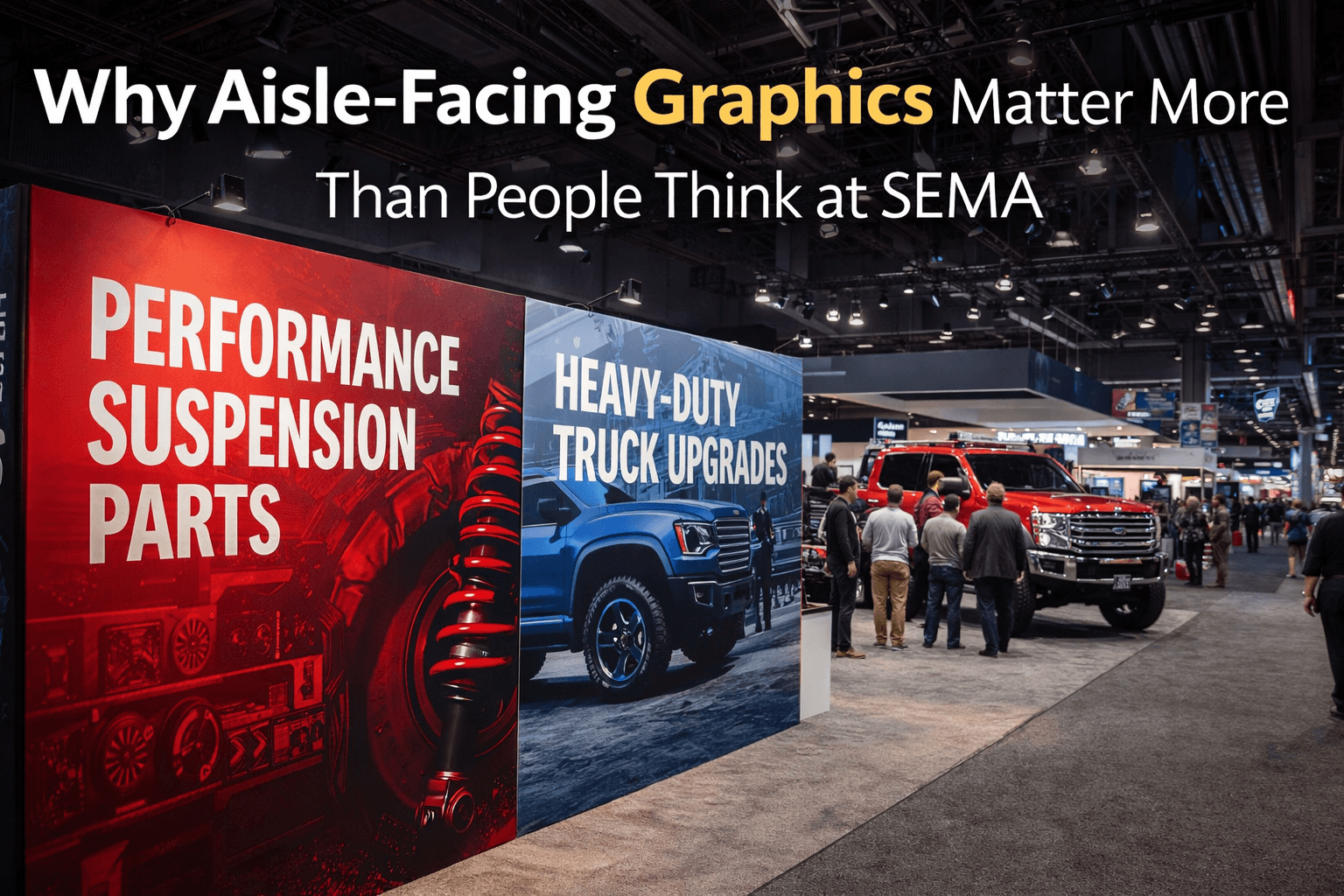
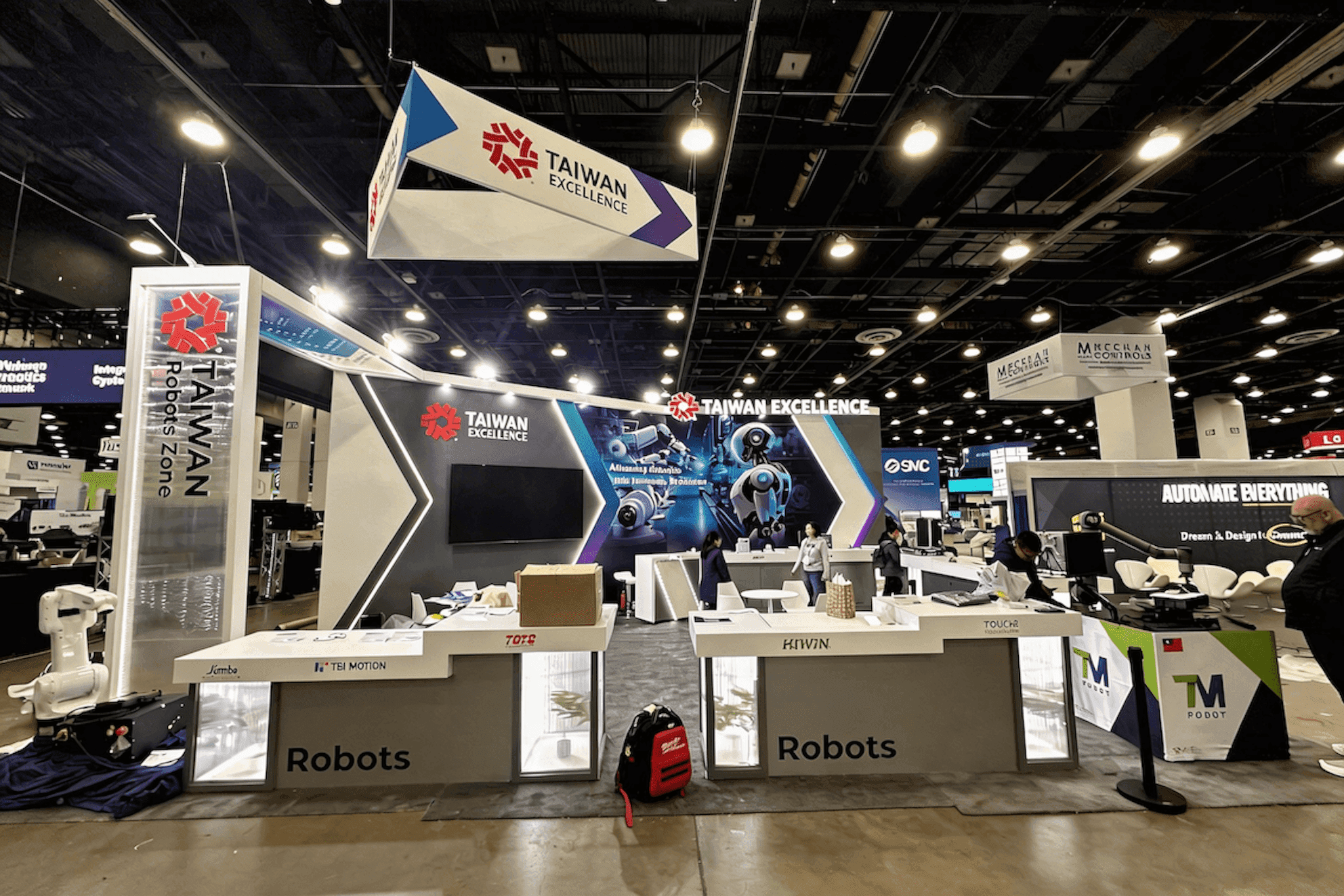
SEMA Show booth graphics at the aisle edge with automotive wall messaging, vehicle display visibility, and a clear product-focused booth entrance

Why Aisle-Facing Graphics Matter More Than People Think at SEMA

Why Aisle-Facing Graphics Matter More Than People Think at SEMA

Circle Exhibit Team

Industry professionals

Exhibition industry professional dedicated to delivering the latest insights and curated recommendations to you.

Exhibition industry professional dedicated to delivering the latest insights and curated recommendations to you.

At SEMA, traffic moves quickly and decisions happen from the aisle. Strong aisle-facing graphics help visitors read the booth faster, understand the display sooner, and decide to stop before they ever step inside.

At SEMA, traffic moves quickly and decisions happen from the aisle. Strong aisle-facing graphics help visitors read the booth faster, understand the display sooner, and decide to stop before they ever step inside.

At SEMA, traffic moves quickly and decisions happen from the aisle. Strong aisle-facing graphics help visitors read the booth faster, understand the display sooner, and decide to stop before they ever step inside.

SEMA is not a show where exhibitors get much time to explain themselves before a visitor makes a decision. On an automotive show floor, people often read the booth from the aisle first, then decide whether the display, products, or vehicle setup are worth a closer look. That makes the outer edge of the booth much more important than many exhibitors realize. At SEMA, the aisle-facing side is not just a boundary. It is the first layer of communication.

A lot of exhibitors still treat aisle-facing graphics as a finishing detail. They focus heavily on the main structure, the vehicle position, or the back wall, then use the outer edge of the booth for secondary branding. That approach usually wastes one of the most valuable visual moments on the floor. At SEMA Show, people often see the booth before they understand what category of product is being presented. If the booth edge does not help with that first read, the display has already made its job harder.

This matters even more in automotive environments because the visitor is often trying to process several things at once. There may be a feature vehicle in the booth, product shelving, wheel or accessory displays, lighting effects, and surrounding traffic from nearby exhibitors. Without a clear visual hierarchy, the booth can look busy before it looks relevant. Aisle-facing graphics help solve that problem by establishing the message before the visitor reaches the center of the display.

The best aisle-facing graphics usually do three jobs very quickly. First, they signal what kind of brand or product is inside the booth. Second, they tell the visitor where to look next. Third, they help connect the outer edge of the booth to the larger display story inside. When that sequence works, the booth feels easier to read. When it does not, the display can look impressive but still fail to convert attention into a stop.

This is especially important at SEMA because a lot of booths compete through visual intensity. Large vehicles, polished finishes, lighting, rigged signs, and bold structures can all pull attention at once. If everything is loud, nothing is clear. Good aisle-facing graphics create order before the visitor reaches the detail layer. They make the booth feel intentional instead of crowded.

In automotive categories, the first glance usually decides whether the booth looks product-led or just visually busy. A clean aisle-facing message can tell the visitor whether the booth is about suspension, wheels, electronics, accessories, detailing, off-road parts, performance systems, or brand identity. That kind of immediate classification matters because automotive buyers and industry attendees do not want to spend extra time decoding what a booth is trying to say. They want to know quickly whether the display is relevant to what they came to see.

This is why strong graphics and brand presentation matter so much at SEMA. The booth edge is not there only to carry a logo. It should help frame the product category, support the vehicle story, and guide the eye toward the most important visual asset in the booth. In many cases, the graphics on the aisle-facing surface do more to create booth clarity than a second message wall deeper inside.

A common mistake is placing too much emphasis on the vehicle itself and assuming the vehicle will explain the whole booth. Sometimes it does not. A modified truck, car, or specialty vehicle can pull attention, but it does not always explain what the exhibitor is actually selling. Without supporting graphics on the aisle-facing edge, the visitor may stop for the vehicle, glance at the display, and move on without understanding the product line behind it. The booth gets attention, but not the right kind of attention.

Aisle-facing graphics also affect how large the booth feels from outside. In a well-planned 30x40 trade show booth, the outer wall planes and edge-facing message surfaces can help organize the full display into readable layers. That is especially valuable when the booth includes a feature vehicle, supporting products, and conversation space all at once. In a larger footprint, the booth edge should not disappear into the overall structure. It should help anchor the visual entry point so visitors know where the main story begins.

This is also where layout and build strategy need to support the graphic layer. If the booth edge is blocked by furniture, stacked products, or awkward structure transitions, the graphics lose their job. If the visual message sits too low, too far back, or too close to unrelated elements, the booth edge becomes noise instead of direction. A strong display usually comes from aligning the graphics plan with the physical structure from the beginning, which is one reason many exhibitors benefit from working with a Las Vegas trade show booth builder that understands how message hierarchy, vehicle placement, and show-floor behavior all affect each other.

Another thing exhibitors underestimate is how much aisle-facing graphics influence booth traffic quality. Better first-read messaging does not just increase stops. It tends to attract more qualified stops. People who understand the category and product fit from the aisle arrive with better context. That makes conversations faster, product exploration smoother, and the booth less dependent on staff having to explain the basics from zero every time.

At SEMA, that matters because many booths are trying to balance several commercial goals at once. They want to show the vehicle well, highlight product lines, support distributor or dealer conversations, and still make the brand feel premium. Aisle-facing graphics help stabilize that mix. They create a clearer starting point, which makes the rest of the booth easier to navigate and easier to understand.

The strongest SEMA booths usually do not rely on one dramatic element alone. They build a sequence. The aisle-facing graphics set the message. The vehicle or product display reinforces interest. The deeper booth layers handle detail, discussion, and conversion. That order is what makes the booth feel complete.

At SEMA, traffic rewards immediate visual hierarchy. If the booth edge tells the story early, the rest of the display gets a better chance to work.
SEMA is not a show where exhibitors get much time to explain themselves before a visitor makes a decision. On an automotive show floor, people often read the booth from the aisle first, then decide whether the display, products, or vehicle setup are worth a closer look. That makes the outer edge of the booth much more important than many exhibitors realize. At SEMA, the aisle-facing side is not just a boundary. It is the first layer of communication.

A lot of exhibitors still treat aisle-facing graphics as a finishing detail. They focus heavily on the main structure, the vehicle position, or the back wall, then use the outer edge of the booth for secondary branding. That approach usually wastes one of the most valuable visual moments on the floor. At SEMA Show, people often see the booth before they understand what category of product is being presented. If the booth edge does not help with that first read, the display has already made its job harder.

This matters even more in automotive environments because the visitor is often trying to process several things at once. There may be a feature vehicle in the booth, product shelving, wheel or accessory displays, lighting effects, and surrounding traffic from nearby exhibitors. Without a clear visual hierarchy, the booth can look busy before it looks relevant. Aisle-facing graphics help solve that problem by establishing the message before the visitor reaches the center of the display.

The best aisle-facing graphics usually do three jobs very quickly. First, they signal what kind of brand or product is inside the booth. Second, they tell the visitor where to look next. Third, they help connect the outer edge of the booth to the larger display story inside. When that sequence works, the booth feels easier to read. When it does not, the display can look impressive but still fail to convert attention into a stop.

This is especially important at SEMA because a lot of booths compete through visual intensity. Large vehicles, polished finishes, lighting, rigged signs, and bold structures can all pull attention at once. If everything is loud, nothing is clear. Good aisle-facing graphics create order before the visitor reaches the detail layer. They make the booth feel intentional instead of crowded.

In automotive categories, the first glance usually decides whether the booth looks product-led or just visually busy. A clean aisle-facing message can tell the visitor whether the booth is about suspension, wheels, electronics, accessories, detailing, off-road parts, performance systems, or brand identity. That kind of immediate classification matters because automotive buyers and industry attendees do not want to spend extra time decoding what a booth is trying to say. They want to know quickly whether the display is relevant to what they came to see.

This is why strong graphics and brand presentation matter so much at SEMA. The booth edge is not there only to carry a logo. It should help frame the product category, support the vehicle story, and guide the eye toward the most important visual asset in the booth. In many cases, the graphics on the aisle-facing surface do more to create booth clarity than a second message wall deeper inside.

A common mistake is placing too much emphasis on the vehicle itself and assuming the vehicle will explain the whole booth. Sometimes it does not. A modified truck, car, or specialty vehicle can pull attention, but it does not always explain what the exhibitor is actually selling. Without supporting graphics on the aisle-facing edge, the visitor may stop for the vehicle, glance at the display, and move on without understanding the product line behind it. The booth gets attention, but not the right kind of attention.

Aisle-facing graphics also affect how large the booth feels from outside. In a well-planned 30x40 trade show booth, the outer wall planes and edge-facing message surfaces can help organize the full display into readable layers. That is especially valuable when the booth includes a feature vehicle, supporting products, and conversation space all at once. In a larger footprint, the booth edge should not disappear into the overall structure. It should help anchor the visual entry point so visitors know where the main story begins.

This is also where layout and build strategy need to support the graphic layer. If the booth edge is blocked by furniture, stacked products, or awkward structure transitions, the graphics lose their job. If the visual message sits too low, too far back, or too close to unrelated elements, the booth edge becomes noise instead of direction. A strong display usually comes from aligning the graphics plan with the physical structure from the beginning, which is one reason many exhibitors benefit from working with a Las Vegas trade show booth builder that understands how message hierarchy, vehicle placement, and show-floor behavior all affect each other.

Another thing exhibitors underestimate is how much aisle-facing graphics influence booth traffic quality. Better first-read messaging does not just increase stops. It tends to attract more qualified stops. People who understand the category and product fit from the aisle arrive with better context. That makes conversations faster, product exploration smoother, and the booth less dependent on staff having to explain the basics from zero every time.

At SEMA, that matters because many booths are trying to balance several commercial goals at once. They want to show the vehicle well, highlight product lines, support distributor or dealer conversations, and still make the brand feel premium. Aisle-facing graphics help stabilize that mix. They create a clearer starting point, which makes the rest of the booth easier to navigate and easier to understand.

The strongest SEMA booths usually do not rely on one dramatic element alone. They build a sequence. The aisle-facing graphics set the message. The vehicle or product display reinforces interest. The deeper booth layers handle detail, discussion, and conversion. That order is what makes the booth feel complete.

At SEMA, traffic rewards immediate visual hierarchy. If the booth edge tells the story early, the rest of the display gets a better chance to work.


Message

Leave your message and we will get back to you ASAP

Send a Message

We’ll Be in Touch!

Message

Leave your message and we will get back to you ASAP

If you’re ready to shape the future with us, your journey could start here.

If you’re ready to shape the future with us, your journey could start here.

Address:

4915 Steptoe Street #300

Las Vegas, NV 89122