When a Full Product Deserves Floor Space
A full product is most valuable when the buyer needs the object itself to make sense of the specification.
For large elevator machinery or major assemblies, dimensions on a data sheet do not always communicate the same information as standing beside the equipment. Buyers may want to understand scale, construction quality, connection points, moving elements, or how different parts relate physically.
That does not mean the largest or most important product should automatically come to the show. The test is whether the real unit reveals something important that a drawing, video, or smaller reference cannot.
If a full machine makes the shortlist, its physical requirements begin to affect how buyers can examine and discuss it. Those requirements are central to heavy equipment display and inspection planning.
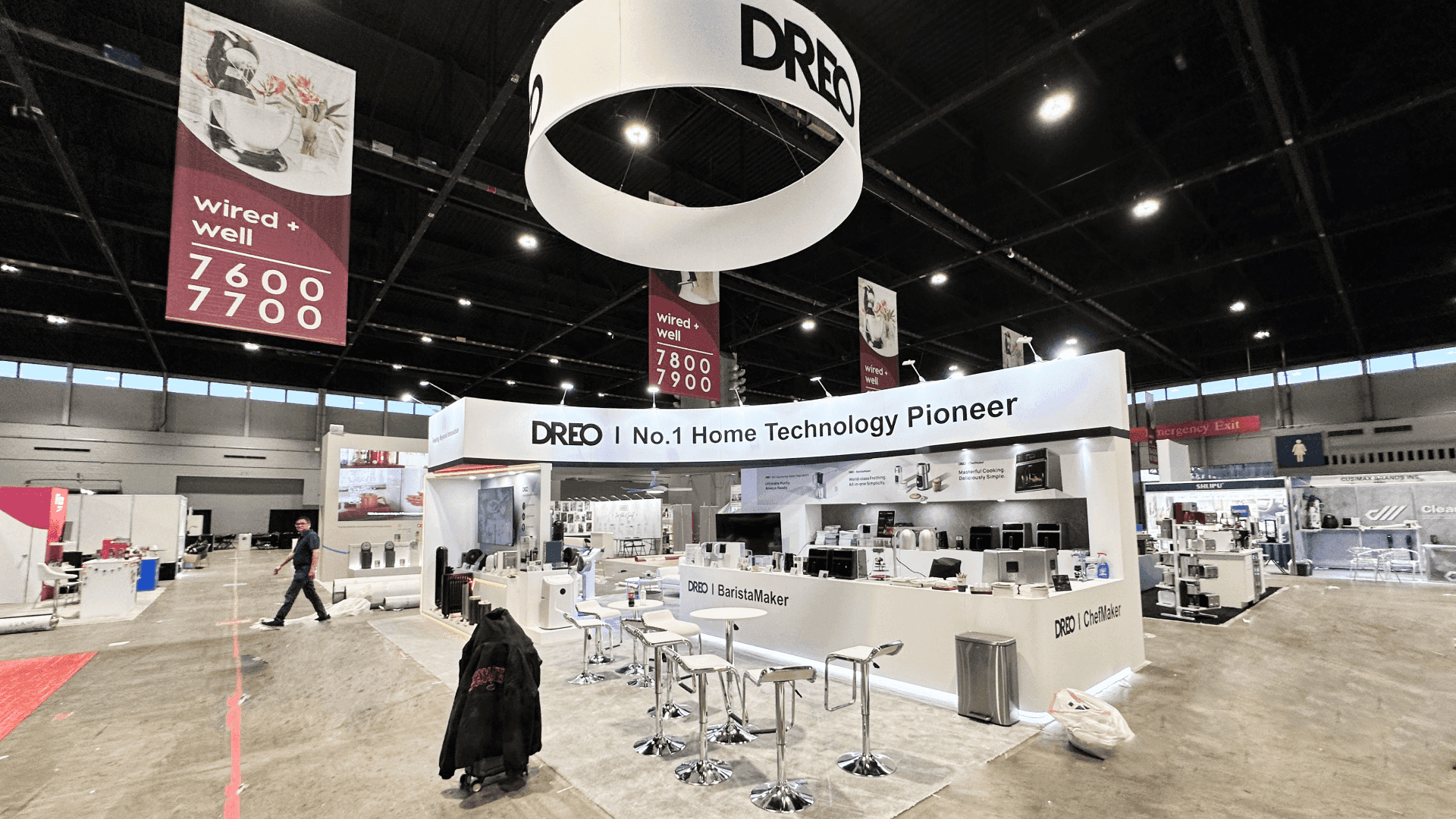
NAEC exhibitors bringing full-size elevator machinery should prioritize products that benefit from physical inspection, technical discussion, and clear buyer access inside the trade show booth.
When a Sample Is Enough
A useful sample isolates the part of the product that actually matters to the buyer.
Controls, fixtures, sensors, finishes, and similar components often do not need an entire system around them to support a meaningful conversation. A buyer may only need to feel a control, compare two finishes, inspect a connection detail, examine dimensions, or see how one component differs from another.
The same principle applies to larger product families. If several versions share the same construction and only a few differences affect the buying decision, representative samples can communicate more than a long row of nearly identical products.
For technical products, that smaller selection still needs enough context for buyers to understand what differs and where each item fits, which is central to technical component display planning.
When Visual or Digital Representation Explains More
A residential elevator cannot always be understood simply as an object sitting inside a booth. Much of the buyer's question may be about where the product fits, how it relates to the surrounding building, or what changes from one application to another.
In those situations, a section drawing, application graphic, selected physical reference, or digital view can explain more than another large object on the floor. The same applies when an exhibitor has many configurations or a product range whose differences are easier to understand through system relationships than through physical appearance alone.
When the product only makes sense in a shaft, residence, platform, or another installed condition, residential and accessibility display planning becomes less about reproducing the entire installation and more about preserving the application context the buyer needs to understand.
What Should Stay Off the Show Floor
Some of the most useful product-selection decisions are decisions not to bring something.
If several models differ only in minor specifications, placing all of them on the floor can make the exhibit harder to read without creating a meaningful new comparison. The same is true when a secondary product repeats what a primary product already demonstrates or when a graphic, catalog, or digital reference can explain the difference just as well.
Handling and setup effort can also be part of the decision. A product that is difficult to bring to the show may still deserve its place if buyers gain something important from seeing it. But if the physical product adds little understanding, that effort is another reason to question whether it belongs on the floor.
A useful test is:
If removing a product does not eliminate an important buyer question, that product probably does not need a physical place on the show floor.
The objective is not the highest SKU count. It is a product set in which every physical item has a clear reason to be there.
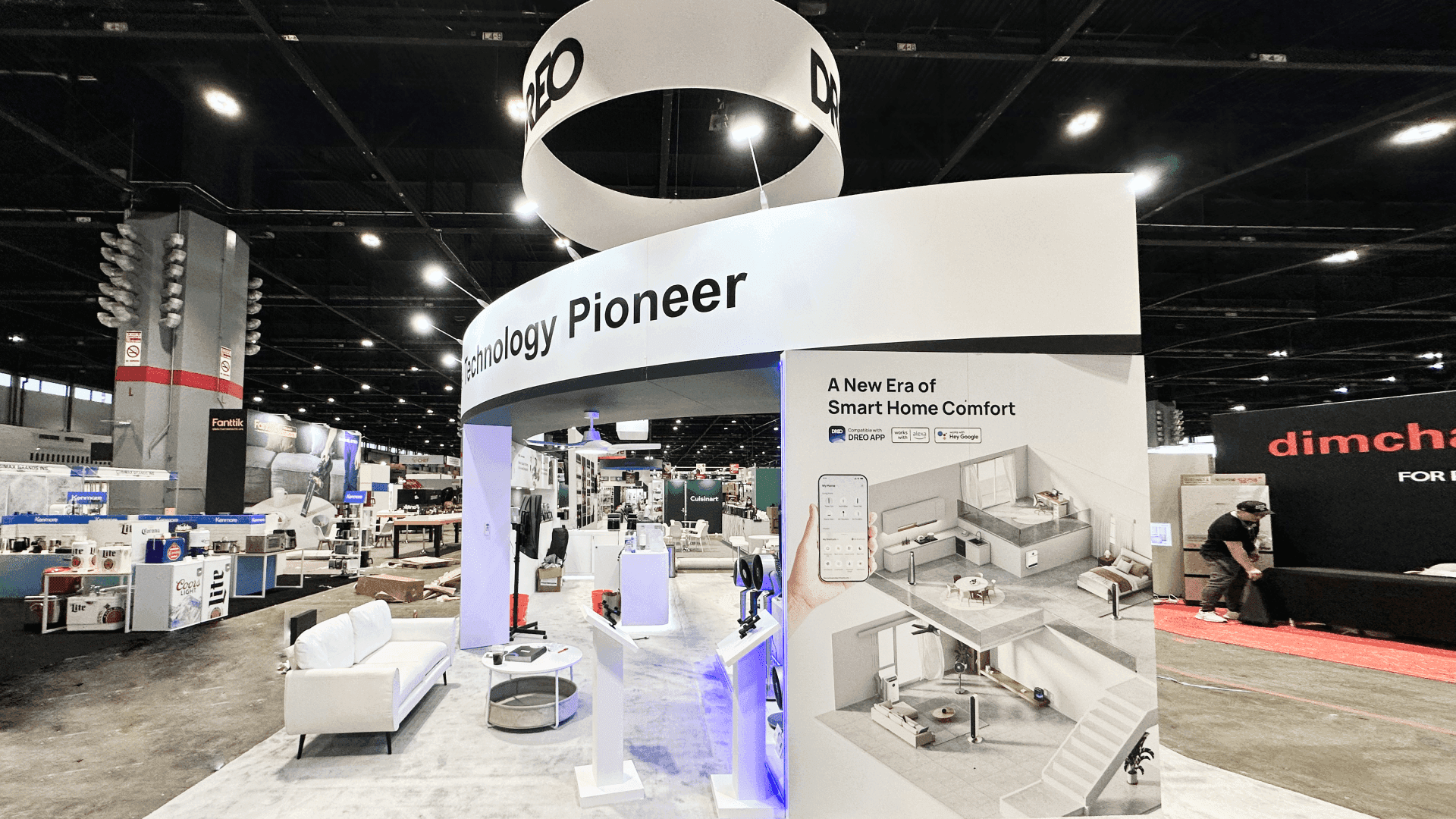
Controls, fixtures, sensors, and installed elevator solutions can often be presented through selected samples, technical graphics, or digital references when a full product adds little to the buyer decision.
A Product Selection Framework for NAEC
Take the actual product list and apply the same test to every item:
What does the buyer gain from having this product physically in front of them?
Then classify the product according to the amount of physical presence the buyer actually needs.
Product Decision | Decision Test | Need for Physical Presence | Recommended Representation | Typical NAEC Use |
|---|---|---|---|---|
Bring Physically | Would the buyer lose important information without seeing the real product? | High | Full product or major assembly | Machinery where scale, construction, movement, interfaces, or physical inspection affect the decision |
Bring as a Sample | Can one component or physical detail answer the important buyer question? | Selective | Representative component, cutaway, material, fixture, or finish sample | Controls, fixtures, sensors, finishes, or a representative part of a larger system |
Represent Visually or Digitally | Does the buyer need installation or system context more than the complete physical object? | Low | Drawing, section, application graphic, screen, or digital reference | Residential or accessibility applications, multiple configurations, installed systems, or broad product portfolios |
Leave Out | Does the product answer a distinct buyer question that is not already covered elsewhere? | None | Keep it out of the physical display; support it with sales materials if needed | Duplicate variants, secondary SKUs, or products whose physical presence adds little new information |
A practical NAEC exhibit may use all four approaches at once: a complete machine where physical inspection matters, selected components for focused comparison, visual references for installed applications, and secondary variants kept in supporting sales materials.
Once that shortlist is final, detailed booth planning can begin around the products that genuinely require floor space.
FAQ
How many products should an exhibitor bring to NAEC?
There is no useful fixed number. The product count should reflect how many distinct buyer questions need a physical answer. If several products serve the same comparison or repeat the same information, a smaller representative set is usually clearer.
Should every product family have a physical example at NAEC?
Not necessarily. A physical example is most useful when buyers need to inspect a meaningful difference. Product families that are mainly distinguished by specifications, configurations, or application conditions can often be supported with selected samples or visual references.
Can products that are not on the booth floor still be part of the sales conversation?
Yes. Additional products can be supported with catalogs, specification sheets, drawings, digital libraries, or staff reference materials. The show floor can then stay focused on the products that genuinely benefit from physical inspection or comparison.