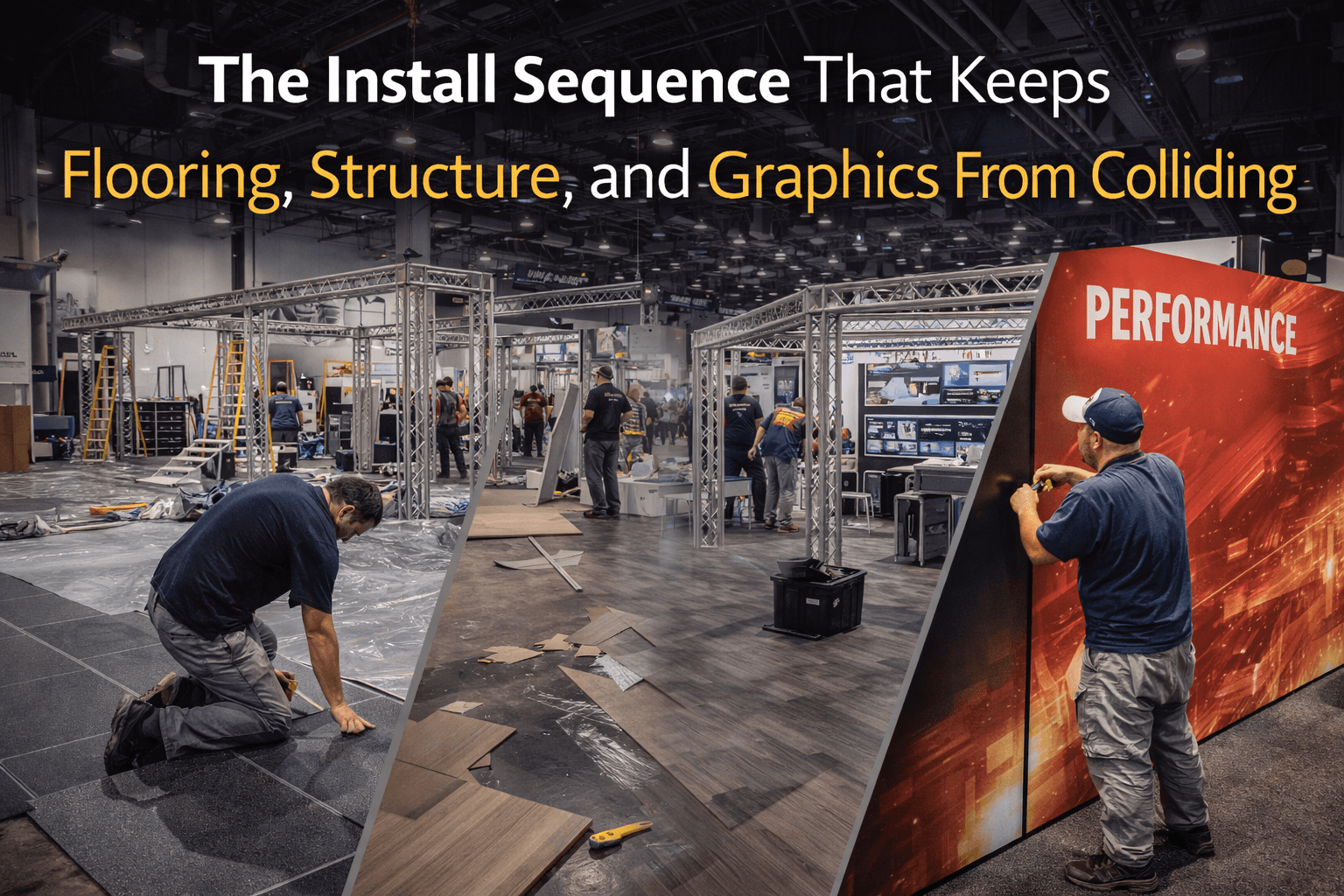
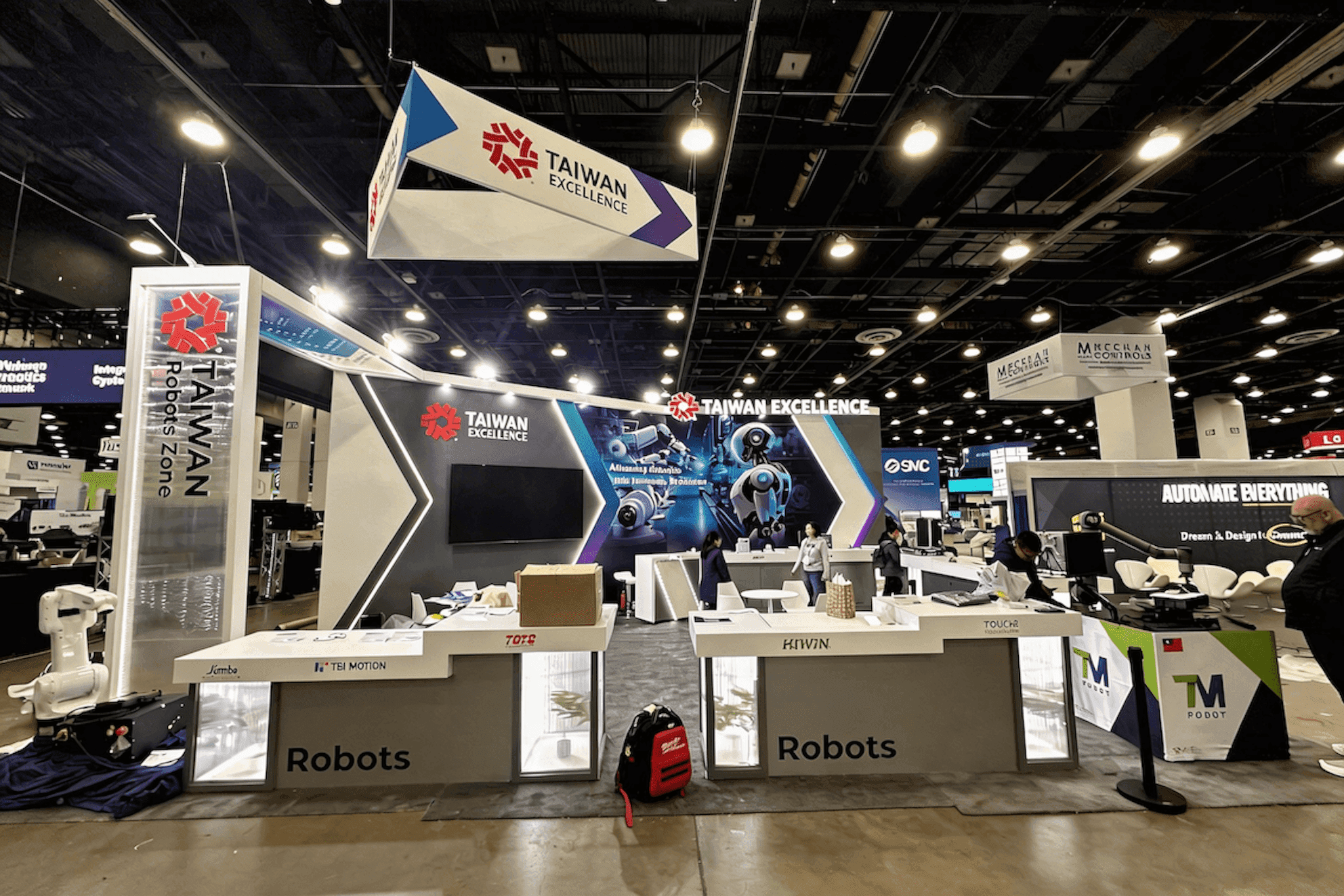
Trade show booth installation sequence with flooring, wall structure, and graphics installation staged in the correct order in Las Vegas

The Install Sequence That Keeps Flooring, Structure, and Graphics From Colliding

The Install Sequence That Keeps Flooring, Structure, and Graphics From Colliding

Circle Exhibit Team

Industry professionals

Exhibition industry professional dedicated to delivering the latest insights and curated recommendations to you.

Exhibition industry professional dedicated to delivering the latest insights and curated recommendations to you.

A clean install sequence reduces rework and crew conflict. When flooring, structure, and graphics are staged in the right order, the booth finishes faster and with fewer resets.

A clean install sequence reduces rework and crew conflict. When flooring, structure, and graphics are staged in the right order, the booth finishes faster and with fewer resets.

A clean install sequence reduces rework and crew conflict. When flooring, structure, and graphics are staged in the right order, the booth finishes faster and with fewer resets.

A lot of booth problems do not come from bad materials or weak labor. They come from good work happening in the wrong order.

That is usually what people are seeing when a booth starts feeling messy during installation. The flooring crew is trying to protect finished surfaces while structure pieces are still moving through the space. Graphics are ready to go up, but the wall frame still needs adjustment. The structure is standing, but part of it has to be reopened because the next trade needs access. Nothing is completely wrong, yet the booth keeps losing time.

This is where install sequencing matters. A booth does not just need the right parts. It needs the right parts to move at the right moment. That is one of the biggest differences between a booth that feels controlled on site and one that always looks like it is catching up.

The simplest way to think about it is this: flooring, structure, and graphics should not fight for the same moment.

Flooring wants stability. Structure wants access. Graphics want finished surfaces. If all three hit the booth at full speed at the same time, the result is usually avoidable friction. Finished carpet gets covered, uncovered, and stepped on too early. Wall frames need last-minute shifts after adjacent surfaces are already in place. Graphic panels wait in the aisle, or worse, get installed too soon and then risk damage while the booth is still active around them.

The better sequence starts before any crew reaches the hall. It starts with deciding what needs to happen first, what needs to remain open, and what absolutely should not be treated as final until the heavy work is done.

In most custom booth builds, the structure has to establish the booth before the booth can be finished. That sounds obvious, but many install headaches come from treating finish items like they can move in as soon as they are available. They should not. Structure should create alignment, support, and access first. Only then does the flooring really have a protected role. And only after both are settled should graphics move in as final visual skin.

That does not mean flooring always waits until the structure is fully complete. It means the flooring plan has to match the structure plan. In some booths, the base flooring or underlayment needs to be set early so the footprint is right. In others, protected zones need to stay open until larger frames, overhead elements, or electrical work are cleared. The point is not rigid order for the sake of order. The point is keeping finished materials from being dragged into unfinished conditions.

This is why good logistics and pre-show coordination matter so much. Sequence starts with what reaches the booth first. If flooring crates arrive before the structure can be placed, or if graphics cases land before the wall system is stable, the show floor starts creating pressure that the crew then has to solve in real time. Good coordination keeps that pressure down by matching freight flow to install flow.

The same thing applies inside the booth footprint. Flooring should not become storage space for structure parts. Graphics should not become temporary covers while crews are still adjusting hardware. When the sequencing is right, each layer arrives into conditions that are ready for it. When the sequencing is wrong, every finished step turns into temporary work.

Wall graphics are where this problem becomes most visible. Graphics usually look like the last step, but they are often affected by every step before them. If the wall frame is not fully true, the graphics reveal it. If surface protection has been handled badly, the graphics install crew works around avoidable damage. If the booth is still functioning like a construction zone, the graphic layer loses the clean finish it is supposed to create. That is why graphics and brand presentation should be treated as the final visual lock-in, not as something to rush just because the panels are already on site.

Fabrication planning also has a lot to do with this. When the booth is packed, labeled, and staged with real install order in mind, the team does not waste the first hours opening the wrong crates or moving finished items out of the way. Good booth fabrication and prebuild checks are not just about whether the pieces fit in the shop. They help make sure the booth arrives in a sequence the field crew can actually use.

On site, the cleanest installs usually follow a simple rhythm. The booth footprint gets established. The main structure goes in and is aligned. Access stays open for the trades that still need it. Flooring moves in when the surface can be protected properly. Graphics go up when the wall system is truly ready to stop behaving like a work zone. That rhythm keeps the booth moving forward instead of doubling back on itself.

It also keeps crew conflict down. Most on-site tension does not come from people refusing to work together. It comes from overlapping too early. When too many trades are forced into the same zone before the booth is ready for them, everyone starts protecting their own task instead of supporting the full sequence. The flooring crew worries about damage. The structure crew needs room. The graphics crew wants finished surfaces. The booth becomes crowded with justified concerns that all come from the same problem: the order was not locked clearly enough.

This is one reason exhibitors benefit from working with a Las Vegas trade show booth builder that looks at the booth as an install system, not just a final design. A good builder is not only thinking about how the booth looks when complete. They are also thinking about how the booth becomes complete without forcing unnecessary resets along the way.

A well-built booth should feel like it tightens as the install moves forward. It should not feel like each finished step has to be reopened to make room for the next one.

That is what a strong install sequence really solves. It protects the flooring, gives the structure room to be set properly, and lets the graphics land at the point where the booth is actually ready to look finished. When that happens, the crews stop colliding and the booth starts coming together the way it was supposed to.

Trying to make booth installation cleaner from the start?
Begin with a stronger Las Vegas trade show booth builder process, then connect it to better logistics and pre-show coordination so flooring, structure, and graphics move in the right order.
A lot of booth problems do not come from bad materials or weak labor. They come from good work happening in the wrong order.

That is usually what people are seeing when a booth starts feeling messy during installation. The flooring crew is trying to protect finished surfaces while structure pieces are still moving through the space. Graphics are ready to go up, but the wall frame still needs adjustment. The structure is standing, but part of it has to be reopened because the next trade needs access. Nothing is completely wrong, yet the booth keeps losing time.

This is where install sequencing matters. A booth does not just need the right parts. It needs the right parts to move at the right moment. That is one of the biggest differences between a booth that feels controlled on site and one that always looks like it is catching up.

The simplest way to think about it is this: flooring, structure, and graphics should not fight for the same moment.

Flooring wants stability. Structure wants access. Graphics want finished surfaces. If all three hit the booth at full speed at the same time, the result is usually avoidable friction. Finished carpet gets covered, uncovered, and stepped on too early. Wall frames need last-minute shifts after adjacent surfaces are already in place. Graphic panels wait in the aisle, or worse, get installed too soon and then risk damage while the booth is still active around them.

The better sequence starts before any crew reaches the hall. It starts with deciding what needs to happen first, what needs to remain open, and what absolutely should not be treated as final until the heavy work is done.

In most custom booth builds, the structure has to establish the booth before the booth can be finished. That sounds obvious, but many install headaches come from treating finish items like they can move in as soon as they are available. They should not. Structure should create alignment, support, and access first. Only then does the flooring really have a protected role. And only after both are settled should graphics move in as final visual skin.

That does not mean flooring always waits until the structure is fully complete. It means the flooring plan has to match the structure plan. In some booths, the base flooring or underlayment needs to be set early so the footprint is right. In others, protected zones need to stay open until larger frames, overhead elements, or electrical work are cleared. The point is not rigid order for the sake of order. The point is keeping finished materials from being dragged into unfinished conditions.

This is why good logistics and pre-show coordination matter so much. Sequence starts with what reaches the booth first. If flooring crates arrive before the structure can be placed, or if graphics cases land before the wall system is stable, the show floor starts creating pressure that the crew then has to solve in real time. Good coordination keeps that pressure down by matching freight flow to install flow.

The same thing applies inside the booth footprint. Flooring should not become storage space for structure parts. Graphics should not become temporary covers while crews are still adjusting hardware. When the sequencing is right, each layer arrives into conditions that are ready for it. When the sequencing is wrong, every finished step turns into temporary work.

Wall graphics are where this problem becomes most visible. Graphics usually look like the last step, but they are often affected by every step before them. If the wall frame is not fully true, the graphics reveal it. If surface protection has been handled badly, the graphics install crew works around avoidable damage. If the booth is still functioning like a construction zone, the graphic layer loses the clean finish it is supposed to create. That is why graphics and brand presentation should be treated as the final visual lock-in, not as something to rush just because the panels are already on site.

Fabrication planning also has a lot to do with this. When the booth is packed, labeled, and staged with real install order in mind, the team does not waste the first hours opening the wrong crates or moving finished items out of the way. Good booth fabrication and prebuild checks are not just about whether the pieces fit in the shop. They help make sure the booth arrives in a sequence the field crew can actually use.

On site, the cleanest installs usually follow a simple rhythm. The booth footprint gets established. The main structure goes in and is aligned. Access stays open for the trades that still need it. Flooring moves in when the surface can be protected properly. Graphics go up when the wall system is truly ready to stop behaving like a work zone. That rhythm keeps the booth moving forward instead of doubling back on itself.

It also keeps crew conflict down. Most on-site tension does not come from people refusing to work together. It comes from overlapping too early. When too many trades are forced into the same zone before the booth is ready for them, everyone starts protecting their own task instead of supporting the full sequence. The flooring crew worries about damage. The structure crew needs room. The graphics crew wants finished surfaces. The booth becomes crowded with justified concerns that all come from the same problem: the order was not locked clearly enough.

This is one reason exhibitors benefit from working with a Las Vegas trade show booth builder that looks at the booth as an install system, not just a final design. A good builder is not only thinking about how the booth looks when complete. They are also thinking about how the booth becomes complete without forcing unnecessary resets along the way.

A well-built booth should feel like it tightens as the install moves forward. It should not feel like each finished step has to be reopened to make room for the next one.

That is what a strong install sequence really solves. It protects the flooring, gives the structure room to be set properly, and lets the graphics land at the point where the booth is actually ready to look finished. When that happens, the crews stop colliding and the booth starts coming together the way it was supposed to.

Trying to make booth installation cleaner from the start?
Begin with a stronger Las Vegas trade show booth builder process, then connect it to better logistics and pre-show coordination so flooring, structure, and graphics move in the right order.
Message

Leave your message and we will get back to you ASAP

Send a Message

We’ll Be in Touch!

Message

Leave your message and we will get back to you ASAP

Address:

4915 Steptoe Street #300

Las Vegas, NV 89122