RE+ Booth Planning for Solar, Battery, and Clean Energy Exhibitors

Circle Exhibit Team
Industry professionals
Exhibition industry professional dedicated to delivering the latest insights and curated recommendations to you.
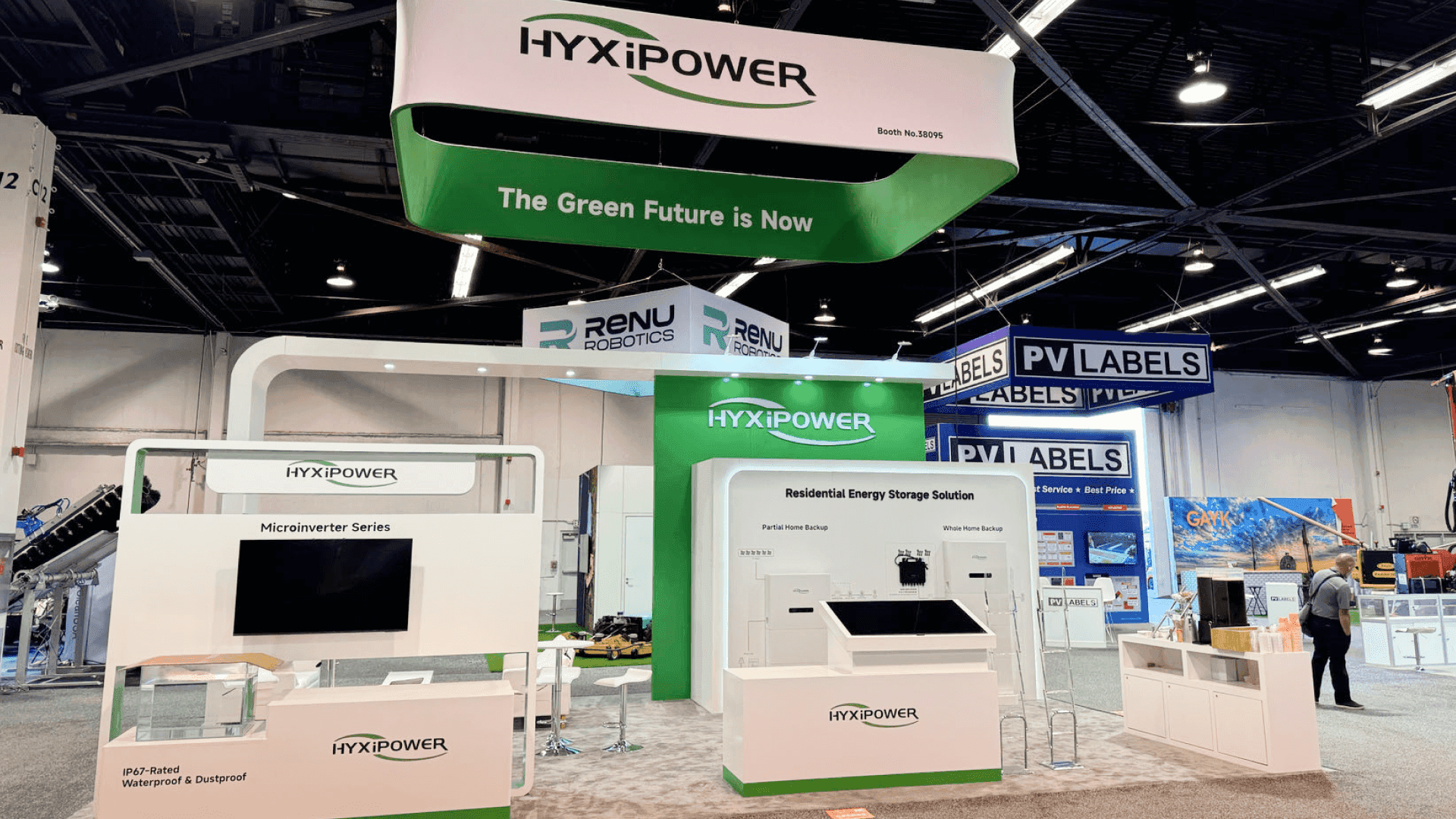
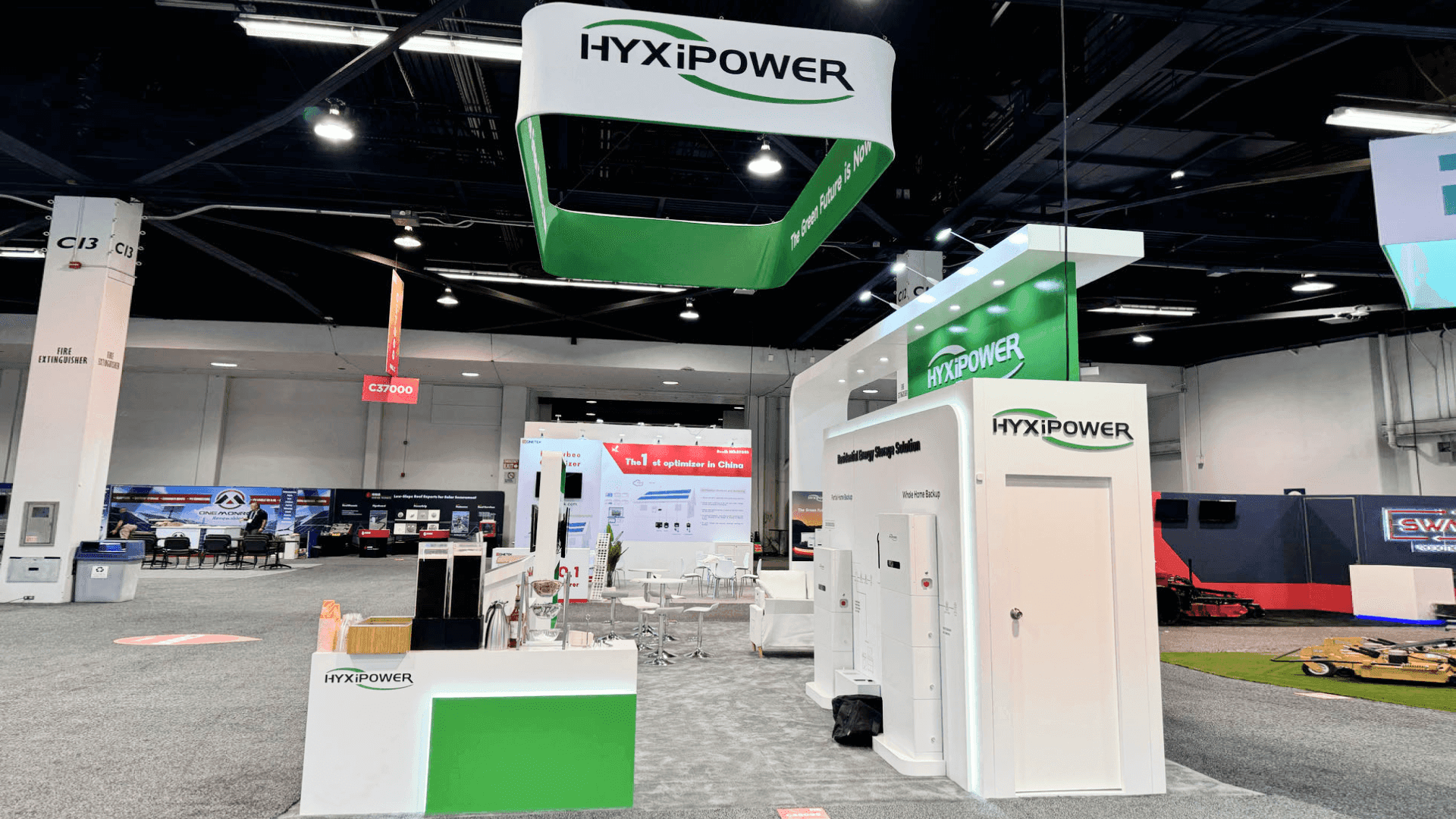
Clean energy exhibitors at RE+ need booth layouts that make complex solar, battery, and energy storage systems easier to understand. A strong booth should connect product displays, technical demos, sample walls, meeting counters, graphics, and show-site execution into one clear visitor path.
Clean energy booths often need to explain systems, not just products.
For solar, battery, and energy storage exhibitors, a booth has to help visitors understand how panels, inverters, battery cabinets, monitoring platforms, and system components connect. That is different from a standard product display booth.
At RE+, the booth should make complex technology easier to read before a technical conversation begins.
Quick Answer
RE+ exhibitors should plan booths around clear product storytelling, technical demo zones, and buyer conversation areas. Solar panels, battery systems, energy storage components, and monitoring dashboards should be placed in a way that helps visitors understand the system flow before speaking with sales or technical staff.
For show-specific planning, RE+ booth planning should start with the clean energy system being explained, then build the booth layout around that story.
Why Do Clean Energy Booths Need a Different Layout?
Clean energy products often work as part of a system.
A solar panel, battery module, inverter, control cabinet, monitoring dashboard, or EV charging component may not explain itself alone. Visitors need to understand how the product fits into a larger energy workflow.
That means the booth should support three actions:
show the product clearly
explain the system relationship
move qualified visitors into a technical or sales conversation
If everything is placed on one wall or counter, the booth can feel like a parts display. A better layout helps visitors move from product recognition to system understanding.
That is the main job of an RE+ booth.
What Should Visitors Understand First?
Visitors should understand what clean energy system the booth is showing.
Before they compare specifications, capacity, chemistry, controls, installation methods, or monitoring tools, they need to know the product category and system role.
The booth should answer one question quickly:
What part of the solar, battery, or clean energy system does this brand support?
That may include:
solar module technology
residential or commercial battery systems
utility-scale energy storage
inverter or power conversion systems
monitoring and energy management software
racking, mounting, or balance-of-system components
EV charging or grid-interactive products
clean energy project services
The first layer of the booth should reduce confusion. The deeper technical details can come after the visitor stops.
How Should Solar Panels Be Displayed in a Booth?
Solar panels should be positioned for visibility and explanation, not just placed as large objects.
Panels can take up space quickly. If they are angled poorly or placed too close to the aisle, they may block movement. If they are pushed too far back, visitors may not understand that they are the main product.
A good solar display should support:
clear front or angled visibility
enough room for visitors to inspect details
simple labeling for product type or application
nearby graphics that explain use case
staff access for technical explanation
no blocking of meeting or demo areas
The panel should work as part of the booth story.
For example, a solar module display can lead into an inverter demo, storage discussion, or monitoring dashboard, depending on the exhibitor’s product focus.
How Should Battery and Energy Storage Systems Be Presented?
Battery systems need context.
A battery cabinet, module, rack, enclosure, or energy storage sample can look technical but still be hard to understand. Visitors need to know whether the product is for residential storage, commercial systems, utility-scale projects, microgrids, backup power, or solar-plus-storage applications.
A strong battery display should include:
one clear system diagram
a physical sample or scaled component
a technical graphic explaining system role
enough space around the product for discussion
nearby screen or dashboard support if needed
safe, clean product staging
The booth should not overload visitors with every specification on the first wall.
The goal is to help visitors understand the application first. Detailed specs can be handled in the meeting or technical discussion area.
Solar and Battery Booth Zone Planning
Booth Zone | Main Role | Planning Requirement |
|---|---|---|
Front product display | Introduce solar, battery, or clean energy system focus | Clear sightline, simple product category message |
Technical demo zone | Show system behavior, dashboard, or product application | Counter, screen, sample, and staff access planned together |
Sample wall | Organize components, materials, or product variations | Clean labeling, limited clutter, clear hierarchy |
Meeting counter | Support buyer, installer, distributor, or project conversations | Side or rear placement, away from front traffic |
Graphics wall | Explain the system story | Use diagrams and application visuals, not heavy text |
Storage / support area | Hold samples, tools, literature, and staff materials | Hidden but easy for staff to access |
How Should a Technical Demo Zone Work?
The technical demo zone should make the system easier to understand.
For RE+ exhibitors, the demo may involve a monitoring dashboard, product cutaway, system diagram, touch screen, sample module, power conversion explanation, or application workflow. The demo zone should connect the physical product with the system story.
A technical demo zone may include:
a counter or product table
screen-based system visualization
small component samples
staff explanation area
enough room for two to four visitors
cable and power planning if screens are used
a clear next step into a meeting conversation
The demo should not feel like a separate island inside the booth.
It should sit between the first product display and the buyer conversation area, helping visitors move from interest to understanding.
How Does a 20x30 Booth Help Clean Energy Exhibitors?
A 20x30 booth gives clean energy exhibitors more room to separate system explanation from sales discussion.
A 20x30 booth planning for technical demos approach works well when the booth needs to support a product wall, technical demo, sample display, meeting counter, and storage without forcing everything into one crowded zone.
For solar and battery exhibitors, a 20x30 layout can support:
one front product or system display
one technical demo counter
one screen or dashboard wall
one sample or component display area
one meeting counter
hidden storage for literature, tools, or samples
The extra space helps the booth feel more organized.
It also gives staff a better way to move qualified buyers away from front traffic into deeper technical conversations.
When Is a 20x20 Booth Enough?
A 20x20 booth can work when the product story is focused.
If the exhibitor has one main product category, one clear demo, one small sample display, and one short conversation area, a 20x20 layout may be enough. It can be especially useful for clean energy brands that want a compact, direct presentation.
A 20x20 booth planning approach should keep the layout simple:
one main product message
one demo or sample counter
one compact meeting point
one storage area
one clear visitor path
A 20x20 booth becomes harder when the exhibitor tries to show too many system layers at once. If the booth needs solar, storage, software, installation examples, and multiple buyer discussions, 20x30 may give the layout more breathing room.
How Should Graphics Explain Clean Energy Product Storytelling?
Graphics should simplify the system.
For clean energy booths, the graphics should not try to explain every technical detail at once. They should help visitors understand the product role, application, and system relationship.
Good booth graphics may include:
a simple solar-plus-storage diagram
product application icons
installation environment visuals
short system labels
component relationship graphics
a clean headline that explains the product category
The graphic wall should support the booth journey.
Visitors should be able to see the product, understand what it connects to, and know where to ask a deeper question.
Graphics are especially important when the product itself is technical, industrial, or hard to evaluate visually.
How Should the Meeting Counter Be Placed?
The meeting counter should sit away from the main product display pressure.
At RE+, buyer conversations may involve technical fit, project type, distributor relationships, installer needs, system integration, lead times, or documentation. These conversations need more focus than the front demo zone usually allows.
A meeting counter can work better than a full meeting room when the booth needs to stay open. It gives the team a place to continue a qualified conversation without making the booth feel closed.
A good meeting counter should:
sit to the side or rear
avoid blocking the demo zone
have enough space for documents or tablets
stay near product or system graphics
let staff continue the conversation without leaving the booth flow
The meeting area should feel connected to the product story, but not mixed into the busiest traffic zone.
How Does Las Vegas Show-Site Execution Affect RE+ Booths?
Clean energy booths often include heavier samples, technical displays, screens, product structures, and storage needs.
That means layout decisions should connect to show-site execution early. Product displays need to be staged safely. Screens need power access. Technical counters need cable planning. Samples and literature need storage. Large product visuals need to be installed in the right sequence.
This is where Las Vegas exhibit build support helps connect design, logistics, installation, and booth operation.
A clean energy booth may need planning for:
product sample staging
solar or battery display placement
screen and monitor setup
power access
cable routing
graphics installation
staff working paths
hidden storage
final booth readiness before opening
The booth should be designed for how it will be built, not only how it will look.
What Happens When Technical Products Are Not Organized Clearly?
The booth becomes harder to understand.
Visitors may see panels, batteries, samples, diagrams, and screens, but fail to understand the system relationship. Staff may need to explain too much before the visitor can ask a useful question.
Common problems include:
too many product samples on one wall
no clear system diagram
demo counter placed too far from the product display
meeting counter blocking traffic
graphics written for engineers only
storage visible from the aisle
no clear path from product interest to buyer conversation
A clean energy booth should reduce the effort required to understand the system.
That is especially important when the product category is technical.
What Should RE+ Exhibitors Confirm Before Finalizing the Booth?
RE+ booth planning should start with the product story and system flow.
Before choosing walls, counters, displays, or meeting furniture, exhibitors should define what the visitor needs to understand first.
Planning Checklist
What clean energy system or product category should visitors notice first?
Is the booth focused on solar, battery, energy storage, software, hardware, or project solutions?
Does the booth need a physical product sample or scaled display?
Where should the technical demo happen?
Does the booth need a screen, dashboard, or system diagram?
Where will buyers move for deeper conversation?
Does the booth need a 20x20 or 20x30 layout?
How much storage is needed for samples, tools, literature, and staff materials?
Are graphics explaining the system clearly?
Will the product display affect installation or staging?
Where are power and cable access needed?
Can the booth be installed in a clean sequence before opening?
These questions help the booth stay practical and understandable.
What Is the Best Layout Logic for an RE+ Booth?
The best RE+ booth layout starts with the system story.
First, decide what product or clean energy application visitors should understand. Then place the product display, technical demo zone, graphics, meeting counter, storage, and staff path around that story.
A strong booth should make three things clear:
what clean energy product or system is being shown
how the product fits into a larger solar, battery, or storage application
where qualified buyers should continue the conversation
That is how a technical booth becomes easier to read.
Not by adding more products, but by making the system easier to understand.
Planning a Solar, Battery, or Clean Energy Booth for RE+?
Start with the RE+ show context, then plan product displays, technical demos, meeting counters, graphics, booth size, and Las Vegas show-site execution as one connected system.
Clean energy booths often need to explain systems, not just products.
For solar, battery, and energy storage exhibitors, a booth has to help visitors understand how panels, inverters, battery cabinets, monitoring platforms, and system components connect. That is different from a standard product display booth.
At RE+, the booth should make complex technology easier to read before a technical conversation begins.
Quick Answer
RE+ exhibitors should plan booths around clear product storytelling, technical demo zones, and buyer conversation areas. Solar panels, battery systems, energy storage components, and monitoring dashboards should be placed in a way that helps visitors understand the system flow before speaking with sales or technical staff.
For show-specific planning, RE+ booth planning should start with the clean energy system being explained, then build the booth layout around that story.
Why Do Clean Energy Booths Need a Different Layout?
Clean energy products often work as part of a system.
A solar panel, battery module, inverter, control cabinet, monitoring dashboard, or EV charging component may not explain itself alone. Visitors need to understand how the product fits into a larger energy workflow.
That means the booth should support three actions:
show the product clearly
explain the system relationship
move qualified visitors into a technical or sales conversation
If everything is placed on one wall or counter, the booth can feel like a parts display. A better layout helps visitors move from product recognition to system understanding.
That is the main job of an RE+ booth.
What Should Visitors Understand First?
Visitors should understand what clean energy system the booth is showing.
Before they compare specifications, capacity, chemistry, controls, installation methods, or monitoring tools, they need to know the product category and system role.
The booth should answer one question quickly:
What part of the solar, battery, or clean energy system does this brand support?
That may include:
solar module technology
residential or commercial battery systems
utility-scale energy storage
inverter or power conversion systems
monitoring and energy management software
racking, mounting, or balance-of-system components
EV charging or grid-interactive products
clean energy project services
The first layer of the booth should reduce confusion. The deeper technical details can come after the visitor stops.
How Should Solar Panels Be Displayed in a Booth?
Solar panels should be positioned for visibility and explanation, not just placed as large objects.
Panels can take up space quickly. If they are angled poorly or placed too close to the aisle, they may block movement. If they are pushed too far back, visitors may not understand that they are the main product.
A good solar display should support:
clear front or angled visibility
enough room for visitors to inspect details
simple labeling for product type or application
nearby graphics that explain use case
staff access for technical explanation
no blocking of meeting or demo areas
The panel should work as part of the booth story.
For example, a solar module display can lead into an inverter demo, storage discussion, or monitoring dashboard, depending on the exhibitor’s product focus.
How Should Battery and Energy Storage Systems Be Presented?
Battery systems need context.
A battery cabinet, module, rack, enclosure, or energy storage sample can look technical but still be hard to understand. Visitors need to know whether the product is for residential storage, commercial systems, utility-scale projects, microgrids, backup power, or solar-plus-storage applications.
A strong battery display should include:
one clear system diagram
a physical sample or scaled component
a technical graphic explaining system role
enough space around the product for discussion
nearby screen or dashboard support if needed
safe, clean product staging
The booth should not overload visitors with every specification on the first wall.
The goal is to help visitors understand the application first. Detailed specs can be handled in the meeting or technical discussion area.
Solar and Battery Booth Zone Planning
Booth Zone | Main Role | Planning Requirement |
|---|---|---|
Front product display | Introduce solar, battery, or clean energy system focus | Clear sightline, simple product category message |
Technical demo zone | Show system behavior, dashboard, or product application | Counter, screen, sample, and staff access planned together |
Sample wall | Organize components, materials, or product variations | Clean labeling, limited clutter, clear hierarchy |
Meeting counter | Support buyer, installer, distributor, or project conversations | Side or rear placement, away from front traffic |
Graphics wall | Explain the system story | Use diagrams and application visuals, not heavy text |
Storage / support area | Hold samples, tools, literature, and staff materials | Hidden but easy for staff to access |
How Should a Technical Demo Zone Work?
The technical demo zone should make the system easier to understand.
For RE+ exhibitors, the demo may involve a monitoring dashboard, product cutaway, system diagram, touch screen, sample module, power conversion explanation, or application workflow. The demo zone should connect the physical product with the system story.
A technical demo zone may include:
a counter or product table
screen-based system visualization
small component samples
staff explanation area
enough room for two to four visitors
cable and power planning if screens are used
a clear next step into a meeting conversation
The demo should not feel like a separate island inside the booth.
It should sit between the first product display and the buyer conversation area, helping visitors move from interest to understanding.
How Does a 20x30 Booth Help Clean Energy Exhibitors?
A 20x30 booth gives clean energy exhibitors more room to separate system explanation from sales discussion.
A 20x30 booth planning for technical demos approach works well when the booth needs to support a product wall, technical demo, sample display, meeting counter, and storage without forcing everything into one crowded zone.
For solar and battery exhibitors, a 20x30 layout can support:
one front product or system display
one technical demo counter
one screen or dashboard wall
one sample or component display area
one meeting counter
hidden storage for literature, tools, or samples
The extra space helps the booth feel more organized.
It also gives staff a better way to move qualified buyers away from front traffic into deeper technical conversations.
When Is a 20x20 Booth Enough?
A 20x20 booth can work when the product story is focused.
If the exhibitor has one main product category, one clear demo, one small sample display, and one short conversation area, a 20x20 layout may be enough. It can be especially useful for clean energy brands that want a compact, direct presentation.
A 20x20 booth planning approach should keep the layout simple:
one main product message
one demo or sample counter
one compact meeting point
one storage area
one clear visitor path
A 20x20 booth becomes harder when the exhibitor tries to show too many system layers at once. If the booth needs solar, storage, software, installation examples, and multiple buyer discussions, 20x30 may give the layout more breathing room.
How Should Graphics Explain Clean Energy Product Storytelling?
Graphics should simplify the system.
For clean energy booths, the graphics should not try to explain every technical detail at once. They should help visitors understand the product role, application, and system relationship.
Good booth graphics may include:
a simple solar-plus-storage diagram
product application icons
installation environment visuals
short system labels
component relationship graphics
a clean headline that explains the product category
The graphic wall should support the booth journey.
Visitors should be able to see the product, understand what it connects to, and know where to ask a deeper question.
Graphics are especially important when the product itself is technical, industrial, or hard to evaluate visually.
How Should the Meeting Counter Be Placed?
The meeting counter should sit away from the main product display pressure.
At RE+, buyer conversations may involve technical fit, project type, distributor relationships, installer needs, system integration, lead times, or documentation. These conversations need more focus than the front demo zone usually allows.
A meeting counter can work better than a full meeting room when the booth needs to stay open. It gives the team a place to continue a qualified conversation without making the booth feel closed.
A good meeting counter should:
sit to the side or rear
avoid blocking the demo zone
have enough space for documents or tablets
stay near product or system graphics
let staff continue the conversation without leaving the booth flow
The meeting area should feel connected to the product story, but not mixed into the busiest traffic zone.
How Does Las Vegas Show-Site Execution Affect RE+ Booths?
Clean energy booths often include heavier samples, technical displays, screens, product structures, and storage needs.
That means layout decisions should connect to show-site execution early. Product displays need to be staged safely. Screens need power access. Technical counters need cable planning. Samples and literature need storage. Large product visuals need to be installed in the right sequence.
This is where Las Vegas exhibit build support helps connect design, logistics, installation, and booth operation.
A clean energy booth may need planning for:
product sample staging
solar or battery display placement
screen and monitor setup
power access
cable routing
graphics installation
staff working paths
hidden storage
final booth readiness before opening
The booth should be designed for how it will be built, not only how it will look.
What Happens When Technical Products Are Not Organized Clearly?
The booth becomes harder to understand.
Visitors may see panels, batteries, samples, diagrams, and screens, but fail to understand the system relationship. Staff may need to explain too much before the visitor can ask a useful question.
Common problems include:
too many product samples on one wall
no clear system diagram
demo counter placed too far from the product display
meeting counter blocking traffic
graphics written for engineers only
storage visible from the aisle
no clear path from product interest to buyer conversation
A clean energy booth should reduce the effort required to understand the system.
That is especially important when the product category is technical.
What Should RE+ Exhibitors Confirm Before Finalizing the Booth?
RE+ booth planning should start with the product story and system flow.
Before choosing walls, counters, displays, or meeting furniture, exhibitors should define what the visitor needs to understand first.
Planning Checklist
What clean energy system or product category should visitors notice first?
Is the booth focused on solar, battery, energy storage, software, hardware, or project solutions?
Does the booth need a physical product sample or scaled display?
Where should the technical demo happen?
Does the booth need a screen, dashboard, or system diagram?
Where will buyers move for deeper conversation?
Does the booth need a 20x20 or 20x30 layout?
How much storage is needed for samples, tools, literature, and staff materials?
Are graphics explaining the system clearly?
Will the product display affect installation or staging?
Where are power and cable access needed?
Can the booth be installed in a clean sequence before opening?
These questions help the booth stay practical and understandable.
What Is the Best Layout Logic for an RE+ Booth?
The best RE+ booth layout starts with the system story.
First, decide what product or clean energy application visitors should understand. Then place the product display, technical demo zone, graphics, meeting counter, storage, and staff path around that story.
A strong booth should make three things clear:
what clean energy product or system is being shown
how the product fits into a larger solar, battery, or storage application
where qualified buyers should continue the conversation
That is how a technical booth becomes easier to read.
Not by adding more products, but by making the system easier to understand.
Planning a Solar, Battery, or Clean Energy Booth for RE+?
Start with the RE+ show context, then plan product displays, technical demos, meeting counters, graphics, booth size, and Las Vegas show-site execution as one connected system.
Exhibition Cases
Message
Leave your message and we will get back to you ASAP
Send a Message
We’ll Be in Touch!
Message
Leave your message and we will get back to you ASAP
Address:
4915 Steptoe Street #300
Las Vegas, NV 89122