Checklist 1: Define Clear Exhibition Objectives
Goals are the foundation of exhibition strategy. Without clarity, execution will scatter, and both budget and resources will be wasted.
Common objectives include:
Lead generation: Requires focus on interaction zones and data collection systems.
Brand awareness: Prioritizes striking visual design and media-friendly setups.
Partnership development: Needs well-designed private meeting spaces and professional collateral.
How to implement: 6–9 months before the event, use exhibit program management tools to translate goals into measurable KPIs (e.g., number of leads, media mentions). When objectives drive the booth, it becomes a marketing asset rather than just a display.
Checklist 2: Understand Event and Venue Regulations
International venues often impose stricter requirements, especially for sustainability and safety. For example:
Many European venues mandate recyclable materials.
U.S. venues commonly impose energy consumption limits.
Solution:
Select eco-friendly exhibit solutions such as recyclable aluminum frames, low-VOC coatings, and interchangeable graphics. These not only ensure compliance but also act as marketing points, with visible sustainability messaging attracting visitors and media attention.
Checklist 3: Design the Booth as a Brand Story
A booth is not just architecture—it’s storytelling in physical form.
Lead-focused booths: Feature interactive screens or QR-code stations at entrances.
Brand-focused booths: Emphasize visual impact through lighting, structure, and immersive displays.
Partner-focused booths: Include functional meeting areas to support conversations.
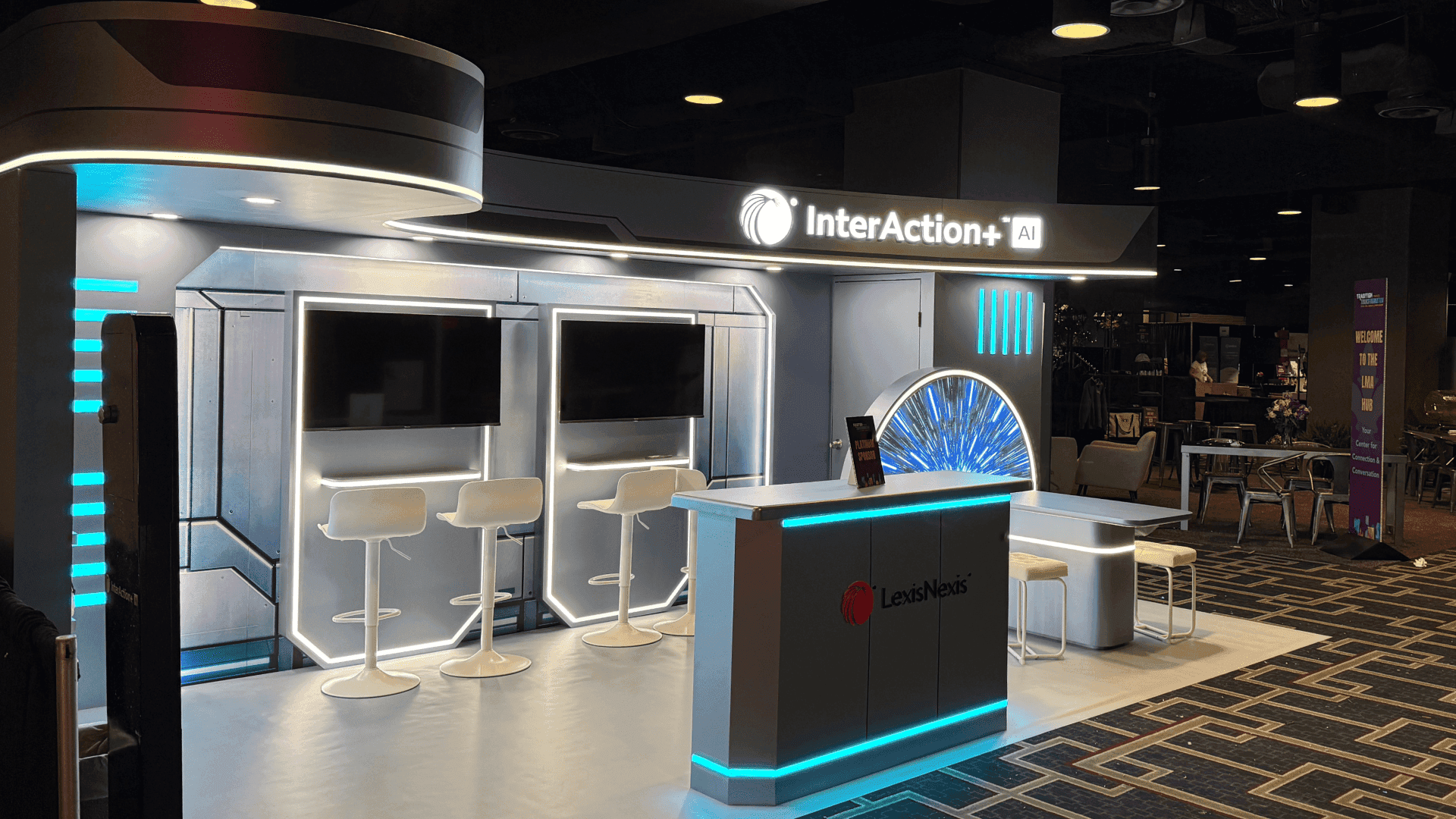
Here, experiential marketing exhibits play a pivotal role. AR can recreate production processes, while interactive touchscreens allow visitors to explore solutions in real time. Such experiences create lasting impressions far beyond static displays.
Checklist 4: Build a Robust Project Management Plan
Exhibitions involve coordination across marketing, design, production, logistics, legal, and finance teams. Without structured management, chaos is inevitable.
Best practice: Use exhibit program management to break the process into milestones:
9 months before: Reserve booth space and finalize contracts.
6 months before: Complete initial design drafts.
3 months before: Begin production and international shipping.
1 month before: Conduct pre-show build rehearsal.
Also create a risk log (e.g., shipping delays, last-minute design changes, overspending) and prepare backup solutions. Resilient project management transforms uncertainty into controlled execution.
Checklist 5: Plan Cross-Border Logistics and Customs
Logistics are often the Achilles’ heel of international exhibiting. Without timely delivery, all preparations can collapse.
Challenges include:
Transport mode: Sea freight is cost-effective but slow, air freight is fast but expensive.
Customs paperwork: Critical for electronics and special materials.
Transit inspections: Multi-country shipments may face additional checks.
Optimization: Partner with experienced international exhibit service providers who simulate logistics scenarios, consolidate shipping, and manage customs documentation. Integrating logistics into overall project management reduces risks significantly.
Checklist 6: Define Team Roles and Deliver Training
On-site staff performance is as important as booth design.
Who handles presentations? Must be able to deliver concise, 2-minute value pitches.
Who manages interaction zones? Must operate devices seamlessly to avoid technical glitches.
Who collects data? Should test digital systems before deployment.
Training approach: Go beyond scripts—simulate real visitor interactions. Staff should be ready for diverse scenarios, from quick questions to in-depth product demos.
Checklist 7: Prepare Interactive Tools and Marketing Materials
Engagement accelerates retention. Brochures alone no longer suffice.
Recommended materials:
Large interactive displays or touchscreens.
Gamified activities or instant rewards to encourage contact sharing.
Video loops to fill downtime and deliver consistent messaging.
With experiential marketing exhibits, these elements extend visitor dwell time and make brand messages truly memorable.
Checklist 8: Showcase Sustainability as Part of the Brand Narrative
Sustainability should move from backstage compliance to front-stage storytelling.
Display visible signs of eco-friendly exhibit solutions.
Use certifications and eco-labels to build credibility.
Share real-time energy use on digital screens to demonstrate transparency.
This transforms sustainability into a marketing advantage, differentiating the brand as responsible and forward-looking.
Checklist 9: Collect and Digitize On-Site Data
Exhibitions are not just “one-day events”—they are long-term lead pipelines.
Best practices:
Replace paper forms with QR-code registrations or digital surveys.
Integrate data collection into interaction zones (games, raffles, or demos).
Use exhibit program management platforms to sync data instantly for post-show follow-up.
Data collection ensures measurable ROI and builds strategic intelligence for future events.
Checklist 10: Conduct Post-Show Review and Optimization
The ultimate value of exhibitions lies in continuous improvement.
Steps:
Quantitative review: Compare goals against outcomes (traffic, conversions, press coverage).
Knowledge capture: Record challenges and solutions to avoid repetition.
Strategic upgrade: Use data on sustainability, interaction, and project management to refine future strategies.
With a closed-loop process, exhibitions evolve from isolated events into scalable business systems.
Conclusion
A comprehensive checklist transforms complex international exhibitions into structured, manageable projects. From sustainability to interactivity, from logistics to post-show analysis, every step determines success. By integrating eco-friendly exhibit solutions, experiential marketing exhibits, and exhibit program management, companies not only execute successful shows but also build repeatable competitive advantages.
If you’re seeking a full-service exhibition partner, visit www.circleexhibit.com to discover our end-to-end solutions for global events.