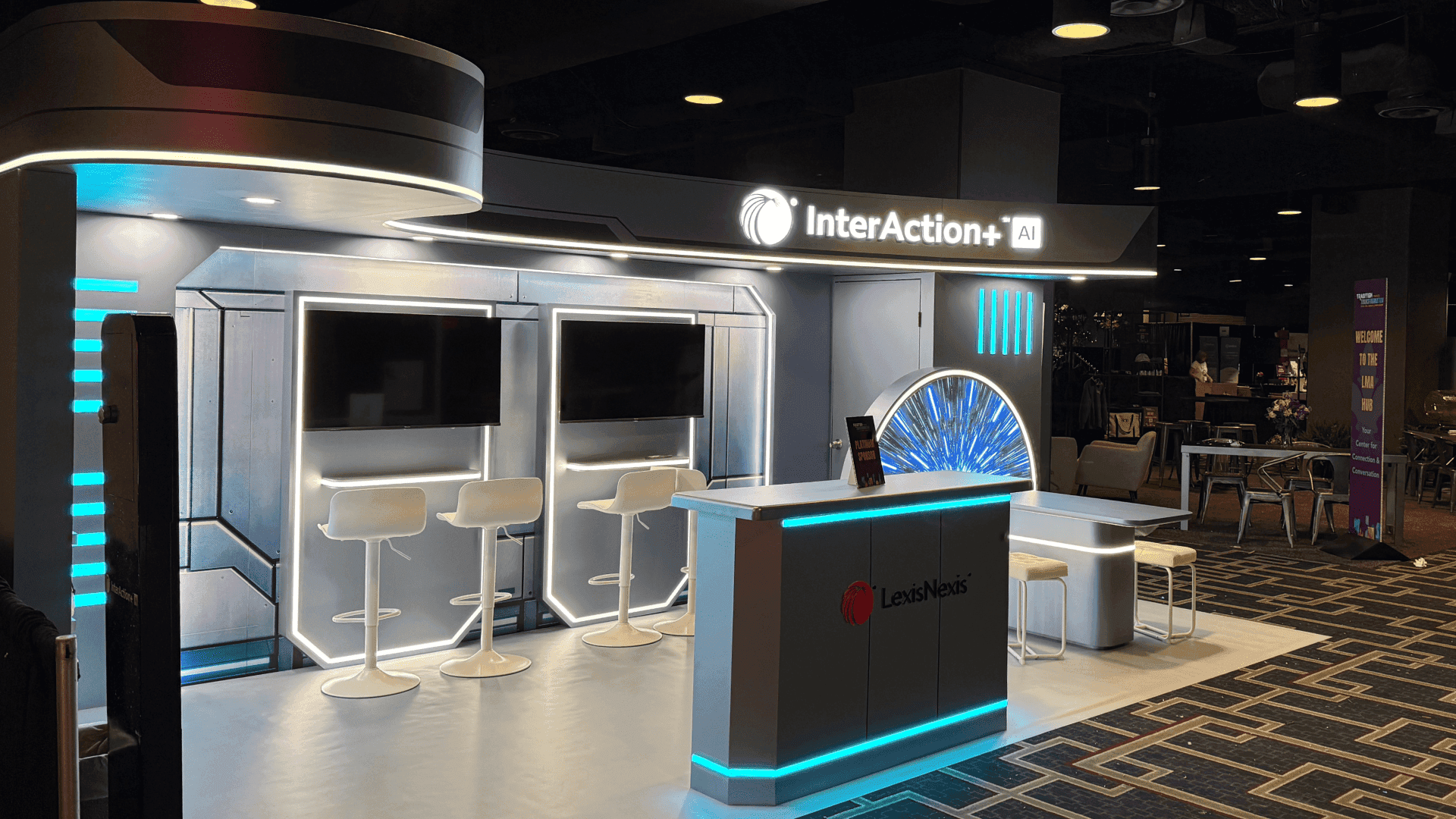
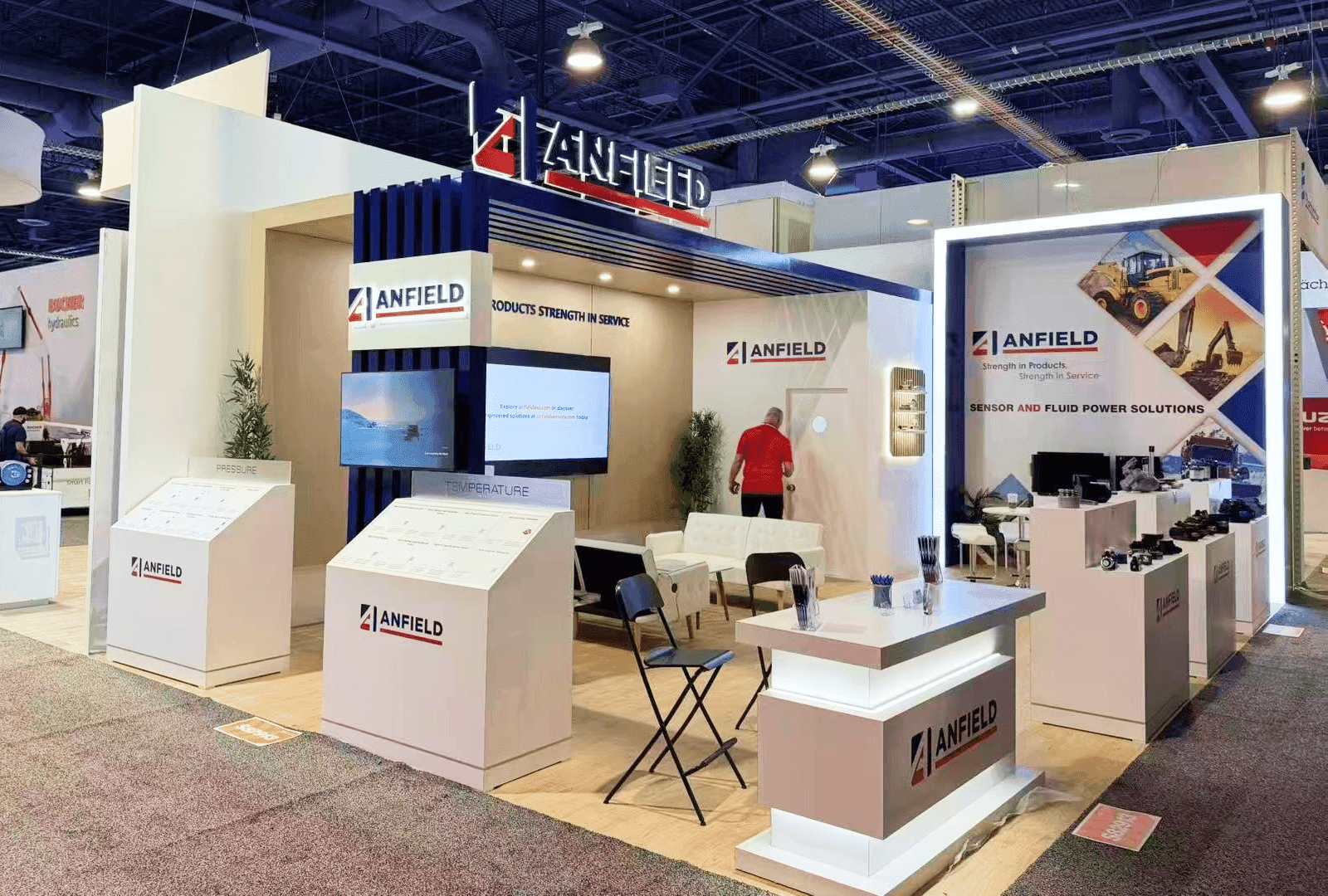
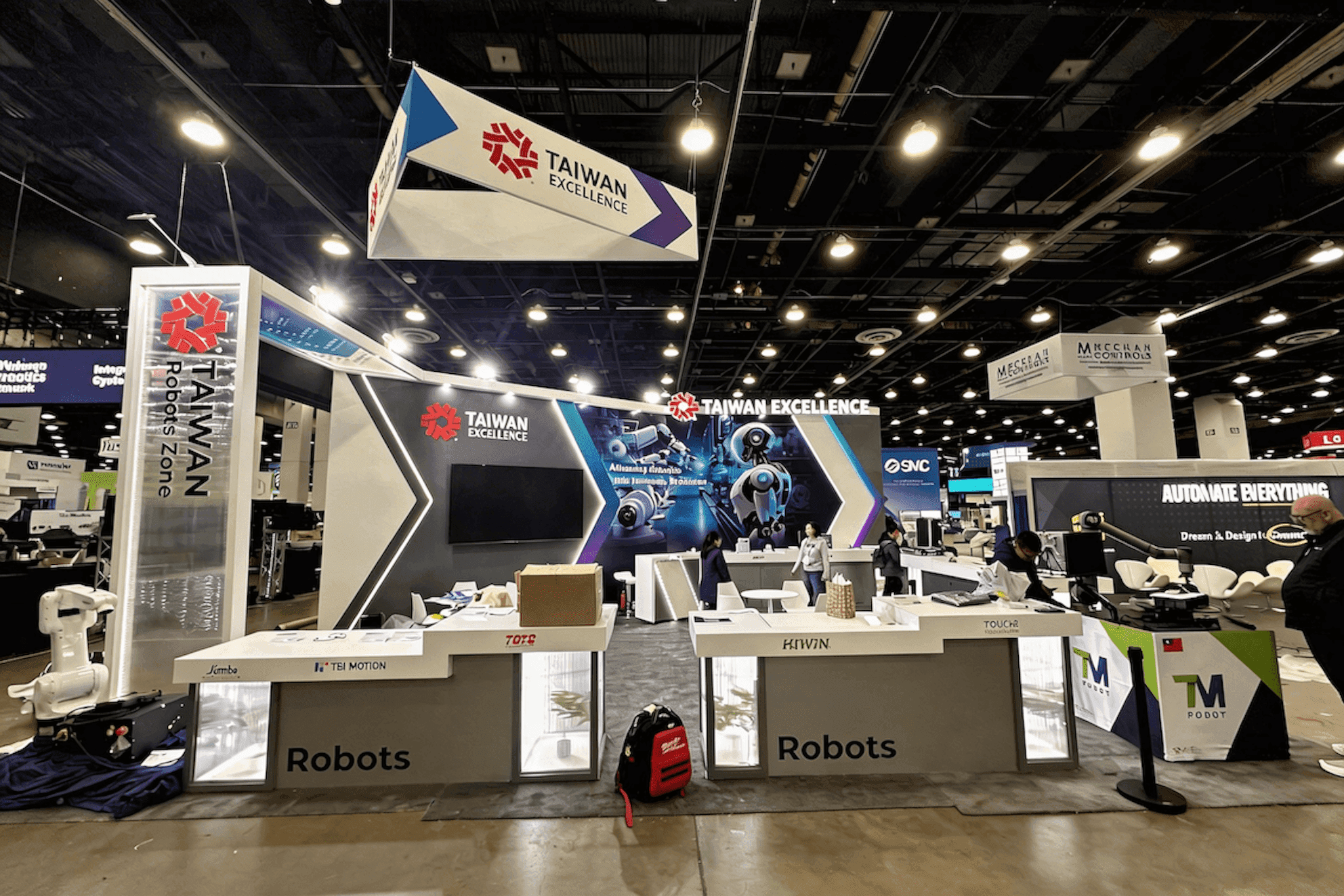
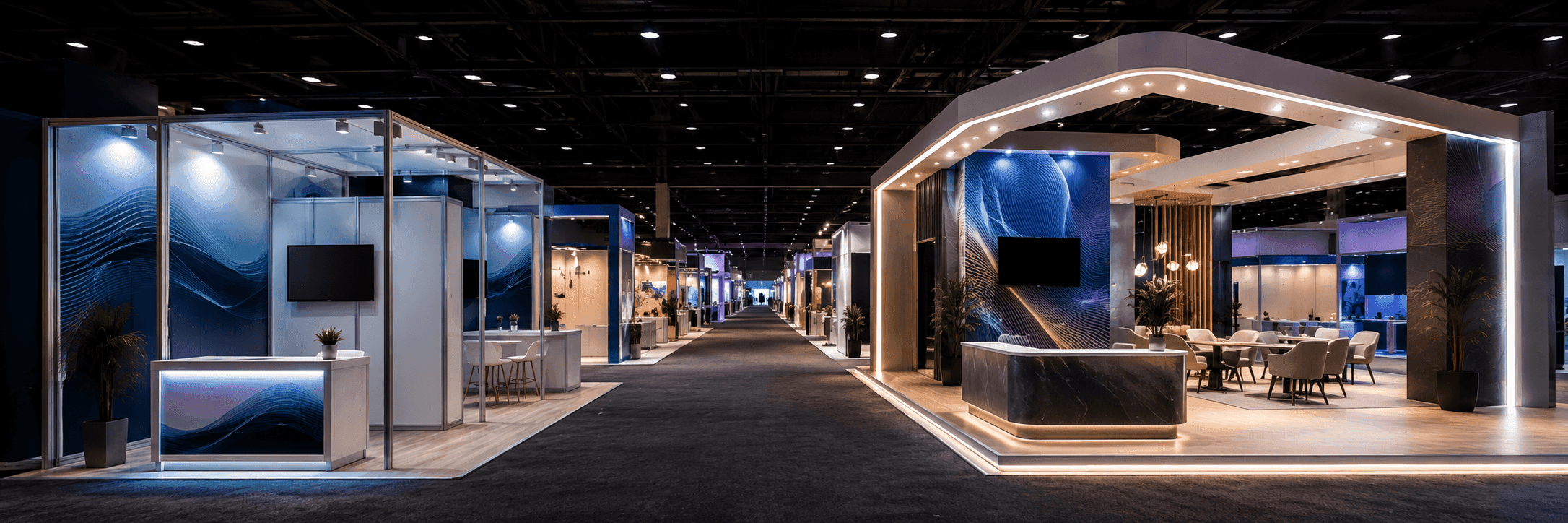
1) Entry that reads in 5 seconds
Angle & scale: headline angled 30–45° to the main aisle; logo:title ≈ 3:5; ≤12 words using a strong verb + industry noun.
Hierarchy: quiet background, high-contrast headline and one key number; no paragraphing at the entry.
Long-range cues: a structural outline signature beats animated clutter.
This is core to island booth design services—decide where the booth speaks before lights and screens.
Quick line templates
“In X, cut Y cost to Z range.”
“Make process Q a N-second task with tech T.”
2) Midrange proof that doesn’t drift
The proof station = one table: Scenario | Metric | Outcome—one sentence + one number each (range + unit + time basis).
One station = one question: physical trigger responds in 0.2–0.5 s, explanatory response ≤2 s.
Visual discipline: consistent weights/sizes for headings, units, notes.
This is delivered by retail display design services to reduce choice and shorten hesitation.
3) Clear exits: exactly three
Three CTAs only: sample, pricing/configurator, booking. Color-code QRs; mount at 1.2–1.4 m so crowds don’t hide them.
Talk-track cap: two lines to restate value and the next step (“30-minute config / callback tomorrow afternoon”).
Takeaway sheet: a one-page press/jury kit (logo, key specs, WB reference, release line).
4) Encode the narrative into a clock
Run one clock for everyone (via exhibit program management):
Micro-show: 40 s every 15 minutes; key/fill +0.3–0.5; three-line patter bridges distance → proof → handoff.
Peak vs off-peak: 60–90 s/visitor shutter rhythm at peak; 90–180 s full flow off-peak.
Roles: greeter (5-second promise) → explainer (90-second proof) → closer (CTA + booking).
Failover: any hiccup executes a ≤10 s cue-card takeover.
5) Wayfinding as “lightweight info architecture”
Floor layer: low-chroma tapes/texture bands to the proof station; aisles ≥1.2 m; at least one 0.8×1.2 m turning pad.
Waist layer: 1–1.2 m high arrows and micro-headers (e.g., “Compare here → then try”).
Top layer: rigged outline signature if allowed; otherwise mini crown beams + floor light bands.
Lock these in island booth design services so on-site tweaks don’t devolve into collage.
6) Media-friendly by design
Pre-mark phone and long-lens spots; provide one fixed high vantage if possible; compress the 8 m → 3 m → 1 m story into a single 18–22-word line on a cue card. Keep 400–600 lx baseline and lift +0.3–0.5 only during micro-shows—no glare.
7) Four numbers write the next city
Within +24 h, read median dwell, interaction completion, CTA triggers, 48-hour revisit.
Micro-edits: trim five words at entry; remove one distraction on the compare view; raise the booking gateway ~10 cm; strengthen verbs; add host cue cards/light nudges if micro-shows slip.
Quick checklist
30–45° entry; ≤12-word headline; logo:title ≈ 3:5
Proof = “Scenario | Metric | Outcome,” one sentence + one number each
One station = one question; first frame ≤0.5 s; explanation ≤2 s; single CTA
Three exits only; color-coded QRs at 1.2–1.4 m
40 s/15′ micro-shows; 60–90 s peak rhythm; ≤10 s failover
400–600 lx baseline; camera spots pre-marked
Close
When wayfinding makes where to go obvious, a narrative grammar fixes what to say, and cadence dictates when to say it, an island booth stops being a pretty one-off and becomes a repeatable high-conversion system. Ready to wire this into your next stop? Visit www.circleexhibit.com to align island booth design services, retail display design services, and exhibit program management end to end.