What Drayage Means for Las Vegas Trade Show Booth Planning

Circle Exhibit Team
Industry professionals
Exhibition industry professional dedicated to delivering the latest insights and curated recommendations to you.
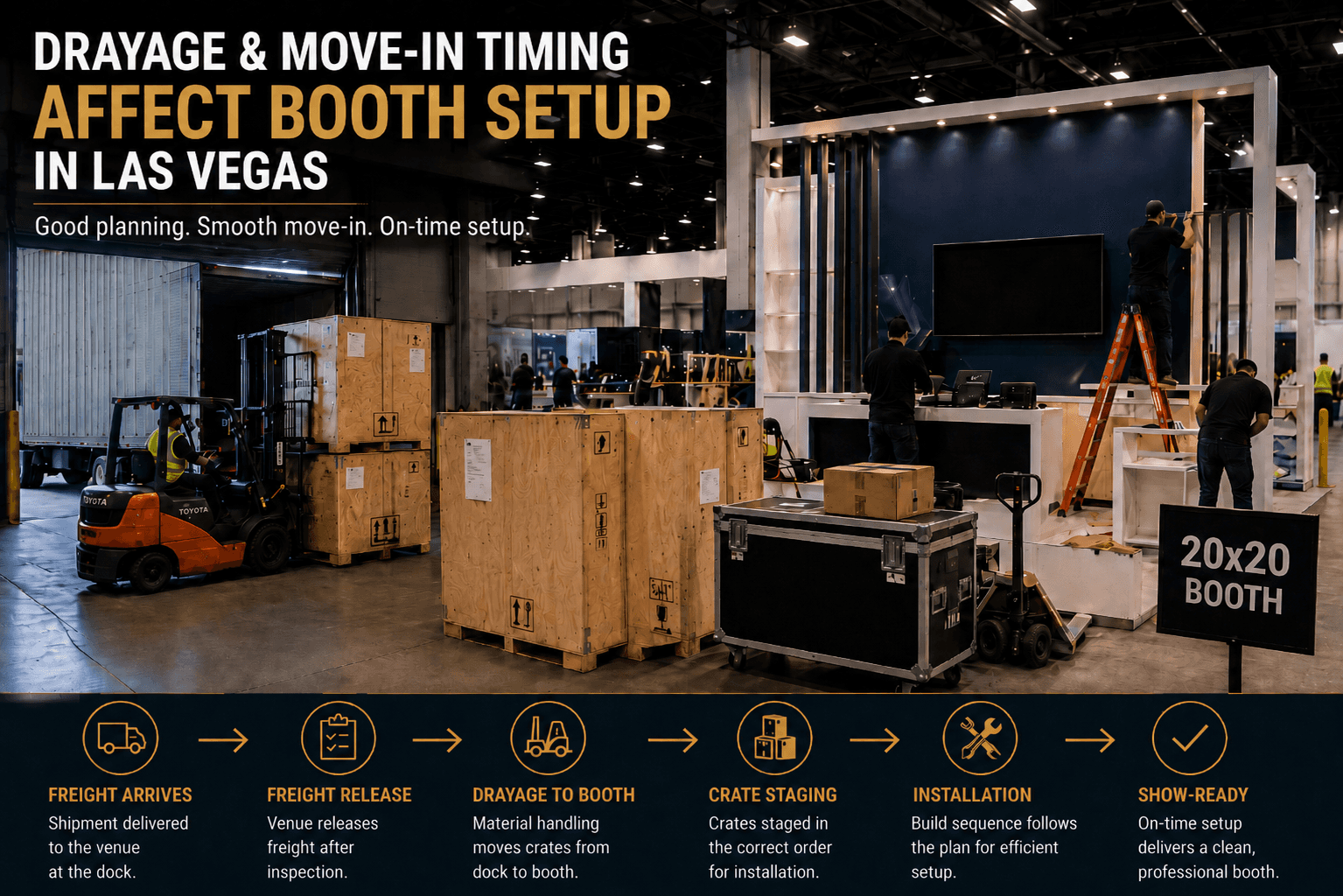
Drayage affects how booth freight moves after it reaches the show site. For Las Vegas trade shows, exhibitors should understand how drayage connects to dock access, freight release, staging, installation timing, empty crate storage, and booth setup sequence.
Drayage is one of the most misunderstood parts of trade show booth planning.
Many exhibitors think booth freight is finished once it ships to Las Vegas. In reality, shipping only gets materials to the show-site system. Drayage affects what happens after that: how freight is received, moved, staged, emptied, stored, returned, and prepared for outbound handling.
For Las Vegas trade shows, understanding drayage helps exhibitors plan booth setup more clearly and avoid late-stage confusion during move-in.
Quick Answer
Drayage is the show-site handling of booth freight after it reaches the convention facility or advance warehouse. It is different from shipping because it covers material movement from receiving to the booth space, empty crate handling, storage, and return movement after the show. In Las Vegas, drayage affects setup timing, staging, and installation sequence.
For exhibitors managing booth build timelines, booth build support in Las Vegas should account for drayage before the booth reaches the show floor.
What Does Drayage Mean in Trade Show Planning?
Drayage usually refers to material handling inside the trade show system.
It often includes receiving freight, moving freight from the dock or warehouse to the booth space, handling empty crates, storing empties during the show, returning empties after the show, and preparing materials for outbound movement.
This is different from shipping.
Shipping moves booth materials from one place to another before they enter the show-site handling process. Drayage begins when the freight is inside the event’s receiving and material handling environment.
That difference matters because a booth can be shipped correctly but still face delays if the drayage process is not planned clearly.
Drayage vs Shipping: What Is the Difference?
Planning Area | Shipping | Drayage |
|---|---|---|
Main role | Moves booth freight to Las Vegas, the venue, or advance warehouse | Moves booth freight within the show-site handling system |
Timing | Happens before freight reaches the show-site process | Happens during move-in, show operation, and move-out |
Scope | Transportation between locations | Receiving, dock-to-booth movement, empty storage, return handling |
Main risk | Late delivery, carrier issue, missing shipment | Freight release delay, staging confusion, install sequence disruption |
Booth impact | Determines whether materials arrive | Determines when and how materials reach the booth space |
The simple way to understand it is this:
Shipping gets the freight to the event system.
Drayage gets the freight through the event system.
Why Does Drayage Matter for Las Vegas Booth Planning?
Drayage matters because booth installation depends on freight being available in the right order.
At Las Vegas venues, move-in can involve freight receiving, dock schedules, material handling, labor windows, aisle access, and booth installation timing. If key booth materials do not reach the booth space when the crew needs them, setup can slow down even when the design and fabrication are ready.
This is where logistics and pre-show coordination becomes important. Drayage should be planned as part of the booth schedule, not treated as a separate afterthought.
A booth team needs to know:
what ships first
what must be accessible during setup
what items are packed together
what needs to be staged near the booth
what can stay packed until later
what empty crates must be removed before final presentation
Drayage affects the order of work.
How Does Drayage Affect the Booth Setup Sequence?
Drayage can change what the install crew can do first.
If flooring arrives but the wall structure is delayed, setup may pause. If graphics arrive before the frame system is staged, they cannot be installed yet. If counters or product displays are buried behind other freight, the crew may spend extra time locating the right pieces.
A clean booth setup sequence depends on freight being packed and released in a way that matches installation needs.
For example:
Flooring or floor protection may need to happen first.
Wall structures and frames may need to follow.
Electrical or AV access may need to be coordinated before counters are closed.
Graphics may need to be installed after walls are stable.
Product displays, samples, and furniture usually come later.
Final cleaning and presentation checks happen near the end.
When drayage is ignored, this sequence can break down.
When drayage is planned, the booth has a better chance of moving through setup in a controlled order.
What Happens When Drayage Is Not Planned Clearly?
The most common problem is not one single failure.
It is confusion.
Freight may be on-site but not yet released to the booth. Crates may arrive in the wrong order. Important components may be packed too deep inside a pallet or case. Empty crate handling may interrupt the final setup window. Staff may not know which items are handled by the carrier and which fall under show-site material handling.
This can create pressure during move-in.
A booth that looked simple in the planning stage may become harder to install because the freight flow was not aligned with the build sequence.
Drayage planning helps reduce confusion around:
freight arrival status
crate location
dock-to-booth movement
staging timing
empty crate removal
outbound packing
install crew access
It does not replace good booth design. It protects the setup process that makes the design possible.
How Does Drayage Affect Rental Booths?
Rental booths still need drayage planning.
A rental booth may use modular walls, reusable counters, branded panels, lighting, flooring, and display components. These pieces are often easier to stage than a fully custom build, but they still need to reach the booth space in a usable order.
Good Las Vegas booth rental planning should consider how rental components will move from freight handling into setup.
For rental booths, drayage planning should clarify:
how wall panels are packed
whether counters and graphics are shipped together
what components are needed first
how labeled pieces match the layout
where empty cases go during the show
what must be repacked quickly after move-out
A rental booth can save time only when the logistics path supports the install path.
How Does Drayage Affect Custom Booth Builds?
Custom booth builds often have more drayage dependencies.
A custom booth may include unique walls, counters, millwork, graphics, AV, lighting, product fixtures, flooring, and storage elements. If one key piece is delayed or staged incorrectly, the rest of the build may be affected.
This is why custom exhibits need more detailed packing and labeling logic.
Each crate or pallet should support the install sequence. The crew should be able to identify what is needed first, what can wait, and what must stay protected until final placement.
For custom exhibit execution in Las Vegas, drayage planning is not only about moving freight. It is about protecting the build order.
The more complex the booth, the more important freight sequencing becomes.
What Should Exhibitors Ask Before Freight Ships?
Drayage planning should begin before the freight leaves the warehouse.
Once the freight reaches the event system, changes become harder to manage. Exhibitors should confirm what is being shipped, how it is packed, how it is labeled, and what needs to be accessible first during install.
Drayage Planning Checklist
Is the booth shipping to an advance warehouse or directly to the show site?
Which items need to be installed first?
Are crates and pallets labeled by install sequence?
Are graphics packed where the crew can access them at the right time?
Are counters, frames, hardware, and lighting separated clearly?
Is there a plan for empty crate storage?
Who is tracking freight release during move-in?
Does the install crew know what should arrive first?
Are product samples, demo materials, or staff items separated from structural freight?
Is outbound packing planned before the show closes?
These questions help prevent the booth team from treating drayage as a last-minute issue.
Why Does Dock-to-Booth Movement Matter?
Dock-to-booth movement affects when installation can actually begin.
A shipment may be delivered to the event environment, but the booth team still needs the materials at the booth space. The time between freight arrival and booth access can affect labor planning, install sequencing, and final presentation.
This is especially important when the booth includes:
large wall components
heavy counters
product displays
samples or demo materials
AV equipment
flooring
custom graphics
rental system components
Dock-to-booth movement should be considered part of the setup timeline.
If the team only tracks carrier delivery, they may miss the part of the process that determines when materials are actually available for installation.
How Should Drayage Be Planned for Move-Out?
Drayage also affects what happens after the show closes.
Move-out can become rushed if empty crates are not returned in a usable order or if outbound packing is not planned before the booth is dismantled. This matters for both rental and custom booths because materials need to be protected, counted, repacked, and prepared for the next movement.
A clean move-out plan should include:
which materials need to be packed first
where small items and hardware should go
how graphics should be protected
how rental components should be separated
how custom pieces should be labeled
who confirms outbound freight details
when the booth space needs to be cleared
Move-out planning is part of drayage planning.
If it is ignored, the booth may be harder to reuse, inspect, or prepare for the next show.
What Drayage Does Not Mean
Drayage does not mean the booth is designed, built, or installed.
It also does not mean the same thing as long-distance shipping.
Drayage is one part of the show-site logistics chain. It supports booth setup by moving materials through the event handling process, but it does not replace design planning, fabrication checks, installation labor, or on-site supervision.
This distinction helps exhibitors avoid confusion.
A booth plan should separate:
design and engineering
fabrication and prebuild checks
shipping
drayage
installation
dismantle and outbound handling
Each step affects the next one, but they are not the same job.
How Can Exhibitors Plan Around Drayage Without Overcomplicating It?
The best approach is to connect drayage to the booth’s setup sequence.
Exhibitors do not need to turn drayage into a separate planning document with no connection to the booth. They need to understand how freight movement supports the build order.
A practical approach is:
Confirm the booth layout.
Identify what must be installed first.
Pack and label materials around that order.
Coordinate freight arrival with move-in timing.
Track when materials are released to the booth space.
Remove empties only after key items are accessible.
Plan outbound packing before the show ends.
This keeps drayage practical.
It becomes part of booth planning, not an isolated logistics term.
What Is the Best Way to Think About Drayage in Las Vegas?
The best way to think about drayage is simple:
Drayage controls how booth materials move inside the show-site environment.
For Las Vegas exhibitors, that movement affects setup timing, labor coordination, staging, empty crate handling, and final booth readiness. It can influence both rental booths and custom builds because both depend on the right materials reaching the booth space at the right time.
Drayage should not be treated as a cost line only.
It should be treated as part of the booth execution plan.
When exhibitors understand that, they can plan freight, staging, installation, and move-out with fewer surprises.
Planning Booth Freight and Setup for a Las Vegas Trade Show?
Circle Exhibit teams help exhibitors connect booth design, rental structure, logistics, freight staging, and show-site installation planning so the booth setup sequence stays clear from move-in to move-out.
Drayage is one of the most misunderstood parts of trade show booth planning.
Many exhibitors think booth freight is finished once it ships to Las Vegas. In reality, shipping only gets materials to the show-site system. Drayage affects what happens after that: how freight is received, moved, staged, emptied, stored, returned, and prepared for outbound handling.
For Las Vegas trade shows, understanding drayage helps exhibitors plan booth setup more clearly and avoid late-stage confusion during move-in.
Quick Answer
Drayage is the show-site handling of booth freight after it reaches the convention facility or advance warehouse. It is different from shipping because it covers material movement from receiving to the booth space, empty crate handling, storage, and return movement after the show. In Las Vegas, drayage affects setup timing, staging, and installation sequence.
For exhibitors managing booth build timelines, booth build support in Las Vegas should account for drayage before the booth reaches the show floor.
What Does Drayage Mean in Trade Show Planning?
Drayage usually refers to material handling inside the trade show system.
It often includes receiving freight, moving freight from the dock or warehouse to the booth space, handling empty crates, storing empties during the show, returning empties after the show, and preparing materials for outbound movement.
This is different from shipping.
Shipping moves booth materials from one place to another before they enter the show-site handling process. Drayage begins when the freight is inside the event’s receiving and material handling environment.
That difference matters because a booth can be shipped correctly but still face delays if the drayage process is not planned clearly.
Drayage vs Shipping: What Is the Difference?
Planning Area | Shipping | Drayage |
|---|---|---|
Main role | Moves booth freight to Las Vegas, the venue, or advance warehouse | Moves booth freight within the show-site handling system |
Timing | Happens before freight reaches the show-site process | Happens during move-in, show operation, and move-out |
Scope | Transportation between locations | Receiving, dock-to-booth movement, empty storage, return handling |
Main risk | Late delivery, carrier issue, missing shipment | Freight release delay, staging confusion, install sequence disruption |
Booth impact | Determines whether materials arrive | Determines when and how materials reach the booth space |
The simple way to understand it is this:
Shipping gets the freight to the event system.
Drayage gets the freight through the event system.
Why Does Drayage Matter for Las Vegas Booth Planning?
Drayage matters because booth installation depends on freight being available in the right order.
At Las Vegas venues, move-in can involve freight receiving, dock schedules, material handling, labor windows, aisle access, and booth installation timing. If key booth materials do not reach the booth space when the crew needs them, setup can slow down even when the design and fabrication are ready.
This is where logistics and pre-show coordination becomes important. Drayage should be planned as part of the booth schedule, not treated as a separate afterthought.
A booth team needs to know:
what ships first
what must be accessible during setup
what items are packed together
what needs to be staged near the booth
what can stay packed until later
what empty crates must be removed before final presentation
Drayage affects the order of work.
How Does Drayage Affect the Booth Setup Sequence?
Drayage can change what the install crew can do first.
If flooring arrives but the wall structure is delayed, setup may pause. If graphics arrive before the frame system is staged, they cannot be installed yet. If counters or product displays are buried behind other freight, the crew may spend extra time locating the right pieces.
A clean booth setup sequence depends on freight being packed and released in a way that matches installation needs.
For example:
Flooring or floor protection may need to happen first.
Wall structures and frames may need to follow.
Electrical or AV access may need to be coordinated before counters are closed.
Graphics may need to be installed after walls are stable.
Product displays, samples, and furniture usually come later.
Final cleaning and presentation checks happen near the end.
When drayage is ignored, this sequence can break down.
When drayage is planned, the booth has a better chance of moving through setup in a controlled order.
What Happens When Drayage Is Not Planned Clearly?
The most common problem is not one single failure.
It is confusion.
Freight may be on-site but not yet released to the booth. Crates may arrive in the wrong order. Important components may be packed too deep inside a pallet or case. Empty crate handling may interrupt the final setup window. Staff may not know which items are handled by the carrier and which fall under show-site material handling.
This can create pressure during move-in.
A booth that looked simple in the planning stage may become harder to install because the freight flow was not aligned with the build sequence.
Drayage planning helps reduce confusion around:
freight arrival status
crate location
dock-to-booth movement
staging timing
empty crate removal
outbound packing
install crew access
It does not replace good booth design. It protects the setup process that makes the design possible.
How Does Drayage Affect Rental Booths?
Rental booths still need drayage planning.
A rental booth may use modular walls, reusable counters, branded panels, lighting, flooring, and display components. These pieces are often easier to stage than a fully custom build, but they still need to reach the booth space in a usable order.
Good Las Vegas booth rental planning should consider how rental components will move from freight handling into setup.
For rental booths, drayage planning should clarify:
how wall panels are packed
whether counters and graphics are shipped together
what components are needed first
how labeled pieces match the layout
where empty cases go during the show
what must be repacked quickly after move-out
A rental booth can save time only when the logistics path supports the install path.
How Does Drayage Affect Custom Booth Builds?
Custom booth builds often have more drayage dependencies.
A custom booth may include unique walls, counters, millwork, graphics, AV, lighting, product fixtures, flooring, and storage elements. If one key piece is delayed or staged incorrectly, the rest of the build may be affected.
This is why custom exhibits need more detailed packing and labeling logic.
Each crate or pallet should support the install sequence. The crew should be able to identify what is needed first, what can wait, and what must stay protected until final placement.
For custom exhibit execution in Las Vegas, drayage planning is not only about moving freight. It is about protecting the build order.
The more complex the booth, the more important freight sequencing becomes.
What Should Exhibitors Ask Before Freight Ships?
Drayage planning should begin before the freight leaves the warehouse.
Once the freight reaches the event system, changes become harder to manage. Exhibitors should confirm what is being shipped, how it is packed, how it is labeled, and what needs to be accessible first during install.
Drayage Planning Checklist
Is the booth shipping to an advance warehouse or directly to the show site?
Which items need to be installed first?
Are crates and pallets labeled by install sequence?
Are graphics packed where the crew can access them at the right time?
Are counters, frames, hardware, and lighting separated clearly?
Is there a plan for empty crate storage?
Who is tracking freight release during move-in?
Does the install crew know what should arrive first?
Are product samples, demo materials, or staff items separated from structural freight?
Is outbound packing planned before the show closes?
These questions help prevent the booth team from treating drayage as a last-minute issue.
Why Does Dock-to-Booth Movement Matter?
Dock-to-booth movement affects when installation can actually begin.
A shipment may be delivered to the event environment, but the booth team still needs the materials at the booth space. The time between freight arrival and booth access can affect labor planning, install sequencing, and final presentation.
This is especially important when the booth includes:
large wall components
heavy counters
product displays
samples or demo materials
AV equipment
flooring
custom graphics
rental system components
Dock-to-booth movement should be considered part of the setup timeline.
If the team only tracks carrier delivery, they may miss the part of the process that determines when materials are actually available for installation.
How Should Drayage Be Planned for Move-Out?
Drayage also affects what happens after the show closes.
Move-out can become rushed if empty crates are not returned in a usable order or if outbound packing is not planned before the booth is dismantled. This matters for both rental and custom booths because materials need to be protected, counted, repacked, and prepared for the next movement.
A clean move-out plan should include:
which materials need to be packed first
where small items and hardware should go
how graphics should be protected
how rental components should be separated
how custom pieces should be labeled
who confirms outbound freight details
when the booth space needs to be cleared
Move-out planning is part of drayage planning.
If it is ignored, the booth may be harder to reuse, inspect, or prepare for the next show.
What Drayage Does Not Mean
Drayage does not mean the booth is designed, built, or installed.
It also does not mean the same thing as long-distance shipping.
Drayage is one part of the show-site logistics chain. It supports booth setup by moving materials through the event handling process, but it does not replace design planning, fabrication checks, installation labor, or on-site supervision.
This distinction helps exhibitors avoid confusion.
A booth plan should separate:
design and engineering
fabrication and prebuild checks
shipping
drayage
installation
dismantle and outbound handling
Each step affects the next one, but they are not the same job.
How Can Exhibitors Plan Around Drayage Without Overcomplicating It?
The best approach is to connect drayage to the booth’s setup sequence.
Exhibitors do not need to turn drayage into a separate planning document with no connection to the booth. They need to understand how freight movement supports the build order.
A practical approach is:
Confirm the booth layout.
Identify what must be installed first.
Pack and label materials around that order.
Coordinate freight arrival with move-in timing.
Track when materials are released to the booth space.
Remove empties only after key items are accessible.
Plan outbound packing before the show ends.
This keeps drayage practical.
It becomes part of booth planning, not an isolated logistics term.
What Is the Best Way to Think About Drayage in Las Vegas?
The best way to think about drayage is simple:
Drayage controls how booth materials move inside the show-site environment.
For Las Vegas exhibitors, that movement affects setup timing, labor coordination, staging, empty crate handling, and final booth readiness. It can influence both rental booths and custom builds because both depend on the right materials reaching the booth space at the right time.
Drayage should not be treated as a cost line only.
It should be treated as part of the booth execution plan.
When exhibitors understand that, they can plan freight, staging, installation, and move-out with fewer surprises.
Planning Booth Freight and Setup for a Las Vegas Trade Show?
Circle Exhibit teams help exhibitors connect booth design, rental structure, logistics, freight staging, and show-site installation planning so the booth setup sequence stays clear from move-in to move-out.
Exhibition Cases
Message
Leave your message and we will get back to you ASAP
Send a Message
We’ll Be in Touch!
Message
Leave your message and we will get back to you ASAP
Address:
4915 Steptoe Street #300
Las Vegas, NV 89122