Start with the Visitor Action, Not the Booth Size
Before assigning space to counters, shelving, demo equipment, or seating, identify the visitor action that matters most.
If visitors need to watch before they understand the value, start with a demo-led model. If they need to browse and compare, product discovery should take priority. If they need to ask detailed questions before moving forward, consultation should shape the layout.
A hybrid model is justified only when two behaviors are equally important during the same visit. The goal is not to fit in as many booth features as possible; it is to give the most important visitor action enough space to work well.
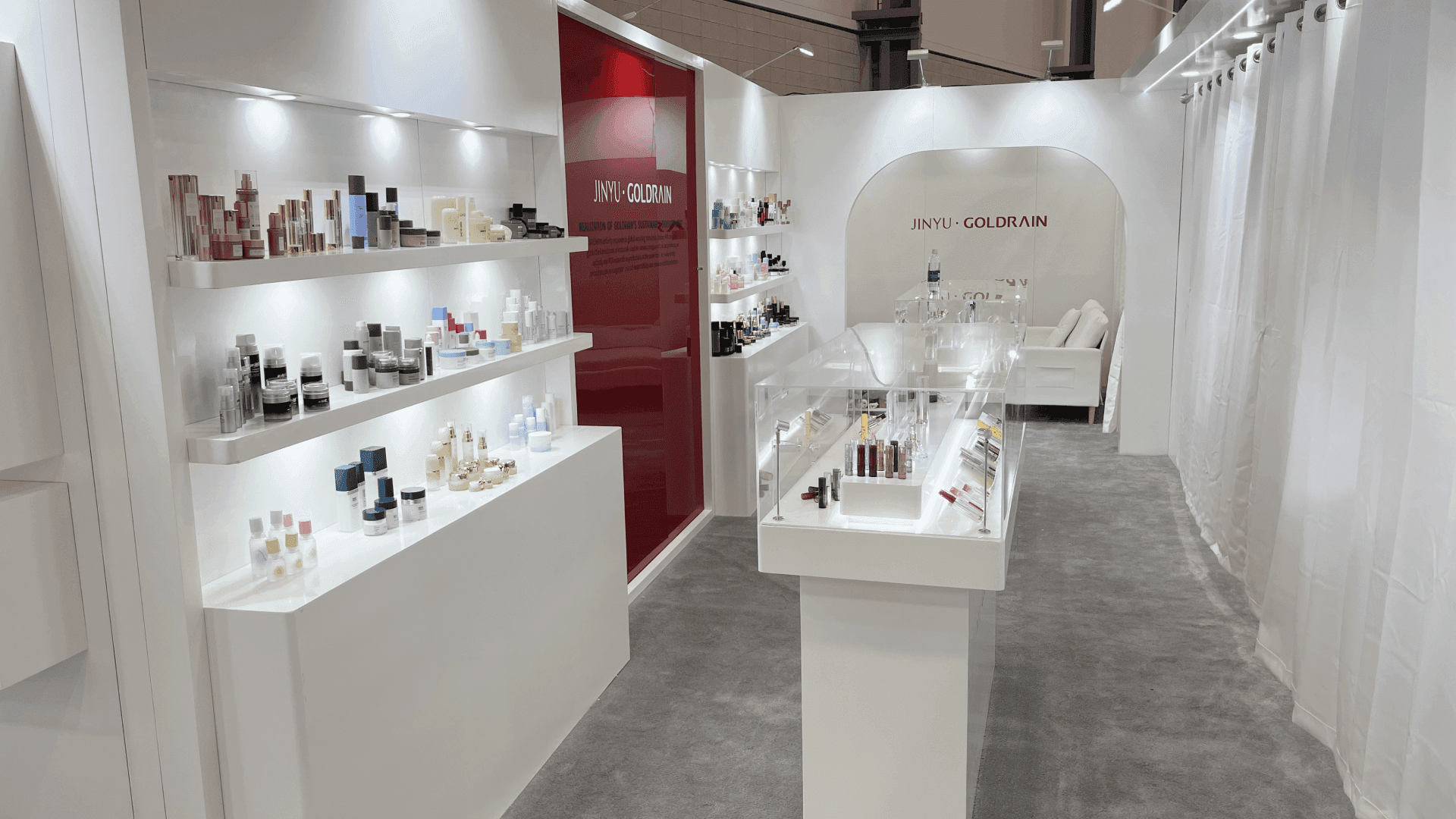
A 20x20 Premiere Orlando booth can balance product discovery with one active demonstration area while preserving space for staff conversations and storage.
When a Demo-Led Booth Makes Sense
A demo-led booth works best when seeing the product or technique in action materially improves understanding. This can apply to professional hair tools, grooming equipment, styling or color techniques, beauty devices, and other products whose performance is difficult to communicate through packaging or static display alone.
The deciding question is simple:
Does seeing it in use answer an important question that a static display cannot?
If it does, the demonstration should become the primary booth behavior rather than an activity fitted into leftover space. It should also create a natural next step—examining the product, asking a question, or speaking with staff.
For hair and barbering brands running demonstrations throughout the day, the next challenge is operational: spectators, product access, tools, staff handoff, and reset all have to work around the same cycle. Hair & Barbering demo planning covers that scenario in more depth.
When Product Discovery Should Take More Space
A product-led booth is usually the better starting point when visitors need time to browse, compare, and understand several products before they need a longer explanation. This fits exhibitors with multiple SKUs, product families, formulas, finishes, applications, or ranges that can be evaluated side by side.
The real test is:
Can visitors understand the range without a staff member explaining every item?
If they can, product visibility and comparison deserve more space than a large demonstration area. Samples, short demos, or one hero interaction can still support the exhibit without changing its primary role.
When Consultation Needs Its Own Space
A consultation-led model makes more sense when the most valuable visitor action is a deeper discussion. That can apply to professional devices, treatment systems, higher-consideration products, or solutions that raise questions about suitability, application, operation, purchasing, or business use.
In that case, the important issue is whether the right visitor can move from initial interest into a useful conversation without occupying the main product or interaction area. Longer discussions need more separation than quick product questions, especially when several visitors may be browsing at the same time.
For spa and wellness brands, consultation may also need to coexist with treatment or device demonstrations, product presentation, and reset. Spa & Wellness booth planning looks at how those functions can share one footprint without competing for the same space.
When a Hybrid Booth Is Worth the Extra Space
Hybrid works when two visitor behaviors are genuinely important—not simply because the exhibitor wants every possible feature.
Common combinations include:
demo + product discovery
product discovery + consultation
demo + consultation
The second behavior has to earn its space. A hybrid layout becomes harder to justify when it also tries to accommodate lounge seating, a large reception counter, multiple screens, extensive storage, hospitality, and several staff positions.
The model works best when both behaviors need to happen during the same visit, staff can support them at the same time, and enough room remains for circulation and operational storage.
What You Gain—and Give Up—with Each Booth Model
Booth model | Best fit when visitors need to… | What it prioritizes | Main trade-off |
|---|---|---|---|
Demo-led | See a technique, transformation, tool, or product in use | Attention and proof in action | More working and viewing space, with greater crowd pressure |
Product-led | Browse and compare several products | Product visibility and comparison | Less space for live interaction or longer conversations |
Consultation-led | Ask detailed questions before moving forward | Deeper professional conversations | Lower visitor throughput and less open browsing space |
Hybrid | Complete two equally important behaviors during one visit | Two core functions within one exhibit | More space, staff, storage, and operational complexity |
The strongest choice is not the model with the most features. It is the one that protects the visitor behavior most closely tied to the exhibitor’s goal.
Let the Operating Model Set the Minimum Functional Footprint
Booth size should follow the operating model, not lead it. A product-led exhibit may work efficiently in a smaller footprint, while demonstrations, longer consultations, or two important visitor behaviors operating at the same time require more functional separation.
If 400 square feet is already under consideration, 20x20 booth planning shows how that footprint changes the balance between active interaction, product display, conversation, storage, and circulation.
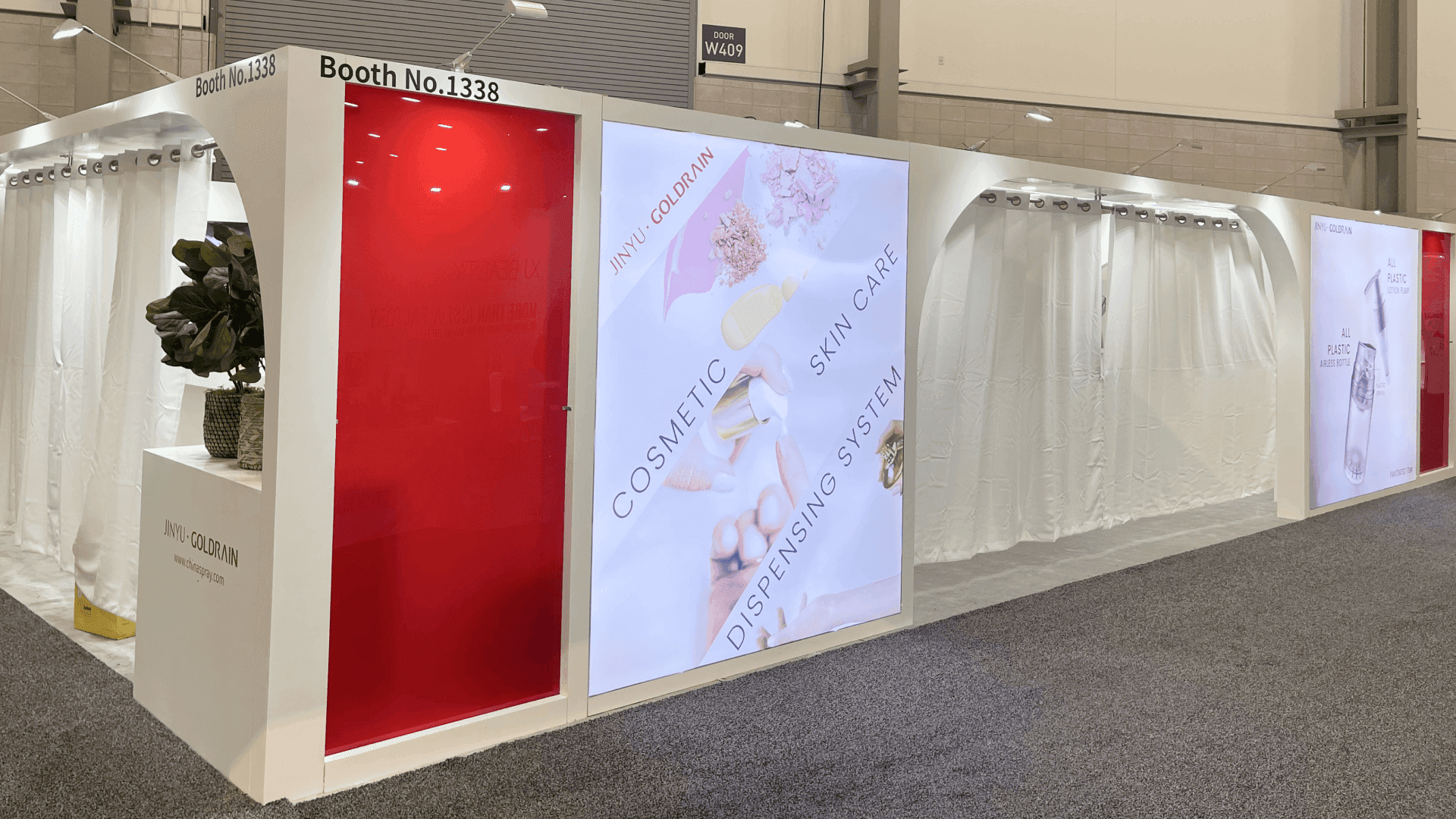
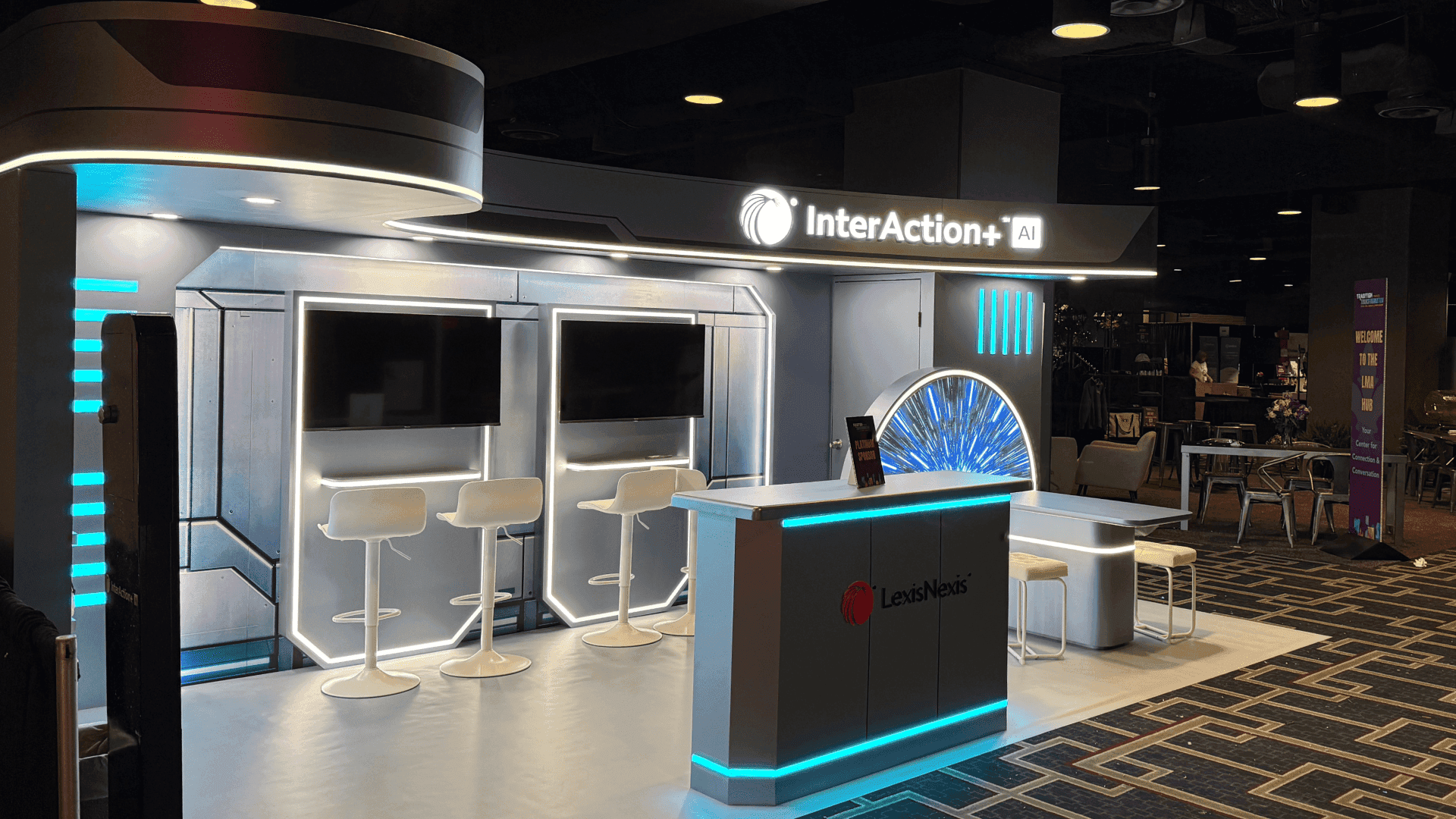
A consultation-led booth gives visitors room to move from initial product interest into a longer professional conversation without taking over the main display area.
Make the Decision
Use the visitor’s first meaningful action to settle the model:
Demo-led when visitors need to see the value in action.
Product-led when they need to browse and compare.
Consultation-led when they need a deeper conversation before deciding.
Hybrid only when two behaviors are equally important during the same visit.
If one behavior clearly matters more, give it the space first.
Once the operating model and minimum footprint are clear, Orlando booth rental becomes a practical next step for comparing structures and configurations that can support those functions.
Frequently Asked Questions
Does every Premiere Orlando exhibitor need a live demo?
No. A live demo is useful when seeing a technique, product, tool, or device in use materially improves understanding. Brands whose visitors mainly need to browse or compare products may be better served by a product-led model.
Can a product-led booth still include a live demonstration?
Yes. A compact demo can support one hero product without changing the exhibit’s main role, as long as browsing and comparison remain the primary visitor behavior.
Can a 20x20 Premiere Orlando booth support more than one visitor behavior?
Yes, but the activities still need priorities. A 20x20 footprint can often support one primary behavior plus a secondary function, while two equally demanding activities require tighter trade-offs in display, conversation, storage, and circulation.