How to Plan a 20x20 or 30x40 Booth for AAPEX Las Vegas

Circle Exhibit Team
Industry professionals
Exhibition industry professional dedicated to delivering the latest insights and curated recommendations to you.
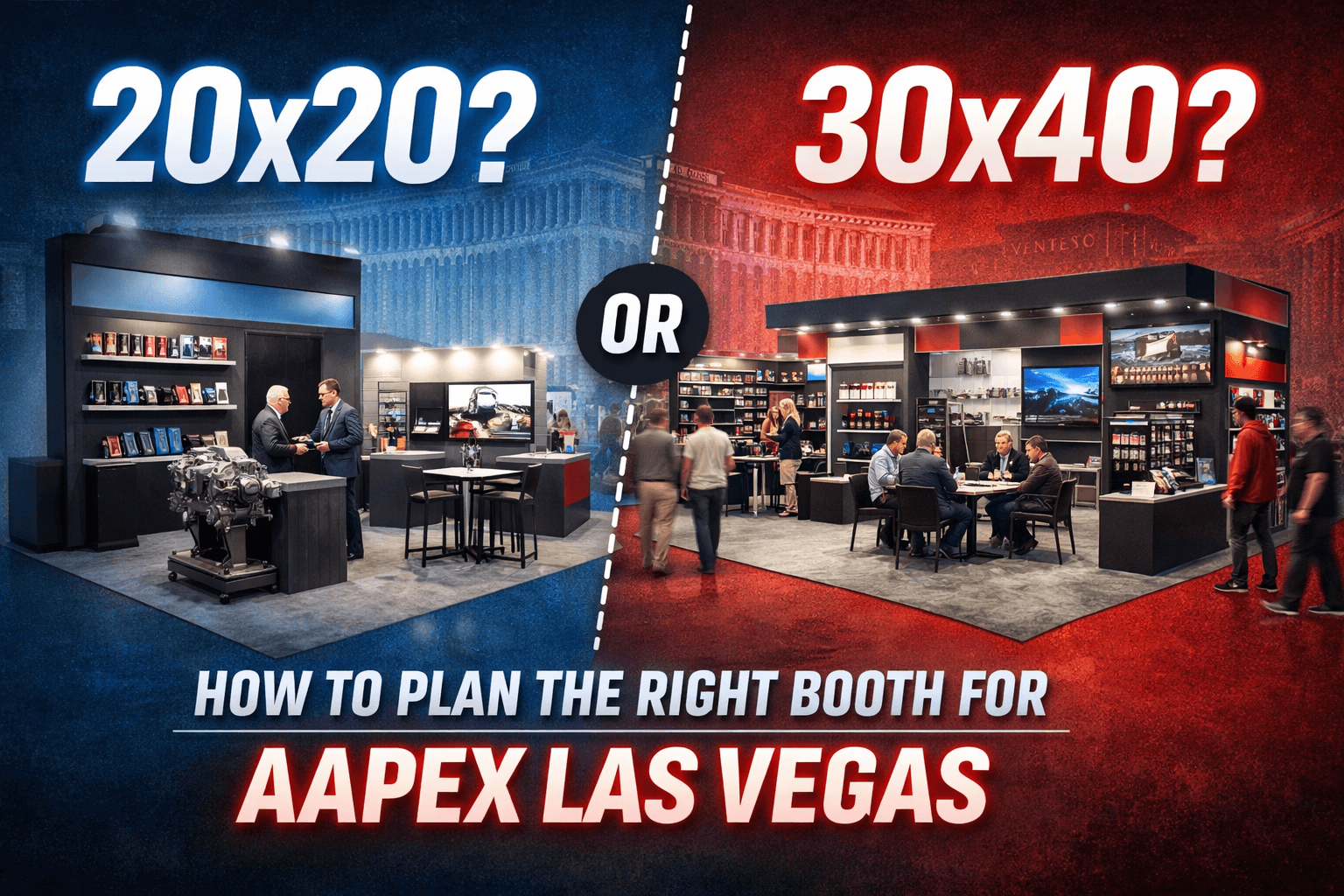
Choosing a booth size for AAPEX is not really about picking the bigger footprint if the budget allows. It is about choosing the size that matches how your team will actually use the space once the show opens.
That matters at AAPEX because this is a large business event for the automotive aftermarket, not a casual consumer expo. AAPEX 2026 is scheduled for November 3–5, 2026 in Las Vegas at The Venetian Expo and AAPEX Forum / Caesars Forum, and the show floor is built around broad product and service categories so buyers can move booth to booth by what they are looking for. The event also promotes more than 1,400 product categories on the floor, which means exhibitors are competing in an environment where visitors compare a lot of products quickly.
So the real question is not “Is 30x40 better than 20x20?”
The real question is: what does your booth need to do?
If your team mainly needs to show a focused product line, stop buyers cleanly, and hold a few short conversations, a 20x20 trade show booth layout can be the better choice. If you need to show several product groups, support more than one conversation at a time, and keep the booth from feeling compressed, a 30x40 island booth layout usually gives you more room to work with.
Start with the product count, not the rendering
The easiest way to make the wrong booth decision is to look at a rendering before looking at the product list.
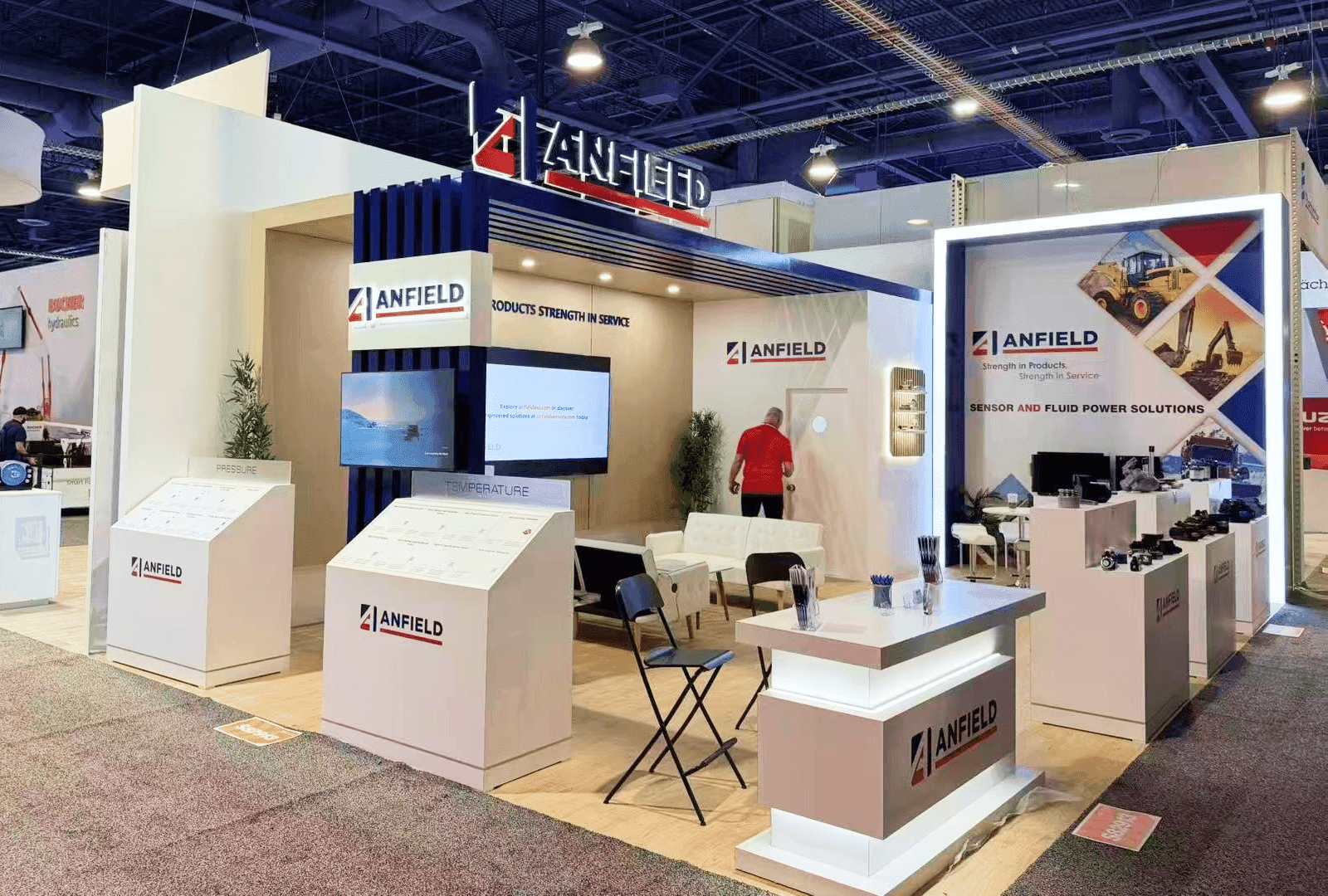
On paper, a 20x20 can feel generous. In real show conditions, it fills up quickly. One main wall, one side display, a counter, a screen, product shelves, and two or three conversations happening at once can change the feel of the booth fast. What looked balanced in the design stage can start to feel tight once actual products and people are inside it.
That is especially true for automotive aftermarket exhibitors. AAPEX is built around products, parts, tools, equipment, supplies, and service categories. If your team is bringing a narrow product range with a few strong hero items, a 20x20 can stay clean and effective. If you are bringing multiple categories, several shelves of packaged items, comparison displays, or technical demo pieces, the booth usually needs more separation than you think.
A simple rule helps here:
choose 20x20 if the booth tells one clear story
choose 30x40 if the booth needs to tell several stories without crowding itself
A 20x20 works best when the booth is focused
A 20x20 is often the right size for exhibitors who want clarity more than scale.
That usually means one clear product direction, one strong branded wall, one clean presentation zone, and a meeting setup that stays simple. At AAPEX, this can work well for brands showing a focused product family, a smaller number of high-priority SKUs, or a lineup that does not need to be broken into multiple zones.
The advantage of a 20x20 is discipline. It forces the booth to stay edited. Visitors can read the message quickly, understand where to look, and step into the space without hesitation. If the team keeps the display logic tight, a 20x20 can feel sharper than a larger booth that tries to do too much.
It also tends to be easier to install. Less structure, fewer zones, and fewer competing surfaces usually make setup cleaner. For exhibitors working with a Las Vegas trade show booth builder, this often means fewer chances for product placement, graphics, and visitor flow to fight each other during setup.
A 30x40 makes more sense when the booth needs layers
A 30x40 usually becomes the better choice when the booth has to handle more than one type of interaction at the same time.
That may mean one area for packaged product display, another for larger components, a clearer demo position, and enough open space for several buyer conversations without blocking the aisle. It may also mean separating distributors, sales meetings, and general walk-up traffic so the booth does not feel like every interaction is happening in the same corner.
This is where a 30x40 island booth layout starts to justify itself. AAPEX sells island booths with a minimum size of 20' x 20', which already tells you that once an exhibitor wants a more open, multi-side presentation, the planning usually shifts from “fit everything in” to “make the booth work from several directions.”
For automotive aftermarket exhibitors, that extra room matters when the products need to be grouped clearly rather than stacked tightly. A larger footprint does not automatically make the booth better. But it does make it easier to divide the experience into sections that buyers can read quickly.
Traffic flow matters as much as square footage
At AAPEX, a booth can fail even when it looks good.
The reason is usually flow. Buyers do not enter the booth to admire the structure. They want to understand the offer quickly, compare products, ask a few questions, and decide whether to stay longer. If the front edge is blocked, if samples are too close to the aisle, or if meetings spill into the entry path, the booth starts losing people before the sales team gets a chance to talk.
A 20x20 demands tighter control here. The entry has to stay open. The first message has to be obvious. The booth cannot afford too many freestanding pieces near the front. In a 30x40, you get more forgiveness. There is more room to create a clean front read, a clearer path inward, and better distance between browsing and talking.
That distinction matters at AAPEX because the show floor is large, category-driven, and built for business conversations. If your team expects multiple buyer interactions at once, the booth size should reflect that from the start.
Meeting space should be planned early, not squeezed in later
One of the most common layout mistakes is treating meeting space like an add-on.
The product walls get planned first. The counters get placed. The graphics are locked. Then someone asks where the actual conversations are supposed to happen. At that point, the answer is usually: wherever there is room left.
That approach rarely works well at AAPEX. Buyers often want a few focused minutes, especially when the products involve fitment, category differences, technical details, or distribution questions. If the booth is expected to support those discussions, then the meeting area needs to be part of the layout from the beginning.
In a 20x20, that often means keeping the meeting format compact. A small standing table or one contained discussion corner is usually enough. In a 30x40, the booth can hold a clearer separation between product browsing and actual conversation. That tends to make the whole space feel calmer, especially when more than one buyer stops in at the same time.
The setup plan should influence the size decision too
Booth size is not only a design issue. It is also an installation issue.
A smaller booth is usually easier to stage, easier to check, and easier to finish with fewer moving parts. A larger booth gives you more opportunity, but it also creates more chances for setup to slow down if the sequence is not tightly managed.
That matters because AAPEX splits exhibitor services by venue. The official site directs exhibitors to separate service guides for Venetian Expo and AAPEX Forum, with venue-specific information tied to booth ranges and service access. In practice, that means layout, freight planning, and install sequencing should be matched to the actual venue early, not handled as an afterthought.
This is where logistics and pre-show coordination becomes part of the booth-size discussion. If the booth needs more shelving, more crates, more product groups, more demo support, and more setup steps, that should influence the footprint decision. Sometimes the larger booth is worth it because it gives the installation plan room to work. Other times, the smaller booth performs better because it keeps the whole project tighter and cleaner.
Choose the size that matches how the booth will actually perform
There is no standard answer that says every AAPEX exhibitor should move up to 30x40.
A focused exhibitor with a clear product story can do very well in a 20x20. In some cases, it is the stronger choice because it keeps the booth readable and prevents unnecessary complexity. But if the team needs to show several product groups, support more conversations, and avoid cramming display, demo, and meetings into one small area, then 30x40 usually gives the booth a better chance to perform.
The right booth size is the one that supports the way your team plans to sell on the floor.
If you need one clean presentation and a controlled visitor path, start with 20x20.
If you need multiple zones, more breathing room, and better separation between products and conversations, 30x40 is often the smarter move.
At AAPEX, that decision has less to do with ambition and more to do with fit.
Planning to exhibit at AAPEX in Las Vegas? See how a Las Vegas trade show booth builder can help you choose the right booth size, shape the traffic flow, and build a layout that works for automotive aftermarket products.
Choosing a booth size for AAPEX is not really about picking the bigger footprint if the budget allows. It is about choosing the size that matches how your team will actually use the space once the show opens.
That matters at AAPEX because this is a large business event for the automotive aftermarket, not a casual consumer expo. AAPEX 2026 is scheduled for November 3–5, 2026 in Las Vegas at The Venetian Expo and AAPEX Forum / Caesars Forum, and the show floor is built around broad product and service categories so buyers can move booth to booth by what they are looking for. The event also promotes more than 1,400 product categories on the floor, which means exhibitors are competing in an environment where visitors compare a lot of products quickly.
So the real question is not “Is 30x40 better than 20x20?”
The real question is: what does your booth need to do?
If your team mainly needs to show a focused product line, stop buyers cleanly, and hold a few short conversations, a 20x20 trade show booth layout can be the better choice. If you need to show several product groups, support more than one conversation at a time, and keep the booth from feeling compressed, a 30x40 island booth layout usually gives you more room to work with.
Start with the product count, not the rendering
The easiest way to make the wrong booth decision is to look at a rendering before looking at the product list.
On paper, a 20x20 can feel generous. In real show conditions, it fills up quickly. One main wall, one side display, a counter, a screen, product shelves, and two or three conversations happening at once can change the feel of the booth fast. What looked balanced in the design stage can start to feel tight once actual products and people are inside it.
That is especially true for automotive aftermarket exhibitors. AAPEX is built around products, parts, tools, equipment, supplies, and service categories. If your team is bringing a narrow product range with a few strong hero items, a 20x20 can stay clean and effective. If you are bringing multiple categories, several shelves of packaged items, comparison displays, or technical demo pieces, the booth usually needs more separation than you think.
A simple rule helps here:
choose 20x20 if the booth tells one clear story
choose 30x40 if the booth needs to tell several stories without crowding itself
A 20x20 works best when the booth is focused
A 20x20 is often the right size for exhibitors who want clarity more than scale.
That usually means one clear product direction, one strong branded wall, one clean presentation zone, and a meeting setup that stays simple. At AAPEX, this can work well for brands showing a focused product family, a smaller number of high-priority SKUs, or a lineup that does not need to be broken into multiple zones.
The advantage of a 20x20 is discipline. It forces the booth to stay edited. Visitors can read the message quickly, understand where to look, and step into the space without hesitation. If the team keeps the display logic tight, a 20x20 can feel sharper than a larger booth that tries to do too much.
It also tends to be easier to install. Less structure, fewer zones, and fewer competing surfaces usually make setup cleaner. For exhibitors working with a Las Vegas trade show booth builder, this often means fewer chances for product placement, graphics, and visitor flow to fight each other during setup.
A 30x40 makes more sense when the booth needs layers
A 30x40 usually becomes the better choice when the booth has to handle more than one type of interaction at the same time.
That may mean one area for packaged product display, another for larger components, a clearer demo position, and enough open space for several buyer conversations without blocking the aisle. It may also mean separating distributors, sales meetings, and general walk-up traffic so the booth does not feel like every interaction is happening in the same corner.
This is where a 30x40 island booth layout starts to justify itself. AAPEX sells island booths with a minimum size of 20' x 20', which already tells you that once an exhibitor wants a more open, multi-side presentation, the planning usually shifts from “fit everything in” to “make the booth work from several directions.”
For automotive aftermarket exhibitors, that extra room matters when the products need to be grouped clearly rather than stacked tightly. A larger footprint does not automatically make the booth better. But it does make it easier to divide the experience into sections that buyers can read quickly.
Traffic flow matters as much as square footage
At AAPEX, a booth can fail even when it looks good.
The reason is usually flow. Buyers do not enter the booth to admire the structure. They want to understand the offer quickly, compare products, ask a few questions, and decide whether to stay longer. If the front edge is blocked, if samples are too close to the aisle, or if meetings spill into the entry path, the booth starts losing people before the sales team gets a chance to talk.
A 20x20 demands tighter control here. The entry has to stay open. The first message has to be obvious. The booth cannot afford too many freestanding pieces near the front. In a 30x40, you get more forgiveness. There is more room to create a clean front read, a clearer path inward, and better distance between browsing and talking.
That distinction matters at AAPEX because the show floor is large, category-driven, and built for business conversations. If your team expects multiple buyer interactions at once, the booth size should reflect that from the start.
Meeting space should be planned early, not squeezed in later
One of the most common layout mistakes is treating meeting space like an add-on.
The product walls get planned first. The counters get placed. The graphics are locked. Then someone asks where the actual conversations are supposed to happen. At that point, the answer is usually: wherever there is room left.
That approach rarely works well at AAPEX. Buyers often want a few focused minutes, especially when the products involve fitment, category differences, technical details, or distribution questions. If the booth is expected to support those discussions, then the meeting area needs to be part of the layout from the beginning.
In a 20x20, that often means keeping the meeting format compact. A small standing table or one contained discussion corner is usually enough. In a 30x40, the booth can hold a clearer separation between product browsing and actual conversation. That tends to make the whole space feel calmer, especially when more than one buyer stops in at the same time.
The setup plan should influence the size decision too
Booth size is not only a design issue. It is also an installation issue.
A smaller booth is usually easier to stage, easier to check, and easier to finish with fewer moving parts. A larger booth gives you more opportunity, but it also creates more chances for setup to slow down if the sequence is not tightly managed.
That matters because AAPEX splits exhibitor services by venue. The official site directs exhibitors to separate service guides for Venetian Expo and AAPEX Forum, with venue-specific information tied to booth ranges and service access. In practice, that means layout, freight planning, and install sequencing should be matched to the actual venue early, not handled as an afterthought.
This is where logistics and pre-show coordination becomes part of the booth-size discussion. If the booth needs more shelving, more crates, more product groups, more demo support, and more setup steps, that should influence the footprint decision. Sometimes the larger booth is worth it because it gives the installation plan room to work. Other times, the smaller booth performs better because it keeps the whole project tighter and cleaner.
Choose the size that matches how the booth will actually perform
There is no standard answer that says every AAPEX exhibitor should move up to 30x40.
A focused exhibitor with a clear product story can do very well in a 20x20. In some cases, it is the stronger choice because it keeps the booth readable and prevents unnecessary complexity. But if the team needs to show several product groups, support more conversations, and avoid cramming display, demo, and meetings into one small area, then 30x40 usually gives the booth a better chance to perform.
The right booth size is the one that supports the way your team plans to sell on the floor.
If you need one clean presentation and a controlled visitor path, start with 20x20.
If you need multiple zones, more breathing room, and better separation between products and conversations, 30x40 is often the smarter move.
At AAPEX, that decision has less to do with ambition and more to do with fit.
Planning to exhibit at AAPEX in Las Vegas? See how a Las Vegas trade show booth builder can help you choose the right booth size, shape the traffic flow, and build a layout that works for automotive aftermarket products.
Exhibition Cases
Message
Leave your message and we will get back to you ASAP
Send a Message
We’ll Be in Touch!
Message
Leave your message and we will get back to you ASAP
Address:
4915 Steptoe Street #300
Las Vegas, NV 89122