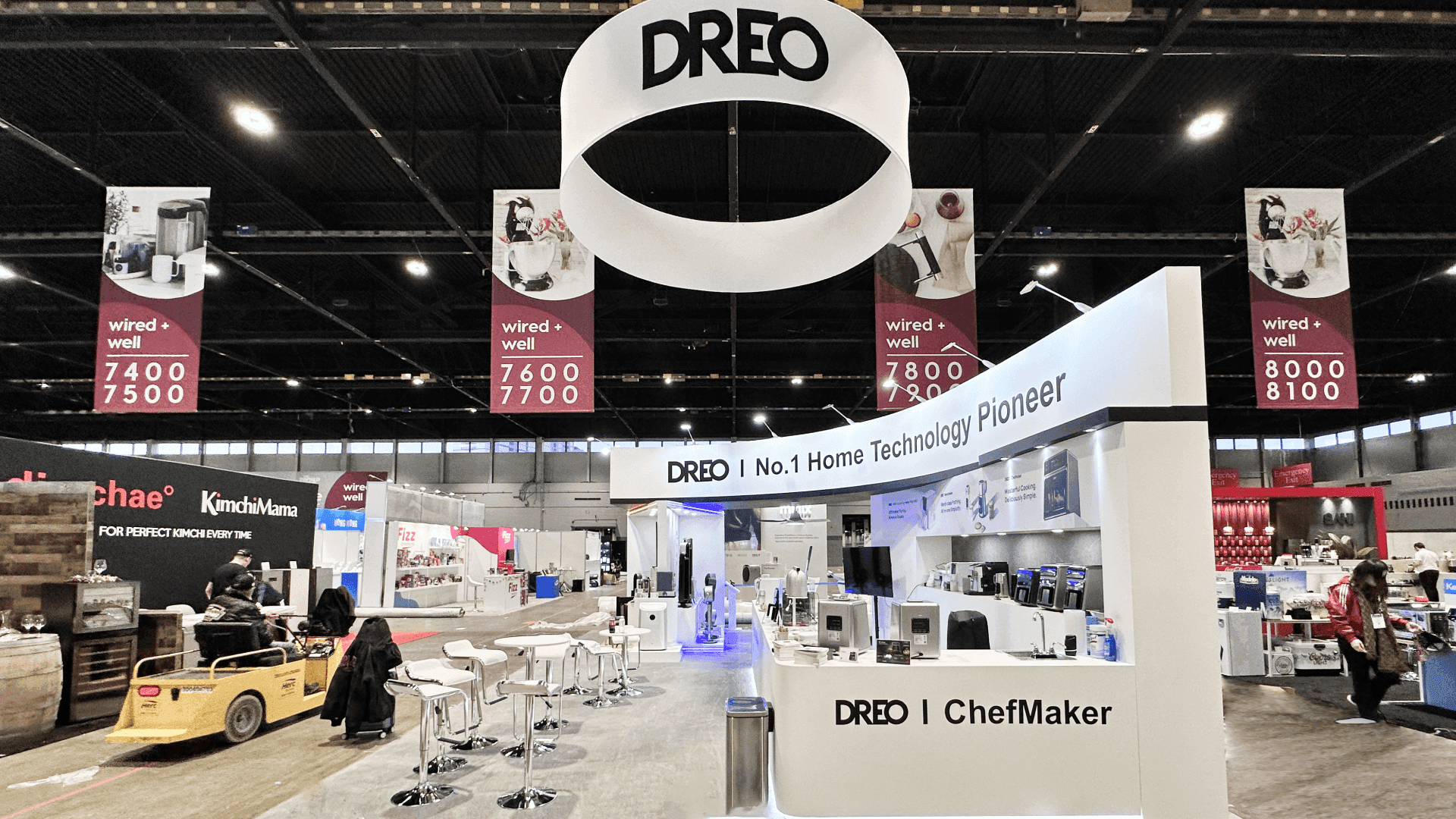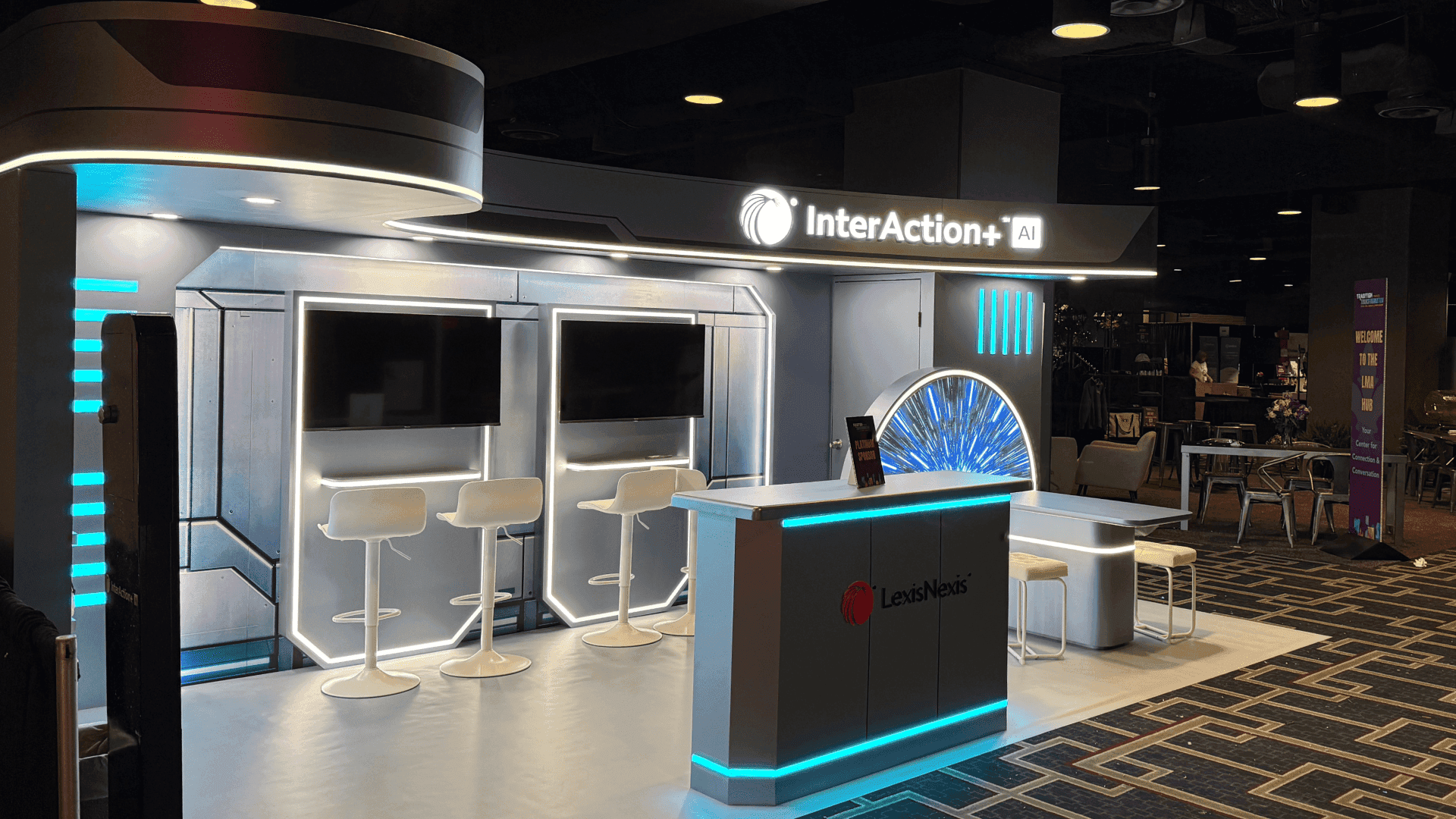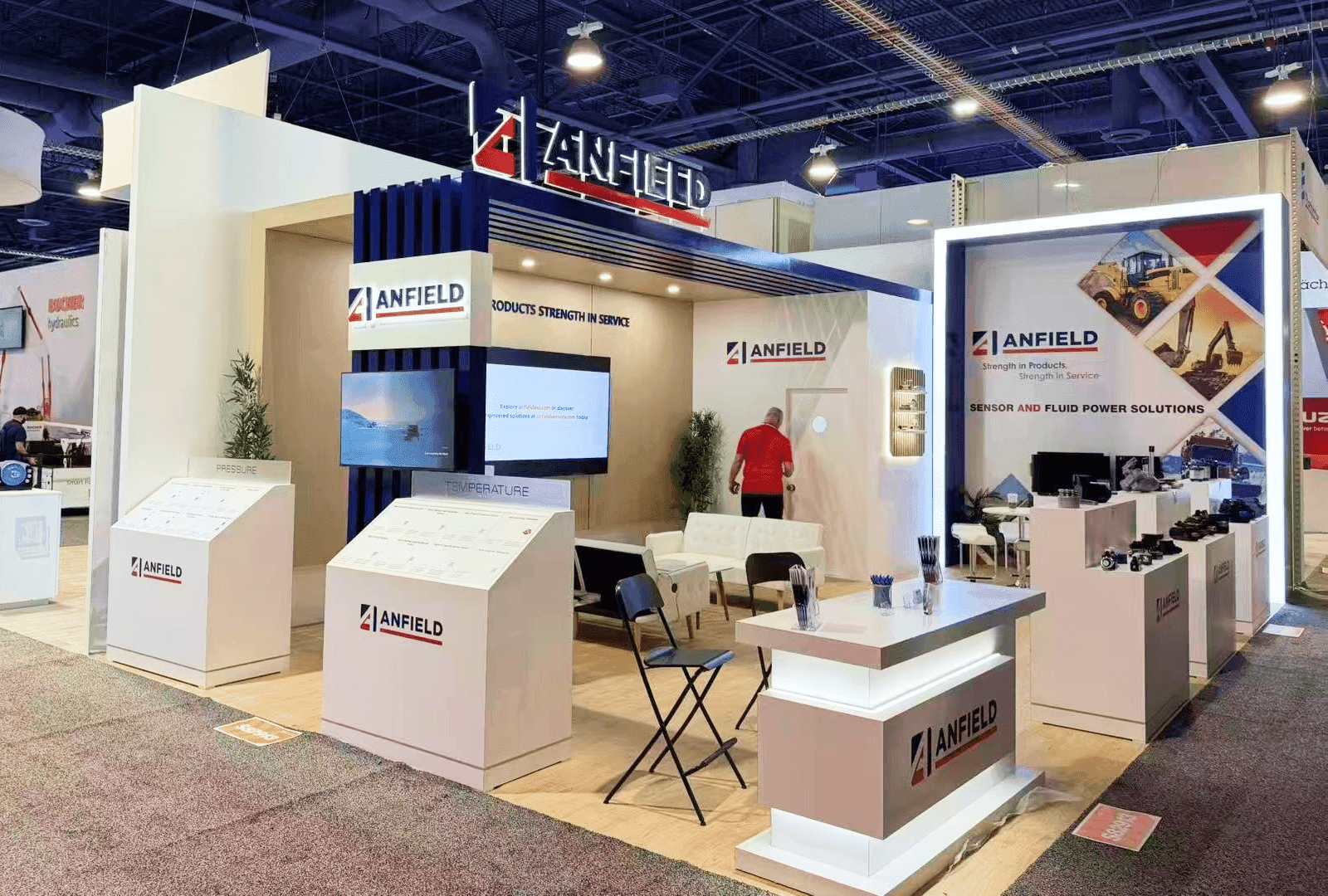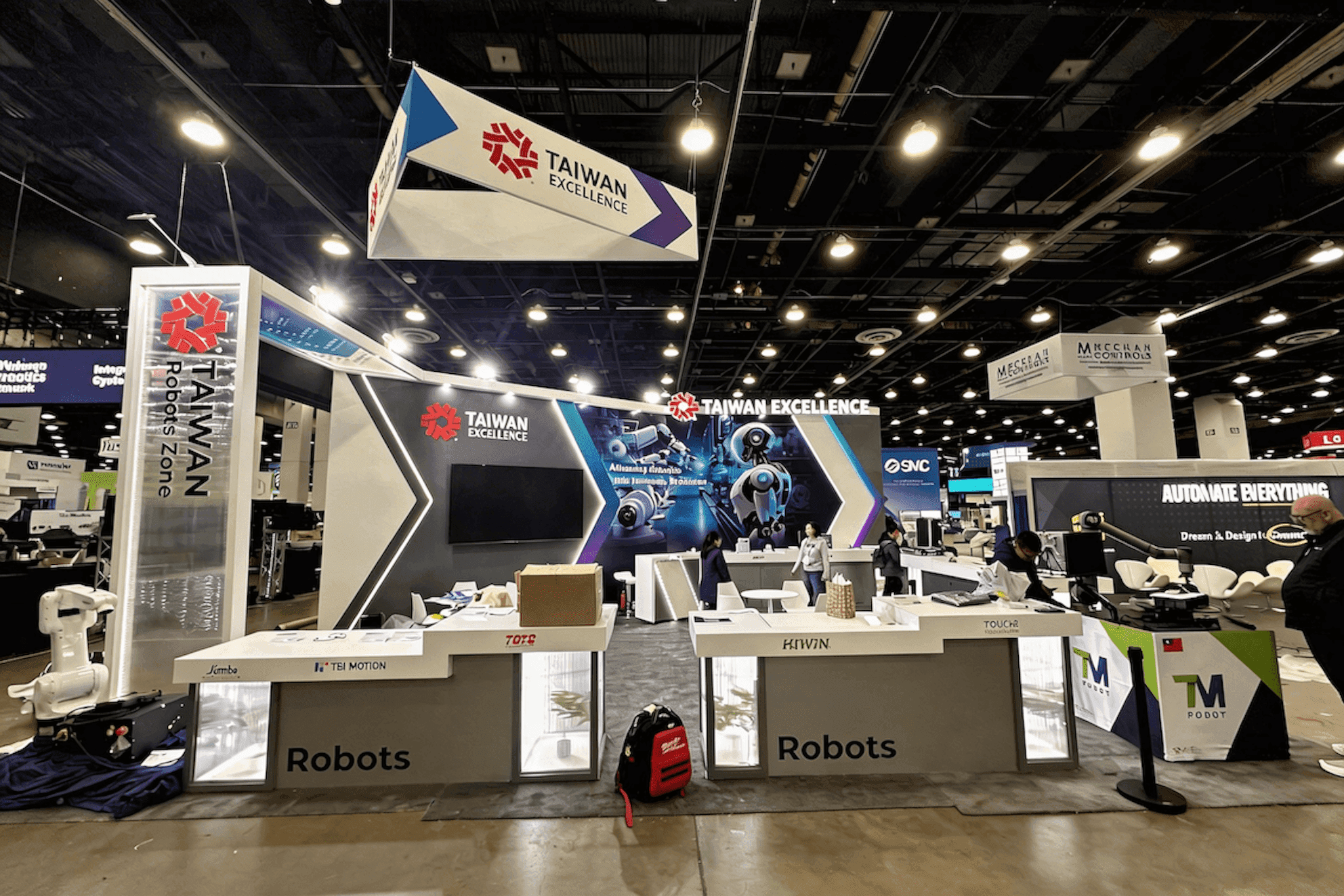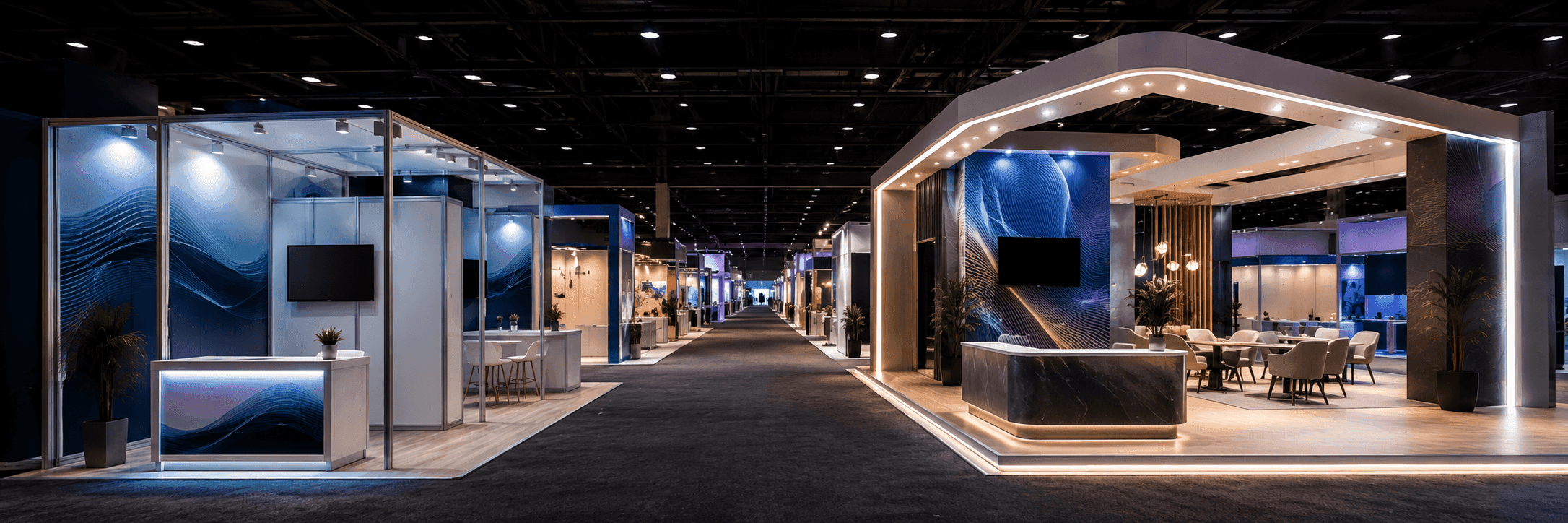
Trade show booth structure being staged on the LVCC show floor with freight cases, crew activity, and installation setup for a Las Vegas exhibition project

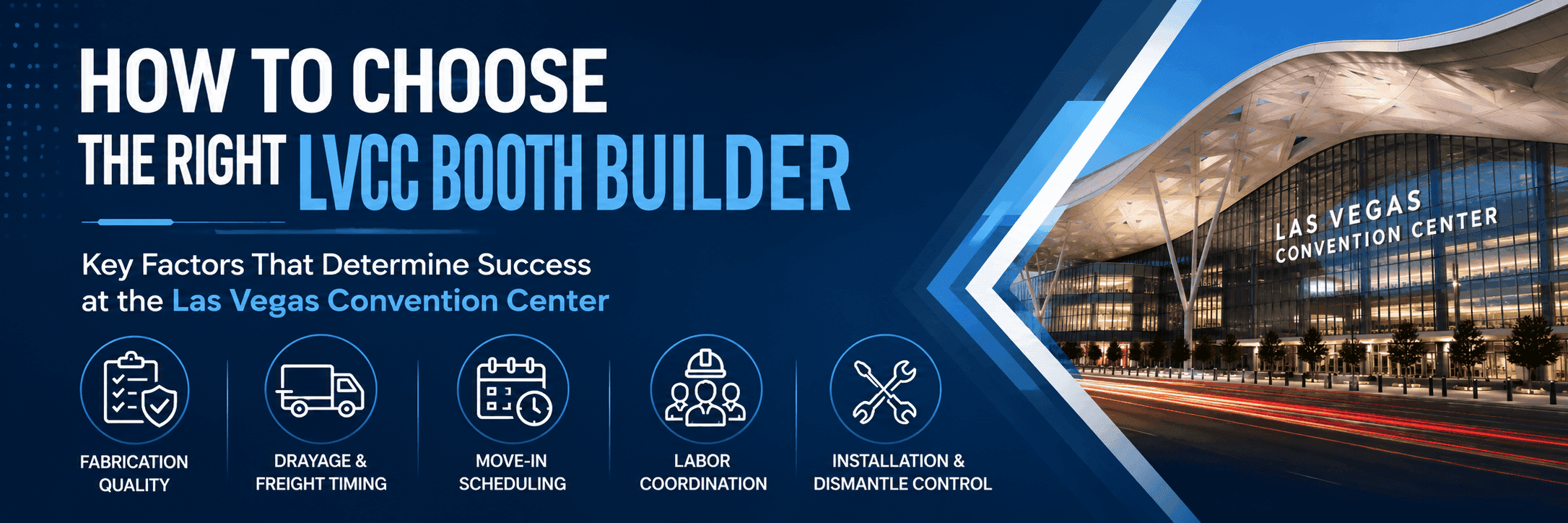
How to Choose a Las Vegas Trade Show Booth Builder for LVCC Shows

How to Choose a Las Vegas Trade Show Booth Builder for LVCC Shows

Circle Exhibit Team

Industry professionals

Exhibition industry professional dedicated to delivering the latest insights and curated recommendations to you.

Exhibition industry professional dedicated to delivering the latest insights and curated recommendations to you.

A real booth builder for LVCC shows is judged by show-floor execution, not only by design renderings. The strongest teams understand booth fabrication, prebuild checks, drayage, move-in scheduling, union labor coordination, and installation control inside Las Vegas venue conditions.

A real booth builder for LVCC shows is judged by show-floor execution, not only by design renderings. The strongest teams understand booth fabrication, prebuild checks, drayage, move-in scheduling, union labor coordination, and installation control inside Las Vegas venue conditions.

A real booth builder for LVCC shows is judged by show-floor execution, not only by design renderings. The strongest teams understand booth fabrication, prebuild checks, drayage, move-in scheduling, union labor coordination, and installation control inside Las Vegas venue conditions.

A real LVCC booth builder is tested on the floor, not in the rendering

A lot of exhibitors begin the search the same way.

They compare design styles.
They review past booth images.
They look at renderings and ask whether the booth looks custom, premium, or visually impressive.

That is understandable.

But at the Las Vegas Convention Center, those things are only the beginning. A builder may present strong concept work and still struggle once the project reaches real venue conditions.

At LVCC, the better question is not just:

Can they design a good booth?

It is:

Can they fabricate it, stage it, move it in, coordinate labor, and install it cleanly under actual show-floor pressure?

That is usually what separates a real Las Vegas trade show booth builder from a company that is mostly selling design language.

LVCC changes what “good builder” really means

LVCC is not a generic venue situation.

Large halls, busy move-in windows, freight pressure, drayage handling, labor coordination, and installation timing all affect how a booth actually comes together. That is especially true on major shows where multiple exhibitors are moving at once and the hall is under real operational pressure.

Because of that, a builder for LVCC should be judged on venue execution logic, not just on what the booth looks like in concept.

A builder who understands LVCC should be comfortable discussing things like:

  • drayage and freight timing

  • move-in scheduling

  • labor coordination

  • booth installation sequence

  • how to keep staging under control

  • how fabrication decisions affect field work

Those are the signals that matter.

Booth fabrication quality matters before the booth ever reaches LVCC

One of the clearest early signs of a strong builder is how seriously they handle booth fabrication and prebuild checks.

A builder who really understands LVCC knows that show-floor time is too valuable to waste on preventable shop mistakes. That is why fabrication quality is not just about whether parts get built. It is about whether the booth arrives with enough clarity to install without unnecessary decoding, rework, or uncertainty.

Good questions to ask include:

Do they run prebuild checks?

This helps catch fit, finish, and install-sequence issues before they reach the hall.

Do they think about field sequence during fabrication?

The booth should not only fit together in the shop. It should arrive ready for real install conditions.

Is the packing and labeling logic clear?

At LVCC, the crew should not have to guess what opens first.

A builder who has strong fabrication discipline usually makes the field team’s job easier before the show even starts.
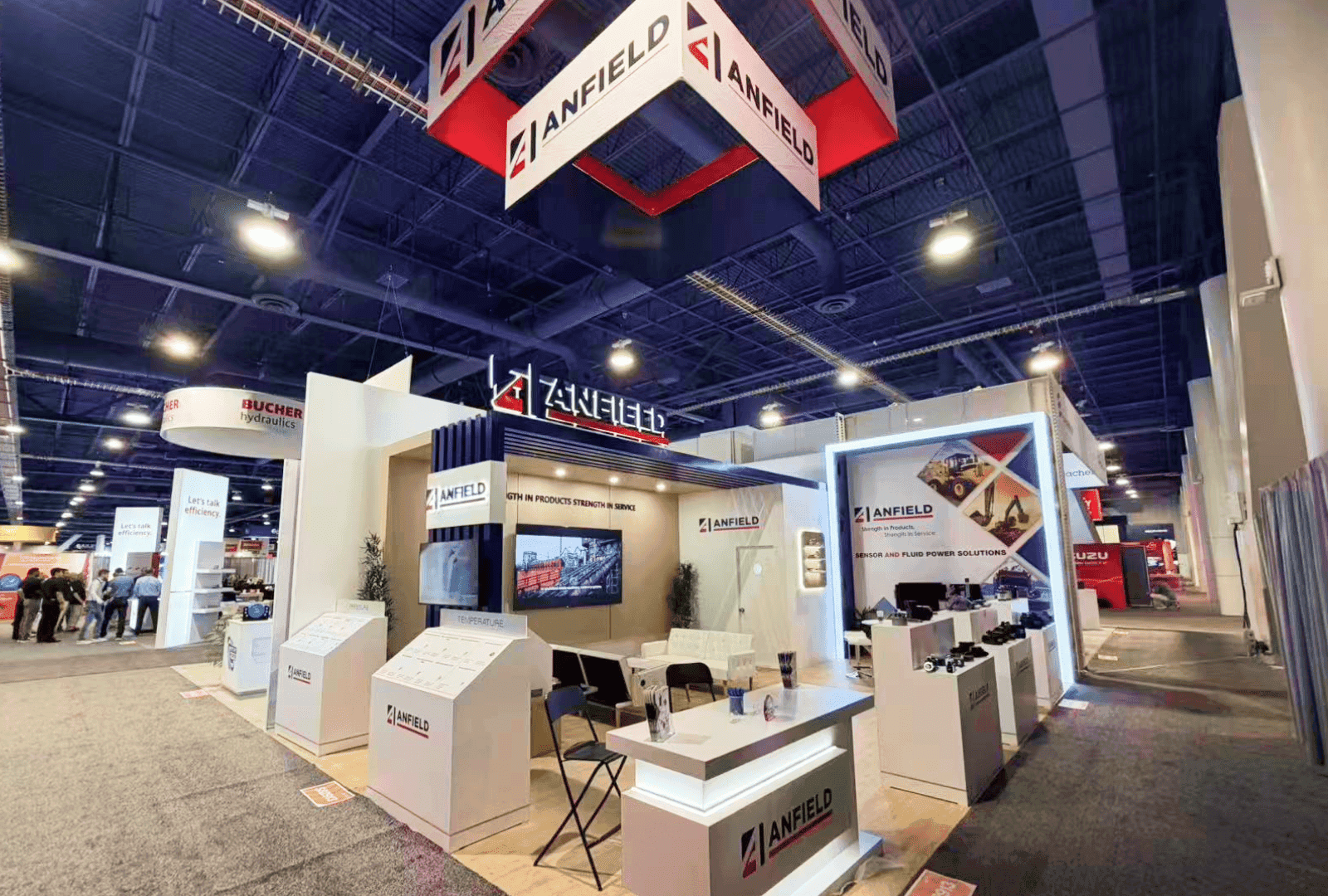
Drayage understanding is a real Las Vegas skill

Many exhibitors underestimate this.

A builder who works LVCC regularly should understand that drayage is not a side issue. It changes how freight becomes usable, how staging pressure builds, and how quickly the booth starts moving from arrival to actual progress.

This matters because freight being “at the venue” is not the same as freight being ready for productive use.

A builder who understands drayage should be thinking about:

  • what materials need to be available first

  • how the booth handles early freight waves

  • how staging should stay workable

  • how not to trap the center of the booth too early

  • how freight timing affects labor efficiency

If a builder speaks only about finished booth appearance and cannot speak clearly about drayage flow, that is usually a warning sign.

Move-in scheduling affects the whole install rhythm

At LVCC, move-in timing is part of booth strategy.

A good builder should be able to explain how the schedule affects:

  • labor readiness

  • freight release order

  • active install phases

  • access protection

  • when sensitive finish work should begin

  • how the booth will avoid early congestion

This matters because a booth does not become controlled simply because the calendar says move-in has started. It becomes controlled when the right tasks happen in the right order.

That is why a builder should be comfortable talking about schedule in a practical way, not just promising that the booth will be “ready on time.”

The stronger answer is usually more specific:

  • what gets built first

  • what gets staged later

  • what needs the cleanest access

  • what must stay protected until the booth is stable

That is real move-in thinking.

Union labor coordination should not sound vague

Another important signal is how a builder talks about labor in a Las Vegas venue context.

On major LVCC shows, labor coordination can directly affect install quality, pacing, and how smoothly the booth moves from one phase to the next. A builder does not need to dramatize that. But they should understand it clearly.

That means they should be able to talk about things like:

  • crew sequencing

  • handoff between tasks

  • how to avoid too many trades colliding in one zone

  • how to keep installation moving cleanly under labor rules and venue conditions

  • how union labor timing affects the booth’s critical path

If the answer is generic—something like “we handle everything”—that is usually not enough.

A builder who really knows LVCC will usually describe labor coordination as an execution system, not as a vague service promise.

Installation coordination is where the real builder shows up

This is where the difference becomes obvious.

A builder may have a strong design team and still lose control on site if the installation phase is weak. At LVCC, that usually becomes visible fast.

This is why on-site installation and dismantle support matters so much.

A real builder should be able to explain:

How the booth will sequence on site

Not everything should open or activate at once.

How the center or hero zone stays protected

The booth should not trap its most important area too early.

How finish work is protected

Sensitive surfaces should not enter unstable conditions too soon.

How dismantle is handled afterward

A builder who only talks about setup but not closeout is not giving the full execution picture.

A good booth builder is not only installing the booth.
They are controlling the conditions around the install.

LVCC experience should sound venue-specific, not generic

This is another useful filter.

A builder who has real LVCC experience should naturally speak in venue-aware language. They should understand that a Las Vegas project is not just “another booth.”

They should be comfortable discussing:

  • hall conditions

  • freight flow

  • move-in constraints

  • drayage handling

  • schedule pressure

  • installation control inside active exhibition halls

They may also reference relevant LVCC show contexts, such as CES in Las Vegas, where fast-read presentation, tighter finish timing, and cleaner demo readiness all raise the importance of strong field execution.

The key is not whether they name-drop shows.

The key is whether they think like someone who has actually worked inside this type of environment.

Ask how they reduce risk before the booth reaches the hall

This is usually a much better question than asking only about visual style.

A stronger builder should have a clear answer to risk prevention.

For example:

How do you reduce install-day surprises?

Prebuild checks and fabrication clarity should be part of the answer.

How do you keep the booth from getting crowded too early?

They should talk about release order, staging, and sequence.

How do you protect the booth’s most important finish areas?

They should explain when sensitive materials enter the process.

How do you handle on-site coordination under LVCC conditions?

They should give practical, not generic, answers.

These questions usually reveal whether the builder is truly execution-minded.

The best builders usually make the project feel calmer, not louder

This is one of the clearest real-world signals.

A strong LVCC builder does not just promise capability. They usually bring a calmer operating logic to the project.

That often shows up as:

  • cleaner fabrication readiness

  • fewer unresolved questions before move-in

  • clearer sequence thinking

  • more disciplined staging

  • less avoidable rework

  • better control of labor and timing

  • fewer moments where the booth has to be “rescued” on site

That is what exhibitors should really be looking for.

Not just a booth that looks impressive in a proposal.

A booth team that makes the live environment easier to manage.

Red flags are usually easy to hear once you know what to listen for

A builder may not be the right LVCC fit if they mostly talk about:

  • visual style without execution detail

  • broad service lists without process clarity

  • “full service” promises without venue-specific planning

  • price first, but sequence and installation last

  • beautiful renderings, but no real explanation of prebuild, drayage, or on-site coordination

Those are not always hard no’s, but they are signs to go deeper.

At LVCC, the real work begins when the booth has to become real under live venue conditions.

If the builder cannot describe that convincingly, the project may end up carrying more risk than it appears to at first.

A practical checklist for choosing the right LVCC builder

If you want a simple framework, start here:

1. Can they explain fabrication discipline clearly?

Ask about prebuild checks, labeling, and field readiness.

2. Do they understand drayage and freight timing?

They should treat it as part of execution, not background shipping.

3. Can they speak concretely about move-in scheduling?

The answer should include sequence, not only deadlines.

4. Do they understand labor coordination in Las Vegas show-floor conditions?

They should be comfortable discussing how the booth stays workable on site.

5. Can they explain installation and dismantle control?

A real builder should think through the whole booth lifecycle.

If the answers feel detailed, grounded, and venue-aware, you are usually closer to the right partner.

Final thought

Choosing a builder for LVCC shows is not really about who produces the nicest renderings.

It is about who can turn a booth into a clean, controlled, buildable reality inside Las Vegas venue conditions.

That means the better builder is usually the one who understands:

  • booth fabrication

  • prebuild checks

  • drayage

  • move-in scheduling

  • labor coordination

  • on-site installation control

  • dismantle planning

Those are the things that decide whether the booth simply exists on paper or actually works on the floor.

At LVCC, that difference matters.

And experienced exhibitors usually feel it very quickly.


Looking for a partner that understands real LVCC booth execution—not just renderings?
Explore our Las Vegas trade show booth builder approach, or get in touch to discuss booth fabrication, move-in planning, and on-site installation support for your next Las Vegas show.

A real LVCC booth builder is tested on the floor, not in the rendering

A lot of exhibitors begin the search the same way.

They compare design styles.
They review past booth images.
They look at renderings and ask whether the booth looks custom, premium, or visually impressive.

That is understandable.

But at the Las Vegas Convention Center, those things are only the beginning. A builder may present strong concept work and still struggle once the project reaches real venue conditions.

At LVCC, the better question is not just:

Can they design a good booth?

It is:

Can they fabricate it, stage it, move it in, coordinate labor, and install it cleanly under actual show-floor pressure?

That is usually what separates a real Las Vegas trade show booth builder from a company that is mostly selling design language.

LVCC changes what “good builder” really means

LVCC is not a generic venue situation.

Large halls, busy move-in windows, freight pressure, drayage handling, labor coordination, and installation timing all affect how a booth actually comes together. That is especially true on major shows where multiple exhibitors are moving at once and the hall is under real operational pressure.

Because of that, a builder for LVCC should be judged on venue execution logic, not just on what the booth looks like in concept.

A builder who understands LVCC should be comfortable discussing things like:

  • drayage and freight timing

  • move-in scheduling

  • labor coordination

  • booth installation sequence

  • how to keep staging under control

  • how fabrication decisions affect field work

Those are the signals that matter.

Booth fabrication quality matters before the booth ever reaches LVCC

One of the clearest early signs of a strong builder is how seriously they handle booth fabrication and prebuild checks.

A builder who really understands LVCC knows that show-floor time is too valuable to waste on preventable shop mistakes. That is why fabrication quality is not just about whether parts get built. It is about whether the booth arrives with enough clarity to install without unnecessary decoding, rework, or uncertainty.

Good questions to ask include:

Do they run prebuild checks?

This helps catch fit, finish, and install-sequence issues before they reach the hall.

Do they think about field sequence during fabrication?

The booth should not only fit together in the shop. It should arrive ready for real install conditions.

Is the packing and labeling logic clear?

At LVCC, the crew should not have to guess what opens first.

A builder who has strong fabrication discipline usually makes the field team’s job easier before the show even starts.

Drayage understanding is a real Las Vegas skill

Many exhibitors underestimate this.

A builder who works LVCC regularly should understand that drayage is not a side issue. It changes how freight becomes usable, how staging pressure builds, and how quickly the booth starts moving from arrival to actual progress.

This matters because freight being “at the venue” is not the same as freight being ready for productive use.

A builder who understands drayage should be thinking about:

  • what materials need to be available first

  • how the booth handles early freight waves

  • how staging should stay workable

  • how not to trap the center of the booth too early

  • how freight timing affects labor efficiency

If a builder speaks only about finished booth appearance and cannot speak clearly about drayage flow, that is usually a warning sign.

Move-in scheduling affects the whole install rhythm

At LVCC, move-in timing is part of booth strategy.

A good builder should be able to explain how the schedule affects:

  • labor readiness

  • freight release order

  • active install phases

  • access protection

  • when sensitive finish work should begin

  • how the booth will avoid early congestion

This matters because a booth does not become controlled simply because the calendar says move-in has started. It becomes controlled when the right tasks happen in the right order.

That is why a builder should be comfortable talking about schedule in a practical way, not just promising that the booth will be “ready on time.”

The stronger answer is usually more specific:

  • what gets built first

  • what gets staged later

  • what needs the cleanest access

  • what must stay protected until the booth is stable

That is real move-in thinking.

Union labor coordination should not sound vague

Another important signal is how a builder talks about labor in a Las Vegas venue context.

On major LVCC shows, labor coordination can directly affect install quality, pacing, and how smoothly the booth moves from one phase to the next. A builder does not need to dramatize that. But they should understand it clearly.

That means they should be able to talk about things like:

  • crew sequencing

  • handoff between tasks

  • how to avoid too many trades colliding in one zone

  • how to keep installation moving cleanly under labor rules and venue conditions

  • how union labor timing affects the booth’s critical path

If the answer is generic—something like “we handle everything”—that is usually not enough.

A builder who really knows LVCC will usually describe labor coordination as an execution system, not as a vague service promise.

Installation coordination is where the real builder shows up

This is where the difference becomes obvious.

A builder may have a strong design team and still lose control on site if the installation phase is weak. At LVCC, that usually becomes visible fast.

This is why on-site installation and dismantle support matters so much.

A real builder should be able to explain:

How the booth will sequence on site

Not everything should open or activate at once.

How the center or hero zone stays protected

The booth should not trap its most important area too early.

How finish work is protected

Sensitive surfaces should not enter unstable conditions too soon.

How dismantle is handled afterward

A builder who only talks about setup but not closeout is not giving the full execution picture.

A good booth builder is not only installing the booth.
They are controlling the conditions around the install.

LVCC experience should sound venue-specific, not generic

This is another useful filter.

A builder who has real LVCC experience should naturally speak in venue-aware language. They should understand that a Las Vegas project is not just “another booth.”

They should be comfortable discussing:

  • hall conditions

  • freight flow

  • move-in constraints

  • drayage handling

  • schedule pressure

  • installation control inside active exhibition halls

They may also reference relevant LVCC show contexts, such as CES in Las Vegas, where fast-read presentation, tighter finish timing, and cleaner demo readiness all raise the importance of strong field execution.

The key is not whether they name-drop shows.

The key is whether they think like someone who has actually worked inside this type of environment.

Ask how they reduce risk before the booth reaches the hall

This is usually a much better question than asking only about visual style.

A stronger builder should have a clear answer to risk prevention.

For example:

How do you reduce install-day surprises?

Prebuild checks and fabrication clarity should be part of the answer.

How do you keep the booth from getting crowded too early?

They should talk about release order, staging, and sequence.

How do you protect the booth’s most important finish areas?

They should explain when sensitive materials enter the process.

How do you handle on-site coordination under LVCC conditions?

They should give practical, not generic, answers.

These questions usually reveal whether the builder is truly execution-minded.

The best builders usually make the project feel calmer, not louder

This is one of the clearest real-world signals.

A strong LVCC builder does not just promise capability. They usually bring a calmer operating logic to the project.

That often shows up as:

  • cleaner fabrication readiness

  • fewer unresolved questions before move-in

  • clearer sequence thinking

  • more disciplined staging

  • less avoidable rework

  • better control of labor and timing

  • fewer moments where the booth has to be “rescued” on site

That is what exhibitors should really be looking for.

Not just a booth that looks impressive in a proposal.

A booth team that makes the live environment easier to manage.

Red flags are usually easy to hear once you know what to listen for

A builder may not be the right LVCC fit if they mostly talk about:

  • visual style without execution detail

  • broad service lists without process clarity

  • “full service” promises without venue-specific planning

  • price first, but sequence and installation last

  • beautiful renderings, but no real explanation of prebuild, drayage, or on-site coordination

Those are not always hard no’s, but they are signs to go deeper.

At LVCC, the real work begins when the booth has to become real under live venue conditions.

If the builder cannot describe that convincingly, the project may end up carrying more risk than it appears to at first.

A practical checklist for choosing the right LVCC builder

If you want a simple framework, start here:

1. Can they explain fabrication discipline clearly?

Ask about prebuild checks, labeling, and field readiness.

2. Do they understand drayage and freight timing?

They should treat it as part of execution, not background shipping.

3. Can they speak concretely about move-in scheduling?

The answer should include sequence, not only deadlines.

4. Do they understand labor coordination in Las Vegas show-floor conditions?

They should be comfortable discussing how the booth stays workable on site.

5. Can they explain installation and dismantle control?

A real builder should think through the whole booth lifecycle.

If the answers feel detailed, grounded, and venue-aware, you are usually closer to the right partner.

Final thought

Choosing a builder for LVCC shows is not really about who produces the nicest renderings.

It is about who can turn a booth into a clean, controlled, buildable reality inside Las Vegas venue conditions.

That means the better builder is usually the one who understands:

  • booth fabrication

  • prebuild checks

  • drayage

  • move-in scheduling

  • labor coordination

  • on-site installation control

  • dismantle planning

Those are the things that decide whether the booth simply exists on paper or actually works on the floor.

At LVCC, that difference matters.

And experienced exhibitors usually feel it very quickly.


Looking for a partner that understands real LVCC booth execution—not just renderings?
Explore our Las Vegas trade show booth builder approach, or get in touch to discuss booth fabrication, move-in planning, and on-site installation support for your next Las Vegas show.

Message

Leave your message and we will get back to you ASAP

Send a Message

We’ll Be in Touch!

Message

Leave your message and we will get back to you ASAP

Address:

4915 Steptoe Street #300

Las Vegas, NV 89122