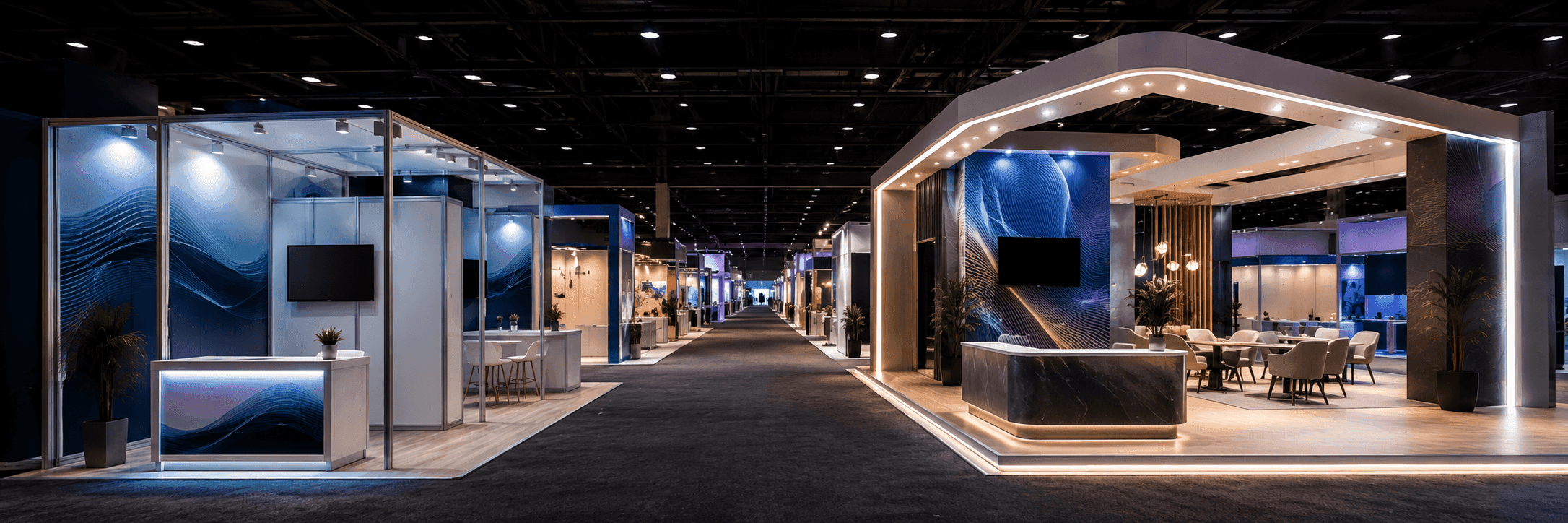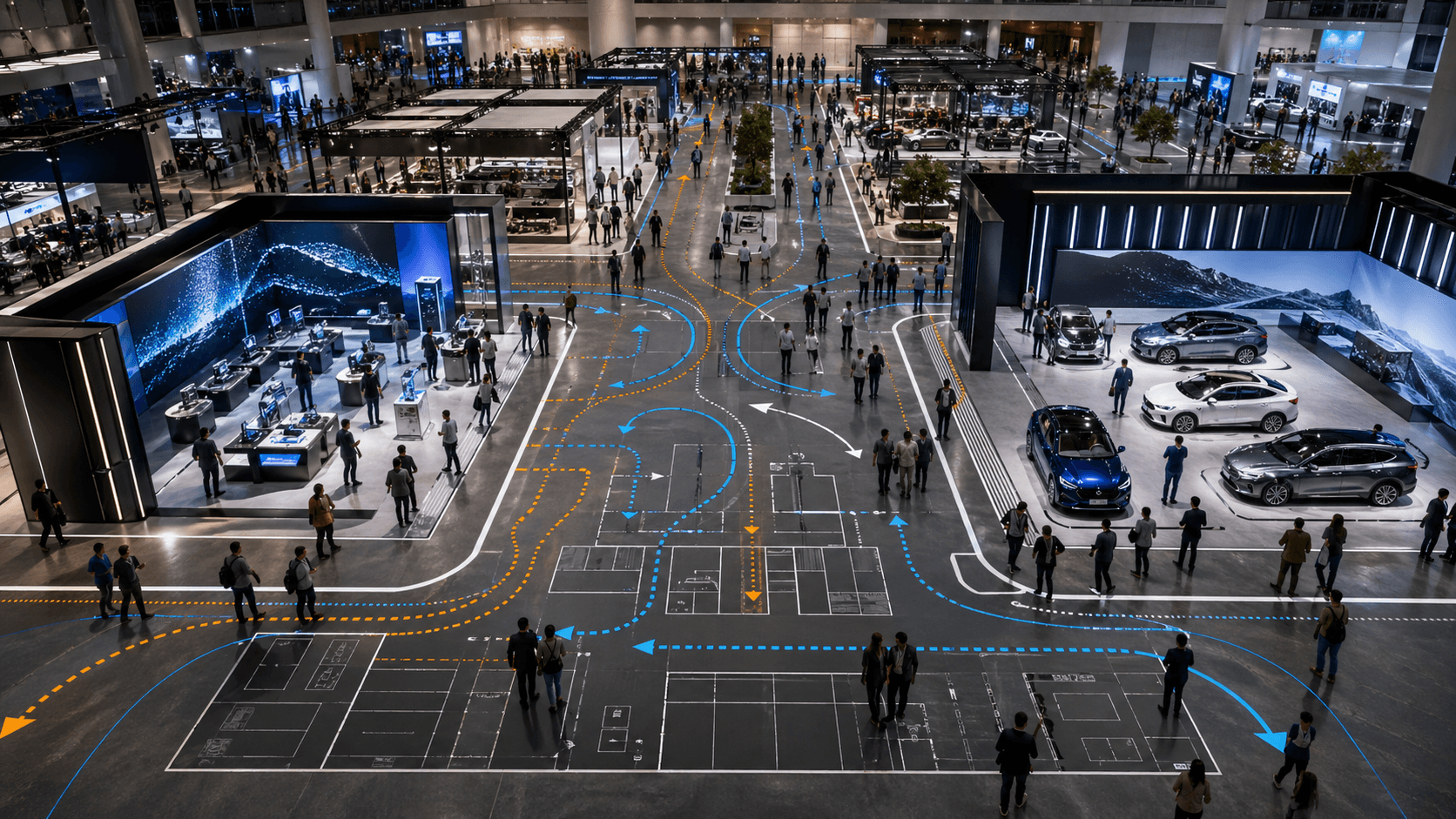
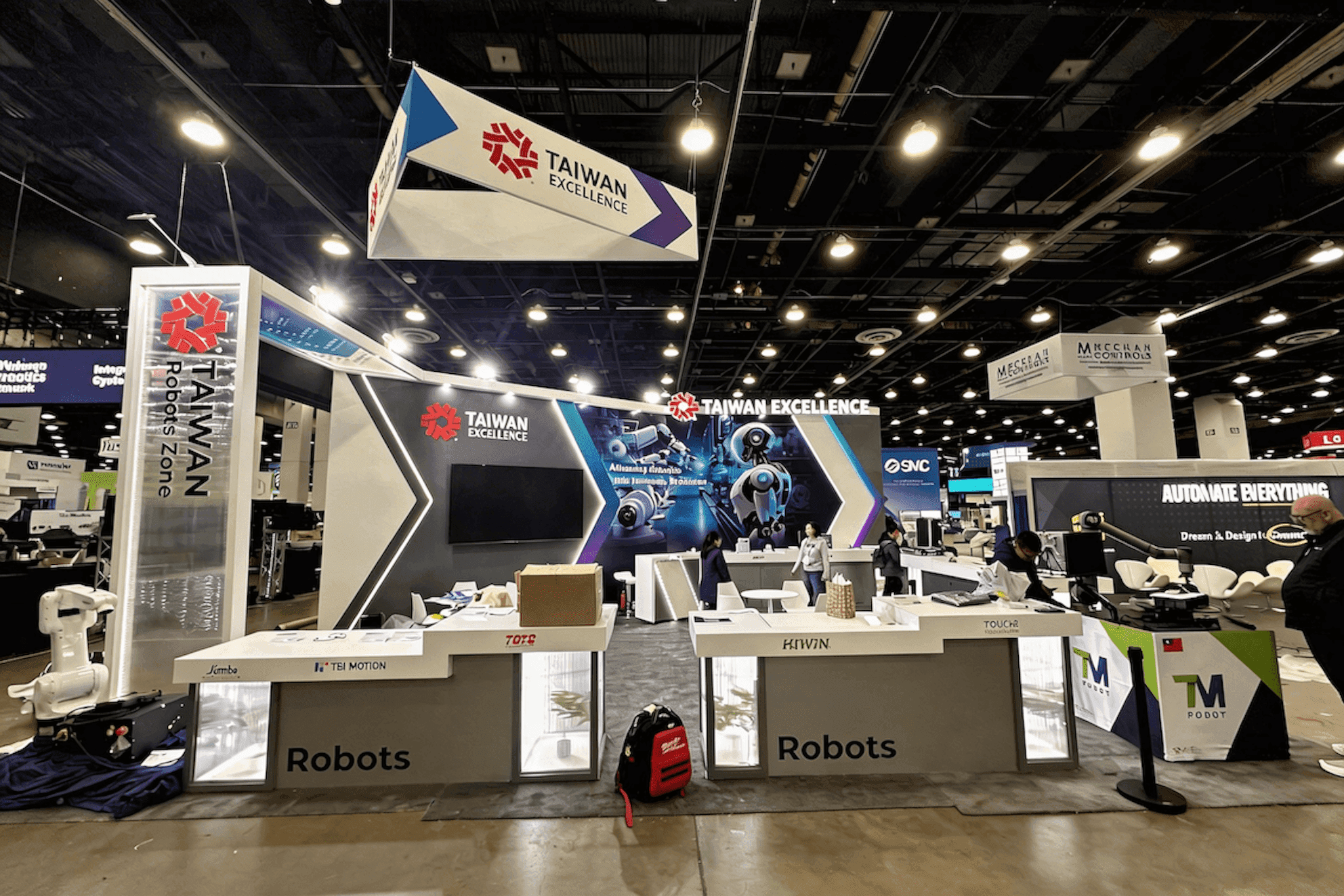
Las Vegas Convention Center hall planning graphic showing booth traffic paths, aisle movement, and visitor flow around large trade show booth layouts

How LVCC Hall Movement Changes Booth Planning for Large Tech and Automotive Shows

How LVCC Hall Movement Changes Booth Planning for Large Tech and Automotive Shows

Circle Exhibit Team

Industry professionals

Exhibition industry professional dedicated to delivering the latest insights and curated recommendations to you.

Exhibition industry professional dedicated to delivering the latest insights and curated recommendations to you.

At LVCC, hall movement affects where and how a booth should open to traffic. A booth plan that ignores corridor pressure, aisle direction, and visitor flow often works worse on the floor than it did on paper.

At LVCC, hall movement affects where and how a booth should open to traffic. A booth plan that ignores corridor pressure, aisle direction, and visitor flow often works worse on the floor than it did on paper.

At LVCC, hall movement affects where and how a booth should open to traffic. A booth plan that ignores corridor pressure, aisle direction, and visitor flow often works worse on the floor than it did on paper.

A booth does not open into empty space at LVCC

That is the first planning mistake.

At the Las Vegas Convention Center, a booth is never just opening into “the aisle.” It is opening into a moving pattern of arrivals, slowdowns, pauses, cross-traffic, and directional flow shaped by the hall around it.

That matters more on large tech and automotive shows because people do not approach every booth evenly. They arrive in waves. They cut across aisles. They slow near major displays. They keep moving if the booth edge feels confusing.

That is why LVCC hall movement changes booth planning from the start.

The hall decides more than exhibitors think

A lot of teams plan from inside the booth out.

They focus on:

  • the screen wall

  • the display product

  • the meeting area

  • the storage wall

  • the demo zone

All of that matters.

But at LVCC, the outside pressure around the booth often decides whether those things actually work. If the hall movement is wrong for the opening, the booth may still look strong in renderings and still underperform once real traffic starts hitting the edge.

The booth does not only need a good layout.
It needs a layout that makes sense in the hall it sits in.

Hall movement changes where the booth should feel open

This is one of the most practical design shifts.

Some booths need a broad, obvious entry.
Others need a more controlled front edge with a clearer first stop.
Some need the main attraction pulled slightly inward so traffic does not stall at the aisle line.

That decision depends heavily on how people are moving in the hall.

If the aisle carries fast lateral flow, the booth may need a cleaner, simpler first read. If the hall naturally creates pause points, the booth may benefit from a stronger front-facing moment. If the traffic tends to cross diagonally, the opening angle may matter more than the raw width.

That is why “open booth” planning is never one-size-fits-all at LVCC.

Large tech and automotive shows behave differently

This is where many layouts need to become more specific.

A large tech event like CES in Las Vegas often brings faster scanning behavior. People move quickly, compare quickly, and decide quickly whether a booth looks worth stepping into. The booth edge usually has to explain itself faster.

A large automotive event like SEMA Show often creates stronger visual stops around vehicles, parts walls, and category displays. The booth may attract attention more easily, but it can also trap traffic more easily if the center zone or entry logic is weak.

Both happen at LVCC.
But they create different kinds of hall pressure.

That is why the same booth logic does not always travel well between tech and automotive contexts.

Booth openings should respond to directional flow, not only booth size

This is where teams often oversimplify.

They assume:

  • big booth = big open front

  • small booth = tighter front

That is not always wrong, but it is incomplete.

A booth can have enough size and still open badly if it ignores the way traffic actually moves past it. Sometimes a slightly more controlled entry works better because it turns passing flow into a clearer stop. Sometimes a too-wide opening weakens the booth because visitors do not know where the first meaningful moment is supposed to happen.

This is especially true in a 20x20 trade show booth.

In a 20x20, every opening decision carries more weight. The booth has less room to recover from weak edge planning. If the first stop happens in the wrong place, the whole booth can begin to feel compressed very quickly.

That is why hall movement matters even more in smaller footprints.

The hall changes how the first stop should happen

A lot of booths fail at the exact same moment:

the visitor slows down, but does not quite step in.

At LVCC, that usually happens when the booth edge is doing too many things at once. A passing visitor sees a screen, a product, a meeting table, a storage wall, and a crowd line all competing for the same first read.

That creates hesitation.

A stronger booth usually gives the hall a cleaner answer:

  • this is where to look first

  • this is where to step

  • this is what the booth is about

  • this is where the next layer begins

If the hall movement is fast, that answer needs to come even sooner.

Traffic pressure changes where demo zones should sit

This matters a lot on both CES and SEMA-style booths.

At CES, demo zones often work better when they sit just inside the booth instead of directly on the aisle edge. That gives the interaction enough room to happen without spilling immediately into passing traffic.

At SEMA, display-heavy booths often need to protect the strongest vehicle or product angle from getting flattened by side pressure or crowded by people who stop too early at the front.

In both cases, the booth needs to understand one thing:

the hall is already shaping the crowd before the booth gets a chance to.

That is why demo placement, display angle, and traffic capture all have to respond to hall movement instead of pretending the booth controls everything by itself.

Corners, aisle crossings, and pause points change booth behavior

Not all floor positions behave the same way, even inside the same hall.

A booth near a crossing may receive more diagonal attention.
A booth near a major path may deal with faster movement and shorter dwell time.
A booth near a natural slowdown point may collect more passive traffic than expected.

That is why the same design can feel very different depending on where it sits in LVCC.

The booth planner has to ask:

  • Where are people coming from?

  • Where are they headed next?

  • Where are they likely to slow down?

  • Where are they cutting across instead of approaching straight?

Those answers often shape booth success more than one more wall or one more feature ever will.

Builder planning matters because hall movement affects the whole booth system

This is one reason exhibitors benefit from working with a Las Vegas trade show booth builder that understands venue movement, not just booth design.

Because hall pressure affects:

  • entry condition

  • screen visibility

  • demo spacing

  • meeting placement

  • product sightlines

  • queue behavior

  • how quickly the booth feels crowded

A booth that looks balanced in isolation can still open badly if no one planned it against the movement pattern outside it.

That is where venue-aware builder logic makes a real difference.

The best LVCC booths usually make one thing very clear

They know what the hall is supposed to do for them.

Some booths want to catch motion and convert it into a stop.
Some want to absorb pause traffic and move it deeper.
Some want to protect a hero display from aisle interference.
Some want to use a cleaner edge to pull people toward a demo.

All of those can work.

What usually fails is the booth that has no clear relationship with the hall at all.

At LVCC, the booth does not need to control every movement pattern.
It just needs to understand which ones it is working with and which ones it must protect itself from.

A practical way to think about it

For large LVCC shows, booth planning usually gets stronger when the team asks these questions early:

Where is the fastest traffic?

That tells you how quickly the booth must explain itself.

Where is the first real stop supposed to happen?

That shapes the opening and the front edge.

What must stay visually protected?

That affects vehicle angles, demo sightlines, and product hierarchy.

What should happen after the stop?

That shapes the path from aisle to interaction.

How much booth can the hall realistically feed?

That keeps the layout from over-opening or over-building.

These are venue questions, not just booth questions.

Final thought

LVCC hall movement changes booth planning because the booth never meets visitors in isolation.

It meets them inside an existing pattern of motion, pressure, pause points, and directional flow. Large tech and automotive shows only make that more obvious.

That is why a booth should not simply be designed to look open.

It should be planned to open in the right way for the hall around it.

Once that logic is right, the booth usually becomes easier to enter, easier to read, and much more effective once real traffic starts moving.


Planning a booth for a major LVCC show?
Start with a Las Vegas trade show booth builder approach that responds to real hall movement, then align the booth with the right event context for CES or SEMA instead of treating traffic like a generic aisle condition.
A booth does not open into empty space at LVCC

That is the first planning mistake.

At the Las Vegas Convention Center, a booth is never just opening into “the aisle.” It is opening into a moving pattern of arrivals, slowdowns, pauses, cross-traffic, and directional flow shaped by the hall around it.

That matters more on large tech and automotive shows because people do not approach every booth evenly. They arrive in waves. They cut across aisles. They slow near major displays. They keep moving if the booth edge feels confusing.

That is why LVCC hall movement changes booth planning from the start.

The hall decides more than exhibitors think

A lot of teams plan from inside the booth out.

They focus on:

  • the screen wall

  • the display product

  • the meeting area

  • the storage wall

  • the demo zone

All of that matters.

But at LVCC, the outside pressure around the booth often decides whether those things actually work. If the hall movement is wrong for the opening, the booth may still look strong in renderings and still underperform once real traffic starts hitting the edge.

The booth does not only need a good layout.
It needs a layout that makes sense in the hall it sits in.

Hall movement changes where the booth should feel open

This is one of the most practical design shifts.

Some booths need a broad, obvious entry.
Others need a more controlled front edge with a clearer first stop.
Some need the main attraction pulled slightly inward so traffic does not stall at the aisle line.

That decision depends heavily on how people are moving in the hall.

If the aisle carries fast lateral flow, the booth may need a cleaner, simpler first read. If the hall naturally creates pause points, the booth may benefit from a stronger front-facing moment. If the traffic tends to cross diagonally, the opening angle may matter more than the raw width.

That is why “open booth” planning is never one-size-fits-all at LVCC.

Large tech and automotive shows behave differently

This is where many layouts need to become more specific.

A large tech event like CES in Las Vegas often brings faster scanning behavior. People move quickly, compare quickly, and decide quickly whether a booth looks worth stepping into. The booth edge usually has to explain itself faster.

A large automotive event like SEMA Show often creates stronger visual stops around vehicles, parts walls, and category displays. The booth may attract attention more easily, but it can also trap traffic more easily if the center zone or entry logic is weak.

Both happen at LVCC.
But they create different kinds of hall pressure.

That is why the same booth logic does not always travel well between tech and automotive contexts.

Booth openings should respond to directional flow, not only booth size

This is where teams often oversimplify.

They assume:

  • big booth = big open front

  • small booth = tighter front

That is not always wrong, but it is incomplete.

A booth can have enough size and still open badly if it ignores the way traffic actually moves past it. Sometimes a slightly more controlled entry works better because it turns passing flow into a clearer stop. Sometimes a too-wide opening weakens the booth because visitors do not know where the first meaningful moment is supposed to happen.

This is especially true in a 20x20 trade show booth.

In a 20x20, every opening decision carries more weight. The booth has less room to recover from weak edge planning. If the first stop happens in the wrong place, the whole booth can begin to feel compressed very quickly.

That is why hall movement matters even more in smaller footprints.

The hall changes how the first stop should happen

A lot of booths fail at the exact same moment:

the visitor slows down, but does not quite step in.

At LVCC, that usually happens when the booth edge is doing too many things at once. A passing visitor sees a screen, a product, a meeting table, a storage wall, and a crowd line all competing for the same first read.

That creates hesitation.

A stronger booth usually gives the hall a cleaner answer:

  • this is where to look first

  • this is where to step

  • this is what the booth is about

  • this is where the next layer begins

If the hall movement is fast, that answer needs to come even sooner.

Traffic pressure changes where demo zones should sit

This matters a lot on both CES and SEMA-style booths.

At CES, demo zones often work better when they sit just inside the booth instead of directly on the aisle edge. That gives the interaction enough room to happen without spilling immediately into passing traffic.

At SEMA, display-heavy booths often need to protect the strongest vehicle or product angle from getting flattened by side pressure or crowded by people who stop too early at the front.

In both cases, the booth needs to understand one thing:

the hall is already shaping the crowd before the booth gets a chance to.

That is why demo placement, display angle, and traffic capture all have to respond to hall movement instead of pretending the booth controls everything by itself.

Corners, aisle crossings, and pause points change booth behavior

Not all floor positions behave the same way, even inside the same hall.

A booth near a crossing may receive more diagonal attention.
A booth near a major path may deal with faster movement and shorter dwell time.
A booth near a natural slowdown point may collect more passive traffic than expected.

That is why the same design can feel very different depending on where it sits in LVCC.

The booth planner has to ask:

  • Where are people coming from?

  • Where are they headed next?

  • Where are they likely to slow down?

  • Where are they cutting across instead of approaching straight?

Those answers often shape booth success more than one more wall or one more feature ever will.

Builder planning matters because hall movement affects the whole booth system

This is one reason exhibitors benefit from working with a Las Vegas trade show booth builder that understands venue movement, not just booth design.

Because hall pressure affects:

  • entry condition

  • screen visibility

  • demo spacing

  • meeting placement

  • product sightlines

  • queue behavior

  • how quickly the booth feels crowded

A booth that looks balanced in isolation can still open badly if no one planned it against the movement pattern outside it.

That is where venue-aware builder logic makes a real difference.

The best LVCC booths usually make one thing very clear

They know what the hall is supposed to do for them.

Some booths want to catch motion and convert it into a stop.
Some want to absorb pause traffic and move it deeper.
Some want to protect a hero display from aisle interference.
Some want to use a cleaner edge to pull people toward a demo.

All of those can work.

What usually fails is the booth that has no clear relationship with the hall at all.

At LVCC, the booth does not need to control every movement pattern.
It just needs to understand which ones it is working with and which ones it must protect itself from.

A practical way to think about it

For large LVCC shows, booth planning usually gets stronger when the team asks these questions early:

Where is the fastest traffic?

That tells you how quickly the booth must explain itself.

Where is the first real stop supposed to happen?

That shapes the opening and the front edge.

What must stay visually protected?

That affects vehicle angles, demo sightlines, and product hierarchy.

What should happen after the stop?

That shapes the path from aisle to interaction.

How much booth can the hall realistically feed?

That keeps the layout from over-opening or over-building.

These are venue questions, not just booth questions.

Final thought

LVCC hall movement changes booth planning because the booth never meets visitors in isolation.

It meets them inside an existing pattern of motion, pressure, pause points, and directional flow. Large tech and automotive shows only make that more obvious.

That is why a booth should not simply be designed to look open.

It should be planned to open in the right way for the hall around it.

Once that logic is right, the booth usually becomes easier to enter, easier to read, and much more effective once real traffic starts moving.


Planning a booth for a major LVCC show?
Start with a Las Vegas trade show booth builder approach that responds to real hall movement, then align the booth with the right event context for CES or SEMA instead of treating traffic like a generic aisle condition.
Message

Leave your message and we will get back to you ASAP

Send a Message

We’ll Be in Touch!

Message

Leave your message and we will get back to you ASAP

Address:

4915 Steptoe Street #300

Las Vegas, NV 89122