How Demo Zones Should Be Planned for CES Booths in Las Vegas

Circle Exhibit Team
Industry professionals
Exhibition industry professional dedicated to delivering the latest insights and curated recommendations to you.
CES is one of the few trade shows where a booth can attract attention in seconds and still lose the opportunity if the demo zone is hard to read, crowded, or slow to navigate. Recent CES guidance shows just how large the event has become: CES 2026 ran across multiple campuses in Las Vegas, spanning more than 2.5 million net square feet, and the show’s official materials emphasize route planning, venue navigation, and fast movement between halls. That matters because a CES demo space is not just a presentation area. It is where product interest, traffic control, and business conversations all collide.
For brands exhibiting at CES in Las Vegas, the smartest approach is to plan the demo zone as the center of booth behavior, not as an extra feature added after the layout is done. At CES, visitors often arrive with a schedule, a venue map, and a short list of booths they want to see. The official CES app is built around wayfinding and agenda planning, which means attendees are often moving with purpose, not wandering slowly through every aisle. A demo zone has to communicate fast, draw people in cleanly, and let them leave with a clear impression of the product.
Start With the Demo Story, Not the Screen Size
A lot of CES booths make the same mistake: they begin with the screen wall, then add counters, then try to figure out where the live product interaction should happen. That usually leads to a demo zone that looks active but feels messy.
A better CES booth design starts with one simple question: what exactly should the attendee understand after 20 to 60 seconds in the space? If the answer is not clear, the demo zone will become a crowd magnet without becoming a lead generator. CES is a show built around seeing and demoing new technology, so the booth has to help visitors understand the product quickly before they move to the next stop.
For most exhibitors, that means narrowing the live zone to one primary use case. If the product can do ten things, the booth should not try to demonstrate all ten at once. One focused demo usually performs better than a noisy cluster of screens, product tables, and overlapping staff explanations.
Demo Zones Have to Protect Traffic Flow
This is where many CES booth concepts break down. The demo itself may be good, but the booth forgets that CES is a moving environment. Official CES guidance says exhibitors planning demonstrations are required to ensure traffic flow can continue at all times and to consider neighboring exhibitors. That is a practical rule, not a small note. If a crowd spills into the aisle or the presentation area blocks movement, the booth stops working the way it should.
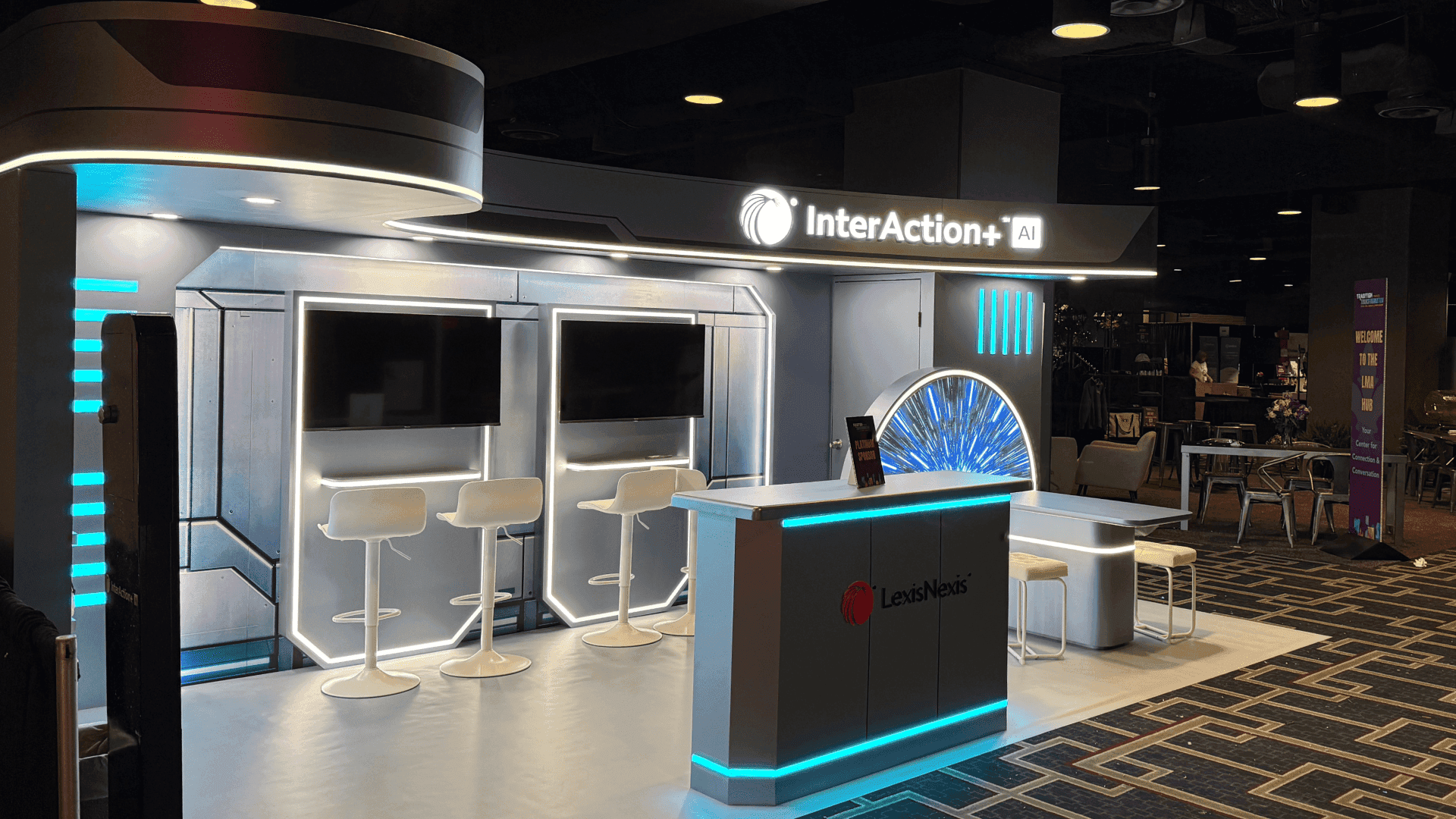
At CES, a good demo zone usually needs three distinct layers:
1. The aisle-facing signal
This is what catches attention from outside the booth. It should be legible in a glance.
2. The hands-on or live-view area
This is where the visitor experiences the product, sees the interface, or watches the proof point.
3. The follow-up conversation edge
This is where staff qualify interest, answer questions, and move deeper conversations away from the center of the crowd.
When these three layers are compressed into one spot, the booth feels busy but inefficient. When they are separated, even slightly, the space feels easier to enter and easier to manage.
Why a 20x20 Booth Often Works Well for CES Demo Planning
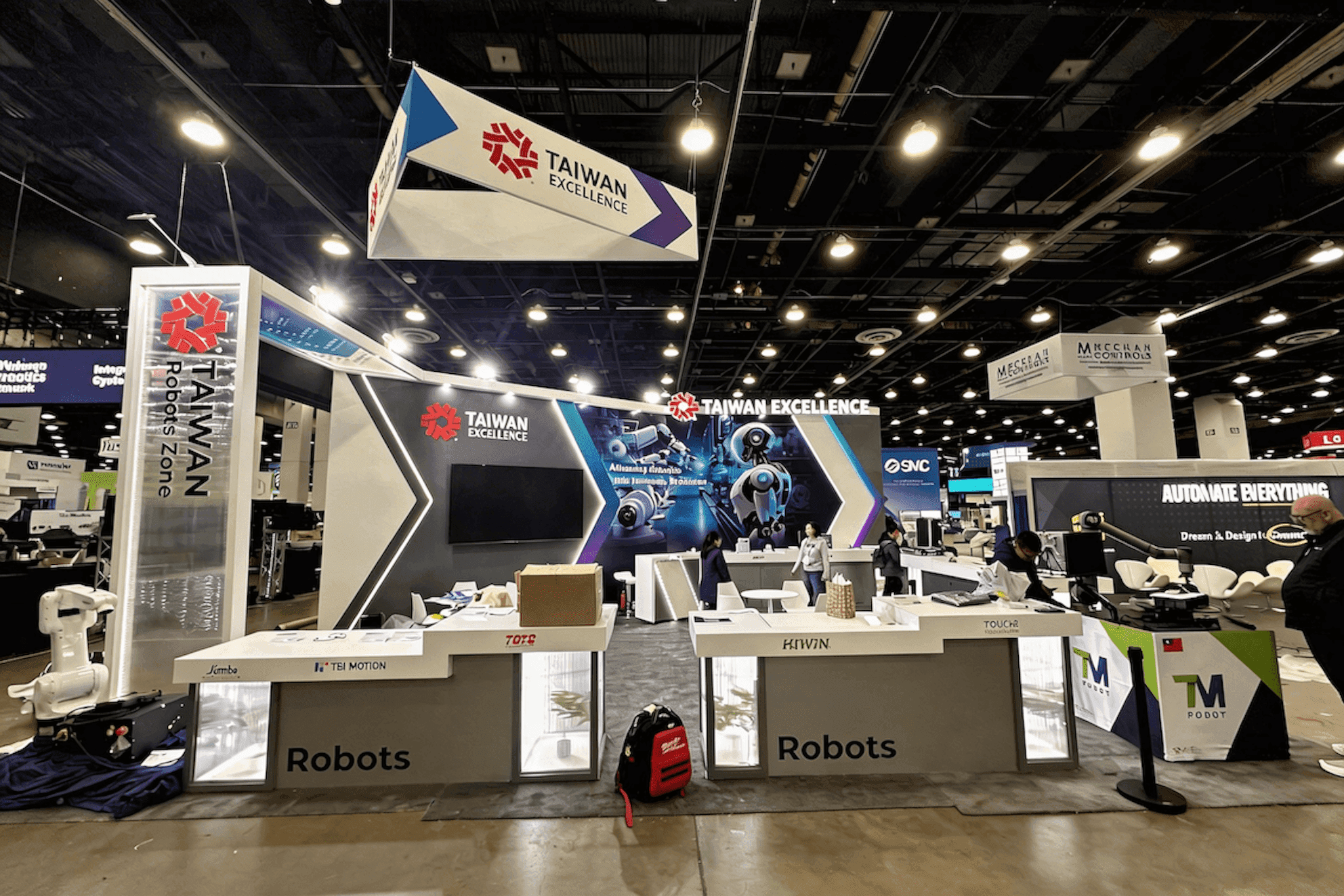
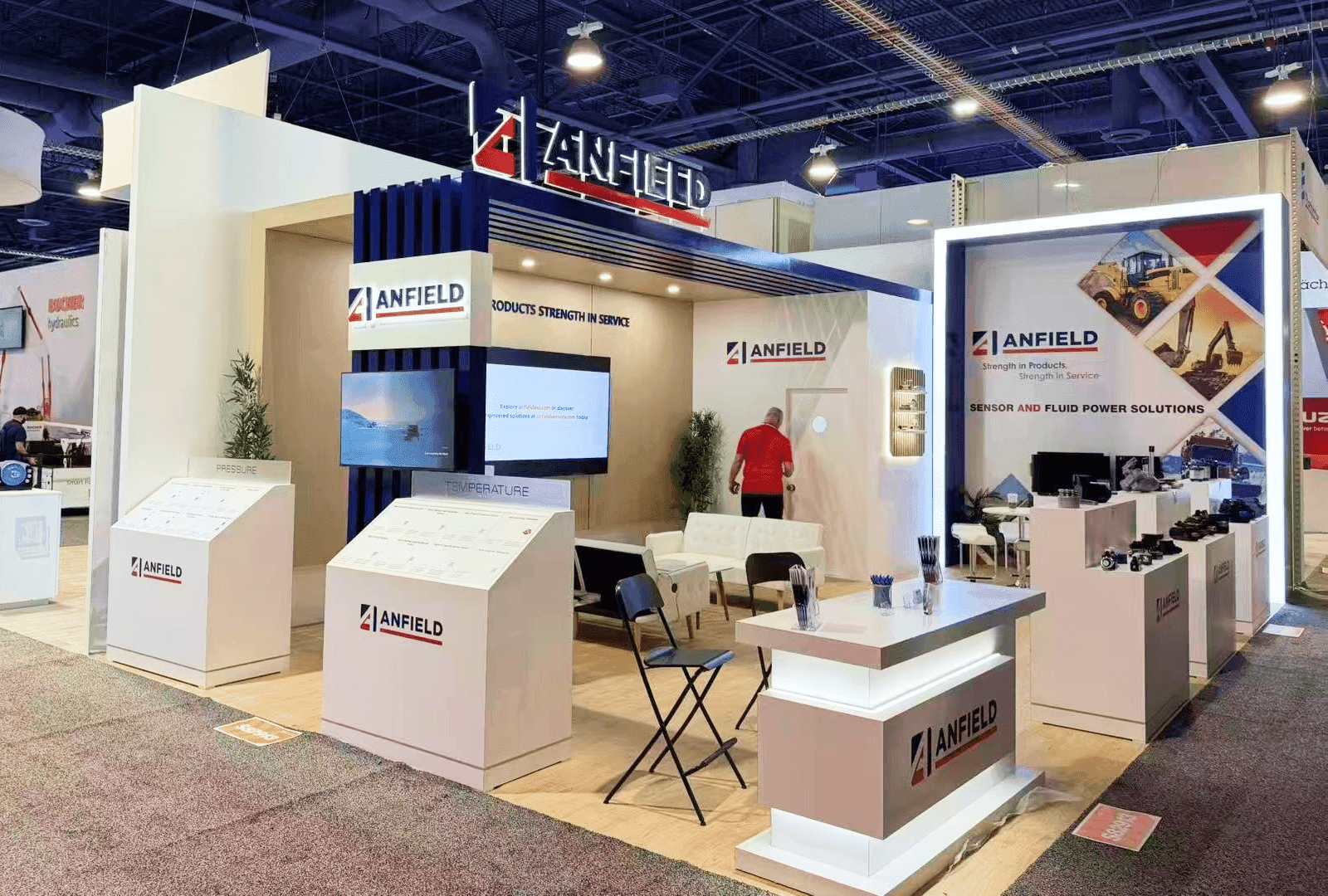
For many CES exhibitors, a 20x20 trade show booth is a practical footprint because it is large enough to separate product demonstration from conversation without forcing the brand into an oversized build. It also happens to cross an operational threshold at CES: official 2026 exhibit benefits state that open exhibit space at 400 square feet or larger at LVCC includes one hour of hanging sign labor, which can help with overhead visibility in a crowded hall. Since a 20x20 booth equals 400 square feet, it is often a strong planning size when visibility and demo control both matter.
That does not mean every CES brand should use a 20x20. It means the footprint is often big enough to solve a common demo problem: keeping the product interaction visible without forcing every serious conversation to happen in the aisle. For software, devices, smart home systems, robotics, health tech, and consumer electronics, that balance is usually more important than simply making the booth look larger.
Graphics Should Explain the Demo Before a Staff Member Speaks
At CES, people do not always stop because someone invites them in. They stop because they understand what is happening. That is why graphics are not decoration around the demo zone. They are part of the demo itself.
CES organizers repeatedly emphasize navigation, speed, and planning across venues, and official attendee guidance encourages people to map routes, focus on one venue at a time, and mark exhibitors in advance. In a show environment like that, graphics need to do immediate work. A visitor should be able to understand the product category, the use case, and the reason to stop before a team member starts talking.
That is where strong trade show graphics and brand presentation become part of booth performance, not just visual finishing. In a CES demo zone, the best graphics usually do three jobs at once: they identify the product fast, simplify the message, and help organize where people should look first.
CES Demo Zones Need Better Sound Discipline Than People Expect
A CES booth does not need to be quiet, but it does need control. Official CES guidance includes a Good Neighbor Policy for exhibit areas and says audio and video content should be appropriate for a general audience, while demonstrations must be planned so traffic can continue. In practice, that means the demo zone should not behave like a mini stage show unless the space is built to manage the audience properly.
For most CES booths, the stronger move is to use directional sound, shorter demo loops, tighter scripting, and faster reset times. The goal is not to create the loudest booth in the hall. The goal is to create the clearest live experience without creating friction for nearby exhibitors or for people trying to move through the aisle.
Installation Planning Matters Just as Much as the Demo Script
The cleanest CES demo zones usually feel simple because the complicated work was handled early. Official CES exhibitor resources point exhibitors toward floor plans, logistics, show rules, and venue-specific manuals, and CES requires EAC registration for exhibitor-appointed contractors. That is a reminder that booth performance at CES is tied to operational planning, not just creative layout.
For demo-heavy booths, install planning affects more than wall placement. It affects power routing, screen testing, cable concealment, product security, backup device storage, and how quickly the team can reset the zone after each interaction. That is why many exhibitors rely on a Las Vegas trade show booth builder that understands CES booth design as a combination of structure, graphics, technology setup, and show-floor execution.
The Best CES Demo Zones Feel Easy to Enter
That is usually the real benchmark. A good demo zone at CES should feel obvious from the aisle, comfortable when you step in, and efficient once the interaction starts.
It should not force visitors to guess where the demo begins. It should not bury the product behind branding. It should not require a long explanation before the value becomes visible. And it should not make staff choose between presenting the demo and clearing the crowd.
At a show as large and fast-moving as CES, clarity wins. The booths that perform well are usually not the ones trying to do everything. They are the ones that make one strong promise, show it quickly, and support it with the right layout, graphics, and install logic.
Final Thoughts
If you are planning a booth for CES in Las Vegas, the demo zone should not be treated as a small feature inside the booth. It should be treated as the part of the booth that determines whether attention turns into conversations.
That is especially true for brands competing in categories where commercial intent is already strong and where visitors are actively comparing builders, booth design quality, and execution standards. At CES, a good booth is not just attractive. It is readable, well-paced, and built around how people actually move through the show floor.
CES is one of the few trade shows where a booth can attract attention in seconds and still lose the opportunity if the demo zone is hard to read, crowded, or slow to navigate. Recent CES guidance shows just how large the event has become: CES 2026 ran across multiple campuses in Las Vegas, spanning more than 2.5 million net square feet, and the show’s official materials emphasize route planning, venue navigation, and fast movement between halls. That matters because a CES demo space is not just a presentation area. It is where product interest, traffic control, and business conversations all collide.
For brands exhibiting at CES in Las Vegas, the smartest approach is to plan the demo zone as the center of booth behavior, not as an extra feature added after the layout is done. At CES, visitors often arrive with a schedule, a venue map, and a short list of booths they want to see. The official CES app is built around wayfinding and agenda planning, which means attendees are often moving with purpose, not wandering slowly through every aisle. A demo zone has to communicate fast, draw people in cleanly, and let them leave with a clear impression of the product.
Start With the Demo Story, Not the Screen Size
A lot of CES booths make the same mistake: they begin with the screen wall, then add counters, then try to figure out where the live product interaction should happen. That usually leads to a demo zone that looks active but feels messy.
A better CES booth design starts with one simple question: what exactly should the attendee understand after 20 to 60 seconds in the space? If the answer is not clear, the demo zone will become a crowd magnet without becoming a lead generator. CES is a show built around seeing and demoing new technology, so the booth has to help visitors understand the product quickly before they move to the next stop.
For most exhibitors, that means narrowing the live zone to one primary use case. If the product can do ten things, the booth should not try to demonstrate all ten at once. One focused demo usually performs better than a noisy cluster of screens, product tables, and overlapping staff explanations.
Demo Zones Have to Protect Traffic Flow
This is where many CES booth concepts break down. The demo itself may be good, but the booth forgets that CES is a moving environment. Official CES guidance says exhibitors planning demonstrations are required to ensure traffic flow can continue at all times and to consider neighboring exhibitors. That is a practical rule, not a small note. If a crowd spills into the aisle or the presentation area blocks movement, the booth stops working the way it should.
At CES, a good demo zone usually needs three distinct layers:
1. The aisle-facing signal
This is what catches attention from outside the booth. It should be legible in a glance.
2. The hands-on or live-view area
This is where the visitor experiences the product, sees the interface, or watches the proof point.
3. The follow-up conversation edge
This is where staff qualify interest, answer questions, and move deeper conversations away from the center of the crowd.
When these three layers are compressed into one spot, the booth feels busy but inefficient. When they are separated, even slightly, the space feels easier to enter and easier to manage.
Why a 20x20 Booth Often Works Well for CES Demo Planning
For many CES exhibitors, a 20x20 trade show booth is a practical footprint because it is large enough to separate product demonstration from conversation without forcing the brand into an oversized build. It also happens to cross an operational threshold at CES: official 2026 exhibit benefits state that open exhibit space at 400 square feet or larger at LVCC includes one hour of hanging sign labor, which can help with overhead visibility in a crowded hall. Since a 20x20 booth equals 400 square feet, it is often a strong planning size when visibility and demo control both matter.
That does not mean every CES brand should use a 20x20. It means the footprint is often big enough to solve a common demo problem: keeping the product interaction visible without forcing every serious conversation to happen in the aisle. For software, devices, smart home systems, robotics, health tech, and consumer electronics, that balance is usually more important than simply making the booth look larger.
Graphics Should Explain the Demo Before a Staff Member Speaks
At CES, people do not always stop because someone invites them in. They stop because they understand what is happening. That is why graphics are not decoration around the demo zone. They are part of the demo itself.
CES organizers repeatedly emphasize navigation, speed, and planning across venues, and official attendee guidance encourages people to map routes, focus on one venue at a time, and mark exhibitors in advance. In a show environment like that, graphics need to do immediate work. A visitor should be able to understand the product category, the use case, and the reason to stop before a team member starts talking.
That is where strong trade show graphics and brand presentation become part of booth performance, not just visual finishing. In a CES demo zone, the best graphics usually do three jobs at once: they identify the product fast, simplify the message, and help organize where people should look first.
CES Demo Zones Need Better Sound Discipline Than People Expect
A CES booth does not need to be quiet, but it does need control. Official CES guidance includes a Good Neighbor Policy for exhibit areas and says audio and video content should be appropriate for a general audience, while demonstrations must be planned so traffic can continue. In practice, that means the demo zone should not behave like a mini stage show unless the space is built to manage the audience properly.
For most CES booths, the stronger move is to use directional sound, shorter demo loops, tighter scripting, and faster reset times. The goal is not to create the loudest booth in the hall. The goal is to create the clearest live experience without creating friction for nearby exhibitors or for people trying to move through the aisle.
Installation Planning Matters Just as Much as the Demo Script
The cleanest CES demo zones usually feel simple because the complicated work was handled early. Official CES exhibitor resources point exhibitors toward floor plans, logistics, show rules, and venue-specific manuals, and CES requires EAC registration for exhibitor-appointed contractors. That is a reminder that booth performance at CES is tied to operational planning, not just creative layout.
For demo-heavy booths, install planning affects more than wall placement. It affects power routing, screen testing, cable concealment, product security, backup device storage, and how quickly the team can reset the zone after each interaction. That is why many exhibitors rely on a Las Vegas trade show booth builder that understands CES booth design as a combination of structure, graphics, technology setup, and show-floor execution.
The Best CES Demo Zones Feel Easy to Enter
That is usually the real benchmark. A good demo zone at CES should feel obvious from the aisle, comfortable when you step in, and efficient once the interaction starts.
It should not force visitors to guess where the demo begins. It should not bury the product behind branding. It should not require a long explanation before the value becomes visible. And it should not make staff choose between presenting the demo and clearing the crowd.
At a show as large and fast-moving as CES, clarity wins. The booths that perform well are usually not the ones trying to do everything. They are the ones that make one strong promise, show it quickly, and support it with the right layout, graphics, and install logic.
Final Thoughts
If you are planning a booth for CES in Las Vegas, the demo zone should not be treated as a small feature inside the booth. It should be treated as the part of the booth that determines whether attention turns into conversations.
That is especially true for brands competing in categories where commercial intent is already strong and where visitors are actively comparing builders, booth design quality, and execution standards. At CES, a good booth is not just attractive. It is readable, well-paced, and built around how people actually move through the show floor.
Exhibition Cases
Message
Leave your message and we will get back to you ASAP
Send a Message
We’ll Be in Touch!
Message
Leave your message and we will get back to you ASAP
Address:
4915 Steptoe Street #300
Las Vegas, NV 89122