How Demo Traffic Changes Booth Design Across Tech, Broadcast, and Automotive Shows

Circle Exhibit Team
Industry professionals
Exhibition industry professional dedicated to delivering the latest insights and curated recommendations to you.
Demo traffic changes by category, not just by booth size. A booth that works for tech demos may slow down at NAB or break down at SEMA because visitors stop, watch, and move differently in each environment.
Demo traffic is not one universal behavior
A lot of exhibitors talk about “traffic” as if it behaves the same way at every show.
It does not.
People may still walk aisles, pause at displays, and enter booths across all major events. But the reason they stop, how long they stay, and what they need to understand before moving deeper can change dramatically from one category to another.
That is why demo traffic should not be planned as a generic booth problem.
It is a category problem.
At tech, broadcast, and automotive shows, the booth may still need to attract, explain, and convert. But the movement pattern that gets people from one step to the next is not the same.
Booth size matters, but category logic usually matters first
Booth size affects spacing, staging, and how many things can happen at once.
That is true.
But demo traffic often changes even more because of what visitors think they are walking into.
For example:
a consumer-tech booth may need fast-read entry and quick demo access
a broadcast booth may need more controlled viewing and workflow clarity
an automotive booth may need to manage visual stops around a hero display before product detail even begins
The footprint matters in all three.
But the type of attention entering the booth matters first.
CES traffic usually moves faster and decides faster
At CES in Las Vegas, people often approach booths with speed.
They scan quickly.
They compare quickly.
They stop only when the booth gives them a clear reason quickly enough.
That means CES demo traffic often behaves like this:
1. Fast pass
Visitors read the booth while still moving.
2. Short stop
The booth gets only a brief chance to prove relevance.
3. Quick decision
The visitor either steps in or keeps moving.
Because of that, CES booths usually need:
a clean front edge
fast category clarity
a demo zone that is visible before it is fully entered
enough spacing to prevent immediate aisle spill
At CES, the booth often loses not because the demo is weak, but because the first read took too long.
CES booths often need the demo slightly inside the booth
This is where many tech booths improve.
If the interaction sits directly on the aisle edge, traffic may stop too early and pile up in the wrong place. If it sits too far back, the booth loses one of its easiest entry triggers.
That is why CES demo planning often works best when:
the message reads from the aisle
the demo is visible from the edge
the real interaction happens just inside the booth
the next step after the stop is obvious
This gives the booth room to absorb curiosity without turning the aisle into the demo zone itself.
NAB traffic usually needs more visual logic before it moves
At NAB Show, the challenge often changes.
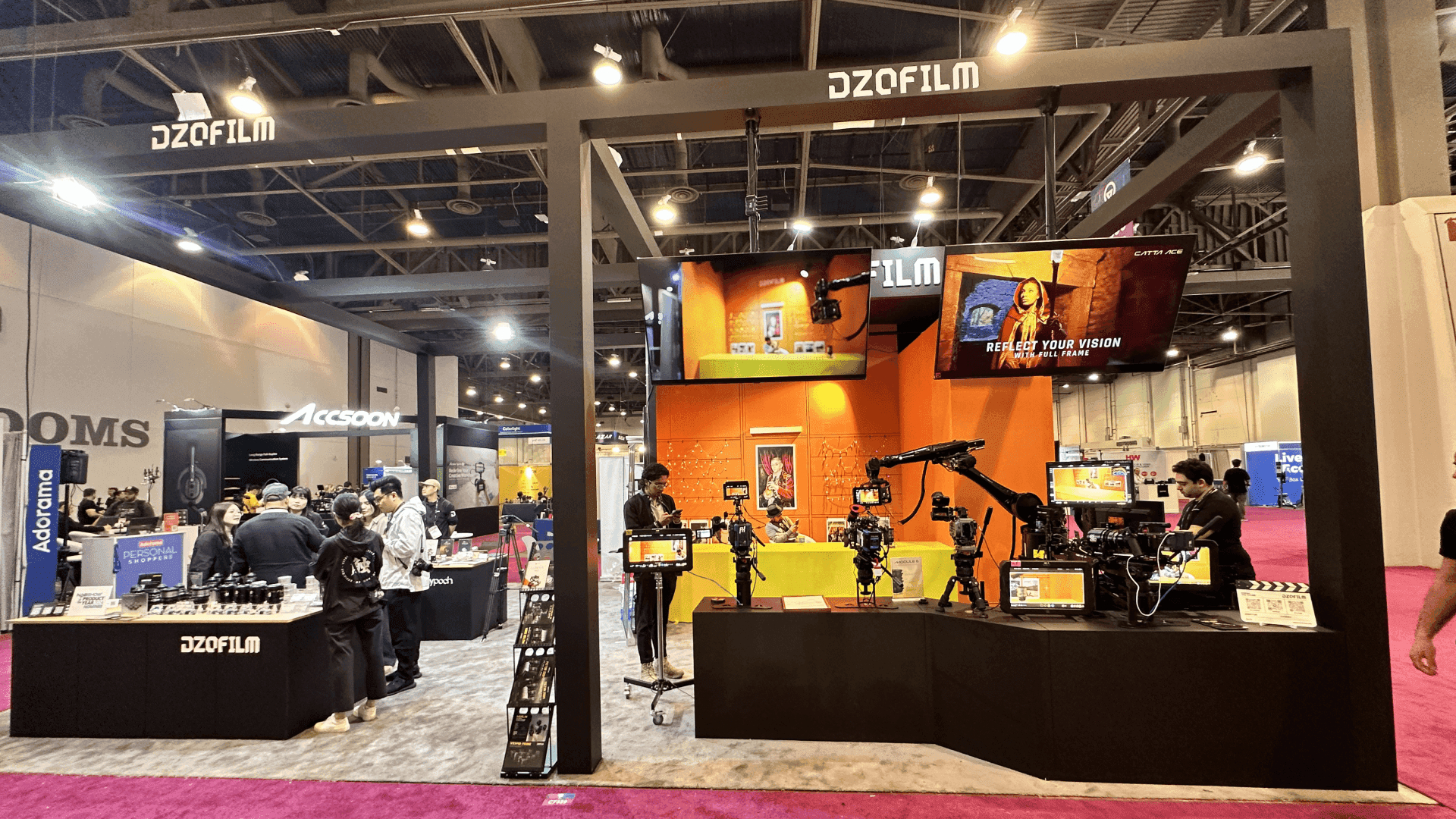
The booth may already look active because there are screens, workflows, operators, camera systems, or switching environments visible from a distance. But visible activity is not the same as understandable activity.
That means NAB traffic often behaves more like this:
1. Observe first
Visitors try to understand what kind of workflow they are looking at.
2. Watch the proof
They need a clear output, not just a busy setup.
3. Move deeper if the system makes sense
The booth earns engagement after the workflow becomes legible.
Because of that, NAB booths usually need:
stronger screen hierarchy
clearer workflow entry
more deliberate viewer positioning
better control over where people stop to watch
At NAB, traffic often slows because the booth is visually rich but logically unclear.
NAB demo flow usually depends on contained audience behavior
This is one of the biggest differences from CES.
At CES, the booth is often trying to convert passersby into participants quickly.
At NAB, the booth is often trying to convert observers into informed viewers first.
That changes the design.
A NAB booth usually works better when it gives the audience:
a clear viewing line
one dominant output to focus on
a visible but non-intrusive operator or workflow zone
a next step for deeper questions after the main proof lands
If viewers cannot tell where to stand or what to watch first, the booth starts collecting bodies without creating understanding.
That is where demo traffic becomes expensive.
SEMA traffic often starts with a stronger visual stop
At SEMA Show, the first stop is often more dramatic.
Vehicles, parts walls, lighting, wheels, accessories, and strong build visuals naturally create attention. That means the booth often does not need to create the first pause from zero.
It needs to control what happens after that pause.
SEMA traffic often behaves more like this:
1. Strong visual stop
The visitor notices the vehicle or hero display.
2. Side or secondary scan
The visitor starts reading product context around the main display.
3. Deeper category movement
The booth either guides the visitor toward product understanding or loses them after the photo moment.
That is why SEMA booths often succeed or fail based on what happens after attention arrives.
Not whether attention arrives at all.
SEMA booths usually need stronger control around the center display
This is where demo traffic changes the booth design.
At SEMA, the center or hero display often pulls people in naturally. But if the product wall, meeting area, or circulation line is weak, that same attention can crowd the booth too early and flatten the display logic.
A better SEMA booth usually protects:
the strongest vehicle or hero sightline
the path around the display
the transition from visual stop to product context
the ability to keep the booth readable even when people gather fast
At SEMA, traffic can become a problem even when the booth is doing its job too well visually.
That is why display-led traffic still needs planning.
The same demo strategy does not travel well across all three
This is where many exhibitors lose performance.
For example:
A CES-style booth at NAB
May feel too shallow because the workflow needs more controlled viewing than quick interaction.
A NAB-style booth at SEMA
May feel too explanation-heavy because the first stop is visual and category-led, not workflow-led.
A SEMA-style booth at CES
May feel too dependent on visual weight and not fast enough in message clarity.
The booth may still look impressive in all three places.
But the demo traffic will not reward it the same way.
That is why category-specific movement logic matters so much.
Demo traffic changes where the first stop should happen
Here is the practical difference:
At CES
The first stop often works best just inside the booth.
The visitor needs a quick, clean step into the experience.
At NAB
The first stop often happens at the viewing line.
The visitor needs to understand before interacting.
At SEMA
The first stop often happens at the hero display edge.
The visitor is pulled visually first, then needs product clarity second.
That means the “front” of the booth is not doing the same job at every show.
If the team uses the same edge logic everywhere, the booth may keep attracting attention but fail to guide it correctly.
Builder planning matters because traffic changes the whole booth system
This is one reason exhibitors benefit from working with a Las Vegas trade show booth builder that understands how category-specific traffic affects layout.
Because traffic logic influences:
where the booth should open
where the demo should sit
how the audience should form
where conversation should happen
what needs the strongest visual priority
how quickly the booth starts feeling crowded
A booth that works beautifully for one event can underperform at another if the traffic assumptions are copied without adjustment.
That is not a design failure.
It is usually a movement-logic failure.
A simple comparison framework
If you want the shortest way to compare the three:
CES
Fast-read, fast-entry, low-friction demo capture.
NAB
Watch-first, logic-first, controlled viewer positioning.
SEMA
Hero-stop first, product-context second, circulation control around the display.
That is often the clearest way to understand why booth design should change across the three categories.
Better booth design usually starts with the right traffic question
Instead of asking only:
How should the booth look?
It helps to ask:
What makes people stop here?
That answer differs by category.
What do they need to understand before moving deeper?
This changes the first-read layer.
Where will crowd pressure form first?
This changes entry, demo, and center-zone planning.
What should happen after the stop?
This changes whether the booth converts attention into real engagement.
Those are traffic questions, but they are also design questions.
That is why the booth gets better when the category gets treated seriously from the start.
Final thought
Demo traffic changes booth design across tech, broadcast, and automotive shows because visitors do not enter those environments the same way.
At CES, the booth has to win quickly.
At NAB, it has to clarify complexity.
At SEMA, it has to manage strong visual attention without letting the layout collapse around it.
That is why traffic logic changes by category, not just by booth size.
Once that becomes clear, the booth usually gets easier to design, easier to enter, and much more effective once the show floor is live.
Demo traffic is not one universal behavior
A lot of exhibitors talk about “traffic” as if it behaves the same way at every show.
It does not.
People may still walk aisles, pause at displays, and enter booths across all major events. But the reason they stop, how long they stay, and what they need to understand before moving deeper can change dramatically from one category to another.
That is why demo traffic should not be planned as a generic booth problem.
It is a category problem.
At tech, broadcast, and automotive shows, the booth may still need to attract, explain, and convert. But the movement pattern that gets people from one step to the next is not the same.
Booth size matters, but category logic usually matters first
Booth size affects spacing, staging, and how many things can happen at once.
That is true.
But demo traffic often changes even more because of what visitors think they are walking into.
For example:
a consumer-tech booth may need fast-read entry and quick demo access
a broadcast booth may need more controlled viewing and workflow clarity
an automotive booth may need to manage visual stops around a hero display before product detail even begins
The footprint matters in all three.
But the type of attention entering the booth matters first.
CES traffic usually moves faster and decides faster
At CES in Las Vegas, people often approach booths with speed.
They scan quickly.
They compare quickly.
They stop only when the booth gives them a clear reason quickly enough.
That means CES demo traffic often behaves like this:
1. Fast pass
Visitors read the booth while still moving.
2. Short stop
The booth gets only a brief chance to prove relevance.
3. Quick decision
The visitor either steps in or keeps moving.
Because of that, CES booths usually need:
a clean front edge
fast category clarity
a demo zone that is visible before it is fully entered
enough spacing to prevent immediate aisle spill
At CES, the booth often loses not because the demo is weak, but because the first read took too long.
CES booths often need the demo slightly inside the booth
This is where many tech booths improve.
If the interaction sits directly on the aisle edge, traffic may stop too early and pile up in the wrong place. If it sits too far back, the booth loses one of its easiest entry triggers.
That is why CES demo planning often works best when:
the message reads from the aisle
the demo is visible from the edge
the real interaction happens just inside the booth
the next step after the stop is obvious
This gives the booth room to absorb curiosity without turning the aisle into the demo zone itself.
NAB traffic usually needs more visual logic before it moves
At NAB Show, the challenge often changes.
The booth may already look active because there are screens, workflows, operators, camera systems, or switching environments visible from a distance. But visible activity is not the same as understandable activity.
That means NAB traffic often behaves more like this:
1. Observe first
Visitors try to understand what kind of workflow they are looking at.
2. Watch the proof
They need a clear output, not just a busy setup.
3. Move deeper if the system makes sense
The booth earns engagement after the workflow becomes legible.
Because of that, NAB booths usually need:
stronger screen hierarchy
clearer workflow entry
more deliberate viewer positioning
better control over where people stop to watch
At NAB, traffic often slows because the booth is visually rich but logically unclear.
NAB demo flow usually depends on contained audience behavior
This is one of the biggest differences from CES.
At CES, the booth is often trying to convert passersby into participants quickly.
At NAB, the booth is often trying to convert observers into informed viewers first.
That changes the design.
A NAB booth usually works better when it gives the audience:
a clear viewing line
one dominant output to focus on
a visible but non-intrusive operator or workflow zone
a next step for deeper questions after the main proof lands
If viewers cannot tell where to stand or what to watch first, the booth starts collecting bodies without creating understanding.
That is where demo traffic becomes expensive.
SEMA traffic often starts with a stronger visual stop
At SEMA Show, the first stop is often more dramatic.
Vehicles, parts walls, lighting, wheels, accessories, and strong build visuals naturally create attention. That means the booth often does not need to create the first pause from zero.
It needs to control what happens after that pause.
SEMA traffic often behaves more like this:
1. Strong visual stop
The visitor notices the vehicle or hero display.
2. Side or secondary scan
The visitor starts reading product context around the main display.
3. Deeper category movement
The booth either guides the visitor toward product understanding or loses them after the photo moment.
That is why SEMA booths often succeed or fail based on what happens after attention arrives.
Not whether attention arrives at all.
SEMA booths usually need stronger control around the center display
This is where demo traffic changes the booth design.
At SEMA, the center or hero display often pulls people in naturally. But if the product wall, meeting area, or circulation line is weak, that same attention can crowd the booth too early and flatten the display logic.
A better SEMA booth usually protects:
the strongest vehicle or hero sightline
the path around the display
the transition from visual stop to product context
the ability to keep the booth readable even when people gather fast
At SEMA, traffic can become a problem even when the booth is doing its job too well visually.
That is why display-led traffic still needs planning.
The same demo strategy does not travel well across all three
This is where many exhibitors lose performance.
For example:
A CES-style booth at NAB
May feel too shallow because the workflow needs more controlled viewing than quick interaction.
A NAB-style booth at SEMA
May feel too explanation-heavy because the first stop is visual and category-led, not workflow-led.
A SEMA-style booth at CES
May feel too dependent on visual weight and not fast enough in message clarity.
The booth may still look impressive in all three places.
But the demo traffic will not reward it the same way.
That is why category-specific movement logic matters so much.
Demo traffic changes where the first stop should happen
Here is the practical difference:
At CES
The first stop often works best just inside the booth.
The visitor needs a quick, clean step into the experience.
At NAB
The first stop often happens at the viewing line.
The visitor needs to understand before interacting.
At SEMA
The first stop often happens at the hero display edge.
The visitor is pulled visually first, then needs product clarity second.
That means the “front” of the booth is not doing the same job at every show.
If the team uses the same edge logic everywhere, the booth may keep attracting attention but fail to guide it correctly.
Builder planning matters because traffic changes the whole booth system
This is one reason exhibitors benefit from working with a Las Vegas trade show booth builder that understands how category-specific traffic affects layout.
Because traffic logic influences:
where the booth should open
where the demo should sit
how the audience should form
where conversation should happen
what needs the strongest visual priority
how quickly the booth starts feeling crowded
A booth that works beautifully for one event can underperform at another if the traffic assumptions are copied without adjustment.
That is not a design failure.
It is usually a movement-logic failure.
A simple comparison framework
If you want the shortest way to compare the three:
CES
Fast-read, fast-entry, low-friction demo capture.
NAB
Watch-first, logic-first, controlled viewer positioning.
SEMA
Hero-stop first, product-context second, circulation control around the display.
That is often the clearest way to understand why booth design should change across the three categories.
Better booth design usually starts with the right traffic question
Instead of asking only:
How should the booth look?
It helps to ask:
What makes people stop here?
That answer differs by category.
What do they need to understand before moving deeper?
This changes the first-read layer.
Where will crowd pressure form first?
This changes entry, demo, and center-zone planning.
What should happen after the stop?
This changes whether the booth converts attention into real engagement.
Those are traffic questions, but they are also design questions.
That is why the booth gets better when the category gets treated seriously from the start.
Final thought
Demo traffic changes booth design across tech, broadcast, and automotive shows because visitors do not enter those environments the same way.
At CES, the booth has to win quickly.
At NAB, it has to clarify complexity.
At SEMA, it has to manage strong visual attention without letting the layout collapse around it.
That is why traffic logic changes by category, not just by booth size.
Once that becomes clear, the booth usually gets easier to design, easier to enter, and much more effective once the show floor is live.
Exhibition Cases
Message
Leave your message and we will get back to you ASAP
Send a Message
We’ll Be in Touch!
Message
Leave your message and we will get back to you ASAP
Address:
4915 Steptoe Street #300
Las Vegas, NV 89122