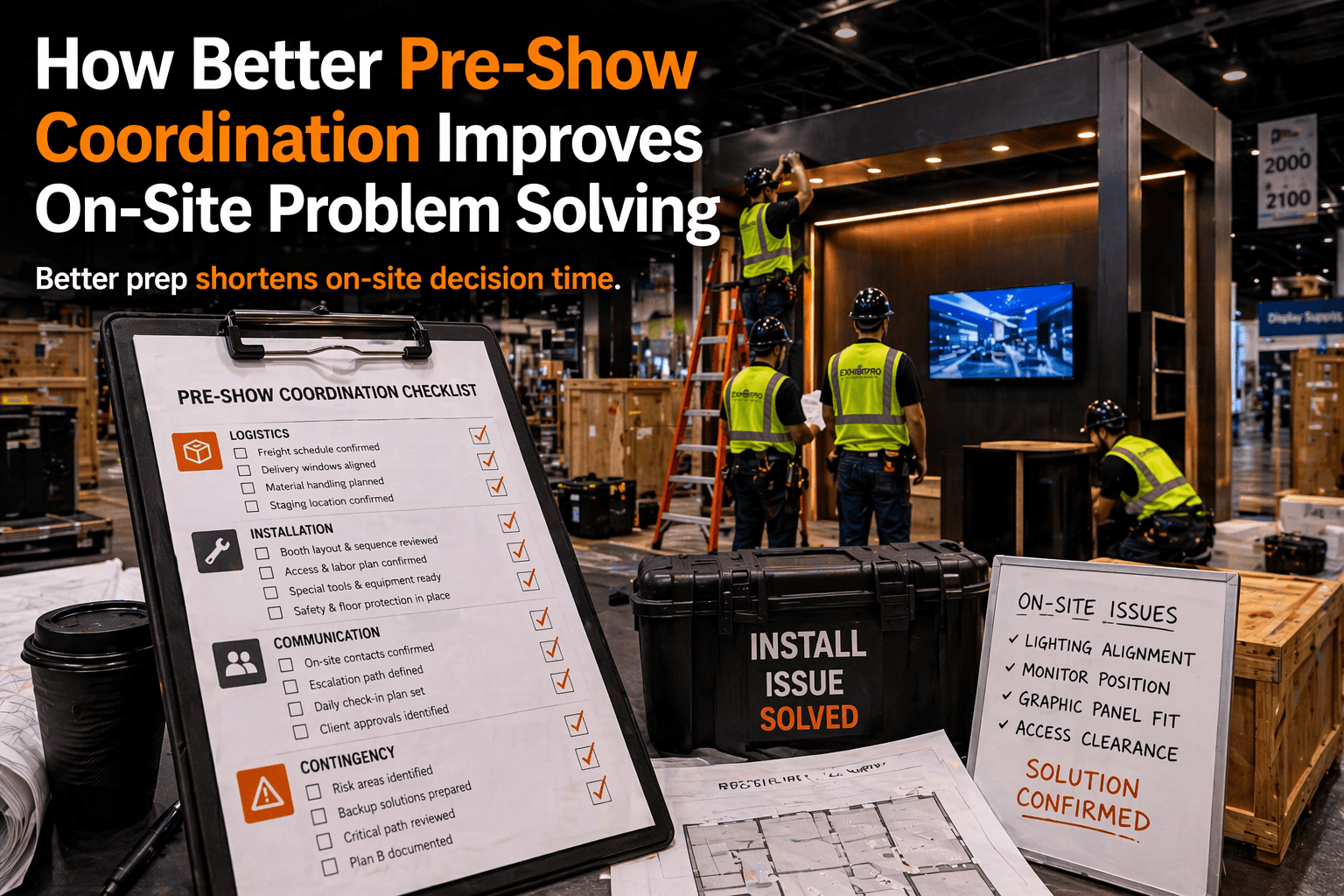
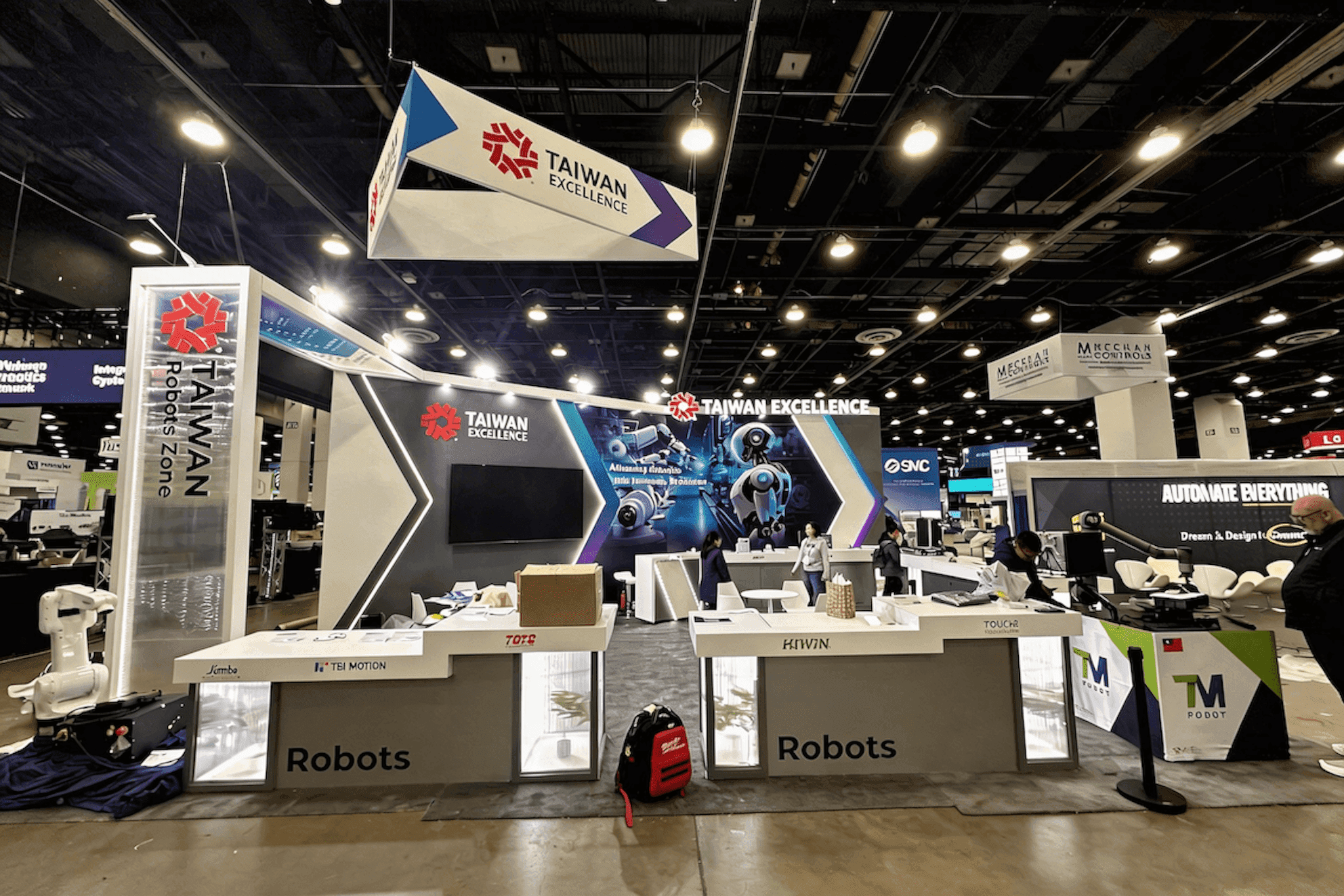
Trade show booth installation with a pre-show coordination checklist, active crew troubleshooting, and on-site problem solving during setup

How Better Pre-Show Coordination Improves On-Site Problem Solving

How Better Pre-Show Coordination Improves On-Site Problem Solving

Circle Exhibit Team

Industry professionals

Exhibition industry professional dedicated to delivering the latest insights and curated recommendations to you.

Exhibition industry professional dedicated to delivering the latest insights and curated recommendations to you.

Better prep shortens on-site decision time. When pre-show coordination is clear, the crew spends less time guessing and more time solving the right problem at the right moment.

Better prep shortens on-site decision time. When pre-show coordination is clear, the crew spends less time guessing and more time solving the right problem at the right moment.

Better prep shortens on-site decision time. When pre-show coordination is clear, the crew spends less time guessing and more time solving the right problem at the right moment.

Most on-site problems are not really “surprises”

They often look like surprises.

A panel does not land the way the team expected.
A crew needs access earlier than planned.
A monitor position affects another zone.
A finish decision suddenly has to be made under pressure.

On site, those moments feel urgent.

But many of them are not random. They are the result of questions that were never fully resolved before move-in.

That is why pre-show coordination matters so much.
It does not eliminate every problem.
It makes the problems easier to solve when they appear.

Better coordination does not remove pressure, it reduces decision delay

This is the real value.

Show-floor issues will still happen. That is normal. Booth installation is a live environment with real freight, real timing pressure, and real human movement.

The difference is how quickly the team can respond.

A well-coordinated project usually reaches a problem and says:

  • we know who owns this

  • we know what phase this affects

  • we know what stays protected

  • we know what can move now

  • we know what the next-best option is

A poorly coordinated project reaches the same problem and loses time deciding where to even begin.

That is where schedules start slipping.

On-site problem solving gets slower when too many questions are still open

This happens more than exhibitors realize.

A crew gets to the floor, and the booth looks ready enough to start. But under the surface, too many decisions are still unresolved.

For example:

  • which materials should open first

  • which zones must stay clear

  • what can be adjusted without affecting the next phase

  • who approves a field change

  • what is finish-critical versus function-critical

  • what belongs to structure first and what belongs to detail work later

If those answers are unclear, even small problems take too long to resolve.

Not because the team is weak.
Because the decision framework is weak.

Good pre-show coordination gives the crew a usable map

That map is not always a literal drawing.

Sometimes it is a shared understanding of sequence, priorities, and fallback decisions.

That usually includes clarity on:

  • install order

  • freight access

  • staging zones

  • floor protection

  • finish priorities

  • owner approvals

  • what the crew should escalate versus solve directly

When that map exists, the team can make cleaner decisions under pressure.
When it does not, every issue becomes bigger than it needed to be.

The biggest time loss usually comes from hesitation, not from the fix itself

This is one of the most important points.

Many show-floor problems are solvable in a reasonable amount of time.

What slows them down is the hesitation before the solution starts.

The crew pauses because they are not sure:

  • whether a change affects another trade

  • whether a panel can move before the next phase

  • whether a surface can still be protected

  • whether the issue belongs to build, graphics, or logistics

  • whether the client would rather protect timing or appearance

That hesitation can cost more than the repair itself.

Better pre-show coordination reduces that hesitation.

Logistics clarity makes on-site troubleshooting much faster

This is where logistics and pre-show coordination do real work.

A lot of field decisions depend on knowing the original plan clearly enough to adjust it intelligently.

If the team already knows:

  • what freight belongs to which phase

  • what zones must remain open

  • what materials are still in reserve

  • what is safe to delay

  • what cannot be trapped

then a problem can be solved in context.

If none of that is clear, the team starts improvising with incomplete information.

That is when one fix creates two more problems.

Fabrication planning helps the field solve problems with more confidence

This is where booth fabrication and prebuild checks matter more than many people think.

A booth that has been checked properly in the shop usually gives the field crew more confidence in what can be adjusted and what should not be touched.

That is because prebuild often reveals:

  • which joins are sensitive

  • which panels have tighter tolerances

  • what hardware logic matters most

  • what access issues are likely

  • what part of the booth is flexible versus exact

Without that knowledge, the field crew may treat every issue like a risk.

With that knowledge, they can solve the right problems faster and avoid touching the wrong things.

Better prep creates better escalation, not just better execution

Not every issue should be solved by the nearest person with tools.

Some problems need approval.
Some need design judgment.
Some need a schedule tradeoff.
Some need a client-facing decision.

This is where pre-show coordination makes a huge difference.

If the team already knows:

  • who decides visual compromises

  • who approves sequencing changes

  • who handles client communication

  • who owns technical adjustments

then the booth does not waste time figuring out authority during the problem.

That is one of the biggest reasons better coordination shortens on-site decision time.

CES-style booths especially benefit from this kind of prep

This becomes even more obvious at CES in Las Vegas, where booths often depend on cleaner first-read presentation, tighter finish control, and more visible demo logic.

In that kind of environment, even a small on-site issue can affect more than build quality.

It can affect:

  • how the booth reads from the aisle

  • where the demo begins

  • how clean the message feels

  • whether the final environment looks controlled

That is why CES-type projects benefit so much from stronger preparation. The tighter the presentation standard, the more valuable fast, confident field decisions become.

Builder planning matters because field problems need sequence logic, not panic

This is one reason exhibitors benefit from working with a Las Vegas trade show booth builder that treats pre-show coordination as part of the build system.

Because once a problem appears on site, the team does not just need effort.

It needs logic.

It needs to know:

  • what this affects

  • what this does not affect

  • what can move

  • what should stay fixed

  • what the fastest clean solution actually is

A builder that plans this way usually solves field issues with less disruption because the sequence was already understood before the problem arrived.

Better on-site problem solving usually starts with better pre-show answers

The strongest installs usually feel calmer for a reason.

They often begin with clearer answers to questions like:

What is the order of work?

The team understands what matters first.

What stays protected?

The crew knows which zones or surfaces cannot be casually reopened.

What can be flexible?

Not every booth element carries the same risk.

What gets escalated?

Decision ownership is already clear.

What is the backup path?

If one thing shifts, the team knows the next-best route without starting from zero.

That is what makes field troubleshooting faster.

The best-coordinated crews usually look less dramatic

That is often a good sign.

They are not calmer because nothing is happening.
They are calmer because they are not spending energy on confusion.

The booth still has problems to solve.
The difference is that the team can solve them without losing the whole install rhythm.

That is what better prep really buys.

Not perfection.
Better decisions, made sooner.

Final thought

On-site problem solving is rarely just about how skilled the crew is.

It is also about how much decision time the project still demands once the issue appears.

That is why better pre-show coordination helps so much. It gives the team structure before pressure shows up. It reduces hesitation. It clarifies ownership. It makes adjustments easier to evaluate. And it shortens the time between “we found a problem” and “we know what to do next.”

That gap is where a lot of schedule pressure lives.

And that is exactly why better prep matters.


Trying to make on-site booth issues easier to solve under pressure?
Start with stronger logistics and pre-show coordination, then connect it to a Las Vegas trade show booth builder approach that turns field decisions into faster, cleaner action.
Most on-site problems are not really “surprises”

They often look like surprises.

A panel does not land the way the team expected.
A crew needs access earlier than planned.
A monitor position affects another zone.
A finish decision suddenly has to be made under pressure.

On site, those moments feel urgent.

But many of them are not random. They are the result of questions that were never fully resolved before move-in.

That is why pre-show coordination matters so much.
It does not eliminate every problem.
It makes the problems easier to solve when they appear.

Better coordination does not remove pressure, it reduces decision delay

This is the real value.

Show-floor issues will still happen. That is normal. Booth installation is a live environment with real freight, real timing pressure, and real human movement.

The difference is how quickly the team can respond.

A well-coordinated project usually reaches a problem and says:

  • we know who owns this

  • we know what phase this affects

  • we know what stays protected

  • we know what can move now

  • we know what the next-best option is

A poorly coordinated project reaches the same problem and loses time deciding where to even begin.

That is where schedules start slipping.

On-site problem solving gets slower when too many questions are still open

This happens more than exhibitors realize.

A crew gets to the floor, and the booth looks ready enough to start. But under the surface, too many decisions are still unresolved.

For example:

  • which materials should open first

  • which zones must stay clear

  • what can be adjusted without affecting the next phase

  • who approves a field change

  • what is finish-critical versus function-critical

  • what belongs to structure first and what belongs to detail work later

If those answers are unclear, even small problems take too long to resolve.

Not because the team is weak.
Because the decision framework is weak.

Good pre-show coordination gives the crew a usable map

That map is not always a literal drawing.

Sometimes it is a shared understanding of sequence, priorities, and fallback decisions.

That usually includes clarity on:

  • install order

  • freight access

  • staging zones

  • floor protection

  • finish priorities

  • owner approvals

  • what the crew should escalate versus solve directly

When that map exists, the team can make cleaner decisions under pressure.
When it does not, every issue becomes bigger than it needed to be.

The biggest time loss usually comes from hesitation, not from the fix itself

This is one of the most important points.

Many show-floor problems are solvable in a reasonable amount of time.

What slows them down is the hesitation before the solution starts.

The crew pauses because they are not sure:

  • whether a change affects another trade

  • whether a panel can move before the next phase

  • whether a surface can still be protected

  • whether the issue belongs to build, graphics, or logistics

  • whether the client would rather protect timing or appearance

That hesitation can cost more than the repair itself.

Better pre-show coordination reduces that hesitation.

Logistics clarity makes on-site troubleshooting much faster

This is where logistics and pre-show coordination do real work.

A lot of field decisions depend on knowing the original plan clearly enough to adjust it intelligently.

If the team already knows:

  • what freight belongs to which phase

  • what zones must remain open

  • what materials are still in reserve

  • what is safe to delay

  • what cannot be trapped

then a problem can be solved in context.

If none of that is clear, the team starts improvising with incomplete information.

That is when one fix creates two more problems.

Fabrication planning helps the field solve problems with more confidence

This is where booth fabrication and prebuild checks matter more than many people think.

A booth that has been checked properly in the shop usually gives the field crew more confidence in what can be adjusted and what should not be touched.

That is because prebuild often reveals:

  • which joins are sensitive

  • which panels have tighter tolerances

  • what hardware logic matters most

  • what access issues are likely

  • what part of the booth is flexible versus exact

Without that knowledge, the field crew may treat every issue like a risk.

With that knowledge, they can solve the right problems faster and avoid touching the wrong things.

Better prep creates better escalation, not just better execution

Not every issue should be solved by the nearest person with tools.

Some problems need approval.
Some need design judgment.
Some need a schedule tradeoff.
Some need a client-facing decision.

This is where pre-show coordination makes a huge difference.

If the team already knows:

  • who decides visual compromises

  • who approves sequencing changes

  • who handles client communication

  • who owns technical adjustments

then the booth does not waste time figuring out authority during the problem.

That is one of the biggest reasons better coordination shortens on-site decision time.

CES-style booths especially benefit from this kind of prep

This becomes even more obvious at CES in Las Vegas, where booths often depend on cleaner first-read presentation, tighter finish control, and more visible demo logic.

In that kind of environment, even a small on-site issue can affect more than build quality.

It can affect:

  • how the booth reads from the aisle

  • where the demo begins

  • how clean the message feels

  • whether the final environment looks controlled

That is why CES-type projects benefit so much from stronger preparation. The tighter the presentation standard, the more valuable fast, confident field decisions become.

Builder planning matters because field problems need sequence logic, not panic

This is one reason exhibitors benefit from working with a Las Vegas trade show booth builder that treats pre-show coordination as part of the build system.

Because once a problem appears on site, the team does not just need effort.

It needs logic.

It needs to know:

  • what this affects

  • what this does not affect

  • what can move

  • what should stay fixed

  • what the fastest clean solution actually is

A builder that plans this way usually solves field issues with less disruption because the sequence was already understood before the problem arrived.

Better on-site problem solving usually starts with better pre-show answers

The strongest installs usually feel calmer for a reason.

They often begin with clearer answers to questions like:

What is the order of work?

The team understands what matters first.

What stays protected?

The crew knows which zones or surfaces cannot be casually reopened.

What can be flexible?

Not every booth element carries the same risk.

What gets escalated?

Decision ownership is already clear.

What is the backup path?

If one thing shifts, the team knows the next-best route without starting from zero.

That is what makes field troubleshooting faster.

The best-coordinated crews usually look less dramatic

That is often a good sign.

They are not calmer because nothing is happening.
They are calmer because they are not spending energy on confusion.

The booth still has problems to solve.
The difference is that the team can solve them without losing the whole install rhythm.

That is what better prep really buys.

Not perfection.
Better decisions, made sooner.

Final thought

On-site problem solving is rarely just about how skilled the crew is.

It is also about how much decision time the project still demands once the issue appears.

That is why better pre-show coordination helps so much. It gives the team structure before pressure shows up. It reduces hesitation. It clarifies ownership. It makes adjustments easier to evaluate. And it shortens the time between “we found a problem” and “we know what to do next.”

That gap is where a lot of schedule pressure lives.

And that is exactly why better prep matters.


Trying to make on-site booth issues easier to solve under pressure?
Start with stronger logistics and pre-show coordination, then connect it to a Las Vegas trade show booth builder approach that turns field decisions into faster, cleaner action.
Message

Leave your message and we will get back to you ASAP

Send a Message

We’ll Be in Touch!

Message

Leave your message and we will get back to you ASAP

Address:

4915 Steptoe Street #300

Las Vegas, NV 89122