Black Hat Booth Planning for Cybersecurity Demo Conversations
Published:
Jan 6, 2026
Updated:
Jan 6, 2026

Circle Exhibit Team
Industry professionals
Exhibition industry professional dedicated to delivering the latest insights and curated recommendations to you.
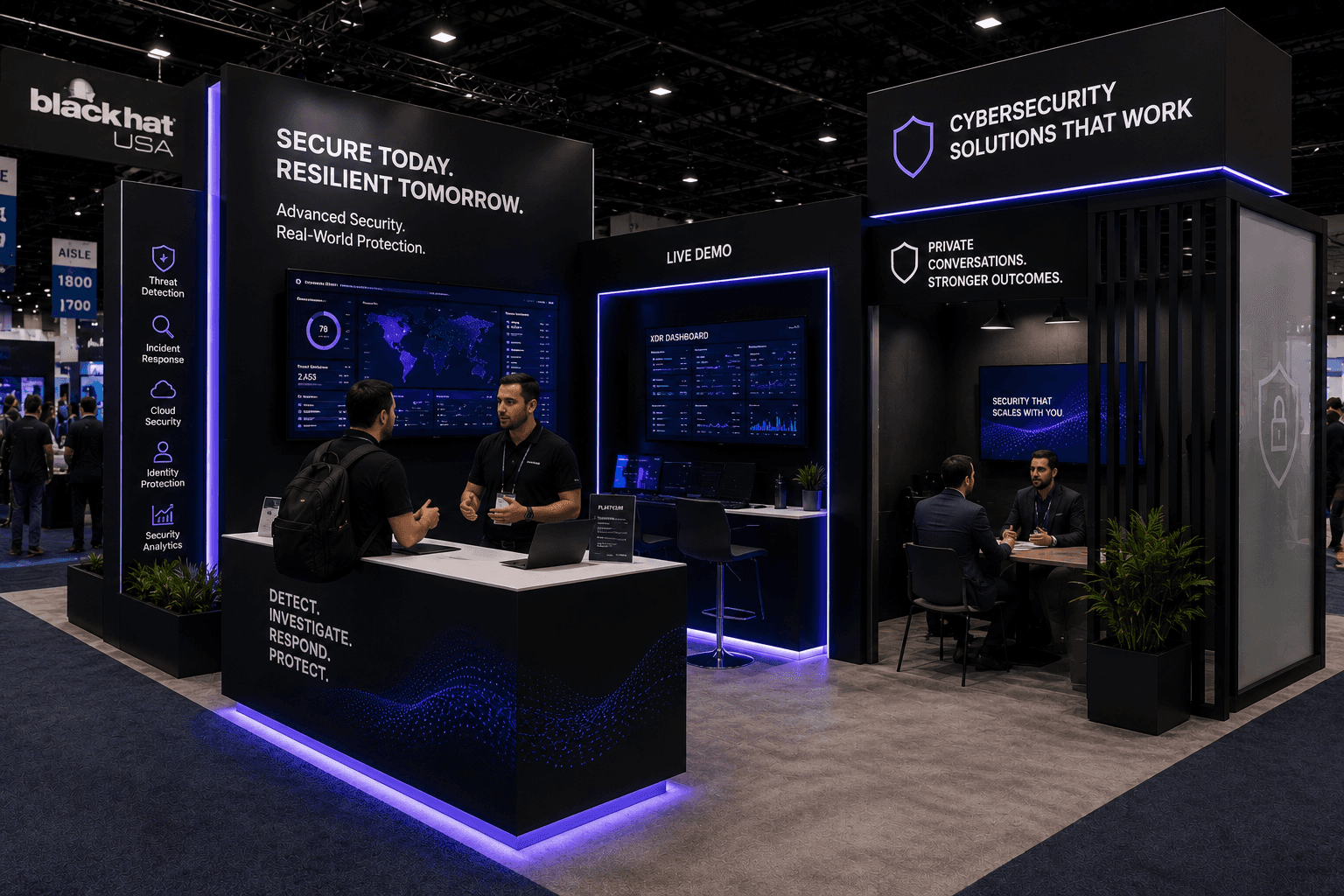
Black Hat booths need more than open traffic and a visible screen. For cybersecurity exhibitors, the layout should support software demos, screen privacy, controlled visitor flow, and semi-private conversations with enterprise buyers who need time to ask deeper technical questions.
Quick Answer:How should cybersecurity exhibitors plan a booth at Black Hat?
Cybersecurity exhibitors at Black Hat should plan booths around controlled demo conversations, screen privacy, enterprise buyer discussions, and clear visitor flow. The booth should help visitors understand the software quickly while giving sales and technical teams enough privacy for deeper security-related conversations.
Quick Answer:How should cybersecurity exhibitors plan a booth at Black Hat?
Cybersecurity exhibitors at Black Hat should plan booths around controlled demo conversations, screen privacy, enterprise buyer discussions, and clear visitor flow. The booth should help visitors understand the software quickly while giving sales and technical teams enough privacy for deeper security-related conversations.
A Black Hat booth should not behave like a broad-audience product display. Cybersecurity exhibitors need a booth that helps the right visitors understand the software, step into a controlled demo, and continue into a more private buyer conversation.
A Black Hat booth should not behave like a broad-audience product display.
Cybersecurity exhibitors usually are not trying to stop visitors with spectacle alone. They need a booth that helps the right people step in, understand the platform quickly, and move into a more focused technical or commercial conversation. That is why Black Hat booth planning should be built around controlled traffic, private demo flow, and enterprise buyer discussion instead of pure open-floor activity.
Quick Answer
Cybersecurity exhibitors at Black Hat should plan booths around controlled demo conversations, screen privacy, enterprise buyer discussions, and clear visitor flow. The booth should help visitors understand the software quickly while giving sales and technical teams enough privacy for deeper security-related conversations.
Why Does a Black Hat Booth Need a Different Layout?
A cybersecurity booth often deals with higher-friction conversations.
Visitors may want to ask about detection logic, integrations, architecture, deployment, compliance, incident response workflows, or competitive differences. They may also need to see dashboards, alerts, interface behavior, or reporting flows without feeling like they are having that conversation in the middle of aisle traffic.
That changes the booth logic.
Instead of building the whole space around maximum openness, a better Black Hat layout usually supports three actions:
quick product recognition
controlled software demo
semi-private buyer conversation
If all three happen at one open counter, the booth can feel exposed, crowded, and hard to use.
What Should Visitors Understand First?
Visitors should understand the software category before they enter a deeper conversation.
At Black Hat, many booths may involve security analytics, threat detection, cloud security, identity, endpoint protection, vulnerability management, network visibility, or security operations workflows. The front-facing part of the booth should make that category clear quickly.
The first message should answer:
What security problem does this product address?
Is the booth focused on platform demo, workflow demo, or solution discussion?
Where should a visitor stop first?
The booth does not need to explain every capability from the aisle. It needs enough clarity to help the right visitor decide to step in.
Why Is a Private Demo Counter So Important?
A private demo counter creates focus.
Cybersecurity software demos are often more effective in a semi-controlled environment than in a wide-open booth front. The visitor may need to watch an interface closely, ask technical questions, or discuss a use case without feeling like they are speaking to an audience.
A good private demo counter should support:
one clear software walkthrough
enough room for one or two visitors at a time
screen visibility without full public exposure
staff positioning that does not block the screen
a natural handoff into a deeper conversation
nearby access to supporting materials or a secondary screen
The point is not total privacy. The point is controlled visibility.
The booth should feel open enough to invite the right traffic, but protected enough to support a real demo conversation.
How Should Screen Privacy Work in a Cybersecurity Booth?
Screen privacy should be intentional.
In many cybersecurity booths, the screen is not just a decorative display. It may show dashboards, alert flows, investigation views, attack-path mapping, cloud posture views, or threat intelligence interfaces. That content is often more detailed than a casual passerby needs to see.
A stronger booth usually separates screen functions:
Screen Type | Main Role | Best Placement |
|---|---|---|
Aisle-facing screen | Attract attention and explain product category | Visible from the aisle, but simplified |
Demo screen | Show the live platform or software workflow | Near the demo counter, not fully exposed |
Conversation support screen | Help answer deeper buyer questions | Side or rear zone, closer to meeting area |
This keeps the booth from becoming either too public or too closed.
The front screen draws interest. The demo screen supports qualified discussion. The deeper conversation area gives the team more room to explain the product without rushing.
How Should Controlled Booth Flow Be Planned?
Controlled flow is more important than high-volume traffic.
A Black Hat booth does not need every visitor to stop. It needs the right visitors to stop, qualify quickly, and move into the right part of the booth. That means the layout should avoid one giant open space with no structure.
A better flow usually works like this:
A visitor sees the category and booth message from the aisle.
The visitor pauses at the front demo or qualification point.
Staff identifies whether the visitor needs a quick overview or a deeper conversation.
Qualified visitors move to a private demo counter or secure discussion zone.
Enterprise buyers move into a quieter conversation area for next-step discussion.
This makes the booth feel more intentional.
Without that flow, casual traffic, partner conversations, and technical demos can all collide in the same space.
What Does a Secure Discussion Zone Look Like?
A secure discussion zone does not need to be fully enclosed.
In many cases, a side counter, rear meeting table, or semi-screened discussion area works better than a closed meeting room. Black Hat exhibitors often need a place where enterprise buyers can ask practical questions about use cases, implementation, or evaluation steps without feeling fully exposed to aisle noise.
A secure discussion zone should support:
deeper technical questions
product-fit conversations
enterprise sales follow-up
partner or channel discussions
short architecture or workflow reviews
next-step planning
The goal is not to isolate the booth. It is to create a quieter zone that feels separate from the front demo traffic.
How Should a 20x20 Booth Handle Cybersecurity Demos?
A 20x20 footprint can work very well for Black Hat when the layout stays disciplined.
In fact, 20x20 booth layouts for software demos are often strong for cybersecurity exhibitors because they give enough room for a front qualification point, a demo counter, a side or rear conversation area, and hidden storage without forcing the booth to become too open.
A good 20x20 cybersecurity booth may include:
one front-facing brand or category wall
one controlled demo counter
one semi-private conversation area
one secondary screen or support screen
hidden storage for staff items and materials
clear entry and exit paths
The key is separation.
A 20x20 booth should not try to do too many public-facing demo behaviors at once. It should guide visitors from first interest to deeper conversation smoothly.
Cybersecurity Booth Zone Planning
Booth Zone | Main Role | Planning Focus |
|---|---|---|
Front qualifier zone | Catch the right traffic quickly | Clear message, fast staff interaction |
Demo counter | Run the software walkthrough | Screen visibility, privacy, staff positioning |
Secure discussion zone | Hold deeper buyer conversations | Reduced exposure, better acoustic comfort |
Support screen area | Reinforce demo or show platform detail | Secondary visibility, not aisle-dominant |
Storage / staff support | Hold literature, devices, personal items | Hidden, easy to access |
How Should Graphics Support a Cybersecurity Demo Booth?
Graphics should reduce friction, not add noise.
Black Hat visitors are often evaluating technical solutions. They do not need a booth full of vague claims. They need fast clarity about what the platform does and why they should step into the demo.
That is where graphics and brand presentation for trade show booths becomes important. Good booth graphics should help define:
the core security category
the product’s role in the security workflow
the right next step for the visitor
the difference between overview content and deeper demo content
The front-facing graphics should stay concise. The deeper demo area can support more detailed screen-based explanation or supporting product visuals.
A cybersecurity booth usually performs better when the message is direct and disciplined.
How Should Staff Positions Support Buyer Conversations?
Staff flow matters because cybersecurity booths often depend on qualification.
A simple staffing structure may include:
one greeter or qualifier near the aisle
one demo lead at the private counter
one technical expert available for deeper questions
one sales or partnership lead in the conversation zone
This helps the booth avoid two common problems:
too many staff crowding the front
serious conversations happening in the middle of open traffic
The layout should give staff clear working positions so the visitor experience feels calm, not chaotic.
If everyone gathers around the same counter, the booth loses both clarity and privacy.
How Does Las Vegas Execution Affect a Black Hat Booth?
A software booth still needs strong execution.
Even though a cybersecurity booth may not involve heavy physical products, it still depends on counters, screens, lighting, cable management, storage, graphics, and final testing. The booth has to support live demos, comfortable conversations, and clean presentation from the moment the show opens.
This is where booth build support in Las Vegas matters. The booth has to be installed in a way that protects screen placement, viewing angles, cable routing, discussion zones, and staff workflow.
For Black Hat exhibitors, execution planning should include:
screen placement and mounting
power and cable access
counter position relative to traffic flow
acoustic comfort for conversation areas
hidden storage
graphic fit and finish
final demo testing before opening
A cybersecurity booth should feel controlled because the product category itself depends on trust and clarity.
What Happens When the Booth Is Too Open?
The demo gets weaker.
This is a common issue with cybersecurity booths that are planned like general tech booths. When the layout is too open, visitors may watch the screen without entering, interrupt ongoing conversations, or hover too close to a private demo.
That can create:
weak screen privacy
crowded counters
low-quality buyer conversations
interrupted demos
unclear visitor flow
less comfortable sales follow-up
For Black Hat, a more controlled layout usually performs better than a highly exposed one.
The booth does not need to look closed. It needs to feel deliberate.
What Should Exhibitors Confirm Before Finalizing the Booth?
The best Black Hat booths are planned around conversation structure.
Before finalizing the layout, exhibitors should confirm how the booth needs to work in real traffic conditions.
Planning Checklist
What should visitors understand from the aisle?
Is the front experience a quick overview or a live software demo?
Does the booth need one main demo counter or more than one?
How much screen privacy is required?
Where should enterprise buyer conversations happen?
Does the booth need a side or rear secure discussion zone?
How much room is needed for staff to qualify and hand off visitors?
What graphics belong in the aisle-facing zone versus the demo zone?
Does a 20x20 layout provide enough separation?
Where will power, screens, and storage be placed?
Can the demo environment be tested before the show opens?
These questions help keep the booth focused on what matters most: clear demos and better conversations.
What Is the Best Layout Logic for a Black Hat Booth?
The best Black Hat booth starts with the conversation model.
First, define how a visitor enters the booth conversation. Then build the demo counter, screen layout, secure discussion zone, and staff positions around that flow.
A strong cybersecurity booth should make three things clear:
what software or security problem is being demonstrated
where the demo conversation should happen
where deeper enterprise discussions should continue
That is what turns a software booth into a better Black Hat environment.
Not more noise. Not more open traffic.
Just better control over how demo conversations happen.
Planning a Cybersecurity Demo Booth for Black Hat?
Start with the Black Hat show context, then plan the demo counter, screen privacy, secure discussion zone, graphics, and Las Vegas booth execution as one connected environment.
A Black Hat booth should not behave like a broad-audience product display.
Cybersecurity exhibitors usually are not trying to stop visitors with spectacle alone. They need a booth that helps the right people step in, understand the platform quickly, and move into a more focused technical or commercial conversation. That is why Black Hat booth planning should be built around controlled traffic, private demo flow, and enterprise buyer discussion instead of pure open-floor activity.
Quick Answer
Cybersecurity exhibitors at Black Hat should plan booths around controlled demo conversations, screen privacy, enterprise buyer discussions, and clear visitor flow. The booth should help visitors understand the software quickly while giving sales and technical teams enough privacy for deeper security-related conversations.
Why Does a Black Hat Booth Need a Different Layout?
A cybersecurity booth often deals with higher-friction conversations.
Visitors may want to ask about detection logic, integrations, architecture, deployment, compliance, incident response workflows, or competitive differences. They may also need to see dashboards, alerts, interface behavior, or reporting flows without feeling like they are having that conversation in the middle of aisle traffic.
That changes the booth logic.
Instead of building the whole space around maximum openness, a better Black Hat layout usually supports three actions:
quick product recognition
controlled software demo
semi-private buyer conversation
If all three happen at one open counter, the booth can feel exposed, crowded, and hard to use.
What Should Visitors Understand First?
Visitors should understand the software category before they enter a deeper conversation.
At Black Hat, many booths may involve security analytics, threat detection, cloud security, identity, endpoint protection, vulnerability management, network visibility, or security operations workflows. The front-facing part of the booth should make that category clear quickly.
The first message should answer:
What security problem does this product address?
Is the booth focused on platform demo, workflow demo, or solution discussion?
Where should a visitor stop first?
The booth does not need to explain every capability from the aisle. It needs enough clarity to help the right visitor decide to step in.
Why Is a Private Demo Counter So Important?
A private demo counter creates focus.
Cybersecurity software demos are often more effective in a semi-controlled environment than in a wide-open booth front. The visitor may need to watch an interface closely, ask technical questions, or discuss a use case without feeling like they are speaking to an audience.
A good private demo counter should support:
one clear software walkthrough
enough room for one or two visitors at a time
screen visibility without full public exposure
staff positioning that does not block the screen
a natural handoff into a deeper conversation
nearby access to supporting materials or a secondary screen
The point is not total privacy. The point is controlled visibility.
The booth should feel open enough to invite the right traffic, but protected enough to support a real demo conversation.
How Should Screen Privacy Work in a Cybersecurity Booth?
Screen privacy should be intentional.
In many cybersecurity booths, the screen is not just a decorative display. It may show dashboards, alert flows, investigation views, attack-path mapping, cloud posture views, or threat intelligence interfaces. That content is often more detailed than a casual passerby needs to see.
A stronger booth usually separates screen functions:
Screen Type | Main Role | Best Placement |
|---|---|---|
Aisle-facing screen | Attract attention and explain product category | Visible from the aisle, but simplified |
Demo screen | Show the live platform or software workflow | Near the demo counter, not fully exposed |
Conversation support screen | Help answer deeper buyer questions | Side or rear zone, closer to meeting area |
This keeps the booth from becoming either too public or too closed.
The front screen draws interest. The demo screen supports qualified discussion. The deeper conversation area gives the team more room to explain the product without rushing.
How Should Controlled Booth Flow Be Planned?
Controlled flow is more important than high-volume traffic.
A Black Hat booth does not need every visitor to stop. It needs the right visitors to stop, qualify quickly, and move into the right part of the booth. That means the layout should avoid one giant open space with no structure.
A better flow usually works like this:
A visitor sees the category and booth message from the aisle.
The visitor pauses at the front demo or qualification point.
Staff identifies whether the visitor needs a quick overview or a deeper conversation.
Qualified visitors move to a private demo counter or secure discussion zone.
Enterprise buyers move into a quieter conversation area for next-step discussion.
This makes the booth feel more intentional.
Without that flow, casual traffic, partner conversations, and technical demos can all collide in the same space.
What Does a Secure Discussion Zone Look Like?
A secure discussion zone does not need to be fully enclosed.
In many cases, a side counter, rear meeting table, or semi-screened discussion area works better than a closed meeting room. Black Hat exhibitors often need a place where enterprise buyers can ask practical questions about use cases, implementation, or evaluation steps without feeling fully exposed to aisle noise.
A secure discussion zone should support:
deeper technical questions
product-fit conversations
enterprise sales follow-up
partner or channel discussions
short architecture or workflow reviews
next-step planning
The goal is not to isolate the booth. It is to create a quieter zone that feels separate from the front demo traffic.
How Should a 20x20 Booth Handle Cybersecurity Demos?
A 20x20 footprint can work very well for Black Hat when the layout stays disciplined.
In fact, 20x20 booth layouts for software demos are often strong for cybersecurity exhibitors because they give enough room for a front qualification point, a demo counter, a side or rear conversation area, and hidden storage without forcing the booth to become too open.
A good 20x20 cybersecurity booth may include:
one front-facing brand or category wall
one controlled demo counter
one semi-private conversation area
one secondary screen or support screen
hidden storage for staff items and materials
clear entry and exit paths
The key is separation.
A 20x20 booth should not try to do too many public-facing demo behaviors at once. It should guide visitors from first interest to deeper conversation smoothly.
Cybersecurity Booth Zone Planning
Booth Zone | Main Role | Planning Focus |
|---|---|---|
Front qualifier zone | Catch the right traffic quickly | Clear message, fast staff interaction |
Demo counter | Run the software walkthrough | Screen visibility, privacy, staff positioning |
Secure discussion zone | Hold deeper buyer conversations | Reduced exposure, better acoustic comfort |
Support screen area | Reinforce demo or show platform detail | Secondary visibility, not aisle-dominant |
Storage / staff support | Hold literature, devices, personal items | Hidden, easy to access |
How Should Graphics Support a Cybersecurity Demo Booth?
Graphics should reduce friction, not add noise.
Black Hat visitors are often evaluating technical solutions. They do not need a booth full of vague claims. They need fast clarity about what the platform does and why they should step into the demo.
That is where graphics and brand presentation for trade show booths becomes important. Good booth graphics should help define:
the core security category
the product’s role in the security workflow
the right next step for the visitor
the difference between overview content and deeper demo content
The front-facing graphics should stay concise. The deeper demo area can support more detailed screen-based explanation or supporting product visuals.
A cybersecurity booth usually performs better when the message is direct and disciplined.
How Should Staff Positions Support Buyer Conversations?
Staff flow matters because cybersecurity booths often depend on qualification.
A simple staffing structure may include:
one greeter or qualifier near the aisle
one demo lead at the private counter
one technical expert available for deeper questions
one sales or partnership lead in the conversation zone
This helps the booth avoid two common problems:
too many staff crowding the front
serious conversations happening in the middle of open traffic
The layout should give staff clear working positions so the visitor experience feels calm, not chaotic.
If everyone gathers around the same counter, the booth loses both clarity and privacy.
How Does Las Vegas Execution Affect a Black Hat Booth?
A software booth still needs strong execution.
Even though a cybersecurity booth may not involve heavy physical products, it still depends on counters, screens, lighting, cable management, storage, graphics, and final testing. The booth has to support live demos, comfortable conversations, and clean presentation from the moment the show opens.
This is where booth build support in Las Vegas matters. The booth has to be installed in a way that protects screen placement, viewing angles, cable routing, discussion zones, and staff workflow.
For Black Hat exhibitors, execution planning should include:
screen placement and mounting
power and cable access
counter position relative to traffic flow
acoustic comfort for conversation areas
hidden storage
graphic fit and finish
final demo testing before opening
A cybersecurity booth should feel controlled because the product category itself depends on trust and clarity.
What Happens When the Booth Is Too Open?
The demo gets weaker.
This is a common issue with cybersecurity booths that are planned like general tech booths. When the layout is too open, visitors may watch the screen without entering, interrupt ongoing conversations, or hover too close to a private demo.
That can create:
weak screen privacy
crowded counters
low-quality buyer conversations
interrupted demos
unclear visitor flow
less comfortable sales follow-up
For Black Hat, a more controlled layout usually performs better than a highly exposed one.
The booth does not need to look closed. It needs to feel deliberate.
What Should Exhibitors Confirm Before Finalizing the Booth?
The best Black Hat booths are planned around conversation structure.
Before finalizing the layout, exhibitors should confirm how the booth needs to work in real traffic conditions.
Planning Checklist
What should visitors understand from the aisle?
Is the front experience a quick overview or a live software demo?
Does the booth need one main demo counter or more than one?
How much screen privacy is required?
Where should enterprise buyer conversations happen?
Does the booth need a side or rear secure discussion zone?
How much room is needed for staff to qualify and hand off visitors?
What graphics belong in the aisle-facing zone versus the demo zone?
Does a 20x20 layout provide enough separation?
Where will power, screens, and storage be placed?
Can the demo environment be tested before the show opens?
These questions help keep the booth focused on what matters most: clear demos and better conversations.
What Is the Best Layout Logic for a Black Hat Booth?
The best Black Hat booth starts with the conversation model.
First, define how a visitor enters the booth conversation. Then build the demo counter, screen layout, secure discussion zone, and staff positions around that flow.
A strong cybersecurity booth should make three things clear:
what software or security problem is being demonstrated
where the demo conversation should happen
where deeper enterprise discussions should continue
That is what turns a software booth into a better Black Hat environment.
Not more noise. Not more open traffic.
Just better control over how demo conversations happen.
Planning a Cybersecurity Demo Booth for Black Hat?
Start with the Black Hat show context, then plan the demo counter, screen privacy, secure discussion zone, graphics, and Las Vegas booth execution as one connected environment.
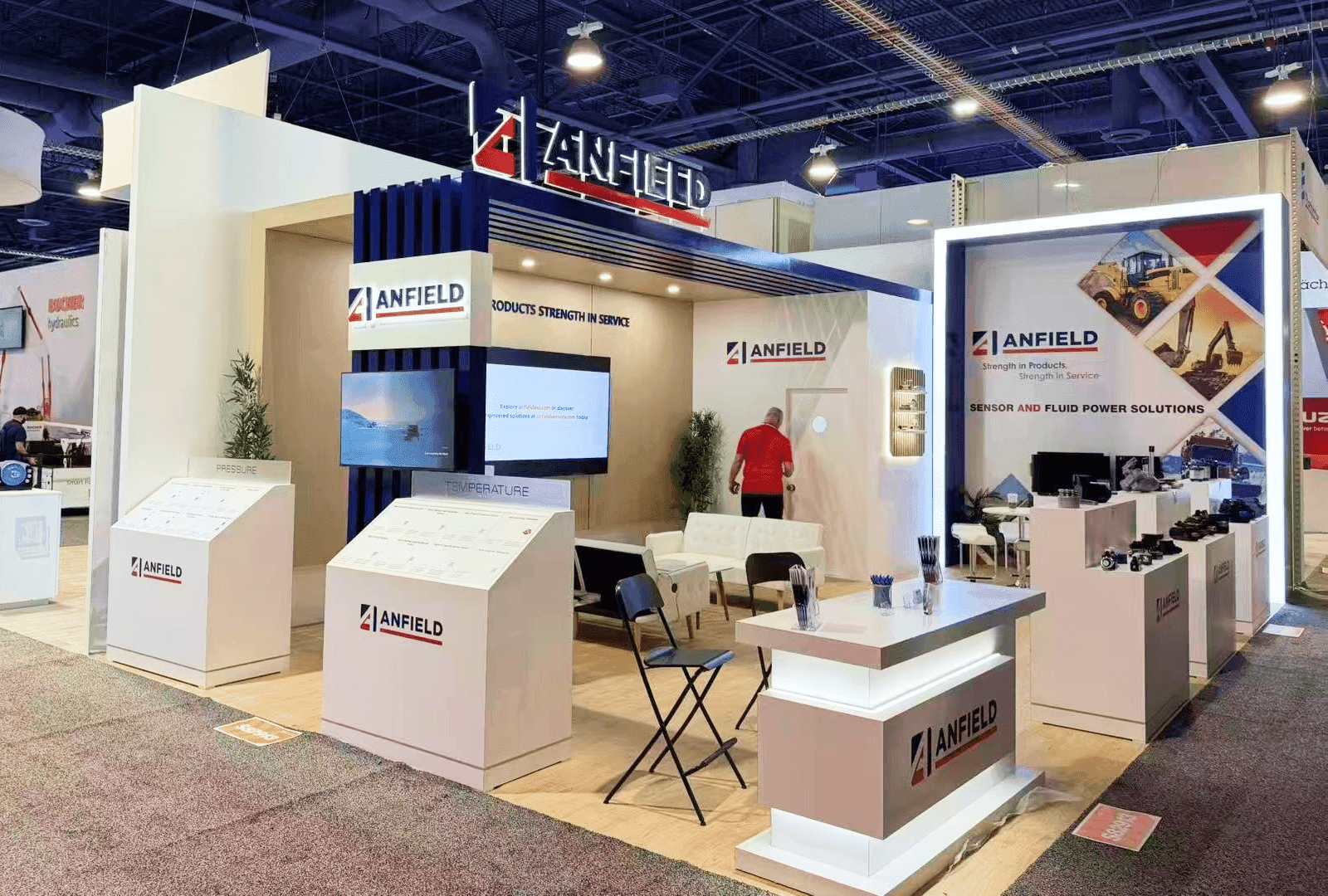
Exhibition Cases
Message
Leave your message and we will get back to you ASAP
Send a Message
We’ll Be in Touch!
Message
Leave your message and we will get back to you ASAP
Address:
4915 Steptoe Street #300
Las Vegas, NV 89122