Why Graphics and Layout Need to Be Planned Together Before Booth Fabrication Starts

Circle Exhibit Team
Industry professionals
Exhibition industry professional dedicated to delivering the latest insights and curated recommendations to you.
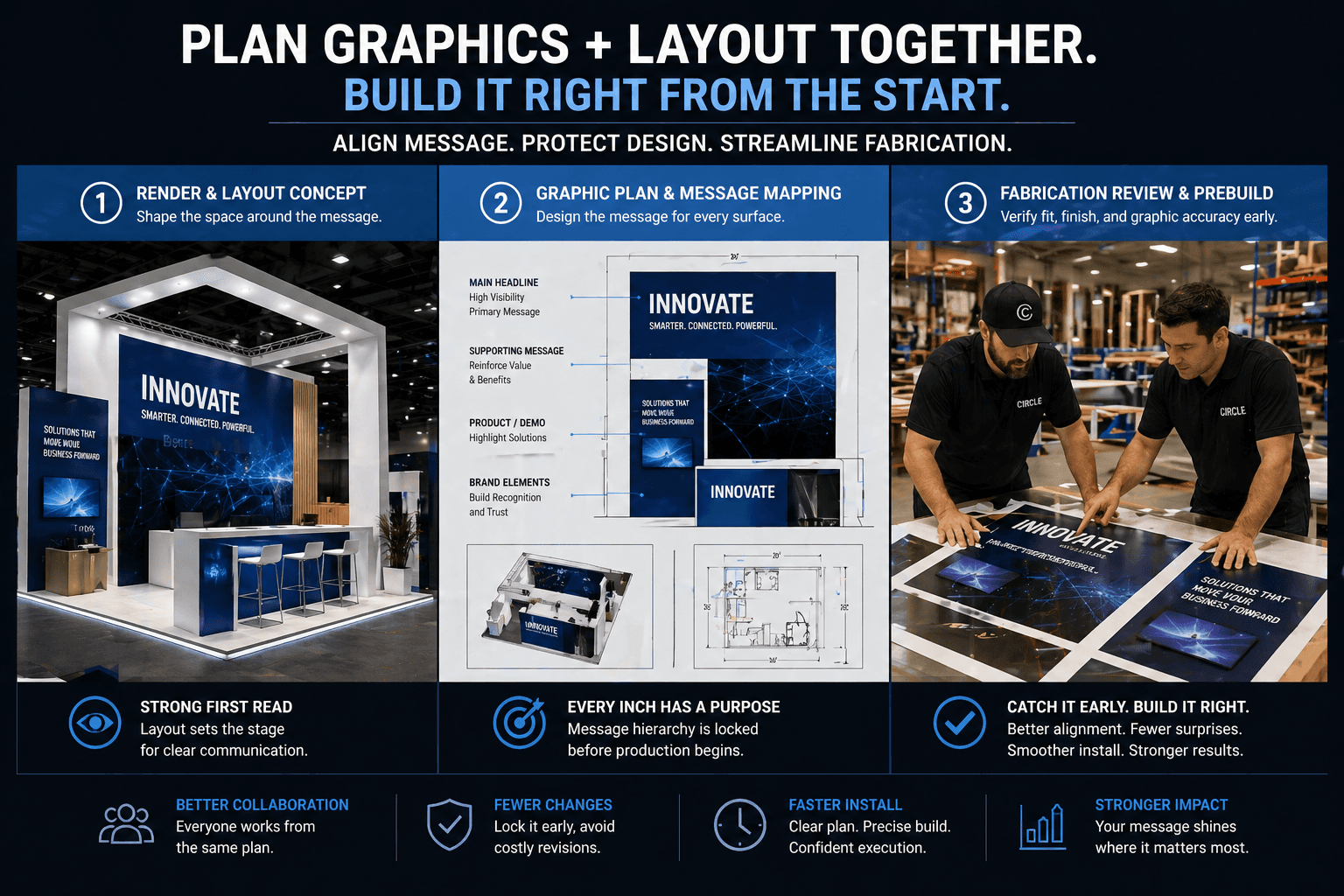
Layout and graphics should be locked together before production starts. When those two systems are still drifting separately, the booth usually becomes harder to build, harder to finish, and harder to read on the floor.
Graphics problems often begin before graphics production
A lot of teams think graphics become important once the booth is already designed.
The layout is approved.
The structure feels mostly settled.
Then the graphics team starts fitting brand, messaging, and visual assets onto the surfaces that already exist.
That sequence is common.
It is also where many booth problems begin.
Because graphics are not only content on top of structure. They are part of how the booth is read, how the walls are prioritized, and how the visitor understands the space from the aisle. If layout and graphics are not being planned together early enough, the booth often reaches fabrication with two systems that still do not fully agree with each other.
That is where avoidable pressure starts.
A booth layout is already making message decisions
Even before any headline is written, the layout is deciding things like:
what surface gets seen first
what wall feels primary
where the eye is supposed to go
how deep the booth feels
where the first stop is likely to happen
what area feels supportive versus dominant
That means layout is already shaping communication.
If the graphic system is developed later as though it is only decorating finished walls, the project often ends up forcing the message into structural logic that was never designed to support it.
That is why graphics and layout need to be planned together.
Not because the booth should become more complicated.
Because the booth should stop working against itself.
The first-read message depends on the physical plan
A booth does not communicate in flat space.
It communicates through:
wall position
entry angle
sightline
scale
depth
hierarchy
what is blocked and what is open
That is why the graphic system cannot be treated as a separate late-stage layer.
A headline may read well in isolation and still fail if:
it lands on the wrong wall
the viewing distance is wrong
the visitor sees another surface first
the booth edge interrupts the message
a monitor, product display, or opening splits the reading sequence
This is one of the biggest reasons early coordination matters.
The graphics do not only need the right words.
They need the right physical conditions.
A render can look right while the message system is still weak
This happens a lot.
The booth looks polished in concept. The render feels branded. The mood is strong. Everyone can imagine the final environment.
But once the team starts asking harder production questions, the weakness appears:
Which wall is the real hero wall?
Where does the main headline actually go?
Which surface must stay visually quiet?
What dimensions are still flexible?
Which graphic zones are dependent on AV or product placement?
Which surfaces need fabrication decisions before the graphics can be finalized?
If those questions are still unresolved, the render may be ahead of the real project.
That is usually when the booth starts carrying hidden production risk.
Layout changes can quietly break graphics logic
This is one reason it is dangerous to let layout and graphics drift on separate tracks.
A small layout adjustment can change far more than people expect.
For example:
moving a storage wall changes the hero message wall
widening an opening changes the first-read sequence
changing monitor size affects surrounding graphic balance
shifting a counter alters viewing distance
deepening a demo zone changes which wall is actually seen first
None of these changes may look dramatic in plan view.
But they can completely change how the booth communicates.
That is why the graphic system should not be “applied later.”
It should evolve alongside the layout while the layout is still honest enough to change.
Graphics planning should influence structural decisions early
This is where the project usually gets stronger.
When the graphics strategy is present early enough, it can help shape better decisions about:
wall width
wall height
clean message surfaces
monitor placement
opening size
transitions between message and display
whether certain surfaces should carry branding, product explanation, or stay quiet
That makes the booth easier to read and easier to fabricate.
Because now the structure is being designed with communication in mind, not only with geometry in mind.
That is usually a much better production starting point.
Fabrication gets harder when layout and graphics are still arguing
This is where booth fabrication and prebuild checks become more vulnerable.
A booth that enters production without locked alignment between layout and graphics often creates pressure like this:
graphic dimensions are still shifting
message zones are not fully confirmed
visible surfaces need late adjustment
fabrication details are being revised to support content that arrived too late
prebuild cannot fully verify the final reading conditions
That is why this is not just a marketing issue.
It is a fabrication issue too.
If layout and graphics are not aligned before production, the shop inherits uncertainty it should not have to solve.
Graphics and fabrication need the same version of reality
This sounds simple, but it matters.
The fabrication team needs to know:
what walls are real
what dimensions are final
what finish zones are visible
what surfaces need precision
what openings or cutouts must align with the visual system
The graphics team needs to know:
what can still change
what cannot
what viewing distance matters
what physical hierarchy the booth is actually creating
what structural limits affect the message
If those two groups are not working from the same reality, the project starts slipping toward compromise.
That is why earlier coordination protects both quality and schedule.
CES booths especially reward this kind of discipline
This becomes especially important at CES in Las Vegas.
CES booths often depend on:
faster first-read messaging
cleaner category clarity
stronger balance between screen and wall message
more disciplined visual hierarchy from the aisle
That means graphics and layout cannot afford to be out of sync for long. If the structure says one thing and the message layer says another, the booth becomes slower to understand at exactly the kind of show where people make fast decisions.
That is one of the biggest reasons CES-type booths benefit from locking layout and graphics together before production starts.
The booth has less time to explain itself once the show is live.
Builder planning matters because message hierarchy is physical
This is one reason exhibitors benefit from working with a Las Vegas trade show booth builder that understands graphics as part of booth behavior, not just as branded decoration.
Because message hierarchy is not only a copywriting decision.
It is a physical decision.
It depends on:
where people approach
where they stop
what wall they see first
what depth the booth creates
where demo and message overlap
what structure should dominate versus disappear
If the builder is not part of that conversation early enough, the project often ends up treating graphics like a surface problem instead of a layout problem.
That is usually too late.
The strongest booths usually lock these things together early
The cleanest projects usually align these five things before fabrication begins:
1. Hero message surface
Everyone knows what wall or surface carries the primary first-read role.
2. Graphic hierarchy
Primary, secondary, and supportive surfaces are clearly separated.
3. Physical openings and display elements
Doors, counters, screens, demo zones, and product displays are already influencing the message plan.
4. Final fabrication-sensitive dimensions
The surfaces that matter visually are not still drifting.
5. Production handoff logic
Graphics and fabrication are working from the same version of the booth.
When those five align, the booth usually becomes easier to produce and easier to read.
A practical test
Before fabrication starts, it helps to ask:
If this wall changes, what happens to the message system?
If the answer is “a lot,” the graphics should already be in the layout conversation.
If this monitor moves, what happens to the visual hierarchy?
That usually reveals whether the booth has real alignment yet.
If this surface gets resized, do both teams already know?
If not, production is carrying risk.
Could the booth still communicate clearly if one detail shifts?
If not, the coordination may still be too fragile.
These questions usually reveal whether layout and graphics are truly locked together or just temporarily coexisting.
Final thought
Graphics and layout need to be planned together before booth fabrication starts because they are not separate systems meeting at the end.
They are two parts of the same reading experience.
The layout decides what the visitor sees first. The graphics decide what that first view means. If they are developed in isolation, the booth often becomes harder to read, harder to fabricate, and harder to finish without pressure.
That is why earlier alignment matters so much.
Not only for better branding.
For better production, better execution, and a booth that actually makes sense once it reaches the floor.
Trying to make booth graphics work harder without creating more production pressure?
Start with a stronger graphics and brand presentation strategy, then connect it to a Las Vegas trade show booth builder approach that locks message hierarchy and layout together before fabrication begins.
Graphics problems often begin before graphics production
A lot of teams think graphics become important once the booth is already designed.
The layout is approved.
The structure feels mostly settled.
Then the graphics team starts fitting brand, messaging, and visual assets onto the surfaces that already exist.
That sequence is common.
It is also where many booth problems begin.
Because graphics are not only content on top of structure. They are part of how the booth is read, how the walls are prioritized, and how the visitor understands the space from the aisle. If layout and graphics are not being planned together early enough, the booth often reaches fabrication with two systems that still do not fully agree with each other.
That is where avoidable pressure starts.
A booth layout is already making message decisions
Even before any headline is written, the layout is deciding things like:
what surface gets seen first
what wall feels primary
where the eye is supposed to go
how deep the booth feels
where the first stop is likely to happen
what area feels supportive versus dominant
That means layout is already shaping communication.
If the graphic system is developed later as though it is only decorating finished walls, the project often ends up forcing the message into structural logic that was never designed to support it.
That is why graphics and layout need to be planned together.
Not because the booth should become more complicated.
Because the booth should stop working against itself.
The first-read message depends on the physical plan
A booth does not communicate in flat space.
It communicates through:
wall position
entry angle
sightline
scale
depth
hierarchy
what is blocked and what is open
That is why the graphic system cannot be treated as a separate late-stage layer.
A headline may read well in isolation and still fail if:
it lands on the wrong wall
the viewing distance is wrong
the visitor sees another surface first
the booth edge interrupts the message
a monitor, product display, or opening splits the reading sequence
This is one of the biggest reasons early coordination matters.
The graphics do not only need the right words.
They need the right physical conditions.
A render can look right while the message system is still weak
This happens a lot.
The booth looks polished in concept. The render feels branded. The mood is strong. Everyone can imagine the final environment.
But once the team starts asking harder production questions, the weakness appears:
Which wall is the real hero wall?
Where does the main headline actually go?
Which surface must stay visually quiet?
What dimensions are still flexible?
Which graphic zones are dependent on AV or product placement?
Which surfaces need fabrication decisions before the graphics can be finalized?
If those questions are still unresolved, the render may be ahead of the real project.
That is usually when the booth starts carrying hidden production risk.
Layout changes can quietly break graphics logic
This is one reason it is dangerous to let layout and graphics drift on separate tracks.
A small layout adjustment can change far more than people expect.
For example:
moving a storage wall changes the hero message wall
widening an opening changes the first-read sequence
changing monitor size affects surrounding graphic balance
shifting a counter alters viewing distance
deepening a demo zone changes which wall is actually seen first
None of these changes may look dramatic in plan view.
But they can completely change how the booth communicates.
That is why the graphic system should not be “applied later.”
It should evolve alongside the layout while the layout is still honest enough to change.
Graphics planning should influence structural decisions early
This is where the project usually gets stronger.
When the graphics strategy is present early enough, it can help shape better decisions about:
wall width
wall height
clean message surfaces
monitor placement
opening size
transitions between message and display
whether certain surfaces should carry branding, product explanation, or stay quiet
That makes the booth easier to read and easier to fabricate.
Because now the structure is being designed with communication in mind, not only with geometry in mind.
That is usually a much better production starting point.
Fabrication gets harder when layout and graphics are still arguing
This is where booth fabrication and prebuild checks become more vulnerable.
A booth that enters production without locked alignment between layout and graphics often creates pressure like this:
graphic dimensions are still shifting
message zones are not fully confirmed
visible surfaces need late adjustment
fabrication details are being revised to support content that arrived too late
prebuild cannot fully verify the final reading conditions
That is why this is not just a marketing issue.
It is a fabrication issue too.
If layout and graphics are not aligned before production, the shop inherits uncertainty it should not have to solve.
Graphics and fabrication need the same version of reality
This sounds simple, but it matters.
The fabrication team needs to know:
what walls are real
what dimensions are final
what finish zones are visible
what surfaces need precision
what openings or cutouts must align with the visual system
The graphics team needs to know:
what can still change
what cannot
what viewing distance matters
what physical hierarchy the booth is actually creating
what structural limits affect the message
If those two groups are not working from the same reality, the project starts slipping toward compromise.
That is why earlier coordination protects both quality and schedule.
CES booths especially reward this kind of discipline
This becomes especially important at CES in Las Vegas.
CES booths often depend on:
faster first-read messaging
cleaner category clarity
stronger balance between screen and wall message
more disciplined visual hierarchy from the aisle
That means graphics and layout cannot afford to be out of sync for long. If the structure says one thing and the message layer says another, the booth becomes slower to understand at exactly the kind of show where people make fast decisions.
That is one of the biggest reasons CES-type booths benefit from locking layout and graphics together before production starts.
The booth has less time to explain itself once the show is live.
Builder planning matters because message hierarchy is physical
This is one reason exhibitors benefit from working with a Las Vegas trade show booth builder that understands graphics as part of booth behavior, not just as branded decoration.
Because message hierarchy is not only a copywriting decision.
It is a physical decision.
It depends on:
where people approach
where they stop
what wall they see first
what depth the booth creates
where demo and message overlap
what structure should dominate versus disappear
If the builder is not part of that conversation early enough, the project often ends up treating graphics like a surface problem instead of a layout problem.
That is usually too late.
The strongest booths usually lock these things together early
The cleanest projects usually align these five things before fabrication begins:
1. Hero message surface
Everyone knows what wall or surface carries the primary first-read role.
2. Graphic hierarchy
Primary, secondary, and supportive surfaces are clearly separated.
3. Physical openings and display elements
Doors, counters, screens, demo zones, and product displays are already influencing the message plan.
4. Final fabrication-sensitive dimensions
The surfaces that matter visually are not still drifting.
5. Production handoff logic
Graphics and fabrication are working from the same version of the booth.
When those five align, the booth usually becomes easier to produce and easier to read.
A practical test
Before fabrication starts, it helps to ask:
If this wall changes, what happens to the message system?
If the answer is “a lot,” the graphics should already be in the layout conversation.
If this monitor moves, what happens to the visual hierarchy?
That usually reveals whether the booth has real alignment yet.
If this surface gets resized, do both teams already know?
If not, production is carrying risk.
Could the booth still communicate clearly if one detail shifts?
If not, the coordination may still be too fragile.
These questions usually reveal whether layout and graphics are truly locked together or just temporarily coexisting.
Final thought
Graphics and layout need to be planned together before booth fabrication starts because they are not separate systems meeting at the end.
They are two parts of the same reading experience.
The layout decides what the visitor sees first. The graphics decide what that first view means. If they are developed in isolation, the booth often becomes harder to read, harder to fabricate, and harder to finish without pressure.
That is why earlier alignment matters so much.
Not only for better branding.
For better production, better execution, and a booth that actually makes sense once it reaches the floor.
Trying to make booth graphics work harder without creating more production pressure?
Start with a stronger graphics and brand presentation strategy, then connect it to a Las Vegas trade show booth builder approach that locks message hierarchy and layout together before fabrication begins.
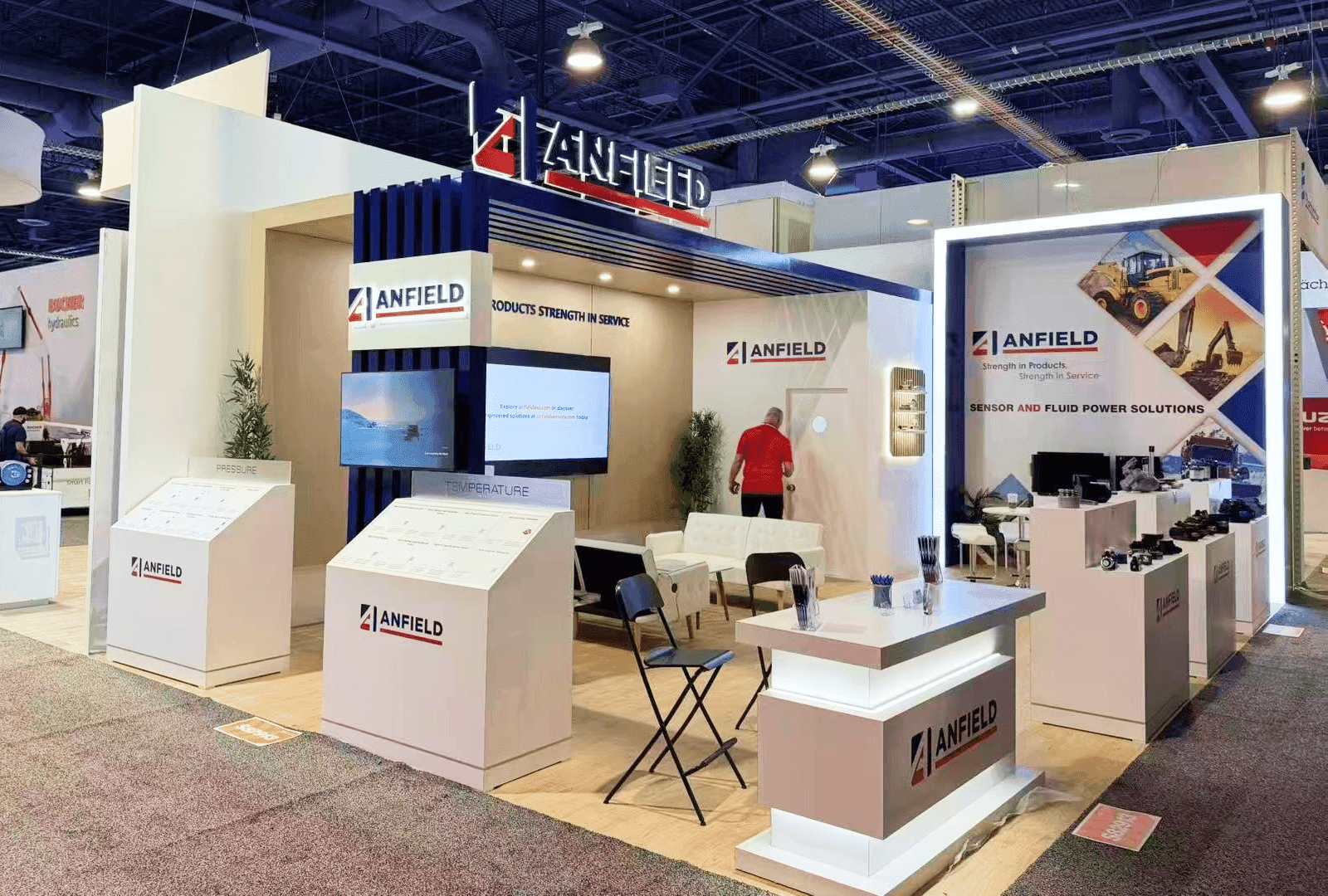
Exhibition Cases
Message
Leave your message and we will get back to you ASAP
Send a Message
We’ll Be in Touch!
Message
Leave your message and we will get back to you ASAP
Address:
4915 Steptoe Street #300
Las Vegas, NV 89122