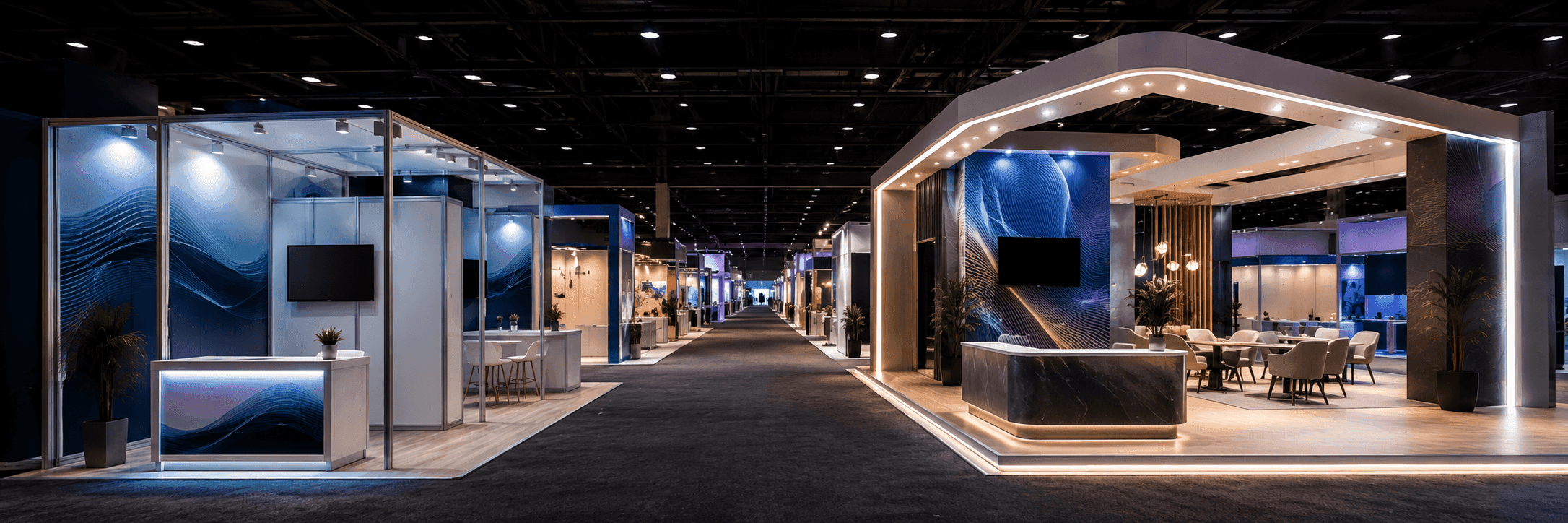
trade show booth layout designed for live product demonstrations and testing with clear visitor flow, demo zones, and supporting visual displays

Designing Booth Layouts for Live Demonstrations and Product Testing

Designing Booth Layouts for Live Demonstrations and Product Testing

Circle Exhibit Team

Industry professionals

Exhibition industry professional dedicated to delivering the latest insights and curated recommendations to you.

Exhibition industry professional dedicated to delivering the latest insights and curated recommendations to you.

Designing Booth Layouts for Live Demonstrations and Product Testing

A booth built for conversation is different from a booth built for demonstration.

Once live demos or product testing become part of the show-floor plan, layout decisions start carrying more weight. Space is no longer just about brand presentation. It has to support movement, viewing angles, queue behavior, reset time, and the practical question every visitor asks within a few seconds:

Where do I stand, and what am I supposed to watch?

That is where many booths lose clarity. The product may be interesting, but the demonstration environment is not designed to guide people through it.

1. Demonstration Booths Need a Clear Viewing Logic

In a standard display booth, visitors can enter from almost any point and understand the space gradually.

Live-demo booths work differently. If people cannot immediately tell:

  • where the demo starts

  • where the best viewing point is

  • where staff are speaking from

  • where not to stand

the demonstration begins to feel messy, no matter how good the product is.

A strong layout gives the demo a front, a side, and a natural stopping line. It tells people how to watch before anyone says a word.

2. Product Testing Needs Buffer Space, Not Just Open Space

A common planning mistake is to allocate “open space” for demonstrations without thinking about how that space behaves once people arrive.

Buffer space is what actually matters. That includes room for:

  • a small crowd to gather without blocking circulation

  • staff to move safely around the product

  • visitors to step in and out without interrupting the demo

  • a reset zone between one interaction and the next

This is especially important when the product is physical, technical, or requires multiple steps to explain.

Without buffer space, the demo works once in rehearsal and then breaks down in real traffic.

3. Not Every Visitor Wants the Full Demo

At trade shows, audiences rarely engage at the same depth.

Some want a quick visual understanding.
Some want to test the product.
Some want a technical explanation.
Some only want to know whether they should come back later.

Booth layouts for live demos should support these different levels at the same time.

A good approach is to create three layers:

  • front layer for quick viewing

  • middle layer for direct interaction

  • back layer for deeper discussion

This keeps the booth from forcing every visitor into the same experience.

4. Screens, Graphics, and Product Motion Must Work Together

When live demonstrations involve digital dashboards, projected visuals, or step-by-step staff explanation, the layout must coordinate those elements instead of treating them separately.

Visitors should never have to choose between:

  • watching the product

  • reading the screen

  • hearing the presenter

  • trying to understand the graphic wall

The strongest demo booths make those elements reinforce one another.

That usually means:

  • placing the main screen within the same viewing field as the product

  • using short, readable supporting graphics

  • avoiding visual noise behind the presenter

  • keeping the demonstration sequence physically legible

When product motion and information are disconnected, attention drops quickly.

5. Reset Time Is Part of Booth Design

Many exhibitors plan for the first demonstration but not the fifth, twentieth, or fiftieth.

Products that are touched, opened, tested, adjusted, or restarted create operational demands throughout the day. If the booth layout does not support reset, staff begin improvising in front of visitors.

That often leads to:

  • clutter around the product

  • awkward staff movement

  • delayed next demos

  • inconsistent visitor experience

A practical demo layout should always account for where staff reset the display, store accessories, and prepare the next interaction without disrupting the aisle.

6. Demo Layouts Should Reduce Friction, Not Create Theater

Some exhibitors try to make demonstrations look dramatic. That can work in certain industries, but in many cases visitors respond better to layouts that feel usable, credible, and easy to follow.

When the layout is clear:

  • people know where to stop

  • the demo begins naturally

  • follow-up conversations happen without chaos

  • the booth feels well run

This matters more than spectacle, especially in industries where visitors are evaluating utility, not entertainment.

Conclusion

Booths built for live demonstrations and product testing need more than open floor space. They need a clear viewing structure, operational logic, and enough flexibility to serve different types of visitors without losing control of the experience.

When demonstration flow is designed well, the booth becomes easier to understand, easier to manage, and more effective at turning attention into meaningful conversations.

For exhibitors building demo-heavy environments, our graphics and brand presentation service shows how visual communication can support product understanding on the show floor.
Designing Booth Layouts for Live Demonstrations and Product Testing

A booth built for conversation is different from a booth built for demonstration.

Once live demos or product testing become part of the show-floor plan, layout decisions start carrying more weight. Space is no longer just about brand presentation. It has to support movement, viewing angles, queue behavior, reset time, and the practical question every visitor asks within a few seconds:

Where do I stand, and what am I supposed to watch?

That is where many booths lose clarity. The product may be interesting, but the demonstration environment is not designed to guide people through it.

1. Demonstration Booths Need a Clear Viewing Logic

In a standard display booth, visitors can enter from almost any point and understand the space gradually.

Live-demo booths work differently. If people cannot immediately tell:

  • where the demo starts

  • where the best viewing point is

  • where staff are speaking from

  • where not to stand

the demonstration begins to feel messy, no matter how good the product is.

A strong layout gives the demo a front, a side, and a natural stopping line. It tells people how to watch before anyone says a word.

2. Product Testing Needs Buffer Space, Not Just Open Space

A common planning mistake is to allocate “open space” for demonstrations without thinking about how that space behaves once people arrive.

Buffer space is what actually matters. That includes room for:

  • a small crowd to gather without blocking circulation

  • staff to move safely around the product

  • visitors to step in and out without interrupting the demo

  • a reset zone between one interaction and the next

This is especially important when the product is physical, technical, or requires multiple steps to explain.

Without buffer space, the demo works once in rehearsal and then breaks down in real traffic.

3. Not Every Visitor Wants the Full Demo

At trade shows, audiences rarely engage at the same depth.

Some want a quick visual understanding.
Some want to test the product.
Some want a technical explanation.
Some only want to know whether they should come back later.

Booth layouts for live demos should support these different levels at the same time.

A good approach is to create three layers:

  • front layer for quick viewing

  • middle layer for direct interaction

  • back layer for deeper discussion

This keeps the booth from forcing every visitor into the same experience.

4. Screens, Graphics, and Product Motion Must Work Together

When live demonstrations involve digital dashboards, projected visuals, or step-by-step staff explanation, the layout must coordinate those elements instead of treating them separately.

Visitors should never have to choose between:

  • watching the product

  • reading the screen

  • hearing the presenter

  • trying to understand the graphic wall

The strongest demo booths make those elements reinforce one another.

That usually means:

  • placing the main screen within the same viewing field as the product

  • using short, readable supporting graphics

  • avoiding visual noise behind the presenter

  • keeping the demonstration sequence physically legible

When product motion and information are disconnected, attention drops quickly.

5. Reset Time Is Part of Booth Design

Many exhibitors plan for the first demonstration but not the fifth, twentieth, or fiftieth.

Products that are touched, opened, tested, adjusted, or restarted create operational demands throughout the day. If the booth layout does not support reset, staff begin improvising in front of visitors.

That often leads to:

  • clutter around the product

  • awkward staff movement

  • delayed next demos

  • inconsistent visitor experience

A practical demo layout should always account for where staff reset the display, store accessories, and prepare the next interaction without disrupting the aisle.

6. Demo Layouts Should Reduce Friction, Not Create Theater

Some exhibitors try to make demonstrations look dramatic. That can work in certain industries, but in many cases visitors respond better to layouts that feel usable, credible, and easy to follow.

When the layout is clear:

  • people know where to stop

  • the demo begins naturally

  • follow-up conversations happen without chaos

  • the booth feels well run

This matters more than spectacle, especially in industries where visitors are evaluating utility, not entertainment.

Conclusion

Booths built for live demonstrations and product testing need more than open floor space. They need a clear viewing structure, operational logic, and enough flexibility to serve different types of visitors without losing control of the experience.

When demonstration flow is designed well, the booth becomes easier to understand, easier to manage, and more effective at turning attention into meaningful conversations.

For exhibitors building demo-heavy environments, our graphics and brand presentation service shows how visual communication can support product understanding on the show floor.
Message

Leave your message and we will get back to you ASAP

Send a Message

We’ll Be in Touch!

Message

Leave your message and we will get back to you ASAP

If you’re ready to shape the future with us, your journey could start here.

If you’re ready to shape the future with us, your journey could start here.

Address:

4915 Steptoe Street #300

Las Vegas, NV 89122