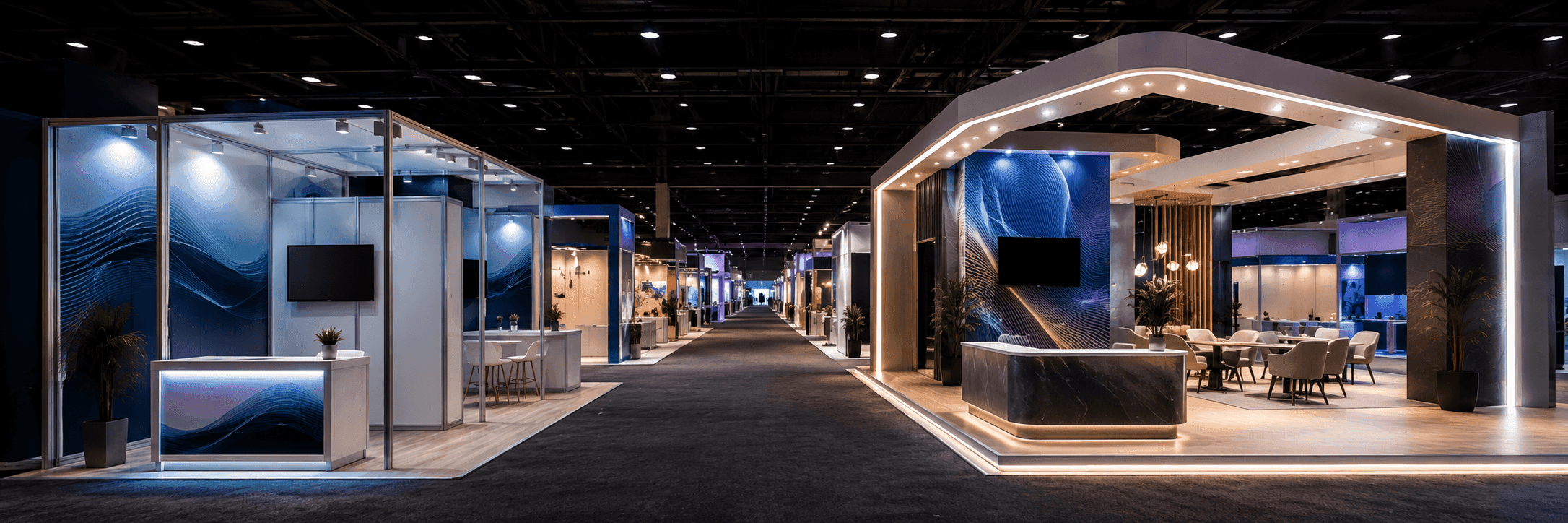
sustainable exhibit design , eco-friendly exhibit materials , modular booth design

Dec 8, 2025

The Road to Low-Carbon Concrete — How WOC 2025 Rewrites the Future of Sustainable Construction

The Road to Low-Carbon Concrete — How WOC 2025 Rewrites the Future of Sustainable Construction


Circle Editor

Industry professionals

Exhibition industry professional dedicated to delivering the latest insights and curated recommendations to you.

At World of Concrete 2025, sustainability is no longer a parallel narrative — it is the heartbeat of every conversation. Across the halls of the Las Vegas Convention Center, you can feel the shift: builders, chemists, designers, and policymakers speak a new shared language — one rooted in circularity, carbon literacy, and long-term resilience. Concrete, one of the most energy-intensive materials on Earth, is undergoing a renaissance. It is lighter, cleaner, regenerative — and increasingly intelligent.

At World of Concrete 2025, sustainability is no longer a parallel narrative — it is the heartbeat of every conversation. Across the halls of the Las Vegas Convention Center, you can feel the shift: builders, chemists, designers, and policymakers speak a new shared language — one rooted in circularity, carbon literacy, and long-term resilience. Concrete, one of the most energy-intensive materials on Earth, is undergoing a renaissance. It is lighter, cleaner, regenerative — and increasingly intelligent.

At World of Concrete 2025, sustainability is no longer a parallel narrative — it is the heartbeat of every conversation. Across the halls of the Las Vegas Convention Center, you can feel the shift: builders, chemists, designers, and policymakers speak a new shared language — one rooted in circularity, carbon literacy, and long-term resilience. Concrete, one of the most energy-intensive materials on Earth, is undergoing a renaissance. It is lighter, cleaner, regenerative — and increasingly intelligent.

Concent

For Circle Exhibit,
this transformation mirrors the company’s philosophy in
sustainable exhibit design,
eco-friendly exhibit materials,
and modular booth design.
The way we build temporary spaces,
they believe, reflects the way we should build permanent ones:
with intention, restraint, and respect for renewal.

The Carbon Reckoning

For decades, concrete has been both the backbone and contradiction of modern civilization —
indispensable yet environmentally costly.
At WOC 2025, this contradiction finally receives its reckoning.

Every major presentation acknowledges the same reality:
cement production alone contributes nearly 8% of global CO₂ emissions.

And yet, the mood isn’t pessimistic.
It’s determined.
Urgent, but hopeful.

The industry has moved past denial and entered the era of solutions.

The Sustainable Materials Pavilion becomes the emotional center of this year’s show.
Walking through it feels like stepping into the future of the planet —
a future built not from compromise,
but from reinvention.

Reinventing the Chemistry of Concrete

One of the most inspiring breakthroughs showcased at WOC 2025
is the reinvention of the cement binder itself.

A research coalition presents LC³ cement (limestone calcined clay cement)
with a potential to cut carbon emissions by nearly 40%.

Nearby, a California startup reveals biogenic limestone,
a carbon-neutral aggregate grown from algae —
offering an extraordinary replacement for traditional quarried stone.

But perhaps the most striking is a Canadian company’s demonstration
of CO₂-infused concrete,
which mineralizes carbon during curing,
locking it permanently into the material structure.

“Concrete can become a carbon sink,”
the lead scientist says —
and for the first time,
the audience believes it.

Circular Construction: Closing the Loop

Circularity is no longer academic theory at WOC —
it is a functioning economic model.

A walk through the Reclamation Zone reveals machinery
that sorts demolition debris with nearly surgical accuracy.

Robotic crushers separate concrete from rebar,
while AI models evaluate the quality of material
to determine whether it should be reused, repurposed, or downcycled.

In one live demo,
a slab of demolished concrete is crushed, filtered, remixed,
and extruded into a fresh block —
all within thirty minutes.

It is not recycling.
It is reincarnation.

This idea — that materials can be endlessly reborn —
is deeply aligned with Circle Exhibit’s
modular booth design.

Just as reclaimed aggregates are re-composed into new structures,
Circle’s modular systems allow frames, panels, and finishes
to move from show to show,
configuration to configuration,
without waste or loss of aesthetic integrity.

Circular thinking is no longer an exception.
It is becoming the default.

Nature-Based Materials Enter the Mainstream

The most visually captivating installations at WOC 2025
belong to the nature-based material innovators.

Hempcrete, once niche, now commands enormous crowds.
Its insulating performance and negative-carbon profile
mark it as a frontrunner for future passive homes.

Mycelium-grown structural blocks
showcase fungal root systems forming lightweight yet strong composites —
living materials that regenerate faster than any industrial alternative.

Engineered timber products are displayed
alongside digital models showing their seismic tolerance
and carbon storage potential.

In the midst of this natural symphony,
Circle Exhibit demonstrates how
eco-friendly exhibit materials
can achieve the same harmony —
where renewable woods, biodegradable textiles,
and low-VOC finishes contribute to cleaner sensory environments.

Sustainability is no longer raw and rustic.
It is refined and modern.

Energy Efficiency as Architecture

Sustainability is not just material —
it is performance.

New innovations at WOC 2025 demonstrate
how the built environment can actively reduce operational energy consumption.

Examples include:

  • Phase-change concrete panels that store and release thermal energy

  • Bio-photovoltaic cladding systems generating power using living algae

  • Light-filtering cement tints optimizing interior daylight

  • Smart precast systems that integrate insulation, conduits, and HVAC channels

Energy efficiency is no longer an add-on to building —
it is the architecture itself.

This mirrors how Circle Exhibit approaches
sustainable exhibit design:
every lighting plan, airflow path, and panel specification
is considered not only for form,
but for ecological footprint.

Beauty without efficiency is outdated.
Efficiency without beauty is ignored.

Today, they coexist.

The Emotional Shift — From Green Mandate to Green Desire

One of the most profound changes at WOC 2025
is emotional, not technical.

Sustainability used to feel like obligation:
reduce emissions, reduce waste, reduce consumption.

Now, sustainability feels like aspiration.

People want natural textures.
People want breathable air.
People want spaces that feel honest.

A booth showcasing mineral-pigmented concrete tiles
draws long lines not because they are eco-friendly,
but because they are beautiful.

A recycled aggregate countertop
is touched repeatedly as visitors comment:
“I love the imperfections.”

Green is no longer guilt-driven.
It is desire-driven.

This emotional evolution is precisely
what Circle Exhibit elevates
through sustainable exhibit design.

Design doesn’t preach sustainability —
it seduces people into choosing it.

Scalability: The Final Frontier

The industry agrees on one truth:
sustainability means nothing if it cannot scale.

At WOC 2025, the world sees the first signs
of scalable green concrete solutions —
systems that work not just for pilot projects,
but for highways, bridges, and megastructures.

High-capacity mixers process low-carbon binders without performance loss.
3D-printed formwork accelerates casting timelines.
Large-format modular panels cut labor requirements dramatically.

For the first time,
sustainable concrete is not just possible
it is profitable.

And as economics shift,
so does adoption.

Circle Exhibit recognizes this same truth in exhibition design:
sustainability only matters if it can be delivered
at scale, consistently, across hundreds of installations.

That is why their
modular booth design
and reusable fabrication systems
are engineered not for one event,
but for decades of lifecycle performance.

Conclusion — A New Ethic of Construction

As WOC 2025 draws to a close,
the mood is unusually reflective for such a massive industrial show.

People pause in the aisles.
They touch reclaimed materials.
They discuss longevity, not speed.

The industry has entered a new era —
one defined not by extraction,
but by regeneration.

Concrete is no longer the symbol of environmental burden.
It is becoming the vessel of environmental healing.

And companies like Circle Exhibit,
with their expertise in
sustainable exhibit design,
eco-friendly exhibit materials,
and modular booth design,
help reinforce this message in every space they build —
spaces that prove sustainability can be
sophisticated, scalable, and profoundly human.

The road to low-carbon concrete is no longer theoretical.
It is being paved —
pour by pour, innovation by innovation —
here at WOC 2025.
For Circle Exhibit,
this transformation mirrors the company’s philosophy in
sustainable exhibit design,
eco-friendly exhibit materials,
and modular booth design.
The way we build temporary spaces,
they believe, reflects the way we should build permanent ones:
with intention, restraint, and respect for renewal.

The Carbon Reckoning

For decades, concrete has been both the backbone and contradiction of modern civilization —
indispensable yet environmentally costly.
At WOC 2025, this contradiction finally receives its reckoning.

Every major presentation acknowledges the same reality:
cement production alone contributes nearly 8% of global CO₂ emissions.

And yet, the mood isn’t pessimistic.
It’s determined.
Urgent, but hopeful.

The industry has moved past denial and entered the era of solutions.

The Sustainable Materials Pavilion becomes the emotional center of this year’s show.
Walking through it feels like stepping into the future of the planet —
a future built not from compromise,
but from reinvention.

Reinventing the Chemistry of Concrete

One of the most inspiring breakthroughs showcased at WOC 2025
is the reinvention of the cement binder itself.

A research coalition presents LC³ cement (limestone calcined clay cement)
with a potential to cut carbon emissions by nearly 40%.

Nearby, a California startup reveals biogenic limestone,
a carbon-neutral aggregate grown from algae —
offering an extraordinary replacement for traditional quarried stone.

But perhaps the most striking is a Canadian company’s demonstration
of CO₂-infused concrete,
which mineralizes carbon during curing,
locking it permanently into the material structure.

“Concrete can become a carbon sink,”
the lead scientist says —
and for the first time,
the audience believes it.

Circular Construction: Closing the Loop

Circularity is no longer academic theory at WOC —
it is a functioning economic model.

A walk through the Reclamation Zone reveals machinery
that sorts demolition debris with nearly surgical accuracy.

Robotic crushers separate concrete from rebar,
while AI models evaluate the quality of material
to determine whether it should be reused, repurposed, or downcycled.

In one live demo,
a slab of demolished concrete is crushed, filtered, remixed,
and extruded into a fresh block —
all within thirty minutes.

It is not recycling.
It is reincarnation.

This idea — that materials can be endlessly reborn —
is deeply aligned with Circle Exhibit’s
modular booth design.

Just as reclaimed aggregates are re-composed into new structures,
Circle’s modular systems allow frames, panels, and finishes
to move from show to show,
configuration to configuration,
without waste or loss of aesthetic integrity.

Circular thinking is no longer an exception.
It is becoming the default.

Nature-Based Materials Enter the Mainstream

The most visually captivating installations at WOC 2025
belong to the nature-based material innovators.

Hempcrete, once niche, now commands enormous crowds.
Its insulating performance and negative-carbon profile
mark it as a frontrunner for future passive homes.

Mycelium-grown structural blocks
showcase fungal root systems forming lightweight yet strong composites —
living materials that regenerate faster than any industrial alternative.

Engineered timber products are displayed
alongside digital models showing their seismic tolerance
and carbon storage potential.

In the midst of this natural symphony,
Circle Exhibit demonstrates how
eco-friendly exhibit materials
can achieve the same harmony —
where renewable woods, biodegradable textiles,
and low-VOC finishes contribute to cleaner sensory environments.

Sustainability is no longer raw and rustic.
It is refined and modern.

Energy Efficiency as Architecture

Sustainability is not just material —
it is performance.

New innovations at WOC 2025 demonstrate
how the built environment can actively reduce operational energy consumption.

Examples include:

  • Phase-change concrete panels that store and release thermal energy

  • Bio-photovoltaic cladding systems generating power using living algae

  • Light-filtering cement tints optimizing interior daylight

  • Smart precast systems that integrate insulation, conduits, and HVAC channels

Energy efficiency is no longer an add-on to building —
it is the architecture itself.

This mirrors how Circle Exhibit approaches
sustainable exhibit design:
every lighting plan, airflow path, and panel specification
is considered not only for form,
but for ecological footprint.

Beauty without efficiency is outdated.
Efficiency without beauty is ignored.

Today, they coexist.

The Emotional Shift — From Green Mandate to Green Desire

One of the most profound changes at WOC 2025
is emotional, not technical.

Sustainability used to feel like obligation:
reduce emissions, reduce waste, reduce consumption.

Now, sustainability feels like aspiration.

People want natural textures.
People want breathable air.
People want spaces that feel honest.

A booth showcasing mineral-pigmented concrete tiles
draws long lines not because they are eco-friendly,
but because they are beautiful.

A recycled aggregate countertop
is touched repeatedly as visitors comment:
“I love the imperfections.”

Green is no longer guilt-driven.
It is desire-driven.

This emotional evolution is precisely
what Circle Exhibit elevates
through sustainable exhibit design.

Design doesn’t preach sustainability —
it seduces people into choosing it.

Scalability: The Final Frontier

The industry agrees on one truth:
sustainability means nothing if it cannot scale.

At WOC 2025, the world sees the first signs
of scalable green concrete solutions —
systems that work not just for pilot projects,
but for highways, bridges, and megastructures.

High-capacity mixers process low-carbon binders without performance loss.
3D-printed formwork accelerates casting timelines.
Large-format modular panels cut labor requirements dramatically.

For the first time,
sustainable concrete is not just possible
it is profitable.

And as economics shift,
so does adoption.

Circle Exhibit recognizes this same truth in exhibition design:
sustainability only matters if it can be delivered
at scale, consistently, across hundreds of installations.

That is why their
modular booth design
and reusable fabrication systems
are engineered not for one event,
but for decades of lifecycle performance.

Conclusion — A New Ethic of Construction

As WOC 2025 draws to a close,
the mood is unusually reflective for such a massive industrial show.

People pause in the aisles.
They touch reclaimed materials.
They discuss longevity, not speed.

The industry has entered a new era —
one defined not by extraction,
but by regeneration.

Concrete is no longer the symbol of environmental burden.
It is becoming the vessel of environmental healing.

And companies like Circle Exhibit,
with their expertise in
sustainable exhibit design,
eco-friendly exhibit materials,
and modular booth design,
help reinforce this message in every space they build —
spaces that prove sustainability can be
sophisticated, scalable, and profoundly human.

The road to low-carbon concrete is no longer theoretical.
It is being paved —
pour by pour, innovation by innovation —
here at WOC 2025.
Message

Leave your message and we will get back to you ASAP

Send a Message

We’ll Be in Touch!

Message

Leave your message and we will get back to you ASAP

If you’re ready to shape the future with us, your journey could start here.

If you’re ready to shape the future with us, your journey could start here.

If you’re ready to shape the future with us, your journey could start here.

Address:

4935 Steptoe Street #300

Las Vegas, NV 89122