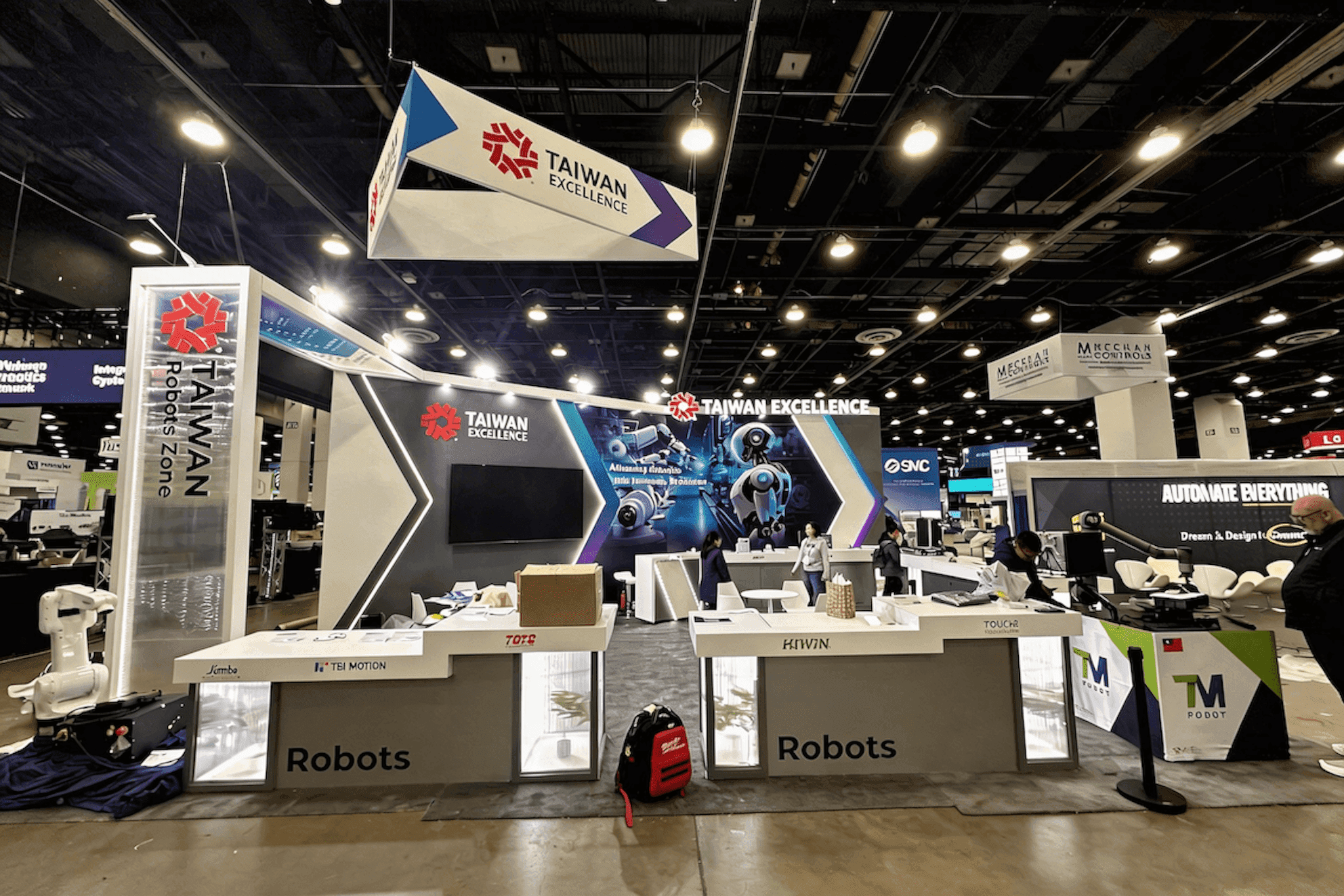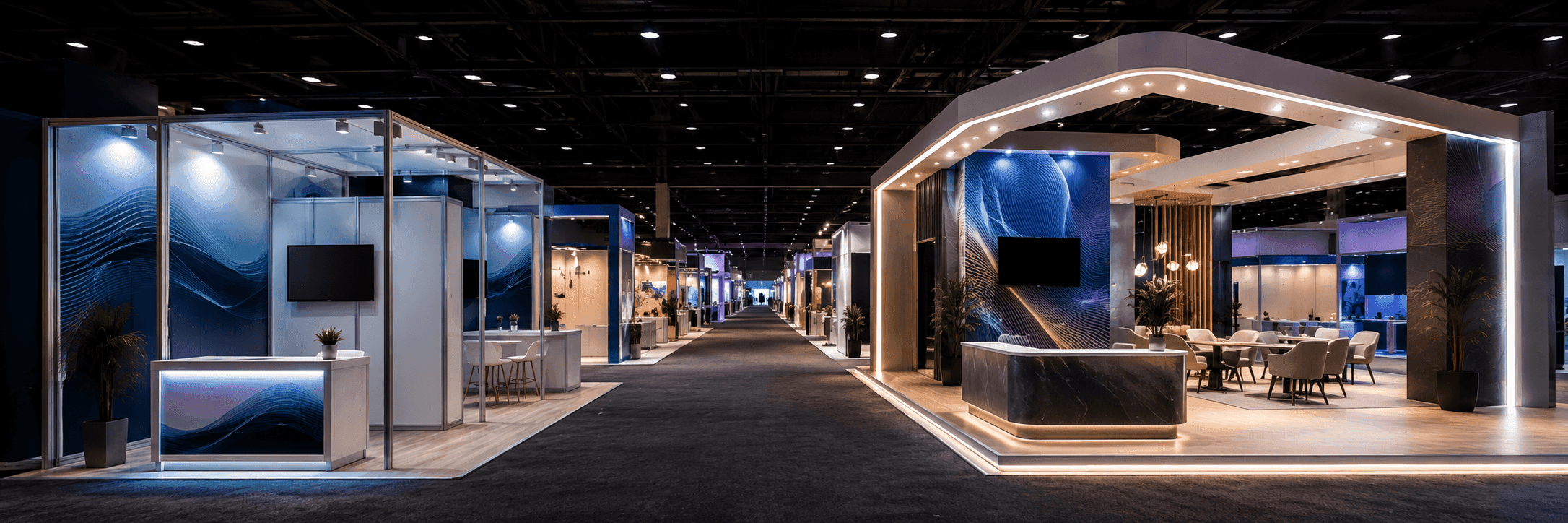
interactive booth technology , technology-integrated displays , experiential exhibit design

Oct 26, 2025

The Inspired Home Show 2025: The Warmth of Intelligence — When AI and Human Design Coexist in the Modern Home

The Inspired Home Show 2025: The Warmth of Intelligence — When AI and Human Design Coexist in the Modern Home


Circle Exhibit Team

Industry professionals

Exhibition industry professional dedicated to delivering the latest insights and curated recommendations to you.

At The Inspired Home Show 2025, technology doesn’t dominate — it listens. In an age of automation and endless connectivity, the real innovation is empathy: how machines understand people, and how design gives them a heart. This year’s exhibition in Chicago marks a turning point. Smart home devices are no longer futuristic novelties — they are companions that learn, adapt, and respond with warmth. For Circle Exhibit , this evolution is more than technical; it’s emotional. Through interactive booth technology , technology-integrated displays , and experiential exhibit design , the company helps brands create intelligent spaces where algorithms serve feelings, and innovation serves humanity.

At The Inspired Home Show 2025, technology doesn’t dominate — it listens. In an age of automation and endless connectivity, the real innovation is empathy: how machines understand people, and how design gives them a heart. This year’s exhibition in Chicago marks a turning point. Smart home devices are no longer futuristic novelties — they are companions that learn, adapt, and respond with warmth. For Circle Exhibit , this evolution is more than technical; it’s emotional. Through interactive booth technology , technology-integrated displays , and experiential exhibit design , the company helps brands create intelligent spaces where algorithms serve feelings, and innovation serves humanity.

At The Inspired Home Show 2025, technology doesn’t dominate — it listens. In an age of automation and endless connectivity, the real innovation is empathy: how machines understand people, and how design gives them a heart. This year’s exhibition in Chicago marks a turning point. Smart home devices are no longer futuristic novelties — they are companions that learn, adapt, and respond with warmth. For Circle Exhibit , this evolution is more than technical; it’s emotional. Through interactive booth technology , technology-integrated displays , and experiential exhibit design , the company helps brands create intelligent spaces where algorithms serve feelings, and innovation serves humanity.

The Age of Empathic Technology

Artificial intelligence has finally outgrown its mechanical voice.

At IHS 2025, the best innovations aren’t those that perform tasks fastest —
but those that understand people best.

A smart oven senses hesitation and pauses to confirm a setting.
A home assistant lowers its volume when detecting a baby’s cry.
Lighting systems track human movement, adjusting warmth to match emotional rhythm.

This new generation of technology doesn’t aim to impress — it aims to comfort.
As one exhibitor put it, “Our goal is not automation; it’s attunement.”

The exhibition floor reflects this philosophy.
Soft soundscapes replace electronic noise.
Product displays resemble living rooms more than labs.
Screens disappear into surfaces, and data visualizations look like art.

Circle Exhibit mirrors this empathy-driven evolution.
Their interactive booth technology transforms exhibitions into responsive environments,
where lighting, motion, and projection adapt organically to visitor behavior.

Technology becomes not an interruption, but a conversation.

Designing the Human Algorithm

Behind every AI system lies a simple truth:
intelligence without empathy is chaos.

Designers at IHS 2025 understand that successful smart homes
depend as much on psychology as on programming.

Every booth reveals careful observation of human rituals —
morning routines, family meals, rest cycles, creative moments.
The focus isn’t on “what” technology can do,
but “how” it feels while doing it.

Circle Exhibit translates these behavioral insights
into spatial storytelling.
Their experiential exhibit design
uses movement, sound, and proximity sensors to emulate domestic rhythm.

A visitor walks into a booth — the light warms slightly.
Pause too long, and soft ambient music fades in.
Every gesture becomes input,
every reaction becomes communication.

This is not exhibition as display — it’s exhibition as empathy.

The Aesthetic of Calm Intelligence

Gone are the glossy, high-tech surfaces of the past decade.
At IHS 2025, intelligence hides behind simplicity.

Designers call it “calm tech” —
technology that exists quietly,
enhancing without overwhelming.

One of the most visited installations, “The Invisible Interface,”
features walls that subtly react to touch and sound,
while furniture embedded with micro-sensors adjusts for posture support.

Every element feels intuitive, organic, and deeply human.

technology-integrated displays
allow visitors to interact with data without realizing it —
gestures, voice, and proximity all blend into seamless flow.

Circle Exhibit embraces this “invisible aesthetic”
through minimalist structural lines, embedded projection, and modular design logic.
Their booths feel alive, yet unobtrusive —
as if the space itself were quietly aware of who’s inside it.

This is the new elegance of intelligence:
a design that knows when not to speak.

When Machines Learn to Care

The emotional impact of AI becomes strikingly evident
in the health and wellness sections of IHS 2025.

A new generation of air purifiers monitors air composition
and adjusts filtration speed based on mood-sensing algorithms.
A digital bathroom mirror reads micro-expressions
to recommend relaxation routines instead of just products.

Visitors respond not with awe, but relief.
Technology that once demanded attention now returns it.

For exhibit builders like Circle Exhibit,
this empathy-first approach reshapes booth architecture itself.
Their experiential exhibit design
positions comfort as the foundation of intelligence.
Rounded corners replace sharp edges,
muted tones replace high contrast,
and warm lighting flows like dialogue through the environment.

In these spaces, design doesn’t just display intelligence —
it demonstrates understanding.

The Sensory Web of Modern Living

One of the most memorable moments at IHS 2025
is found in the Connected Home Gallery
a full-scale simulation of sensory harmony.

Every surface hums with potential.
Touch panels embedded in countertops
respond to gesture pressure with emotional haptics —
a soft pulse when the user is anxious,
a cooling vibration when the room overheats.

Smells and sounds complete the feedback loop —
lavender mist in the evening,
bright citrus in the morning.

Circle Exhibit’s interactive booth technology
employs similar multi-sensory layering.
Through scent diffusion, kinetic movement, and synchronized light,
their booths allow visitors to feel intelligence rather than see it.

It’s not about technology adapting to people —
it’s about people remembering how it feels to be understood.

Bridging Humanity and Automation

A quiet tension runs through every discussion at IHS 2025:
Where does technology end, and humanity begin?

Philosophers of design argue that
true innovation must include moral intelligence —
the ability to recognize limits.

Circle Exhibit embraces this balance.
Their technology-integrated displays
reveal data without distraction,
keeping human behavior — not artificial efficiency — at the core.

Every booth tells a similar story:
a balance between agency and assistance.
Smart kitchens that guide without controlling.
AI lighting systems that illuminate without surveillance.
Digital furniture that supports without dominating.

It’s a future where machines exist not as masters or servants,
but as companions.

From Interaction to Relationship

Perhaps the most profound change in 2025’s smart living movement
is the emotional maturity of its technology.

In previous years, devices reacted —
now they relate.

A coffee maker remembers preferred brew strengths.
A home sound system syncs playlists with circadian rhythms.
A thermostat learns not just temperature preferences,
but how comfort changes during stress.

Circle Exhibit mirrors this relationship dynamic in its booth philosophy.
Their experiential exhibit design
moves beyond product presentation toward shared experience.
Spaces greet visitors like hosts,
respond to them like listeners,
and leave them feeling known.

The result isn’t just engagement — it’s connection.

Designing for Emotional Trust

Trust is the new frontier of smart home design.

In an era of data breaches and algorithmic opacity,
designers must craft not only functional systems,
but trustworthy ones.

Brands at IHS 2025 respond by adopting transparent design languages.
Glass panels reveal internal mechanisms.
Interfaces use plain language instead of code.
Physical buttons coexist with digital touch —
giving users the comfort of control.

Circle Exhibit integrates the same transparency
into its architectural storytelling.
Their interactive booth technology
shows visitors the logic behind every interaction,
turning invisible systems into tangible trust.

Because when users understand how technology works,
they no longer fear it — they embrace it.

The Future Is Soft Intelligence

As the exhibition closes,
the tone feels less like innovation and more like introspection.

The future of smart homes isn’t louder, faster, or shinier —
it’s gentler.

Soft intelligence — design that listens, adapts, and cares —
is redefining what it means to live well.

Through interactive booth technology,
technology-integrated displays,
and experiential exhibit design,
Circle Exhibit continues to humanize technology,
building spaces that make intelligence feel intimate.

Because in the end, the smartest home
is the one that still feels like yours.
The Age of Empathic Technology

Artificial intelligence has finally outgrown its mechanical voice.

At IHS 2025, the best innovations aren’t those that perform tasks fastest —
but those that understand people best.

A smart oven senses hesitation and pauses to confirm a setting.
A home assistant lowers its volume when detecting a baby’s cry.
Lighting systems track human movement, adjusting warmth to match emotional rhythm.

This new generation of technology doesn’t aim to impress — it aims to comfort.
As one exhibitor put it, “Our goal is not automation; it’s attunement.”

The exhibition floor reflects this philosophy.
Soft soundscapes replace electronic noise.
Product displays resemble living rooms more than labs.
Screens disappear into surfaces, and data visualizations look like art.

Circle Exhibit mirrors this empathy-driven evolution.
Their interactive booth technology transforms exhibitions into responsive environments,
where lighting, motion, and projection adapt organically to visitor behavior.

Technology becomes not an interruption, but a conversation.

Designing the Human Algorithm

Behind every AI system lies a simple truth:
intelligence without empathy is chaos.

Designers at IHS 2025 understand that successful smart homes
depend as much on psychology as on programming.

Every booth reveals careful observation of human rituals —
morning routines, family meals, rest cycles, creative moments.
The focus isn’t on “what” technology can do,
but “how” it feels while doing it.

Circle Exhibit translates these behavioral insights
into spatial storytelling.
Their experiential exhibit design
uses movement, sound, and proximity sensors to emulate domestic rhythm.

A visitor walks into a booth — the light warms slightly.
Pause too long, and soft ambient music fades in.
Every gesture becomes input,
every reaction becomes communication.

This is not exhibition as display — it’s exhibition as empathy.

The Aesthetic of Calm Intelligence

Gone are the glossy, high-tech surfaces of the past decade.
At IHS 2025, intelligence hides behind simplicity.

Designers call it “calm tech” —
technology that exists quietly,
enhancing without overwhelming.

One of the most visited installations, “The Invisible Interface,”
features walls that subtly react to touch and sound,
while furniture embedded with micro-sensors adjusts for posture support.

Every element feels intuitive, organic, and deeply human.

technology-integrated displays
allow visitors to interact with data without realizing it —
gestures, voice, and proximity all blend into seamless flow.

Circle Exhibit embraces this “invisible aesthetic”
through minimalist structural lines, embedded projection, and modular design logic.
Their booths feel alive, yet unobtrusive —
as if the space itself were quietly aware of who’s inside it.

This is the new elegance of intelligence:
a design that knows when not to speak.

When Machines Learn to Care

The emotional impact of AI becomes strikingly evident
in the health and wellness sections of IHS 2025.

A new generation of air purifiers monitors air composition
and adjusts filtration speed based on mood-sensing algorithms.
A digital bathroom mirror reads micro-expressions
to recommend relaxation routines instead of just products.

Visitors respond not with awe, but relief.
Technology that once demanded attention now returns it.

For exhibit builders like Circle Exhibit,
this empathy-first approach reshapes booth architecture itself.
Their experiential exhibit design
positions comfort as the foundation of intelligence.
Rounded corners replace sharp edges,
muted tones replace high contrast,
and warm lighting flows like dialogue through the environment.

In these spaces, design doesn’t just display intelligence —
it demonstrates understanding.

The Sensory Web of Modern Living

One of the most memorable moments at IHS 2025
is found in the Connected Home Gallery
a full-scale simulation of sensory harmony.

Every surface hums with potential.
Touch panels embedded in countertops
respond to gesture pressure with emotional haptics —
a soft pulse when the user is anxious,
a cooling vibration when the room overheats.

Smells and sounds complete the feedback loop —
lavender mist in the evening,
bright citrus in the morning.

Circle Exhibit’s interactive booth technology
employs similar multi-sensory layering.
Through scent diffusion, kinetic movement, and synchronized light,
their booths allow visitors to feel intelligence rather than see it.

It’s not about technology adapting to people —
it’s about people remembering how it feels to be understood.

Bridging Humanity and Automation

A quiet tension runs through every discussion at IHS 2025:
Where does technology end, and humanity begin?

Philosophers of design argue that
true innovation must include moral intelligence —
the ability to recognize limits.

Circle Exhibit embraces this balance.
Their technology-integrated displays
reveal data without distraction,
keeping human behavior — not artificial efficiency — at the core.

Every booth tells a similar story:
a balance between agency and assistance.
Smart kitchens that guide without controlling.
AI lighting systems that illuminate without surveillance.
Digital furniture that supports without dominating.

It’s a future where machines exist not as masters or servants,
but as companions.

From Interaction to Relationship

Perhaps the most profound change in 2025’s smart living movement
is the emotional maturity of its technology.

In previous years, devices reacted —
now they relate.

A coffee maker remembers preferred brew strengths.
A home sound system syncs playlists with circadian rhythms.
A thermostat learns not just temperature preferences,
but how comfort changes during stress.

Circle Exhibit mirrors this relationship dynamic in its booth philosophy.
Their experiential exhibit design
moves beyond product presentation toward shared experience.
Spaces greet visitors like hosts,
respond to them like listeners,
and leave them feeling known.

The result isn’t just engagement — it’s connection.

Designing for Emotional Trust

Trust is the new frontier of smart home design.

In an era of data breaches and algorithmic opacity,
designers must craft not only functional systems,
but trustworthy ones.

Brands at IHS 2025 respond by adopting transparent design languages.
Glass panels reveal internal mechanisms.
Interfaces use plain language instead of code.
Physical buttons coexist with digital touch —
giving users the comfort of control.

Circle Exhibit integrates the same transparency
into its architectural storytelling.
Their interactive booth technology
shows visitors the logic behind every interaction,
turning invisible systems into tangible trust.

Because when users understand how technology works,
they no longer fear it — they embrace it.

The Future Is Soft Intelligence

As the exhibition closes,
the tone feels less like innovation and more like introspection.

The future of smart homes isn’t louder, faster, or shinier —
it’s gentler.

Soft intelligence — design that listens, adapts, and cares —
is redefining what it means to live well.

Through interactive booth technology,
technology-integrated displays,
and experiential exhibit design,
Circle Exhibit continues to humanize technology,
building spaces that make intelligence feel intimate.

Because in the end, the smartest home
is the one that still feels like yours.
Message

Leave your message and we will get back to you ASAP

Send a Message

We’ll Be in Touch!

Message

Leave your message and we will get back to you ASAP

If you’re ready to shape the future with us, your journey could start here.

If you’re ready to shape the future with us, your journey could start here.

If you’re ready to shape the future with us, your journey could start here.

Address:

4935 Steptoe Street #300

Las Vegas, NV 89122