

Why Mid-Tier Las Vegas Trade Shows Require a Different Booth Strategy
Feb 2, 2026
Feb 2, 2026


Circle Exhibit Team
Industry professionals
Exhibition industry professional dedicated to delivering the latest insights and curated recommendations to you.
Introduction: Size Changes Expectations
Las Vegas is known for hosting some of the largest and most visually competitive trade shows in the world.
However, not every event in Las Vegas operates at that scale.
Mid-tier trade shows—those with smaller footprints, narrower audiences, or highly specific industry focus—create a fundamentally different environment for exhibitors. While they may share the same venues and operational rules as major expos, the expectations, visitor behavior, and performance metrics are often very different.
Applying a large-show booth strategy to a mid-tier Las Vegas event frequently leads to inefficiency rather than impact.
Audience Behavior Is More Targeted—and Less Forgiving
Visitors at mid-tier trade shows tend to arrive with clearer intent.
They are often:
Looking for specific solutions
Comparing a limited number of vendors
Expecting knowledgeable, direct conversations
In this context, oversized graphics or broad brand statements offer diminishing returns. Booths that lack focus can feel misaligned with the audience’s expectations, even if they appear visually impressive.
Performance depends less on spectacle and more on relevance.
Booth Size Is Smaller, but Scrutiny Is Higher
Mid-tier Las Vegas trade shows typically involve:
Tighter booth dimensions
Shorter dwell times
Fewer “casual” visitors
This means exhibitors have fewer seconds to establish credibility. Design choices that work well in expansive island booths may overwhelm or distract in more compact environments.
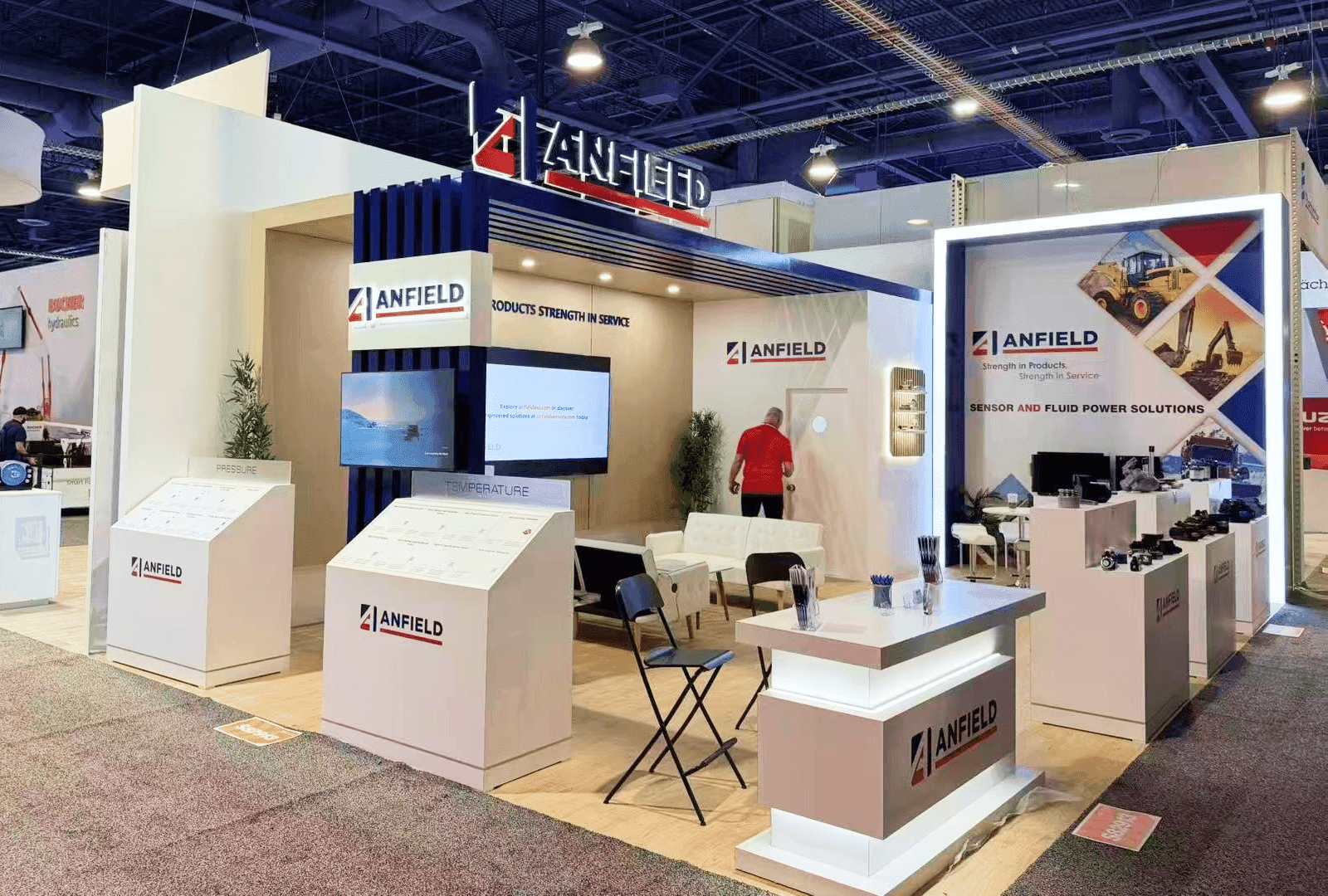
Effective booths in this setting prioritize clarity:
One primary message
Clear product or service framing
Immediate understanding of value
Execution Matters More Than Visual Drama
At large expos, scale can sometimes compensate for inefficiencies.
At mid-tier shows, execution is exposed.
Installation timing, staff readiness, and logistical coordination are immediately noticeable. A booth that opens late, feels cluttered, or lacks a clear flow can undermine trust before conversations begin.
This is where thinking about exhibit performance as a system becomes critical—how space, messaging, and operations work together rather than independently.
Budget Allocation Shifts Toward Function
Mid-tier events often demand a different investment mindset.
Rather than allocating budget toward maximum visual impact, exhibitors benefit from prioritizing:
Reusable structural elements
Clear demonstration zones
Staff support and training
This approach improves consistency across multiple shows and aligns better with the practical nature of mid-tier audiences.
Conclusion: Strategy Must Match the Show
Las Vegas mid-tier trade shows are not smaller versions of major expos—they are different environments with different performance criteria.
Exhibitors who adapt their booth strategy accordingly gain clearer conversations, stronger credibility, and more efficient use of resources. In these settings, success is defined less by scale and more by precision.
Introduction: Size Changes Expectations
Las Vegas is known for hosting some of the largest and most visually competitive trade shows in the world.
However, not every event in Las Vegas operates at that scale.
Mid-tier trade shows—those with smaller footprints, narrower audiences, or highly specific industry focus—create a fundamentally different environment for exhibitors. While they may share the same venues and operational rules as major expos, the expectations, visitor behavior, and performance metrics are often very different.
Applying a large-show booth strategy to a mid-tier Las Vegas event frequently leads to inefficiency rather than impact.
Audience Behavior Is More Targeted—and Less Forgiving
Visitors at mid-tier trade shows tend to arrive with clearer intent.
They are often:
Looking for specific solutions
Comparing a limited number of vendors
Expecting knowledgeable, direct conversations
In this context, oversized graphics or broad brand statements offer diminishing returns. Booths that lack focus can feel misaligned with the audience’s expectations, even if they appear visually impressive.
Performance depends less on spectacle and more on relevance.
Booth Size Is Smaller, but Scrutiny Is Higher
Mid-tier Las Vegas trade shows typically involve:
Tighter booth dimensions
Shorter dwell times
Fewer “casual” visitors
This means exhibitors have fewer seconds to establish credibility. Design choices that work well in expansive island booths may overwhelm or distract in more compact environments.
Effective booths in this setting prioritize clarity:
One primary message
Clear product or service framing
Immediate understanding of value
Execution Matters More Than Visual Drama
At large expos, scale can sometimes compensate for inefficiencies.
At mid-tier shows, execution is exposed.
Installation timing, staff readiness, and logistical coordination are immediately noticeable. A booth that opens late, feels cluttered, or lacks a clear flow can undermine trust before conversations begin.
This is where thinking about exhibit performance as a system becomes critical—how space, messaging, and operations work together rather than independently.
Budget Allocation Shifts Toward Function
Mid-tier events often demand a different investment mindset.
Rather than allocating budget toward maximum visual impact, exhibitors benefit from prioritizing:
Reusable structural elements
Clear demonstration zones
Staff support and training
This approach improves consistency across multiple shows and aligns better with the practical nature of mid-tier audiences.
Conclusion: Strategy Must Match the Show
Las Vegas mid-tier trade shows are not smaller versions of major expos—they are different environments with different performance criteria.
Exhibitors who adapt their booth strategy accordingly gain clearer conversations, stronger credibility, and more efficient use of resources. In these settings, success is defined less by scale and more by precision.
Message
Leave your message and we will get back to you ASAP
Send a Message
We’ll Be in Touch!
Message
Leave your message and we will get back to you ASAP
Address:
4935 Steptoe Street #300
Las Vegas, NV 89122