Oct 29, 2025
Humanizing Technology — How IBS 2025 Brings Warmth to Smart Construction


Circle Exhibit Team
Industry professionals
Exhibition industry professional dedicated to delivering the latest insights and curated recommendations to you.
At the International Builders’ Show (IBS) 2025 in Las Vegas, technology takes on a new form — humanity. No longer the cold machinery of efficiency, it now listens, responds, and adapts. Every year, IBS gathers the brightest in architecture, construction, and design. But in 2025, the buzz isn’t about innovation alone — it’s about intimacy. How can artificial intelligence, automation, and immersive tech build homes that feel alive rather than engineered? For Circle Exhibit , the answer lies in emotion-driven experience. Through interactive booth technology , technology-integrated displays , and experiential exhibit design , the company bridges the digital and the tactile — creating spaces that invite human connection within the realm of high technology.
Technology Finds Its Heartbeat
The first thing visitors notice at IBS 2025 isn’t the noise of machines — it’s the rhythm of harmony.
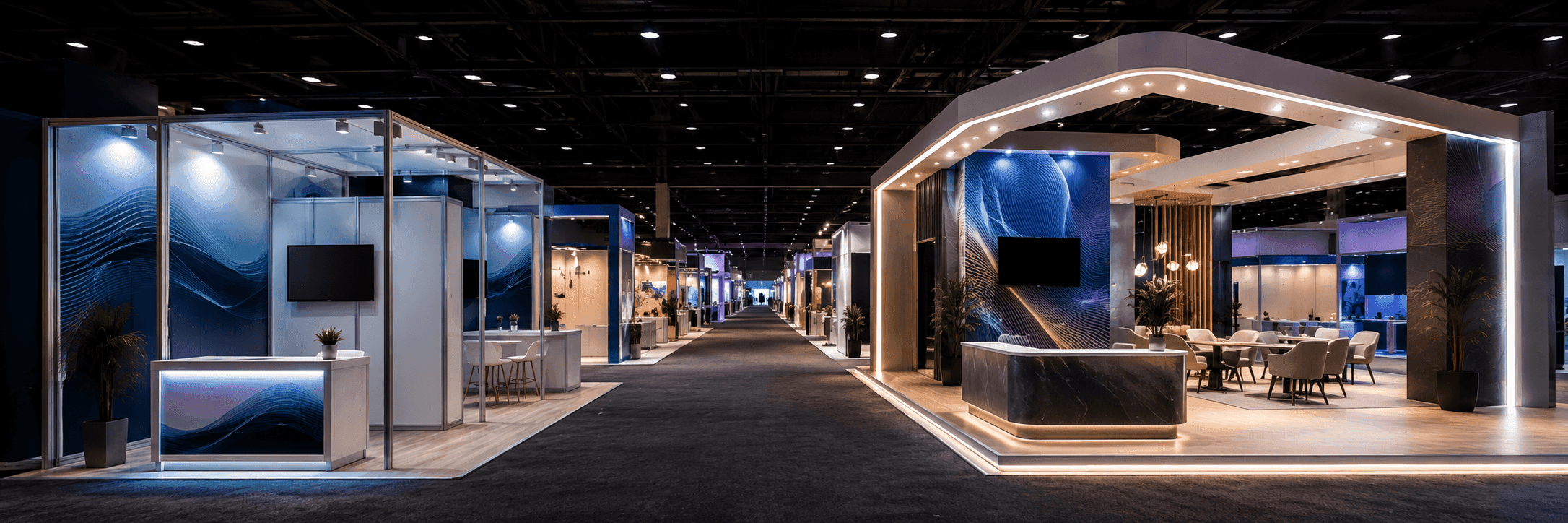
Across the 1.3 million-square-foot show floor,
intelligent walls, adaptive materials, and energy-responsive systems
showcase a quiet revolution in how we build and inhabit space.
A modular housing company from Germany demonstrates AI-driven facades
that “breathe” with changing air quality — automatically adjusting ventilation
to mimic the balance of a natural forest.
An American startup unveils construction drones
that operate with near-silent precision,
mapping floorplans and scanning for safety issues in real time.
But the real innovation lies not in what technology does —
it’s in how it feels.
Homebuilding has found its heartbeat again.
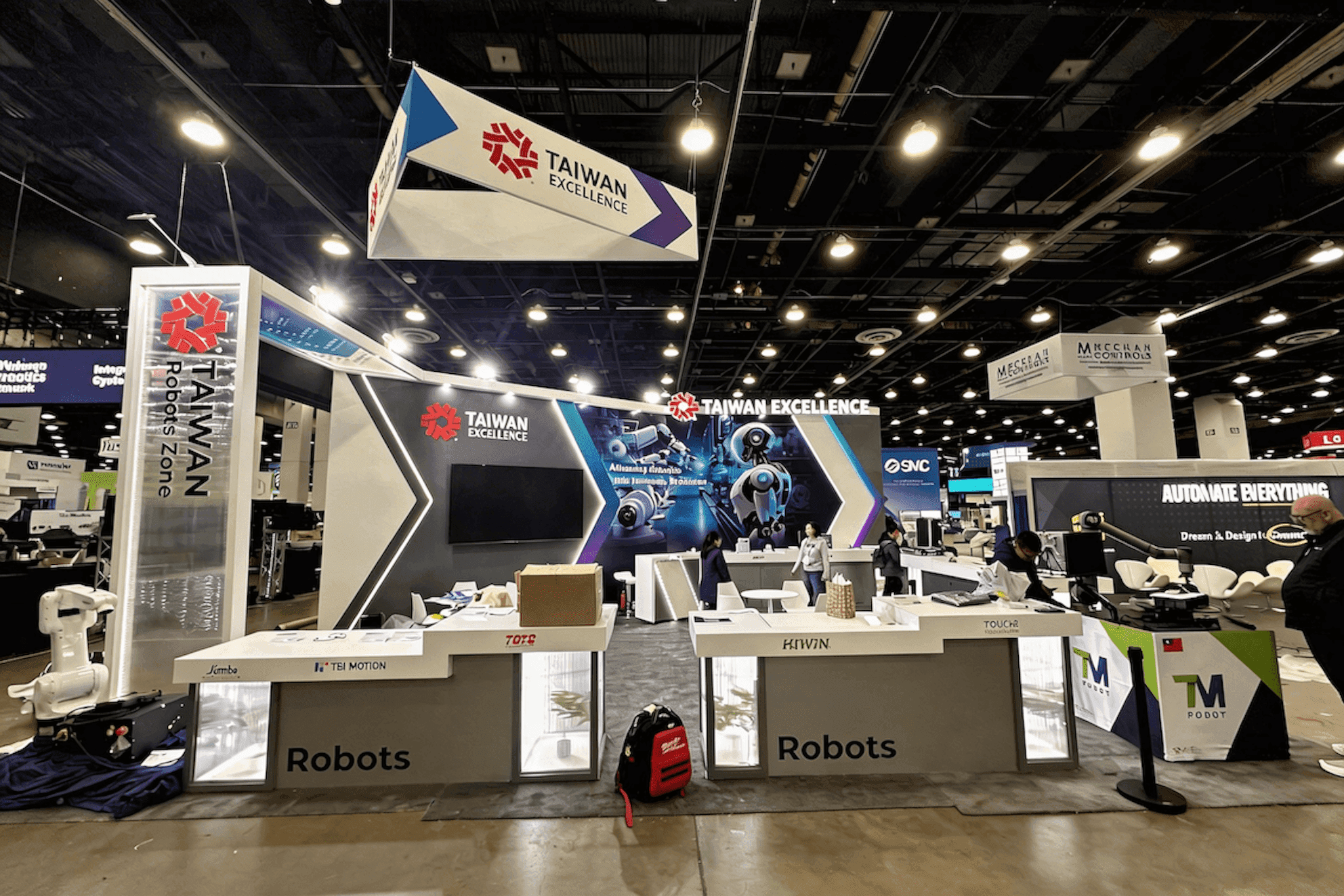
Circle Exhibit brings that same rhythm into its experiential exhibit design.
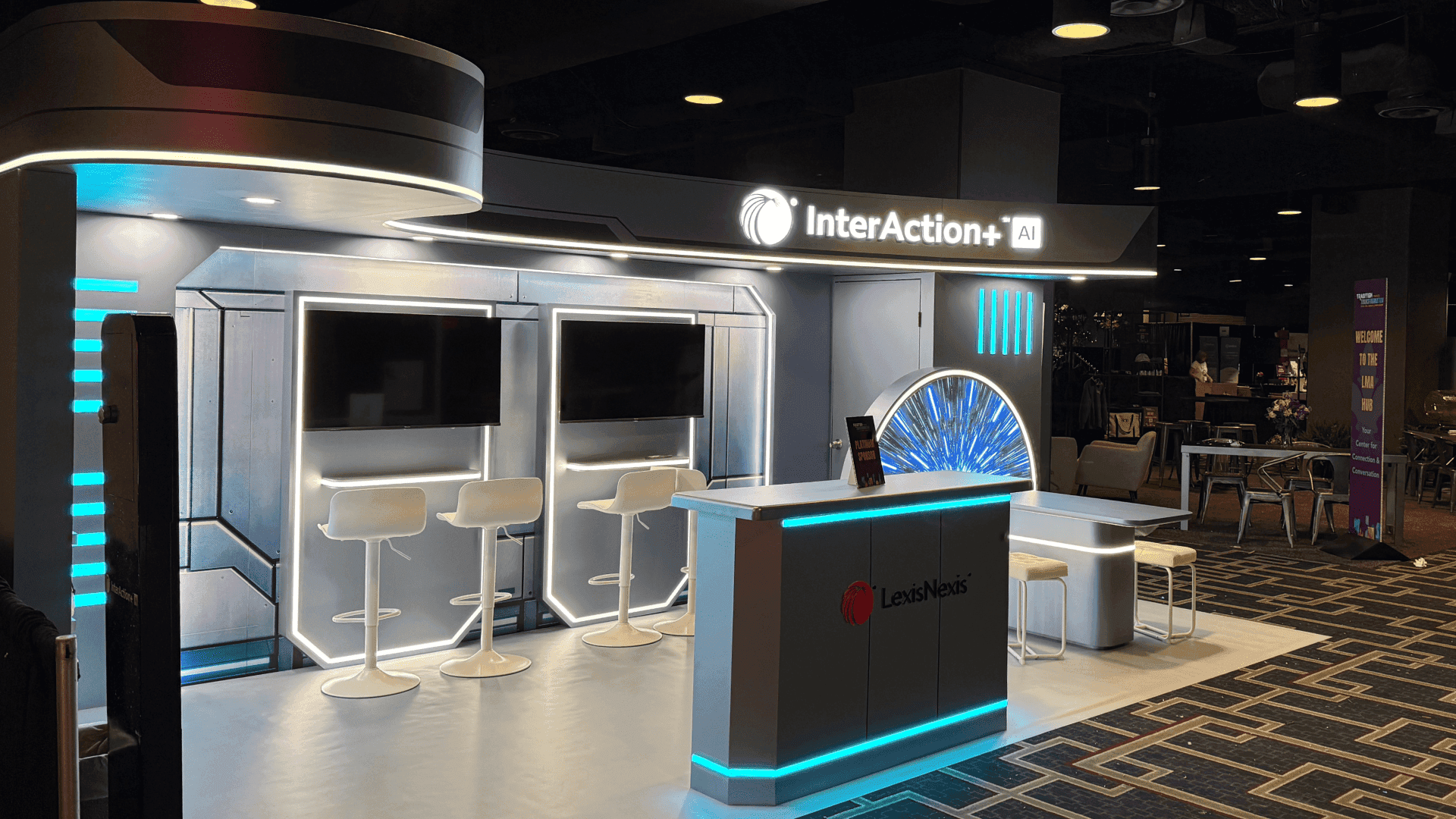
The firm’s booths use ambient lighting, responsive motion sensors, and digital projections
that pulse subtly with audience movement — transforming technology from spectacle to symphony.
When tech feels human, it becomes art.
The Rise of Digital Craftsmanship
Once upon a time, craftsmanship was a matter of hand and tool.
At IBS 2025, it’s also a dialogue between human and algorithm.
Digital craftsmanship — the fusion of traditional artistry and computational precision —
defines the next chapter of construction.
Visitors crowd around robotic masonry systems
that sculpt bricks with millimeter accuracy yet retain organic irregularity.
3D printing studios demonstrate how recycled concrete and clay
can form curvilinear structures that defy geometry yet serve sustainability.
Every build becomes both code and craft —
data-driven yet emotionally designed.
In one corner of the hall, a small exhibit stops people in their tracks.
It’s not the size that impresses — it’s the story.
A booth constructed entirely of algorithmically cut plywood
that folds like origami around a light core.
The designer explains:
“It’s not about making the perfect shape — it’s about finding beauty in digital imperfection.”
Circle Exhibit embodies that philosophy.
Through technology-integrated displays,
they create interactive walls that evolve with user touch —
projections responding to movement, colors deepening with breath.
Technology becomes tactile again — a new form of digital craft.
Smart Homes, Softer Souls
The most emotional trend at IBS 2025?
Technology that learns empathy.
Smart homes no longer simply automate — they anticipate.
AI-driven HVAC systems predict emotional comfort,
adjusting temperature and airflow based on stress detection.
Kitchen counters illuminate softly when movement is sensed,
offering safety with serenity.
Even door frames are embedded with biometric recognition,
not to control, but to care.
A Japanese design firm presents “emotion-aware interiors” —
spaces that adjust acoustics and color saturation in response to voice tone.
It’s not fantasy. It’s the future of sensitivity.
For Circle Exhibit,
this humanized technology shapes the essence of its interactive booth technology.
Booths at international expos now respond to audience rhythm —
music fades as conversation grows,
lighting softens when dwell time increases,
and projection surfaces shift color as visitors move closer.
The booth doesn’t just show innovation — it feels with the audience.
It’s empathy built into architecture.
When Code Meets Culture
At IBS 2025, a clear theme emerges:
technology is no longer neutral.
Designers, builders, and cultural theorists share one conviction —
technology carries emotion, ethics, and cultural identity.
An Indigenous-led architectural firm from Canada showcases AI-designed housing models
inspired by ancestral circular village patterns,
where algorithms learn from cultural geometry rather than overwrite it.
Meanwhile, European exhibitors explore emotional algorithms —
machine learning models trained not just on data, but on cultural rhythm,
seasonal cycles, and local heritage.
This movement transforms smart construction into cultural preservation.
Circle Exhibit echoes this belief in its design language.
Each experiential exhibit design becomes a hybrid between modern form and cultural context.
A digital wall may use motion sensors,
but its content tells stories of human craft, origin, and belonging.
In this way, Circle Exhibit doesn’t just display innovation —
it restores intimacy between technology and tradition.
AI as Design Partner, Not Dictator
Artificial intelligence was once feared as the “end of design.”
At IBS 2025, it’s embraced as the co-designer.
AI tools are now collaborators —
an invisible layer of intuition guiding human creativity.
Design studios show “AI-assisted sketching,”
where architects hand-draw lines,
and algorithms suggest structural reinforcement in real time.
3D scanning drones feed contextual site data into modeling software,
allowing sustainable structures to emerge organically from the land itself.
This partnership frees the designer from repetition
and allows more time for emotion — for storytelling.
Circle Exhibit integrates this logic
into its own creative process.
From interactive booth technology simulations
to generative lighting scripts,
AI is a tool of poetry — not precision alone.
Each exhibit becomes a spontaneous dance
between algorithmic intelligence and human intuition.
The Invisible Layer: Experience Design
“Experience” used to be a marketing word.
At IBS 2025, it becomes an architectural principle.
Brands realize that technology cannot stand alone —
it needs choreography.
How light moves, how sound travels, how surfaces breathe —
these sensory transitions form the true interface between human and machine.
In one of the show’s most admired installations,
a collaboration between an American builder and a lighting firm,
a smart home demonstrates adaptive storytelling.
As visitors enter, AI reads posture and gesture,
adjusting the narrative lighting from “arrival” to “comfort” mode.
It’s not a house — it’s theater.
Circle Exhibit has perfected this art through experiential exhibit design.
Their booths don’t explain innovation; they perform it.
Motion sensors trigger cinematic projections.
Soft spatial audio moves with the visitor.
The design becomes a journey —
a choreography between brand, space, and audience.
Here, technology finally transcends engineering.
It becomes emotion.
Energy Efficiency, Emotional Intelligence
One of IBS 2025’s defining dialogues
is how sustainability intersects with smart systems.
The new frontier is not just energy-efficient homes —
it’s emotionally intelligent ones.
Lighting systems synchronize with circadian rhythm.
HVAC algorithms calculate comfort without excess.
Solar glass roofs store energy while maintaining biophilic transparency.
Every watt saved is a story told —
of mindfulness, not minimalism.
Circle Exhibit applies the same philosophy to trade show architecture.
Its technology-integrated displays operate with self-adjusting LED systems,
minimizing power draw without losing brilliance.
Cooling flows are built into structural design,
ensuring comfort through invisible sustainability.
The result?
A space that feels alive, balanced, and intelligent —
because it cares as much about well-being as performance.
Conclusion: The Human Algorithm
As IBS 2025 closes, one message rings clear —
technology has finally learned to listen.
The future of smart construction isn’t about automation;
it’s about attunement.
When data learns empathy,
and systems understand rhythm,
homes evolve from functional to feeling.
Circle Exhibit stands at this crossroads —
where design becomes dialogue,
and innovation becomes intimacy.
Through interactive booth technology,
technology-integrated displays,
and experiential exhibit design,
the company continues to humanize architecture,
turning trade show spaces into living examples of emotional engineering.
Because the smartest design
isn’t the one that thinks —
it’s the one that feels.
Technology Finds Its Heartbeat
The first thing visitors notice at IBS 2025 isn’t the noise of machines — it’s the rhythm of harmony.
Across the 1.3 million-square-foot show floor,
intelligent walls, adaptive materials, and energy-responsive systems
showcase a quiet revolution in how we build and inhabit space.
A modular housing company from Germany demonstrates AI-driven facades
that “breathe” with changing air quality — automatically adjusting ventilation
to mimic the balance of a natural forest.
An American startup unveils construction drones
that operate with near-silent precision,
mapping floorplans and scanning for safety issues in real time.
But the real innovation lies not in what technology does —
it’s in how it feels.
Homebuilding has found its heartbeat again.
Circle Exhibit brings that same rhythm into its experiential exhibit design.
The firm’s booths use ambient lighting, responsive motion sensors, and digital projections
that pulse subtly with audience movement — transforming technology from spectacle to symphony.
When tech feels human, it becomes art.
The Rise of Digital Craftsmanship
Once upon a time, craftsmanship was a matter of hand and tool.
At IBS 2025, it’s also a dialogue between human and algorithm.
Digital craftsmanship — the fusion of traditional artistry and computational precision —
defines the next chapter of construction.
Visitors crowd around robotic masonry systems
that sculpt bricks with millimeter accuracy yet retain organic irregularity.
3D printing studios demonstrate how recycled concrete and clay
can form curvilinear structures that defy geometry yet serve sustainability.
Every build becomes both code and craft —
data-driven yet emotionally designed.
In one corner of the hall, a small exhibit stops people in their tracks.
It’s not the size that impresses — it’s the story.
A booth constructed entirely of algorithmically cut plywood
that folds like origami around a light core.
The designer explains:
“It’s not about making the perfect shape — it’s about finding beauty in digital imperfection.”
Circle Exhibit embodies that philosophy.
Through technology-integrated displays,
they create interactive walls that evolve with user touch —
projections responding to movement, colors deepening with breath.
Technology becomes tactile again — a new form of digital craft.
Smart Homes, Softer Souls
The most emotional trend at IBS 2025?
Technology that learns empathy.
Smart homes no longer simply automate — they anticipate.
AI-driven HVAC systems predict emotional comfort,
adjusting temperature and airflow based on stress detection.
Kitchen counters illuminate softly when movement is sensed,
offering safety with serenity.
Even door frames are embedded with biometric recognition,
not to control, but to care.
A Japanese design firm presents “emotion-aware interiors” —
spaces that adjust acoustics and color saturation in response to voice tone.
It’s not fantasy. It’s the future of sensitivity.
For Circle Exhibit,
this humanized technology shapes the essence of its interactive booth technology.
Booths at international expos now respond to audience rhythm —
music fades as conversation grows,
lighting softens when dwell time increases,
and projection surfaces shift color as visitors move closer.
The booth doesn’t just show innovation — it feels with the audience.
It’s empathy built into architecture.
When Code Meets Culture
At IBS 2025, a clear theme emerges:
technology is no longer neutral.
Designers, builders, and cultural theorists share one conviction —
technology carries emotion, ethics, and cultural identity.
An Indigenous-led architectural firm from Canada showcases AI-designed housing models
inspired by ancestral circular village patterns,
where algorithms learn from cultural geometry rather than overwrite it.
Meanwhile, European exhibitors explore emotional algorithms —
machine learning models trained not just on data, but on cultural rhythm,
seasonal cycles, and local heritage.
This movement transforms smart construction into cultural preservation.
Circle Exhibit echoes this belief in its design language.
Each experiential exhibit design becomes a hybrid between modern form and cultural context.
A digital wall may use motion sensors,
but its content tells stories of human craft, origin, and belonging.
In this way, Circle Exhibit doesn’t just display innovation —
it restores intimacy between technology and tradition.
AI as Design Partner, Not Dictator
Artificial intelligence was once feared as the “end of design.”
At IBS 2025, it’s embraced as the co-designer.
AI tools are now collaborators —
an invisible layer of intuition guiding human creativity.
Design studios show “AI-assisted sketching,”
where architects hand-draw lines,
and algorithms suggest structural reinforcement in real time.
3D scanning drones feed contextual site data into modeling software,
allowing sustainable structures to emerge organically from the land itself.
This partnership frees the designer from repetition
and allows more time for emotion — for storytelling.
Circle Exhibit integrates this logic
into its own creative process.
From interactive booth technology simulations
to generative lighting scripts,
AI is a tool of poetry — not precision alone.
Each exhibit becomes a spontaneous dance
between algorithmic intelligence and human intuition.
The Invisible Layer: Experience Design
“Experience” used to be a marketing word.
At IBS 2025, it becomes an architectural principle.
Brands realize that technology cannot stand alone —
it needs choreography.
How light moves, how sound travels, how surfaces breathe —
these sensory transitions form the true interface between human and machine.
In one of the show’s most admired installations,
a collaboration between an American builder and a lighting firm,
a smart home demonstrates adaptive storytelling.
As visitors enter, AI reads posture and gesture,
adjusting the narrative lighting from “arrival” to “comfort” mode.
It’s not a house — it’s theater.
Circle Exhibit has perfected this art through experiential exhibit design.
Their booths don’t explain innovation; they perform it.
Motion sensors trigger cinematic projections.
Soft spatial audio moves with the visitor.
The design becomes a journey —
a choreography between brand, space, and audience.
Here, technology finally transcends engineering.
It becomes emotion.
Energy Efficiency, Emotional Intelligence
One of IBS 2025’s defining dialogues
is how sustainability intersects with smart systems.
The new frontier is not just energy-efficient homes —
it’s emotionally intelligent ones.
Lighting systems synchronize with circadian rhythm.
HVAC algorithms calculate comfort without excess.
Solar glass roofs store energy while maintaining biophilic transparency.
Every watt saved is a story told —
of mindfulness, not minimalism.
Circle Exhibit applies the same philosophy to trade show architecture.
Its technology-integrated displays operate with self-adjusting LED systems,
minimizing power draw without losing brilliance.
Cooling flows are built into structural design,
ensuring comfort through invisible sustainability.
The result?
A space that feels alive, balanced, and intelligent —
because it cares as much about well-being as performance.
Conclusion: The Human Algorithm
As IBS 2025 closes, one message rings clear —
technology has finally learned to listen.
The future of smart construction isn’t about automation;
it’s about attunement.
When data learns empathy,
and systems understand rhythm,
homes evolve from functional to feeling.
Circle Exhibit stands at this crossroads —
where design becomes dialogue,
and innovation becomes intimacy.
Through interactive booth technology,
technology-integrated displays,
and experiential exhibit design,
the company continues to humanize architecture,
turning trade show spaces into living examples of emotional engineering.
Because the smartest design
isn’t the one that thinks —
it’s the one that feels.
Message
Leave your message and we will get back to you ASAP
Send a Message
We’ll Be in Touch!
Message
Leave your message and we will get back to you ASAP
Address:
4935 Steptoe Street #300
Las Vegas, NV 89122