Give Different Gaming Units Different Demo Roles
Not every gaming unit in a G2E booth needs the same amount of space or attention.
Some machines should carry the first interaction and provide the clearest product experience. Others may help operators compare different configurations, interfaces, or product variations. Additional units can complete the product range without requiring the same level of access and staff attention.
Treating every machine as equally important usually makes the demo bank harder to understand. Buyers have less guidance on where to begin, staff attention is divided across too many positions, and more floor area is consumed by full demo setups that may not all contribute equally to evaluation.
The better approach is to decide which units deserve primary attention first, then organize supporting units around the comparison process.
When these decisions begin affecting machine positions, equipment clearances, staff access, or structural requirements, trade show booth design and engineering can help translate those requirements into a workable physical layout.
Primary Demo Units Should Lead the First Interaction
Primary demo units should receive the clearest access because they represent the first opportunity for a buyer to understand the product.
These machines usually need:
easier approach paths;
stronger visibility;
direct staff support;
enough room for active use.
The goal is not to make every machine equally important. The goal is to make the buyer evaluation path easier to follow.
Not every gaming unit deserves equal demo priority. Giving every machine the same visibility and interaction space can reduce useful evaluation capacity before the booth actually runs out of room.
Supporting Units Should Improve Comparison Without Competing for Attention
Comparison and supporting units should help buyers understand differences without requiring the same level of space and staff attention as primary demo units.
A booth with multiple machines does not automatically create a stronger evaluation experience. If every unit competes for the same attention, buyers may have more products available but less clarity about what they should evaluate first.
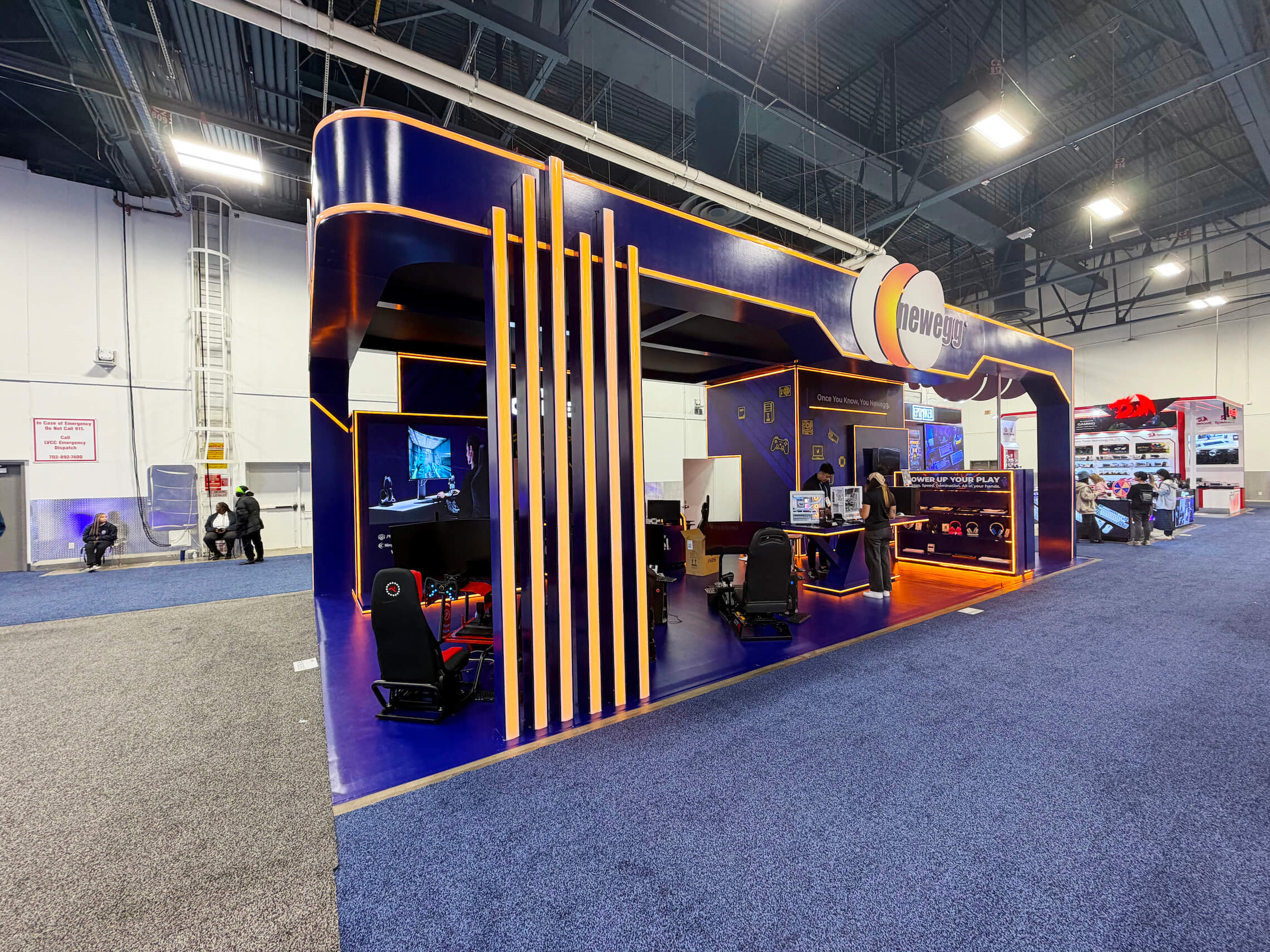
Multiple gaming units require clear grouping, visitor access, and evaluation space so buyers can interact with products without reducing nearby demo capacity.
Judge Demo Capacity by Evaluation, Not Machine Count
A demo bank can look open on a floor plan and still become overloaded once people begin using it.
Each active machine creates a working footprint larger than the cabinet itself. One buyer may be operating the unit, other visitors may stop behind that person to watch, staff may need to step in, and the neighboring machine still needs a clear approach.
Useful capacity should therefore be judged by how many evaluations can happen at the same time without interfering with one another.
Adding another cabinet only creates value if buyers can still approach it, understand what it is meant to demonstrate, and use it without weakening the machines already in operation.
More Machines Does Not Always Mean More Evaluation
Adding more gaming units can make a booth appear to offer more products, but each additional machine also creates new demands:
operating space;
watching space;
staff access;
comparison clarity;
reset requirements.
A booth may physically fit more cabinets while supporting fewer meaningful evaluations if those activities begin competing for the same space.
For example, a booth may fit six gaming cabinets on a floor plan, but if two visitors are testing one unit, a staff member is explaining another, and observers are blocking nearby access, the booth may only be supporting a few effective evaluations at once.
Measure Independent Evaluation Capacity
A stronger demo bank is not defined by how many units fit inside the footprint.
It is defined by how many buyers can still interact with the right machines, compare products clearly, ask questions, and continue through the evaluation process without reducing access to other units.
The goal is not maximum machine count. The goal is maintaining enough capacity for multiple useful evaluations to happen at the same time.
Physical machine count is a poor measure of demo capacity. The better measure is how many machines remain independently usable while the bank is active.
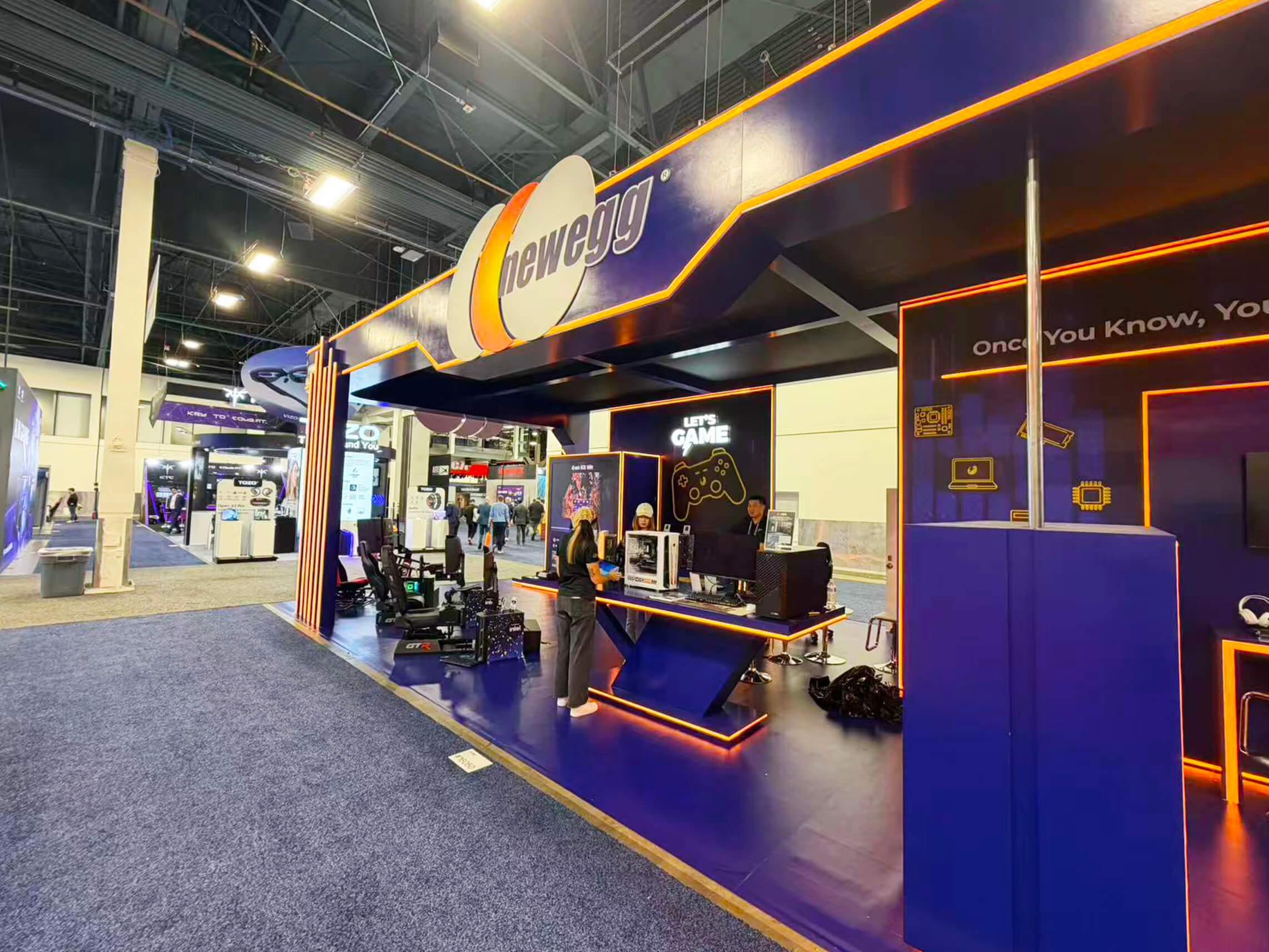
A successful G2E demo area balances active users, watching visitors, and staff support without blocking neighboring gaming equipment.
Separate Active Users, Watching Visitors, and Staff Access
A gaming cabinet rarely serves only the person using it.
One buyer may be operating the machine, several others may be watching, and a staff member may need to step in to explain a control, configuration, or product difference.
Those roles need different space.
Active Users Need Operating Space
The person interacting with the machine needs enough room to use the product naturally.
If the active user is forced into a narrow position because visitors or staff occupy the same area, the product experience itself becomes weaker.
Watching Visitors and Staff Should Not Block Neighboring Units
A common issue in equipment-heavy booths happens when one visitor starts a hands-on demo and several others gather behind them. If a staff member also joins the same area to explain features, the group can unintentionally block the next machine before the booth appears crowded on a floor plan.
The effect on neighboring units matters just as much. A successful demo at one machine should not make the next machine difficult to reach.
If watching one machine regularly closes access to another, the issue is no longer general visitor flow. The demo bank itself is too dense.
Move the Conversation Once Product Evaluation Is Complete
The machine bank is most useful during the first stage of product evaluation.
Questions such as these still belong beside the equipment:
What is this product?
How does it operate?
What is different?
Which configuration am I looking at?
What should I compare?
The machine itself helps answer those questions.
But the value of staying beside the equipment decreases once the discussion moves into:
integration;
deployment;
procurement;
compliance;
commercial terms;
partnership.
Keep Product Questions Near the Equipment
Early questions are often tied directly to what the buyer can see and interact with.
A visitor may need to understand:
how the system operates;
how one configuration differs;
what makes the product relevant.
Keeping these questions near the machine supports faster evaluation.
Move Deeper Discussions Away From Active Demo Positions
For example, a buyer may begin by asking how a gaming unit works, but once the conversation shifts into system integration or deployment requirements, keeping the discussion beside the machine can prevent the next visitor from starting their own evaluation.
The handoff does not need to be complicated. A nearby discussion point or focused conversation area may be enough.
The important part is making the equipment available again when the buyer no longer needs the machine itself to continue the discussion.
The machine bank is an evaluation area, not the place for every downstream sales conversation.
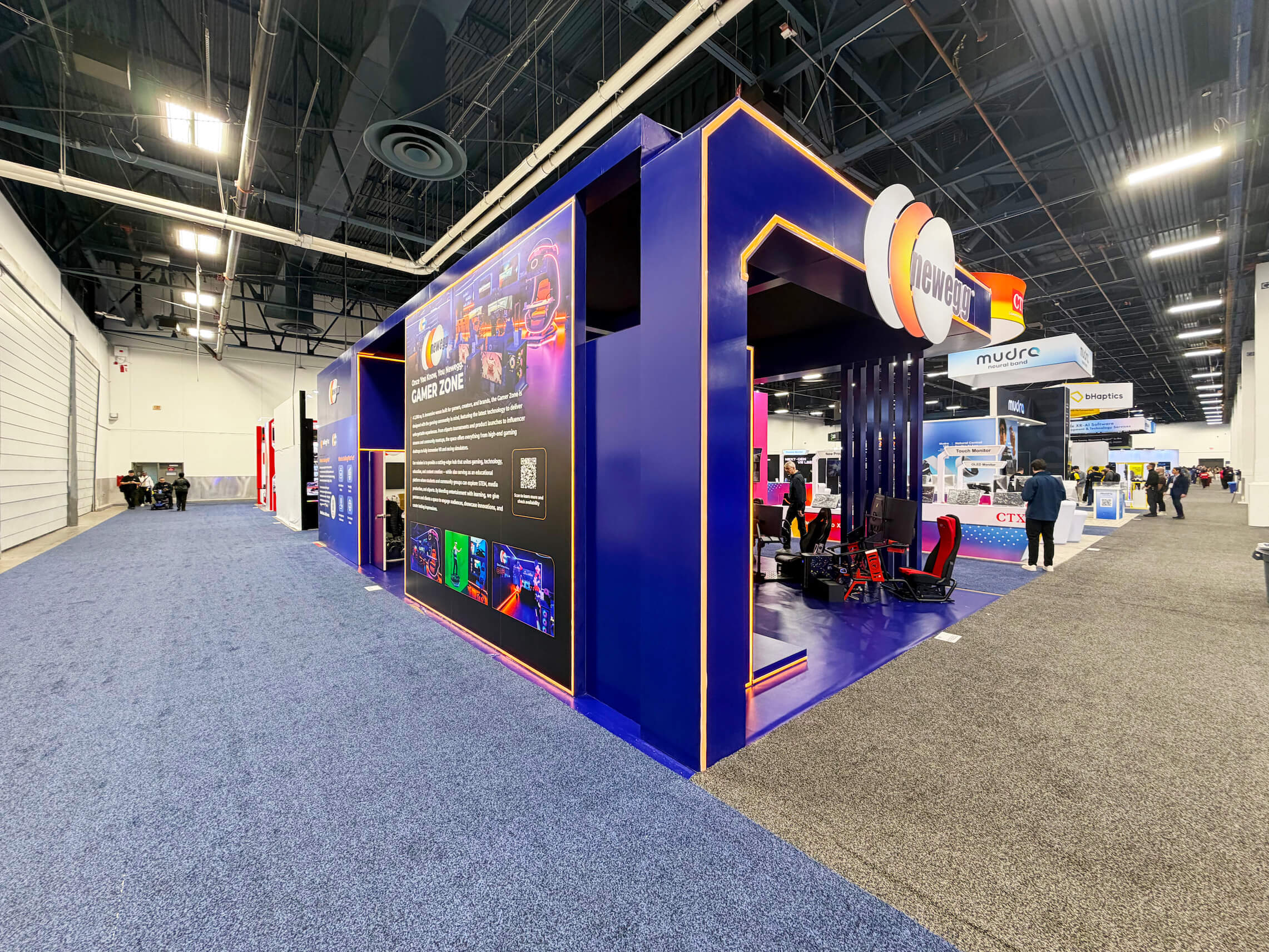
Demo capacity depends on more than machine count. Equipment placement, visitor movement, staff access, and conversation transitions all affect the buyer evaluation experience.
Protect Reset Capacity Between Evaluations
A demo position only has value if it can return to a ready state quickly after one buyer leaves.
Depending on the equipment, reset may involve restoring the machine state, checking a controller or display, reloading demo content, replacing a device, clearing materials, or preparing the unit for the next interaction.
Those tasks need support access of their own.
Reset Is Part of Demo Performance
A demo bank needs to perform throughout the show, not only during the first few interactions.
If each reset requires significant staff movement or interrupts another active demo, the booth may appear successful while gradually losing capacity during busy periods.
Support Access Should Not Interrupt Active Evaluations
During busy show hours, a small reset issue can become a repeated bottleneck.
If staff need to walk through visitor traffic, move around another active unit, or interrupt a neighboring demo just to prepare one machine, the problem is not only staffing—it is the demo bank layout.
If resetting one machine disrupts another active evaluation, the support plan is reducing the bank’s usable capacity.
Signs a G2E Demo Bank Is Too Dense
A demo bank often becomes too dense before the floor plan looks full.
The warning signs appear in how people use the machines:
every unit competes for primary attention;
watching visitors block neighboring cabinets;
staff occupy operating or viewing positions;
buyers cannot immediately tell which machines should be compared;
long conversations remain beside active units;
reset tools or support materials enter the visitor-facing area;
one busy demo makes another machine difficult to approach.
Visitor and Staff Conflicts
When multiple people gather around one machine, the issue may not be the number of visitors but how the demo area handles those interactions.
If staff, active users, and observers repeatedly compete for the same space, the machine grouping needs to be reconsidered.
Evaluation and Reset Conflicts
If buyers cannot understand which units to compare, or if resetting one machine interrupts another evaluation, the booth is losing useful capacity.
Before increasing booth size, first review:
machine priority;
grouping;
conversation location;
support access.
If those conflicts remain after adjustments, then the issue becomes a true footprint decision. A 20x20 booth or 20x30 booth may provide additional separation when machine groups, visitors, staff, and conversations genuinely need more working space.
More floor space cannot fix a demo bank whose machines have not been prioritized. Reduce, regroup, or reprioritize first; increase footprint only when the remaining conflict is genuinely spatial.
FAQ
Should every gaming unit in a G2E booth have equal demo space?
No. Primary demo units should receive the clearest access and strongest interaction space. Comparison and supporting units can use less space when their role is to help buyers evaluate differences rather than carry the main interaction.
When is a G2E gaming equipment demo bank too crowded?
A demo bank is too dense when adding another unit reduces access, visibility, staff movement, comparison clarity, or reset capacity around existing machines. The issue is not the number of cabinets—it is whether buyers can still evaluate them effectively.
When should a buyer conversation move away from the machines?
Move the discussion once it no longer depends on the equipment in front of the buyer. Integration, deployment, procurement, compliance, and commercial conversations usually need a different space so the active demo position remains available.